Featured Case
-
Abstract
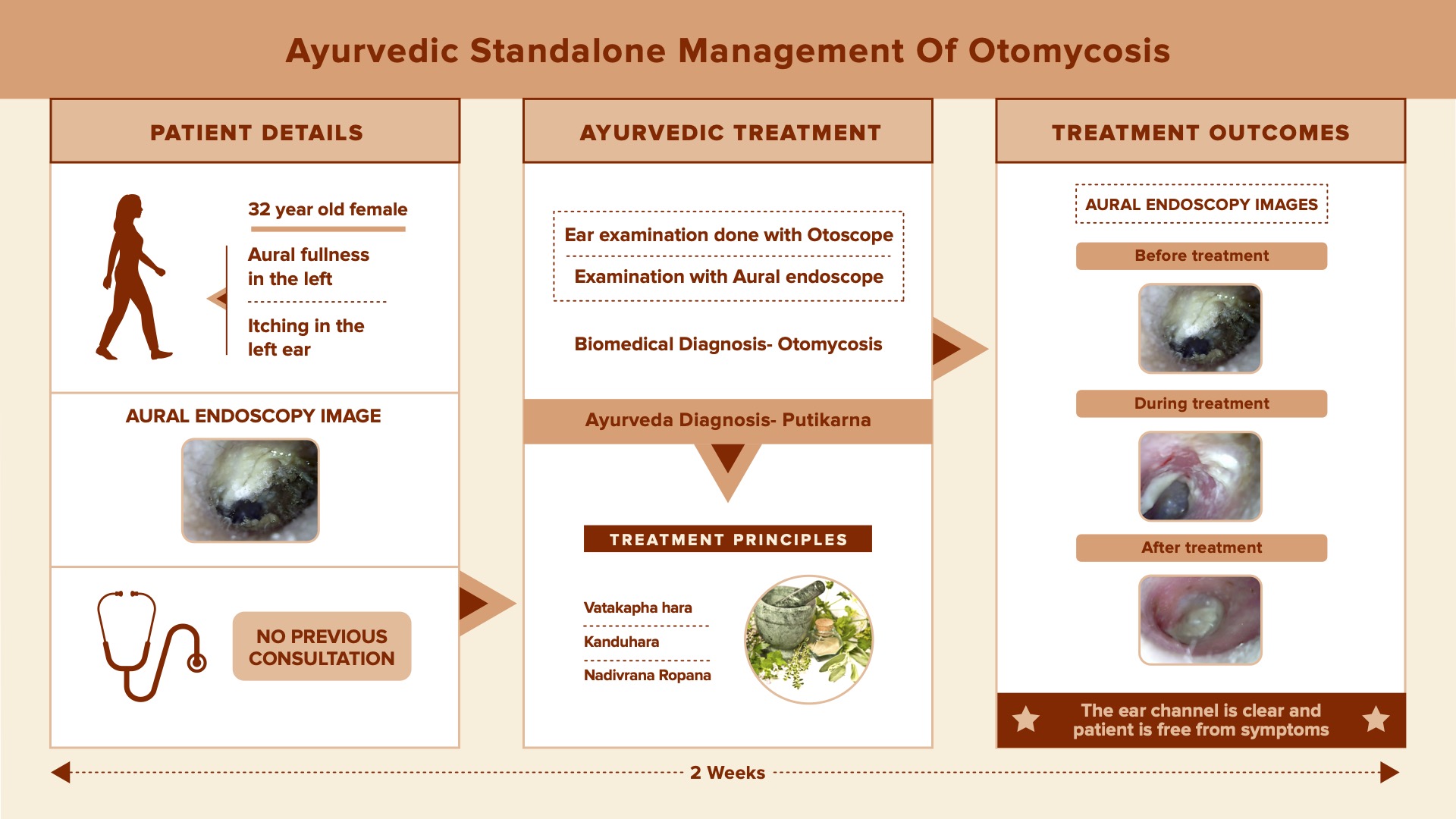
A 30-year-old female patient presented with complaints of aural fullness with itching in left ear for 1 week. Her first choice of treatment was Ayurveda and she approached Dr Sivabalaji. Ear examination was done with otoscope and aural endoscope. The biomedical diagnosis of this clinical condition was Otomycosis and the ayurvedic diagnosis was putikarna. The line of treatment followed was Vatakapha hara as it is vitiated vata dosa in kapha sthana. The medicines chosen were also kandu hara. Nadivrana and vrana ropana cikitsa were also adopted. Pre and post treatment assessments were done based on aural endoscopy. After 1 week of treatment, the patient got complete relief from aural fullness and itching. With 2 weeks of treatment, the clinical condition was completely resolved.
-
Summaries
-
Listen
-
Watch
-
View
-
Read
A 30-year-old female patient presented with complaints of aural fullness with itching in left ear for 1 week. Her first choice of treatment was Ayurveda and she approached Dr Sivabalaji. Ear examination was done with otoscope and aural endoscope. The biomedical diagnosis of this clinical condition was Otomycosis and the ayurvedic diagnosis was putikarna. The line of treatment followed was Vatakapha hara as it is vitiated vata dosa in kapha sthana. The medicines chosen were also kandu hara. Nadivrana and vrana ropana cikitsa were also adopted. Pre and post treatment assessments were done based on aural endoscopy. After 1 week of treatment, the patient got complete relief from aural fullness and itching. With 2 weeks of treatment, the clinical condition was completely resolved.
-
-
Timeline
-
Tabulated Summary
-
Narrative
TITLE OF THE CASE
Successful standalone ayurvedic management of Otomycosis - A case report
Dr Siva Balaji
ABSTRACT
A 30-year-old female patient presented with complaints of aural fullness with itching in left ear for 1 week. Her first choice of treatment was Ayurveda and she approached Dr Sivabalaji. Ear examination was done with otoscope and aural endoscope. The biomedical diagnosis of this clinical condition was Otomycosis and the ayurvedic diagnosis was putikarna. The line of treatment followed was Vatakapha hara as it is vitiated vata dosa in kapha sthana. The medicines chosen were also kandu hara. Nadivrana and vrana ropana cikitsa were also adopted. Pre and post treatment assessments were done based on aural endoscopy. After 1 week of treatment, the patient got complete relief from aural fullness and itching. With 2 weeks of treatment, the clinical condition was completely resolved.
KEYWORDS
Otomycosis, putikarna, ayurveda, case report, standalone
INTRODUCTION
The term otomycosis is mostly used to describe fungal infections of the external ear, including the auricle, auditory canal, eardrum, and middle ear. Malignant invasive necrotizing otitis externa is an infection of the external auditory canal that invades the skull base and the mastoid cells.
Synonyms are fungal otitis externa, fungal malignant otitis externa, fungal necrotizing otitis externa, fungal invasive otitis externa, and fungal otitis media.
Causative fungi: There are a lot of pathogens that can cause infection. Penicillium sp is the most common isolated pathogen. Aspergillus and Candida are low in occurrence compared to Penicillium. There are rare pathogen fungi like Mucor, Fusarium and Cryptococcus. In this patient, culture tests were not done, so the pathogen was not identified. But in the opinion of Dr Sivabalaji, based on the clinical presentation, his interpretation was Candida albicans and Aspergillus niger fungal growth in the left ear.
Diagnosis
The diagnosis of otitis externa relies on the patient's clinical history, the physical examination, an otoscopic examination under microscopic control, imaging studies of the head, and laboratory identification of the fungus.
Radiologic studies include computed tomography (CT), magnetic resonance imaging (MRI), and nuclear imaging. X-ray imaging is currently not beneficial for diagnosing otitis externa.
Laboratory diagnosis includes direct microscopy, culture, and histopathology. The samples from the auditory canal contain debris and secretions that can be used for mycologic culture.
PATIENT INFORMATION
A 30-year-old female patient presented with complaints of aural fullness with itching in left ear for 1 week. Her first choice of treatment was Ayurveda and she approached Dr Sivabalaji.
Medical History: There were no prior consultations
CLINICAL FINDINGS/PHYSICAL EXAMINATION
Ear examination was done with otoscope and aural endoscope.
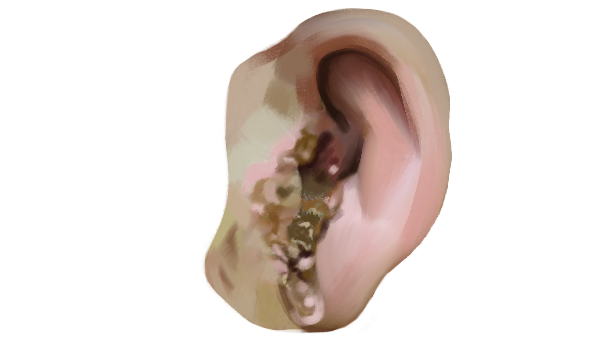
External auditory canal skin appears red with the presence of whitish-black colour fungal mass.
BP: 120/ 80 mmHg. Pulse: 70/minBowel sleep appetite- normal
TIMELINE
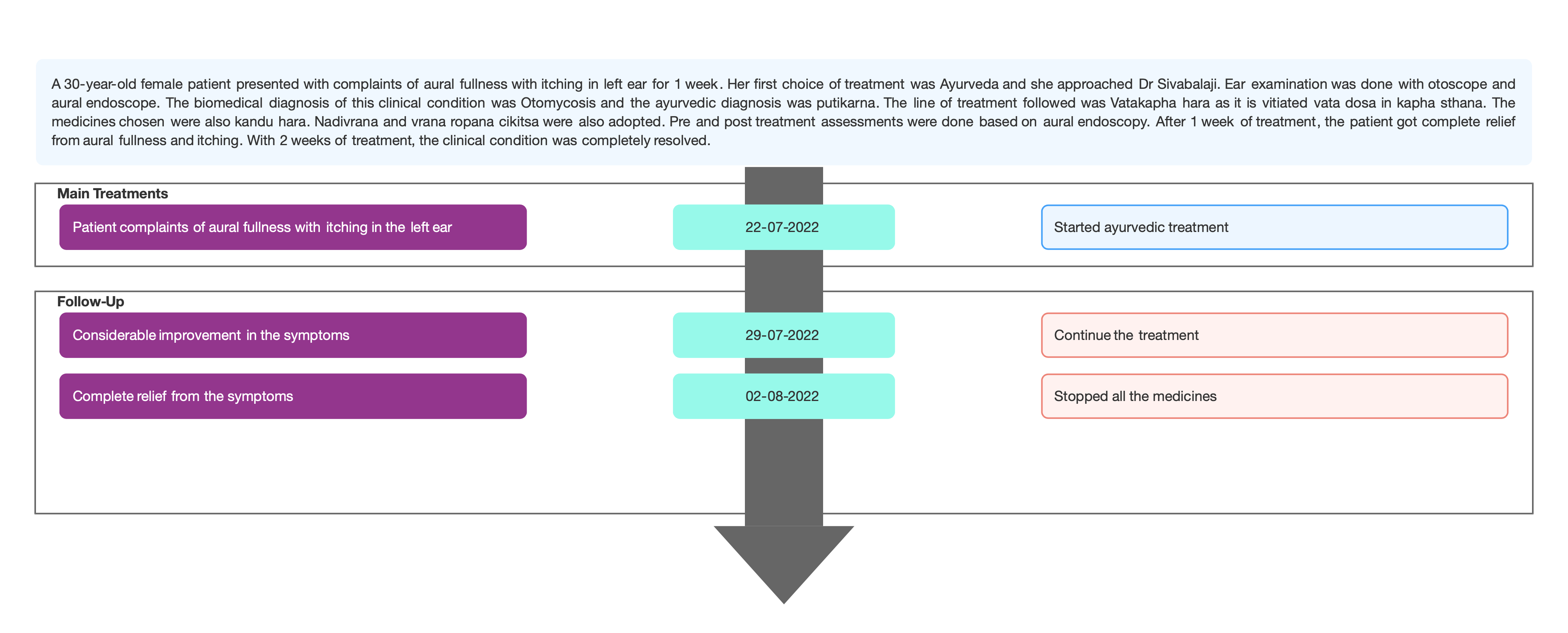
Image 1. Timeline of events added below
DIAGNOSTIC ASSESSMENT
Modern Diagnostic parameter: The biomedical diagnosis was made by Dr Siva Balaji based on the clinical examination and presentation.
Image 2. Aural endoscopy dated 22.7.2022 : Before treatment added below
Ayurvedic Assessment was done based on the examination and the clinical evaluation by the ayurvedic physician.
Differential Diagnosis- The diagnosis was confirmed with clinical examination and presentation.
Prognosis- Treatment of otomycosis typically includes microscopic suction to remove the fungal mass, topical antibiotics to be discontinued and treatment with antifungal eardrops for three weeks. There is a potential for hearing loss and canal stenosis from chronic inflammation, which may occur with a single acute episode. In this case, the patient got a complete cure in 2 weeks of treatment.
THERAPEUTIC INTERVENTION
See the tab ‘Treatment details’.
FOLLOW-UP AND OUTCOMES
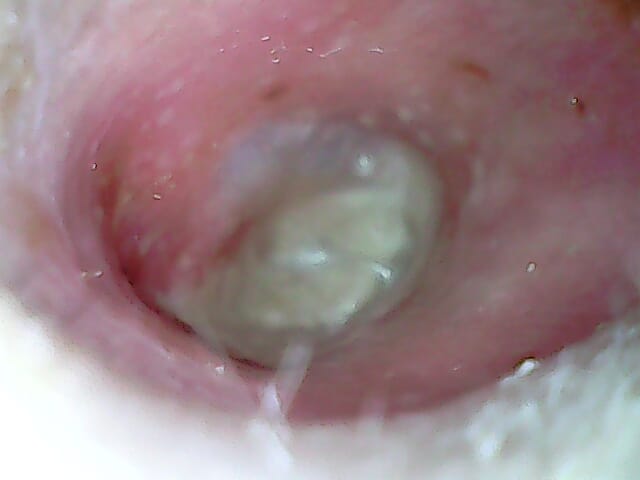
Clinician-based assessment; Assessments were done on the basis of aural endoscopy before and after treatment, and marked improvement was noted within 1 week of treatment. The patient got complete relief with 2 weeks of treatment.
Patient-assessed: Not relevant.
Image 3. Aural endoscopy dated 29.7.2022 : During treatment added below
Image 4. Aural endoscopy dated 1.8.2022 : After treatment added below
Intervention adherence and tolerability – The patient adhered to the prescribed treatments and tolerated the treatments well.
Method of assessment- By monitoring the patient.
Adverse and unanticipated events; None reported.
DISCUSSION ;
In the vata sthana- kapha dosa is involved. So the medicine and treatment given are vata kapha hara. Aragwadhadi kashyam reduces kapha dosa and acts on skin lesions.
It has anti-bacterial and anti-inflammatory properties. All the dravya are kandu hara. Triphala guggulu acts as an anti-bacterial and antiseptic drug which is indicated in nadivrana and vrana ropana. So considering the ear canal as nadi and otomycosis as vrana the medicine is chosen.PATIENT’S PERSPECTIVE
Not available.
LEARNING POINTS/TAKE-HOME MESSAGES
The 30-year-old female consulted Dr Sivabalaji with complaints of aural fullness with itching in the left ear for 1 week. With ayurvedic treatment for 1 week, she got complete relief from symptoms. Ayurvedic intervention can help manage Otomycosis successfully, in 1- 2 weeks where the standard of care proposes a 3 week treatment.
INFORMED CONSENT
Written consent obtained from the patient to publish the case report.
CONFLICT OF INTEREST
None declared.
FUNDING
None
REFERENCE
- Vennewald I, Klemm E. Otomycosis: Diagnosis and treatment. Clin Dermatol. 2010 Mar 4;28(2):202-11. doi: 10.1016/j.clindermatol.2009.12.003. PMID: 20347664.
- Sushrutha Samhita, with Sri Dalhanacharya Teeka, edited by Narayan Ram Acharya Kavyathirtha, Chaukhambha Orientalia, Varanasi, 2009; 1, 7(2): 824 - 2.
Image 1. Timeline of events
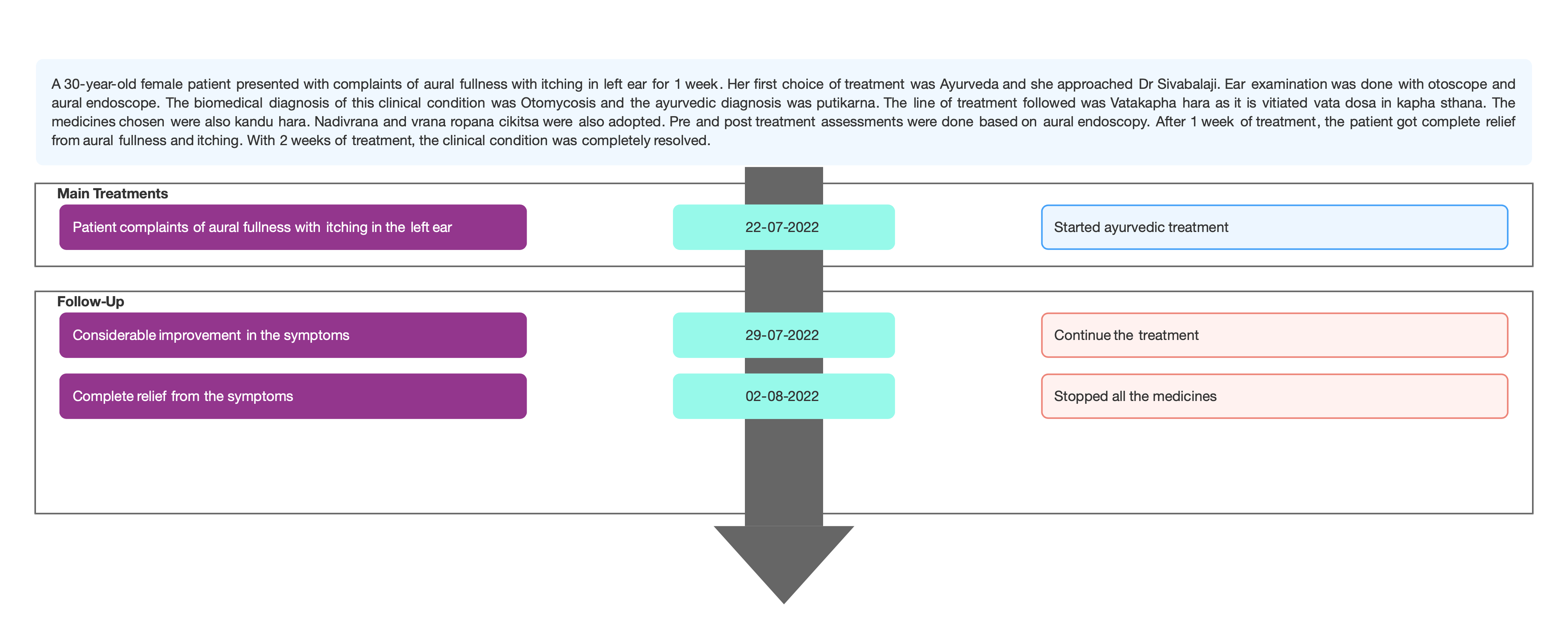
Image 2. Aural endoscopy dated 22.7.2022 : Before treatment
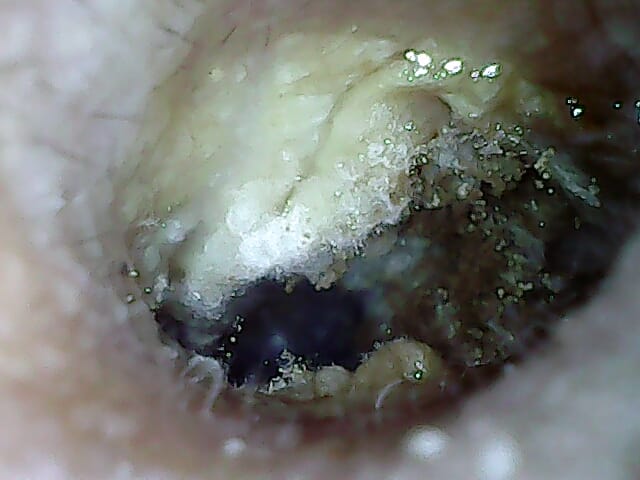
Image 3. Aural endoscopy dated 29.7.2022
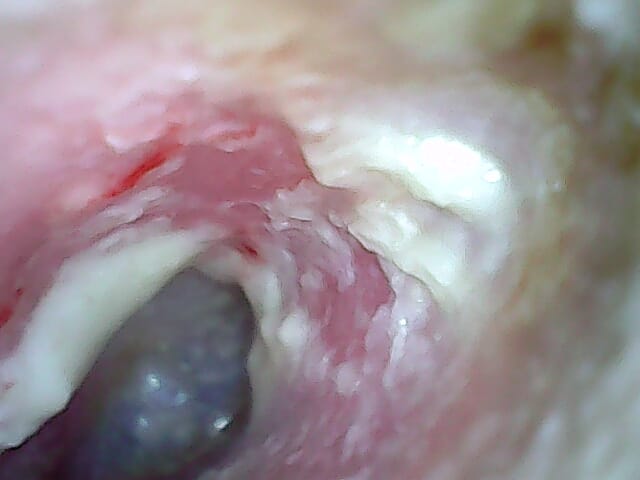
Image 4. Aural endoscopy dated 1.8.2022
-
Immersive Learning
-
Modern Diagnosis
MODERN DIAGNOSIS: Otomycosis
ABOUT THE DISEASE:
The term otomycosis is mostly used to describe fungal infections of the external ear, including the auricle, auditory canal, eardrum, and middle ear. Malignant invasive necrotizing otitis externa is an infection of the external auditory canal that invades the skull base and the mastoid cells.
Synonyms are fungal otitis externa, fungal malignant otitis externa, fungal necrotizing otitis externa, fungal invasive otitis externa, and fungal otitis media.
Causative fungi: There are a lot of pathogens that can cause infection. Penicillium sp is the most common isolated pathogen. Aspergillus and Candida are low in occurrence compared to Penicillium. There are rare pathogen fungi like Mucor, Fusarium and Cryptococcus. In this patient, culture tests were not done, so the pathogen was not identified. But in the opinion of Dr Sivabalaji, based on the clinical presentation, his interpretation was Candida albicans and Aspergillus niger fungal growth in the left ear.
Diagnosis
The diagnosis of otitis externa relies on the patient's clinical history, the physical examination, an otoscopic examination under microscopic control, imaging studies of the head, and laboratory identification of the fungus.
Radiologic studies include computed tomography (CT), magnetic resonance imaging (MRI), and nuclear imaging. X-ray imaging is currently not beneficial for diagnosing otitis externa.
Laboratory diagnosis includes direct microscopy, culture, and histopathology. The samples from the auditory canal contain debris and secretions that can be used for mycologic culture.
The 30-year-old female patient, presented with complaints of aural fullness with itching in the left ear for 1 week. The diagnosis was done based on clinical presentation and examination.
Treatment
Adequate treatment of fungal infection should include the formulation, route of administration, dose, and treatment period according to the site and severity of the disease. Treatment should be directed specifically against the agent of the disease to avoid the development of resistance. The apparent success of treatment must be confirmed by repeatedly negative fungal cultures.
Topical therapies, antimycotics, antiseptics, and solutions of dye, polyenes, imidazole, allylamine, pyridone, thiocarbamates, mercury compounds, and systemic therapies are usually followed.
Prognosis: The prognosis of otomycosis is good in immunocompetent patients. Topical antifungals such as clotrimazole, miconazole, bifonazole, ciclopiroxolamine, and tolnaftate have more favourable properties, including a broad spectrum of activity against pathogens, low ototoxicity, and the availability of commercial solutions. There are potentially safer choices for the treatment of otomycosis, particularly in patients with a perforated eardrum. Invasive forms of otomycosis can develop in immunosuppressed patients, with lethal consequences if not treated properly.
Image 1. Aural endoscopy image before treatment dated 22.7.2022
References:
- Vennewald I, Klemm E. Otomycosis: Diagnosis and treatment. Clin Dermatol. 2010 Mar 4;28(2):202-11. doi: 10.1016/j.clindermatol.2009.12.003. PMID: 20347664.
-
Ayurveda Diagnosis
AYURVEDA DIAGNOSIS: Putikarna
ABOUT THE DISEASE:
According to Ayurveda the major problems associated with ear are Karnasrava (discharging ear), Putikarna (foul-smelling ear) and Krimi Karna (worms in the ear), etc. The major causes of ear diseases include ear infections, ear canal injury, earwax blocking, entry of water and exposure to the diversified climatic conditions, etc Putikarna refers to the foul smell in the ear. This term is also used by physicians in connection with ear infections. Putikarna is the most common Karnaroga in day-to-day ENT practice, characterized by pus discharge with or without pain in the ear. It can be correlated to chronic suppurative otitis media (CSOM). Based on the clinical presentation and examination, the ayurvedic diagnosis given was Putikarna.
Putikarna has the vitiation of pitta dosha along with the involvement of kapha dosha and the properties of each dosha are different to one another therefore Dhupana drugs selection is on the basis of mixed properties that relieves the vitiated doshas with also subsiding the symptoms produced by disturbed pitta, kapha dosha and also stabilizes the vata ashrita in karna.
Treatment: Textbooks like Cikitsamanjari give a lot of treatment options suggested in Putikarna. Karna Dhupana is very therapeutically effective in Putikarna.
Rationale of treatment: In the vata sthana- kapha dosa is involved. So the medicine and treatment given are vata kapha hara. Aragwadhadi kashyam reduces kapha dosa and acts on skin lesions.
It has anti-bacterial and anti-inflammatory properties. All the dravya are kandu hara. Triphala guggulu acts as an anti-bacterial and antiseptic drug which is indicated in nadivrana and vrana ropana. So considering the ear canal as nadi and otomycosis as vrana the medicine is chosen.With 2 weeks of ayurvedic treatment, the patient got complete relief from her symptoms. She is in remission.
Reference
- Sushrutha Samhita, with Sri Dalhanacharya Teeka, edited by Narayan Ram Acharya Kavyathirtha, Chaukhambha Orientalia, Varanasi, 2009; 1, 7(2): 824 - 2.
- Common diseases of the ear, their modern and ayurvedic management: a review. Mahajan et al. ejbps, 2022, Volume 9, Issue 9, 494-496
-
Treatment
Name of Medicine Dosage Form Dosage Mode of Administrtation From - To (Date) Medicine Reference Aragvadhadi kasayam Kasayam 20 ml Mix with 60 ml warm water before food twice daily 2022-07-22 - 2022-07-28 AH.Ci.6 Triphala guggulu Tablet 2-0-2 With warm water after food 2022-07-22 - 2022-07-28 Sharngadhara Samhita.Madhyama Khanda.7 Tab. Septilin Tablet 1-1-1 With warm water after food 2022-07-22 - 2022-07-28 Patent and Proprietary Medicine Aragvadhadi kasayam Kasayam Required quantity Mopping done 2022-07-22 - 2022-07-28 AH.Ci.6 Guggulu Curna Varti Dhupanam 2022-07-22 - 2022-08-05 Anubhuta Yoga Gomutra arka Arka Required quantity Karna pics, Done twice daily in the left ear. 2022-07-22 - 2022-07-26 Susruta Samhita. Su.45 -
Outcome Measures
OUTCOME MEASURES
The 30-year-old female patient consulted Dr Sivabalaji with complaints of aural fullness with itching in the left ear for 1 week. There was no prior consultation.
The outcome measures were measured based on subjective and objective parameters.
Subjective parameters: With 2 weeks of ayurvedic treatment, she got complete relief from her symptoms and all the medicines were stopped.
Objective parameters: The images pre and post-treatment, were taken to assess the outcomes of the treatments.
Image 1. Aural endoscopy dated 29.7.2022- during treatment added below
Image 2. Aural endoscopy dated 1.8.2022 after treatment added below
Disease-modifying effect: The patient is in remission.
-