Featured Case
-
Abstract
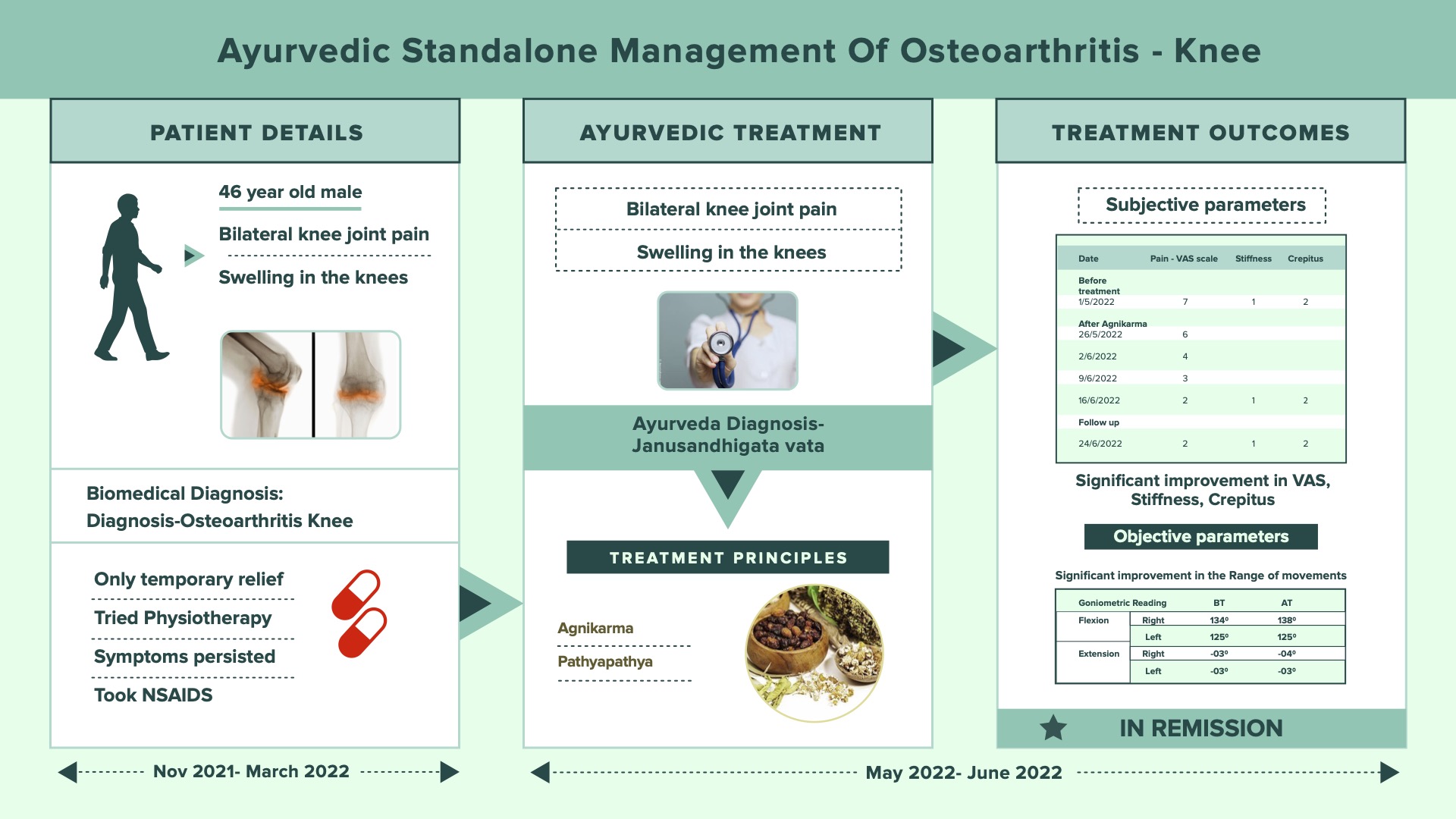
A 46-year-old male patient suffered from bilateral knee joint pain and swelling for 3 years. He also complained of stiffness of the knee joint along with the crackling sound during movements. Six months back the patient took conventional treatments like NSAIDs and physiotherapy. But the symptoms persisted and for further management, he consulted Dr Dudhmal. Based on physical examination and radiological findings the biomedical diagnosis was made as Osteoarthritis of bilateral knee joint - KL grade- 2. The ayurvedic diagnosis was Janusandhigata vata. The line of treatment adopted was Agnikarma with electrocautery. This was done once a week for 1 month. Pre- and post-treatment assessment was done with VAS, stiffness, and the range of movements. After 4 sittings of Agni karma, the VAS recorded as 7 before treatment became 2 after treatment. There is no swelling and stiffness and the range of movement improved. The patient is in remission.
-
Summaries
-
Listen
-
Watch
-
View
-
Read
A 46-year-old male patient suffered from bilateral knee joint pain and swelling for 3 years. He also complained of stiffness of the knee joint along with the crackling sound during movements. Six months back the patient took conventional treatments like NSAIDs and physiotherapy. But the symptoms persisted and for further management, he consulted Dr Dudhmal. Based on physical examination and radiological findings the biomedical diagnosis was made as Osteoarthritis of bilateral knee joint - KL grade- 2. The ayurvedic diagnosis was Janusandhigata vata. The line of treatment adopted was Agnikarma with electrocautery. This was done once a week for 1 month. Pre- and post-treatment assessment was done with VAS, stiffness, and the range of movements. After 4 sittings of Agni karma, the VAS recorded as 7 before treatment became 2 after treatment. There is no swelling and stiffness and the range of movement improved. The patient is in remission.
-
-
Timeline
-
Tabulated Summary
-
Narrative
TITLE OF CASE
Successful standalone ayurvedic management of Osteoarthritis - A case report
Dr Dudhmal
ABSTRACT
A 46-year-old male patient suffered from bilateral knee joint pain and swelling for 3 years. He also complained of stiffness of the knee along with the crackling sound during movements. Six months back the patient took conventional treatments like NSAIDs and physiotherapy. But the symptoms persisted and for further management, he consulted Dr Dudhmal. Based on physical examination and radiological findings the biomedical diagnosis was made as Osteoarthritis of bilateral knee joint - KL grade- 2. The ayurvedic diagnosis was Janusandhigata vata. The line of treatment adopted was Agnikarma with electrocautery. This was done once a week for 1 month. Pre- and post-treatment assessment was done with VAS, stiffness, and the range of movements. After 4 sittings of Agni karma, the VAS recorded as 7 before treatment became 2 after treatment. There is no swelling and stiffness and the range of movement improved.
KEYWORDS
Osteoarthritis , janusandhigata vata, agnikarma, electrocautery, case report, standalone
INTRODUCTION
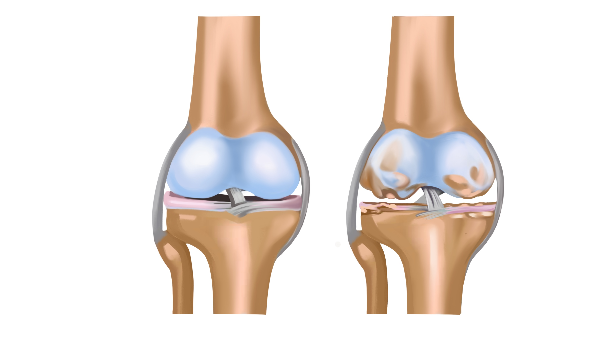
Osteoarthritis (OA) is a common form of arthritis that often affects the knee. In the early stages, there may not be any symptoms. In the later stages, however, they experience pain, stiffness and even restricted movements. Grating sensation, bone spur, tenderness and swelling are also common symptoms of OA knee. If left untreated, the symptoms worsen over time. OA of the knee affects the bones, cartilage, and synovium in the knee joint.
Diagnosis; Medical history and clinical evaluation are the main diagnostic criteria. But imaging like Xray, and MRI may be suggested to assess the intensity of the damage. Blood tests may be suggested to rule out conditions like gout or rheumatoid arthritis.
Treatment: In a mild presentation, acetaminophen or over-the-counter medicines may be sufficient to relieve the pain. In moderate to severe presentation, prescription painkillers, corticosteroid injections, physical therapy or even surgery may be required.
Prognosis: The effects of osteoarthritis of the knee can’t be reversed. But treatment and self-care can help relieve the symptoms and slow the condition’s progress. Medications may be always required to manage the pain. Exercise and physical therapy help in improving the quality of life.
PATIENT INFORMATION
A 46-year-old male patient suffered from bilateral knee joint pain and swelling for 3 years. He also complained of stiffness of the knee along with the crackling sound during movements.
Medical History: The complaints of bilateral knee joint pain and swelling, mild to moderate pain while walking and initial footsteps after waking up, started in November 2021. The patient was prescribed NSAIDS for 4 months. After taking NSAIDS patient got temporary relief but when he stopped the medicines the condition reoccurred. Then he underwent physiotherapy for 1 and ½ months. Still, the symptoms persisted and for further management, he opted Ayurveda.
CLINICAL FINDINGS/PHYSICAL EXAMINATION
Stiffness in the knees +, Crepitus ++ noted.
Flexion Right - 134 and left knee - 125-degree
Extension Right- -03 and left -03 degree
TIMELINE
Image 1. Timeline of events attached below
DIAGNOSTIC ASSESSMENT
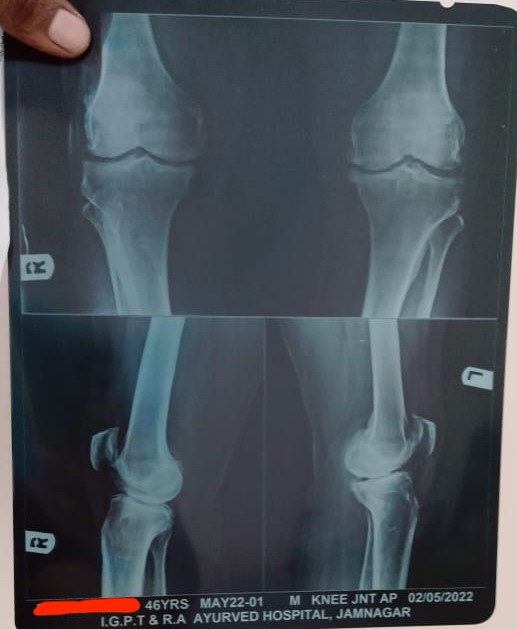
Modern Diagnostic parameter: The biomedical diagnosis was made based on clinical evaluation and presenting complaints. X-ray bilateral knee was also used to confirm the diagnosis. Blood tests were done to rule out gout and RA.
Image 2. X-Ray bilateral knee done prior to starting the ayurvedic treatments added below
Ayurvedic Assessment was done based on the clinical evaluation by the ayurvedic physician.
Differential Diagnosis- Gout, RA and infections were ruled out with blood tests.
Prognosis- The painkillers like NSAIDs are still the most commonly used drugs in the management of pain related to OA. However, the long-term use of these drugs are associated with significant side effects. In this case report, the patient complained of persisting symptoms even after taking NSAIDs.
THERAPEUTIC INTERVENTION
See the tab ‘Treatment details’
FOLLOW-UP AND OUTCOMES
Clinician-based assessment; There was a significant improvement in the stiffness, crepitus, and the range of movements of the bilateral knee
Patient assessed: The VAS recorded as 7 before treatment became 2 in the last recorded follow-up; after 1 and half months indicating the significant effect of the treatment.
Table 1. The VAS, stiffness and crepitus noted before and after treatment added below
Date
Pain - VAS scale
Stiffness
Crepitus
Before treatment
1/5/2022
7
1
2
After Agni karma
26/5/2022
6
2/6/2022
4
9/6/2022
3
16/6/2022
2
1
2
Follow up
24/6/2022
2
1
2
Table 2. The Range of movements (ROM) recorded before and after treatment with Goniometry was added below (units- degree)
Goniometric Reading.
Before treatment
After treatment
Flexion
Right
134
138
Left
125
125
Extension
Right
-03
-04
Left
-03
-03
Intervention adherence and tolerability – The patient adhered to the prescribed treatments and tolerated the treatments well.
Method of assessment- By monitoring the patient.
Adverse and unanticipated events; None reported.
DISCUSSION ;
Agnikarma with electrocautery is found to be very effective in osteoarthritis which is a novel approach.
PATIENT’S PERSPECTIVE
Not available.
LEARNING POINTS/TAKE-HOME MESSAGES
This case report demonstrates the successful ayurvedic standalone management of chronic osteoarthritis in a 46-year-old male patient, who did not get satisfactory relief in spite of taking NSAIDs and physiotherapy.
INFORMED CONSENT
Written consent was obtained from the patient to publish the case report.
CONFLICT OF INTEREST
None declared.
FUNDING
None
REFERENCE
Image 1. Timeline of events
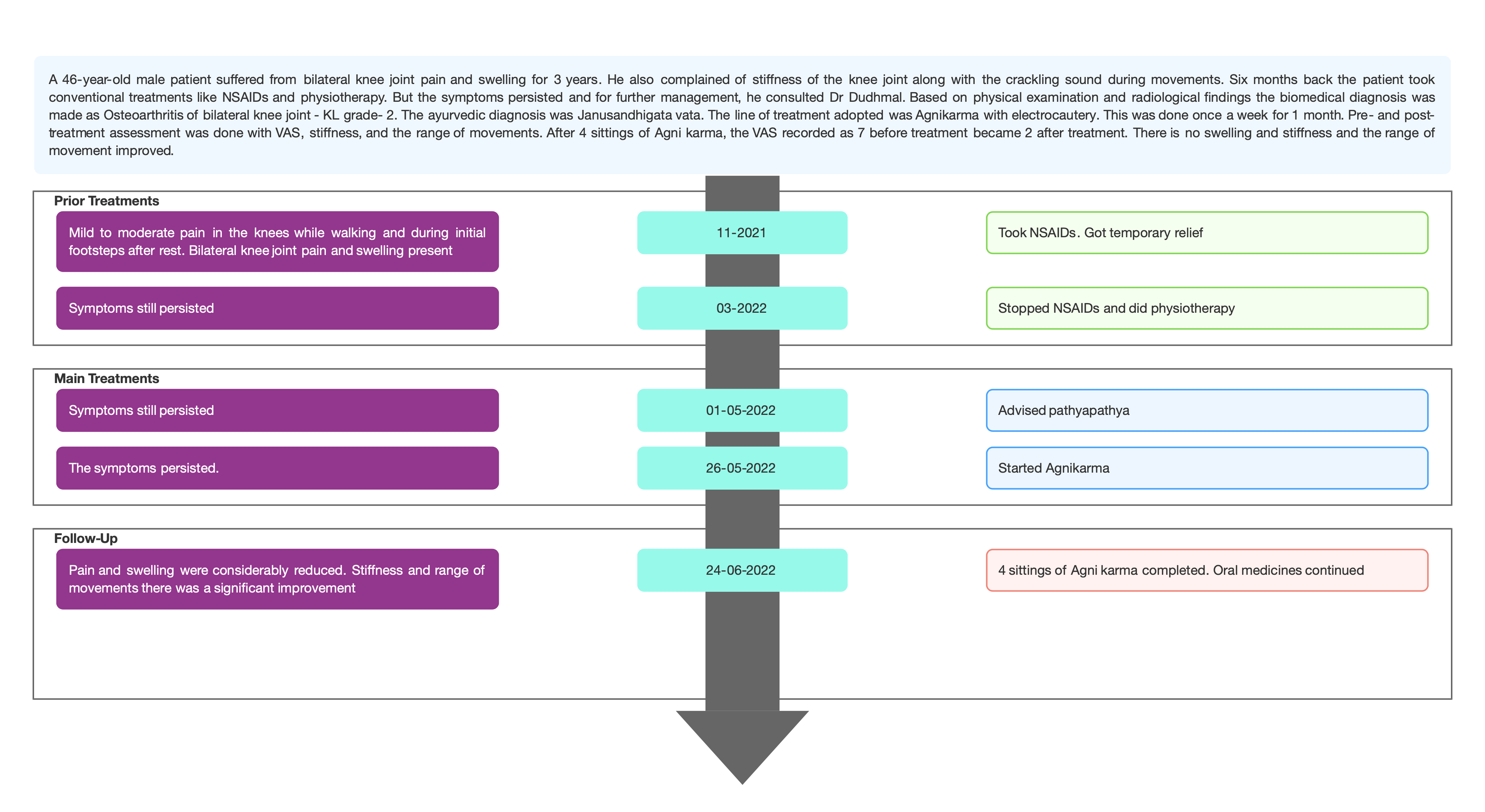
Image 2. X Ray bilateral knee before treatment
-
Immersive Learning
-
Modern Diagnosis
MODERN DIAGNOSIS: Osteoarthritis bilateral knee- KL grade- 2
ABOUT THE DISEASE:
Osteoarthritis (OA) is a common form of arthritis that often affects the knee. In the early stages, there may not be any symptoms. In the later stages, however, they experience pain, stiffness and even restricted movements. Grating sensation, bone spur, tenderness and swelling are also common symptoms of OA knee. If left untreated, the symptoms worsen over time.
OA of the knee affects the bones, cartilage, and synovium in the knee joint.
Diagnosis; Medical history and clinical evaluation are the main diagnostic criteria. But imaging like Xray, and MRI may be suggested to assess the intensity of the damage. Blood tests may be suggested to rule out conditions like gout or rheumatoid arthritis.
In this case report, the patient is a 46-year-old male who suffered from bilateral knee joint pain and swelling for 3 years. He also complained of stiffness of the knee joint along with the crackling sound during movements. The patient took NSAIDs for 4 months and got relief. But when the medicines were stopped, the condition relapsed. He tried physiotherapy also, but the symptoms persisted.
The diagnosis was done based on the clinical evaluation, lab investigations and imaging. It was grade 2 OA.
Image 1. X Ray of the bilateral knee taken prior to starting the treatment is added below
Table 1. Assessments done at baseline are added below
Before Treatment
VAS
STIFFNESS
CREPITUS
1.5.22
7
1
2
Treatment: In a mild presentation, acetaminophen or over-the-counter medicines may be sufficient to relieve the pain. In moderate to severe presentation, prescription painkillers, corticosteroid injections, physical therapy or even surgery may be required.
Prognosis:The effect of osteoarthritis of the knee can’t be reversed. But treatment and self-care can help relieve the symptoms and slow the condition’s progress. Medications may be always required to manage the pain. Exercise and physical therapy help in improving the quality of life.
Reference
Image 1. X-Ray bilateral knee was taken prior to starting the ayurvedic treatments
-
Ayurveda Diagnosis
AYURVEDA DIAGNOSIS: Janusandhigata vata
ABOUT THE DISEASE:
The classical term 'Janu Sandhigata Vata' in Ayurveda can be correlated with Osteoarthritis (OA) of the knee joint. It is one such chronic, degenerative, inflammatory disease which has a great impact on the quality of life of an individual. Present day activities are prone to cause many life deteriorating conditions. Food, lifestyle and environment are three important determinants related to the cause of disease. Sandhigatavata is one among the vatavyadhi. This is highlighted as a degenerative disease under the concepts of dhatu saithilya and dhatu kshaya. Acarya Charaka has used the term Sandhigata anila in Vatavyadhi Ciiktsadhyaya.
The word 'Gata' denotes movement or carrying something along with or to reach a particular site through any particular pathway. The knees are the most weight-bearing joint, and hence get affected very fast. The presentation of this pathogenesis is seen as Janu Sandhigata Vata.
Symptoms: The disease has no specific purvaroopa. But the clinical signs and symptoms include joint pain (Sandhi vedana), Sandhi Shotha (Swelling), Vatapurna druti sparsha, pain and tenderness during the movements of the joints (Prasarana akunchana pravrutisavedana), cracking sounds (Atopa) and degeneration of the joint (Hanti sandhi).
In this case report, a 46-year-old male patient suffered from bilateral knee joint pain and swelling for 3 years. He also complained of stiffness of the knee joint along with the crackling sound during movements. Six months back the patient took conventional treatments like NSAIDs and physiotherapy. But the symptoms persisted and for further management, he consulted Dr Dudhmal. Based on physical examination and radiological findings the biomedical diagnosis was made as Osteoarthritis of bilateral knee joint - KL grade- 2. The ayurvedic diagnosis was Janusandhigata vata. The line of treatment adopted was Agnikarma with electrocautery. Follow up internal medications were given to be continued until last follow up.
Samprapti: No direct references for samprapti of janusandhigatavata is found. The general Samprapti of Sandhivata – Vatavyadhi can be applied for Janusandhigata vata. When vitiated Vata dosha gets Sthana Samshraya in Janusandhi, it causes pain and inflammation in the knee joints and in later stages dislocation and loss of function of the joint of the knee.
Treatments: The treatment of Janusandhigata vata is aimed at reducing the Vata dosha and balancing the shleshaka kapha so that the joint spaces are adequately lubricated for the free movement of the knee joints. For this many procedures have been mentioned like snehana, swedana, mridu samshodhana, Basti and vatahara aushadha prayoga, Ahara and Vihara. In some texts, practices of upanaha, agnikarma, bandhana, mardana etc are also described. Different Ghritas, Guggulu, Shallaki preparations are used for Internal medicines.
Reference:
- Janu sandhigatavata: a comprehensive review of the ayurvedic literature. Biswajit and rabindranath. International journal of scientific research. Volume - 9 | issue - 11 | November - 2020 | print ISSN no. 2277 - 8179 | doi : 10.36106/ijsr
-
Treatment
Name of Medicine Dosage Form Dosage Mode of Administrtation From - To (Date) Medicine Reference Dasamoola Kvatha curnam + Rasnasaptak Kvatha curnam Curnam 5 gms On empty stomach at 6 am and 6 pm mixed with warm water 2022-06-24 - 2022-12-24 Dashamoola Kvatha curnam- AH. Ci. 14: Rasnasaptaka Kvatha curnam- AH. Utt, 35 Yogaraja Guggulu Pill 2-2-2 After food with warm water 2022-06-24 - 2022-12-24 Bhaishajya Ratnavali. Amavatarogadhikara 90 – 95 Ashwagandha Curna+ Guduchi Curna + Sunthi Curna Curna 2gm: 2gm: 1gm in order Twice a day, with warm water before food 2022-06-24 - 2022-12-24 Anubhuta yoga Agnikarma By electrocautery As required 4 sittings done on 26.5, 2.6, 9.6, and 16.6 2022 2022-05-26 - 2022-06-16 Susruta Samhita. Su.12 -
Outcome Measures
OUTCOME MEASURES
A 46-year-old male patient suffered from bilateral knee joint pain and swelling for 3 years. He also complained of stiffness of the knee joint along with the crackling sound during movements. Six months back the patient took conventional treatments like NSAIDs and physiotherapy. But the symptoms persisted and for further management, he consulted Dr Dudhmal. Based on physical examination and radiological findings, the biomedical diagnosis was made as Osteoarthritis of bilateral knee joint - KL grade- 2. The ayurvedic diagnosis was Janusandhigata vata. The line of treatment adopted was Agnikarma with electrocautery.
Assessment criteria: Both subjective and objective criteria were used for assessing the outcomes.
Subjective parameters: There was a significant improvement in the pain and swelling noted after 4 sittings of agnikarma.
Table 1. The VAS, stiffness and crepitus noted before and after treatment added below
Date
Pain - VAS scale
Stiffness
Crepitus
Before treatment
1/5/2022
7
1
2
After Agni karma
26/5/2022
6
2/6/2022
4
9/6/2022
3
16/6/2022
2
1
2
Follow up
24/6/2022
2
1
2
Objective parameters: The swelling is relieved. There was a significant improvement in the range of movements in the right and left knee.
Table 2. The Range of movements (ROM) measured with Goniometry recorded before and after treatment was added below
Goniometric Reading
Before treatment
After treatment
Flexion
Right
134
138
Left
125
125
Extension
Right
-03
-040
Left
-03
-030
Disease modifying effect: The patient is in remission.
-