Featured Case
-
Abstract
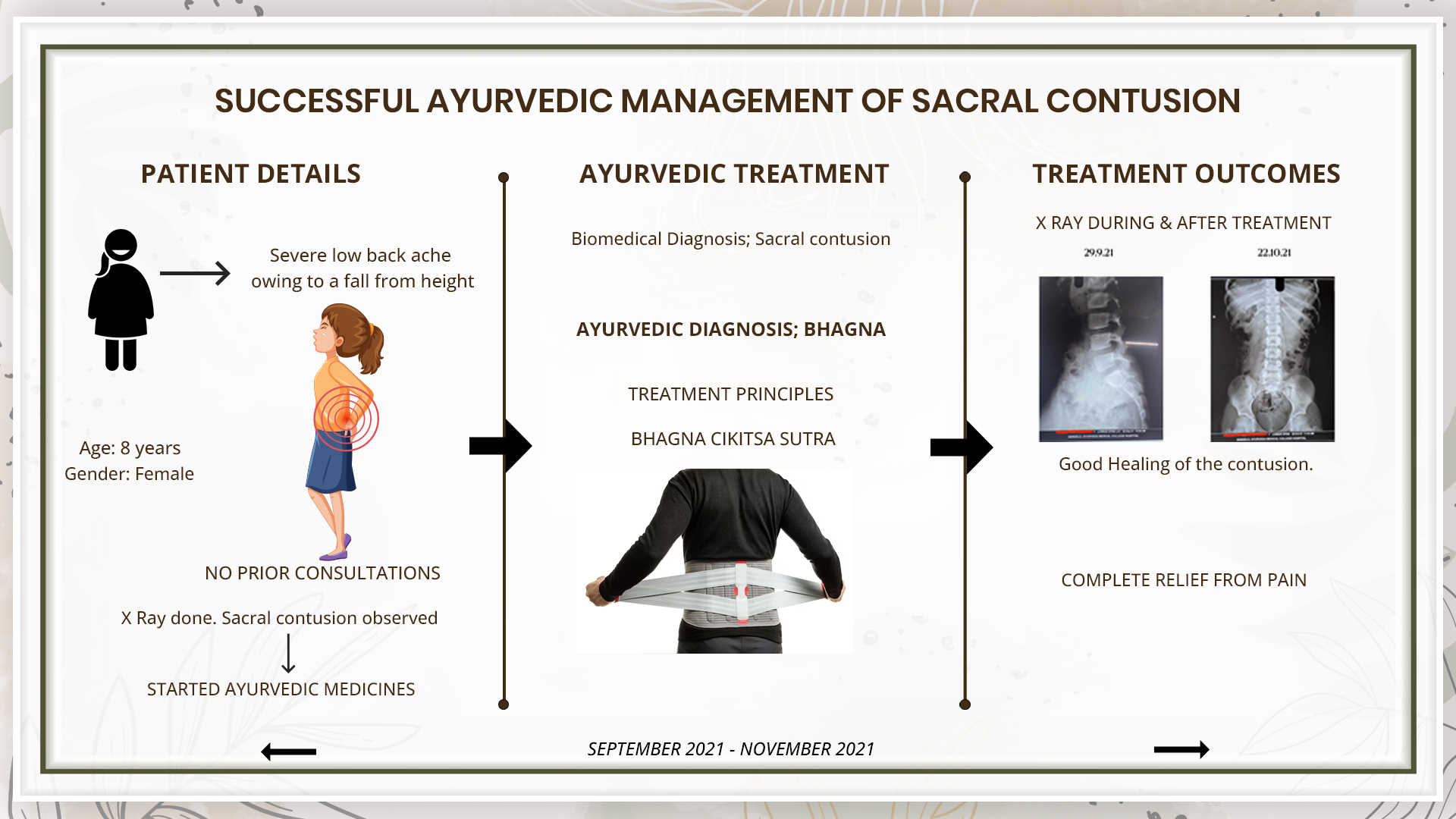
An 8-year-old girl presented with severe low back ache, for 30 minutes. She was playing with her sibling sitting on the bed when she fell from the bed in a sitting position hitting her back. She was immediately brought to the Salya Department for management. Dr Sreelekshmi gave the biomedical diagnosis as a Sacral contusion [1] based on the X-Ray and the clinical presentation. The ayurvedic diagnosis was Bhagna [2] and immediately Murivenna picu was applied to the low back. The line of treatment was Bhagna hara and Keraliya kriyakarma were adopted. She was kept under observation for 45 minutes. She was feeling slightly relieved. The patient was prescribed medicines and sent home advising complete bed rest. But on the 4th day (12.9.21), as the pain was almost relieved, the kid became very active again and started playing extensively with her sibling. That night, the pain was excruciating, and she developed a high temperature. She was again brought to the Casualty and a Paediatrician was consulted. The Paediatrician prescribed Paracetamol for the fever and asked to continue the Ayurvedic medicines. After 3 days (15.9.21), there were no episodes of fever, and the Ayurvedic treatments were restarted. A follow-up X Ray done showed good healing of the S1 vertebrae. The child got complete relief from pain and was active once again. Three follow-ups were done and the patient had no recurrence of pain.
-
Summaries
-
Listen
-
Watch
-
View
-
Read
An 8-year-old girl presented with severe low back ache, for 30 minutes. She was playing with her sibling sitting on the bed when she fell from the bed in a sitting position hitting her back. She was immediately brought to the Salya Department for management. Dr Sreelekshmi gave the biomedical diagnosis as a Sacral contusion [1] based on the X-Ray and the clinical presentation. The ayurvedic diagnosis was Bhagna [2] and immediately Murivenna picu was applied to the low back. The line of treatment was Bhagna hara and Keraliya kriyakarma were adopted. She was kept under observation for 45 minutes. She was feeling slightly relieved. The patient was prescribed medicines and sent home advising complete bed rest. But on the 4th day (12.9.21), as the pain was almost relieved, the kid became very active again and started playing extensively with her sibling. That night, the pain was excruciating, and she developed a high temperature. She was again brought to the Casualty and a Paediatrician was consulted. The Paediatrician prescribed Paracetamol for the fever and asked to continue the Ayurvedic medicines. After 3 days (15.9.21), there were no episodes of fever, and the Ayurvedic treatments were restarted. A follow-up X Ray done showed good healing of the S1 vertebrae. The child got complete relief from pain and was active once again. Three follow-ups were done and the patient had no recurrence of pain.
-
-
Timeline
-
Tabulated Summary
-
Narrative
TITLE OF CASE
Integrative emergency ayurvedic management of trauma-induced Sacral injury in an 8-year-old kid
Dr Sreelekshmi V S
ABSTRACT
An 8-year-old girl presented with severe low back ache, for 30 minutes. She was playing with her sibling sitting on the bed when she fell from the bed in a sitting position hitting her back. She was immediately brought to the Salya Department for management. Dr Sreelekshmi gave the biomedical diagnosis as a Sacral contusion [1] based on the X-Ray and the clinical presentation. The ayurvedic diagnosis was Bhagna [2] and immediately Murivenna picu was applied to the low back. The line of treatment was Bhagna hara and Keraliya kriyakarma were adopted. She was kept under observation for 45 minutes. She was feeling slightly relieved. So, she was prescribed medicines and sent home advised complete bed rest. But on the 4th day (12.9.21), as the pain was almost relieved, the kid became very active again and started playing extensively with her sibling. That night, the pain was excruciating, and she developed a high temperature. She was again brought to the Casualty and a Paediatrician was consulted. The Paediatrician prescribed Paracetamol for the fever and asked to continue the Ayurvedic medicines. After 3 days (15.9.21), there were no episodes of fever, and the Ayurvedic treatments were restarted. A follow-up X Ray done showed good healing of the S1 vertebrae. The child got complete relief from pain and was active once again. Three follow-ups were done and the patient had no recurrence of pain.
KEYWORDS
Emergency, ayurveda, sacral contusion, bhagna, katibhagna, integrative, sacral injury
INTRODUCTION
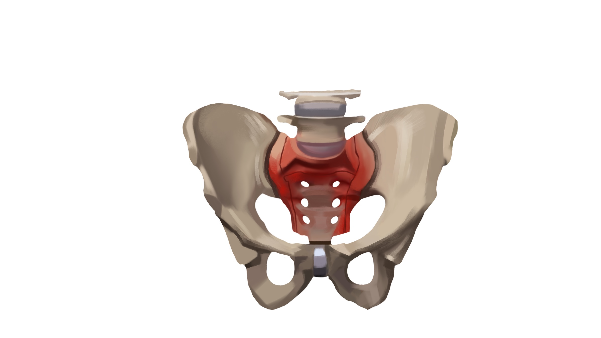
The sacrum is the triangular bone at the bottom of the spine, connecting the pelvis to the backbone. When there is a break in the sacrum, then it is called a Sacral Fracture. Normally the fracture or injury happens by intense physical activities, accidents or falls. This condition is quite rare because the sacrum is a dense bone and only with the involvement of heavy trauma, it can break. However, old people and patients with spina bifida, osteoporosis, rheumatoid arthritis or bone cancer are very vulnerable to getting a Sacral injury.
The normal symptoms in case of a sacral fracture are pain in the lower back, buttocks, and hips or the front of the thigh and groin. There can be bruising or swelling around the sacral area, associated bowel or bladder control conditions, weakness in the legs, or sexual problems.
Diagnostic criteria; Clinical evaluation and X-Ray are the primary diagnostic measures used. Advanced imaging may be used in order to understand the intensity of the damage caused.
PATIENT INFORMATION
An eight-year-old girl suffered from severe low back ache since 30 minutes. There was no prior consultation.
Medical History: The 8-year-old kid was playing with her sibling sitting on the bed when she fell down from the bed in a sitting position hitting her back. She was immediately brought to the Salya Department for management. Immediately Murivenna picu was applied and kept for observation for 45 minutes. She was feeling slightly relieved. So she was prescribed medicines and sent home advised for complete bed rest. But on the 4th day (12.9.21), as the pain was almost relieved, the kid became very active again and started playing extensively with her sibling. That night, the pain was excruciating and she developed a high temperature. She was again brought to the Casualty and a Paediatrician was consulted. The Paediatrician prescribed Paracetamol for the fever and asked to continue the Ayurvedic medicines. After 3 days (15.9.21), there were no episodes of fever, and the Ayurvedic treatments were continued.
CLINICAL FINDINGS/PHYSICAL EXAMINATION
Advised X Ray Pelvis. (12.9.21) On examination, Pain and swelling in the lateral aspect of the thigh and injury site.
Image 1. X-Ray at baseline; 8.9.21 (contour changes and shearing present)
TIMELINE
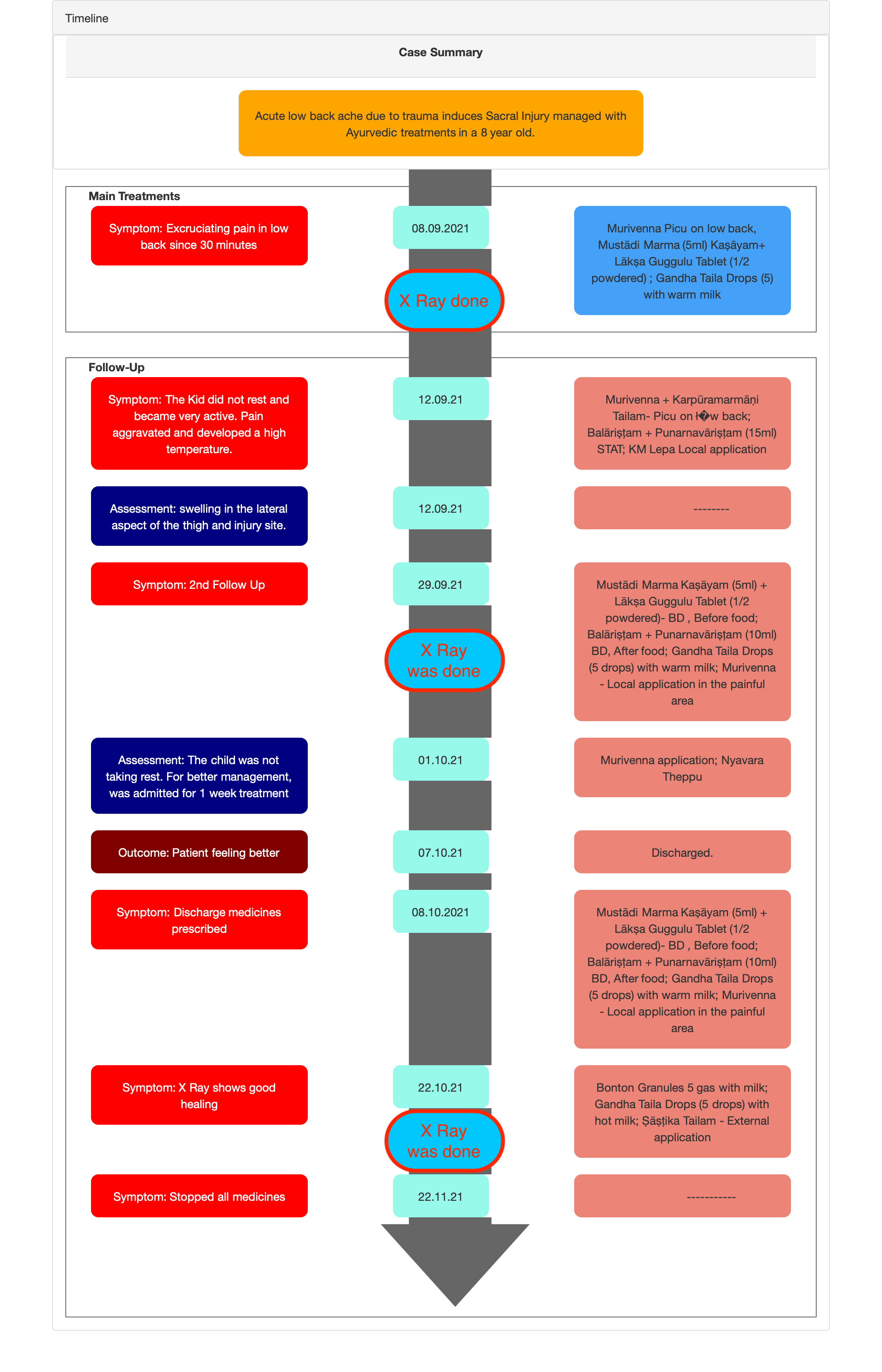
Image 2. TIMELINE of events added below
DIAGNOSTIC ASSESSMENT
Modern Diagnostic parameter: The biomedical diagnosis of Sacral contusion was made by Dr Sreelekshmi, based on the clinical presentation, examination and X-ray pelvis done at baseline.
Ayurvedic Assessment was done based on the investigation reports and the clinical evaluation by the ayurvedic physician.
Differential Diagnosis- The diagnosis was confirmed with an examination and X-ray.
Prognosis- Sacral spine injuries are quite rare, and normally exert a profound effect and also time to recover. If not managed immediately it can result in serious conditions like loss of function and sensation in the legs or hip. The bowel and bladder control and sexual function can also be affected. This 8-year-old kid who had a sacral tear due to her fall from a height was managed successfully with Ayurvedic intervention. There was complete relief from low back pain and X-Ray also shows good healing.
THERAPEUTIC INTERVENTION
See the tab ‘Treatment details’
FOLLOW-UP AND OUTCOMES
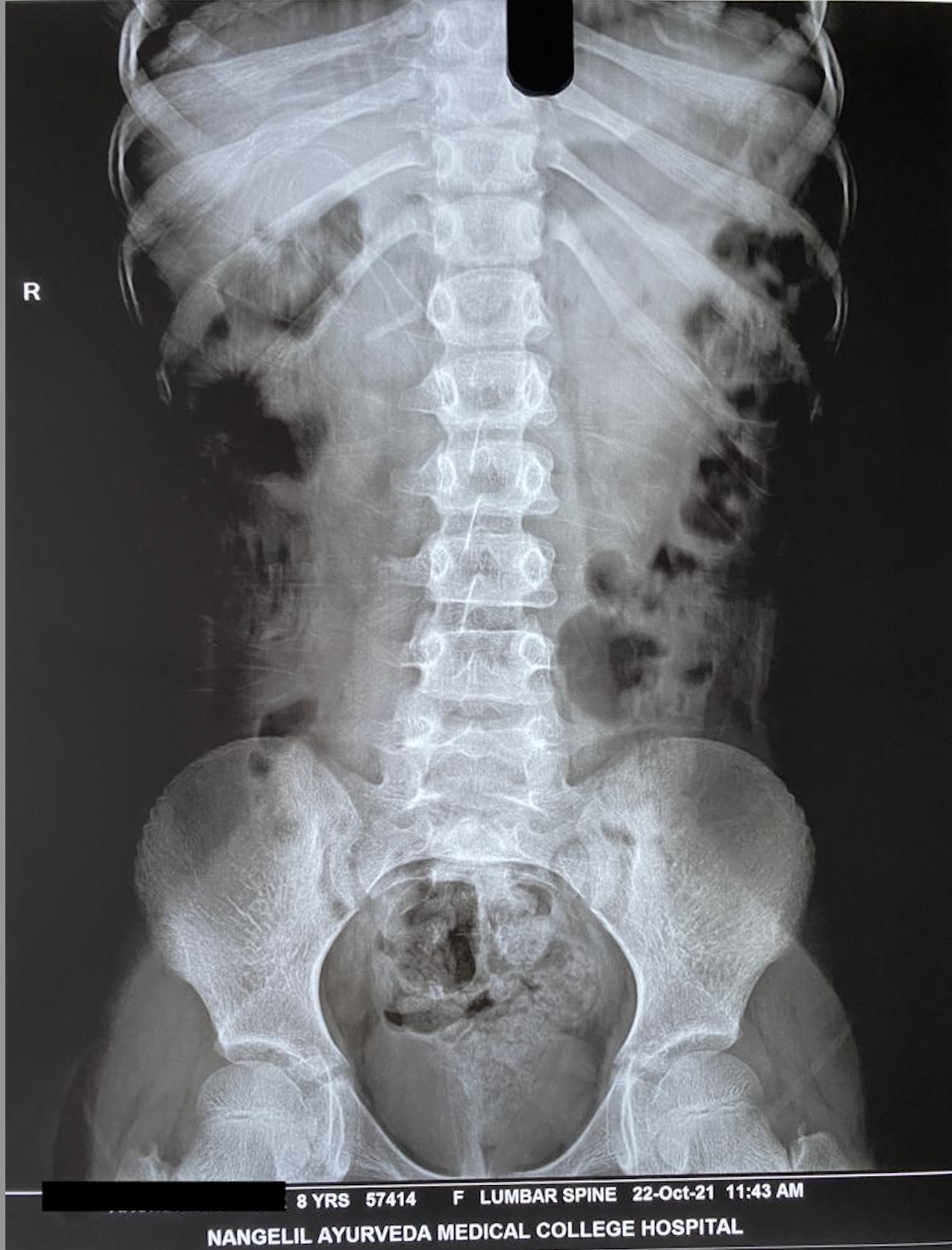
Clinician-based assessment; Pain is completely relieved. The patient is active now and all medicines have been stopped. X Ray (29.1.21) and 22.10.21 shows good healing of the S1 vertebra.
Patient assessed: Not relevant.
Image 3. X-Ray dated 29.1.21 added below.
Image 4. X Ray dated 22.10.21 added below
Intervention adherence and tolerability – The patient adhered to the prescribed treatments and tolerated the treatments well.
Method of assessment- By monitoring the patient.
Adverse and unanticipated events; The patient developed a temperature after 3 days of ayurvedic treatment. So, a paediatrician was consulted, and paracetamol was taken SOS to address the temperature. During this period, ayurvedic medicines were stopped, (12.9.2021- 15.9.2021) and restarted after the temperature was brought under control.
DISCUSSION ;
Here as the diagnosis is Bhagna, the treatment principles of Bhagna and pathya were followed along with Keraliya Kriyakrama to get relief from the condition.
PATIENT’S PERSPECTIVE
Not available.
LEARNING POINTS/TAKE-HOME MESSAGES
The case report illustrates the utility of ayurveda concepts and the efficacy of ayurvedic medicines in successfully treating an emergency sacral contusion in a child due to a fall from a height. An integrative approach was adopted, to help the rapid recovery of the patient.
INFORMED CONSENT
Written consent was obtained from the patient’s parents to publish the case report.
CONFLICT OF INTEREST
None declared.
FUNDING
None
REFERENCE
- Mehta S, Auerbach JD, Born CT, Chin KR. Sacral fractures. JAAOS-Journal of the American Academy of Orthopaedic Surgeons. 2006 Nov 1;14(12):656-65.
- Belorkar, G., K. V. Pawar, and P. M. Pasarkar. “Conceptual Study of Asthibhagna in Relation to Ayurvedic and Modern Views”. Himalayan Journal of Health Sciences, Vol. 5, no. 4, Dec. 2020, pp. 69-73
Image 1. X-Ray at baseline
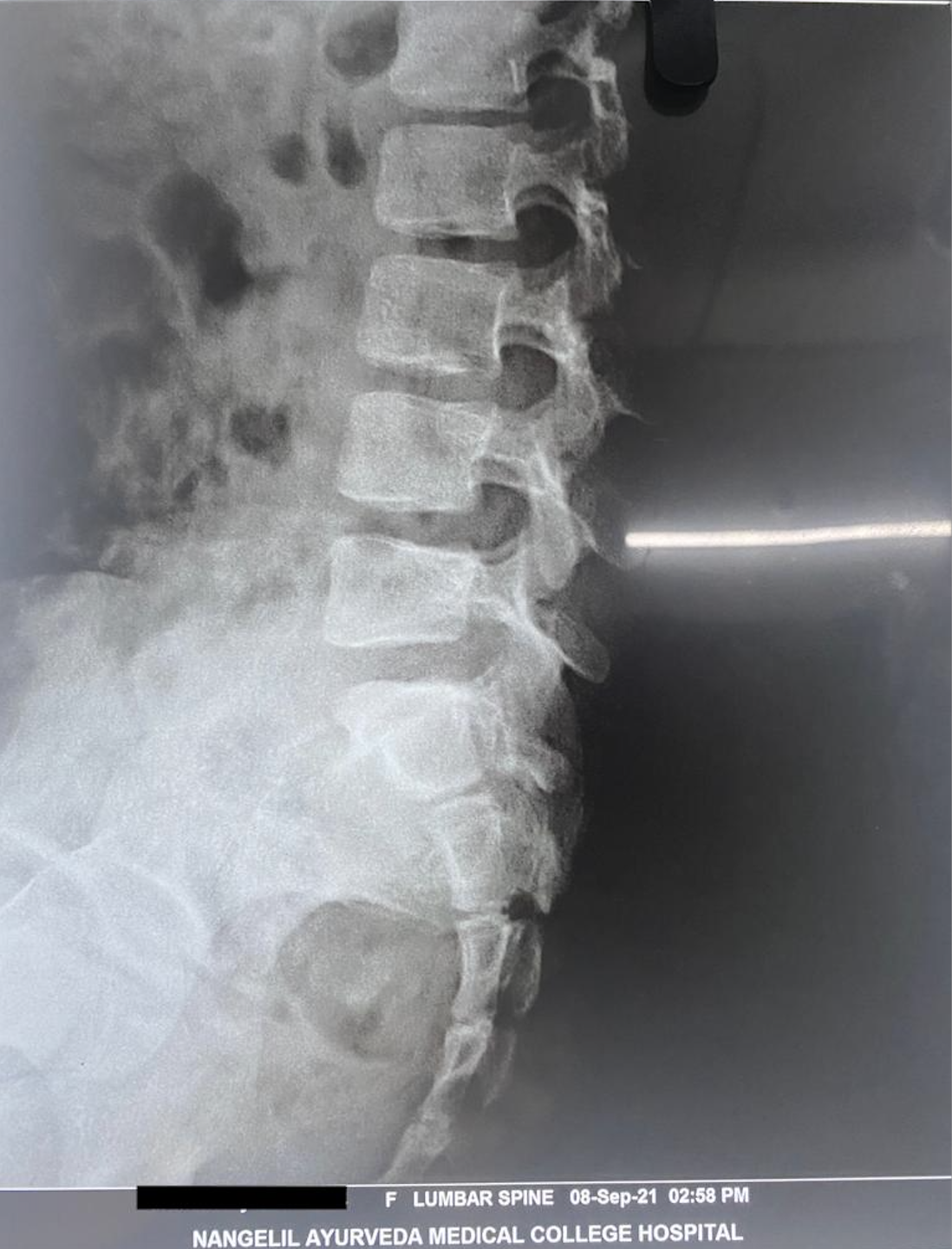
Image 2. Timeline of events
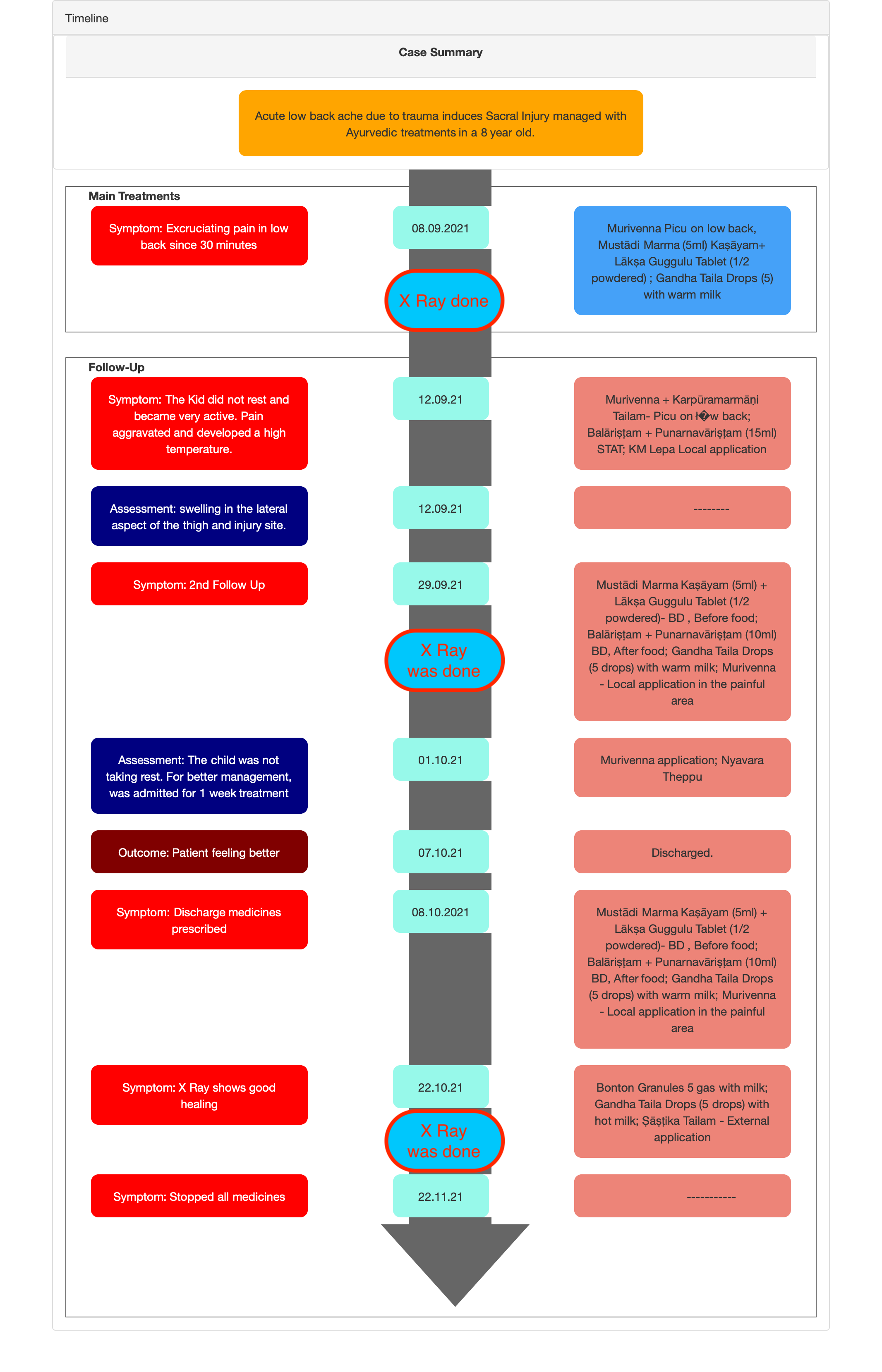
Image 3. X-Ray dated 29.9.21
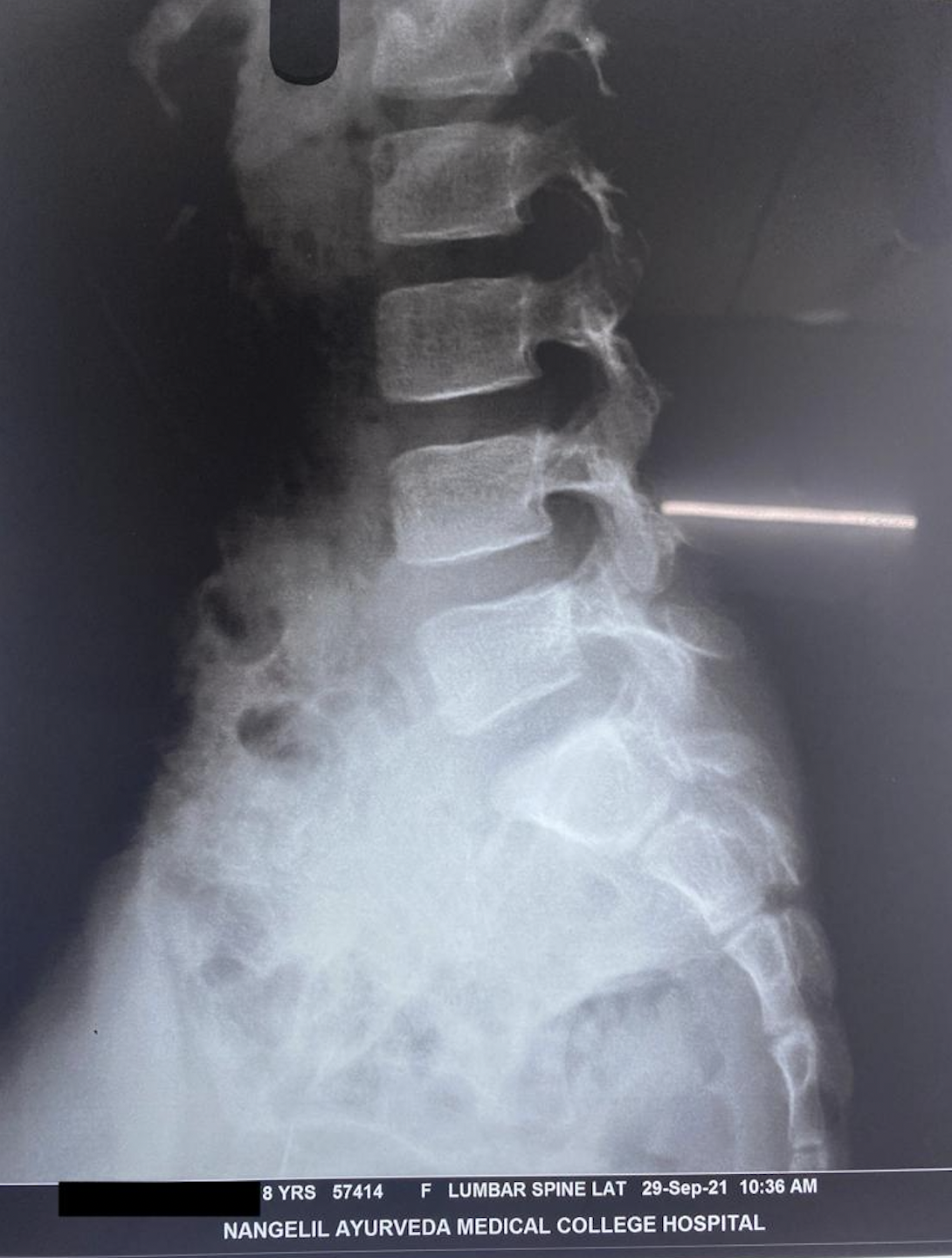
Image 4. X Ray dated 22.10.21
-
Immersive Learning
-
Modern Diagnosis
ABOUT THE DISEASE; SACRAL CONTUSION
The sacrum is the triangular bone at the bottom of the spine, connecting the pelvis to the backbone. When there is a break in the sacrum, then it is called a Sacral Fracture. Normally the fracture or injury happens by intense physical activities, accidents or falls. This condition is quite rare because the sacrum is a dense bone and only with the involvement of heavy trauma, it can break. However, old people and patients with spina bifida, osteoporosis, rheumatoid arthritis or bone cancer are very vulnerable to getting a Sacral injury
The normal symptoms in case of a sacral fracture are a pain in the lower back, buttocks, and hips or the front of the thigh and groin. There can be Bruising or swelling around the sacral area, associated bowel or bladder control conditions, weakness in the legs, or sexual problems.
The patient is an 8-year-old kid with a trauma-induced sacral injury, presented with severe low backache for 30 minutes. There was no prior consultation.
Diagnostic criteria; Clinical evaluation and X-Ray are the primary diagnostic measures used. Advanced imaging may be used in order to understand the intensity of the damage caused. In this patient, a physical examination was not done as the kid was in great pain. X-Ray was used to make the diagnosis.
On examination, Pain and swelling in the lateral aspect of the thigh and injury site.
X-Ray at baseline; 8.9.21 (contour changes and shearing present)
Prognosis & Treatment options; Sacral injury is a very rare condition when compared with the other spinal injuries that are commonly presented. The Prognosis and recovery from a sacral spine injury will vary from patient to patient. The type and severity of injury play a major role in the recovery period. Whether the intensity is mild or severe, if left unmanaged, this can lead to severe health problems including bladder and bowel incontinence, and sexual problems.
-
Ayurveda Diagnosis
ABOUT THE DISEASE; KATIBHAGNAM
Taking into consideration the clinical presentation, the sacral fracture can be correlated to Katibhagnam mentioned in the Ayurvedic texts. The word Bhagna has been derived from the root word ‘Bhanja’ after adding the suffix ‘kta’ which means to break or to grind down or to separate. This term is generally used to denote skeletal injuries. This can be sandhimukta (affecting the joints) or khandbhagna (affecting the bones). [ http:// dx.doi.org/10.7897/2277-4343.074125]. When the bhagna affects kati sandhi, it is called as Katibhagnam.
Types of Bhagna;
For treatment purposes, Bhagna (skeletal injuries) has further been divided into two types i.e. Avrana Bhagna(closed injuries) and Savrana Bhagna(open injuries). In both, the conditions i.e. Avrana Bhagna and Savrana Bhagna, principles of management remain the same except that in open injuries priority will be towards the management of Vrana (wound) to avoid the chances of infection. After the successful management of Vrana (wound), bone or joint injury should be managed using the ayurvedic treatment principles. In this patient, the condition was Avrana Bhagna.Prognosis; The sadhyasadhyata will depend upon the type of bhagna.
Treatment; Normally bhagna sthapana and bandhana are followed to help resolve the condition. If there is a vraṇa then the target of treatment should also include healing the vrana along with healing the fracture.
In this patient, as she is a kid and it was an acute injury, immobilisation and simultaneous internal ayurvedic medicines were planned to help heal the injury and also address the pain. This is a sadhya vyādhi as it is an avrana bhagna.
Treatment rationale of the physician;
Here as the diagnosis is Bhagna, the treatment principles of Bhagna and pathya were followed along with Keraliya Kriyakrama to get relief from the condition. -
Treatment
Name of Medicine Dosage Form Dosage Mode of Administrtation From - To (Date) Medicine Reference Murivenna Tailam Required quantity; Picu on low back External, twice daily for 20-45 minutes 2021-09-08 - 2021-09-11 Anubhuta yoga Mustadi Marma Kashayam+ Laksha Guggulu Tablet Kashayam, tablet 5ml Kashayam + 30ml warm milk + 1/2 Tablet (powdered) Oral, BD before food 2021-09-08 - 2021-09-11 Mustadi Marma kashayam (Ayurveda Proprietary Medicine), Laksha Guggulu (Bhaishajya Ratnavali. Amavatarogadhikaram 90-95) Gandha Taila Tailam 5 drops with warm milk Oral, BD after food 2021-09-08 - 2021-09-11 AH.Uth. 27/36-41 Murivenna + Karpura marmani Tailam Tailam Required quantity; Picu on low back External, twice daily for 20-45 minutes 2021-09-12 - 2021-09-28 Balaristam + Punarnavasavam Aristam 15ml Oral 2021-09-12 - 2021-09-28 Sahasrayogam. Asava arista prakarana KM Lepa Ointment Required quantity External, on painful area 2021-09-19 - 2021-09-28 Ayurvedic Proprietary Medicine -
Outcome Measures
OUTCOME MEASURES:
The patient was an 8-year-old kid, who had a fall and developed a sacral contusion. She was immediately brought to the Ayurvedic college casualty. X-Ray images at baseline showed contour change of S1 Sacral vertebra. Shearing of S1 present.
Assessments; Subjective and objective parameters were done to assess the outcome.
Subjective parameters- Pain is completely relieved. The patient is very active now and all ayurvedic medicines have been stopped. After OP and IP ayurvedic treatments the condition was completely resolved. In total, 3 follow-ups were done and then all ayurvedic medicines were stopped.
Objective parameters;
X-ray images were taken at the midpoint and at the endpoint to check if the healing was happening. The images depicted good healing.
-