Featured Case
-
Abstract
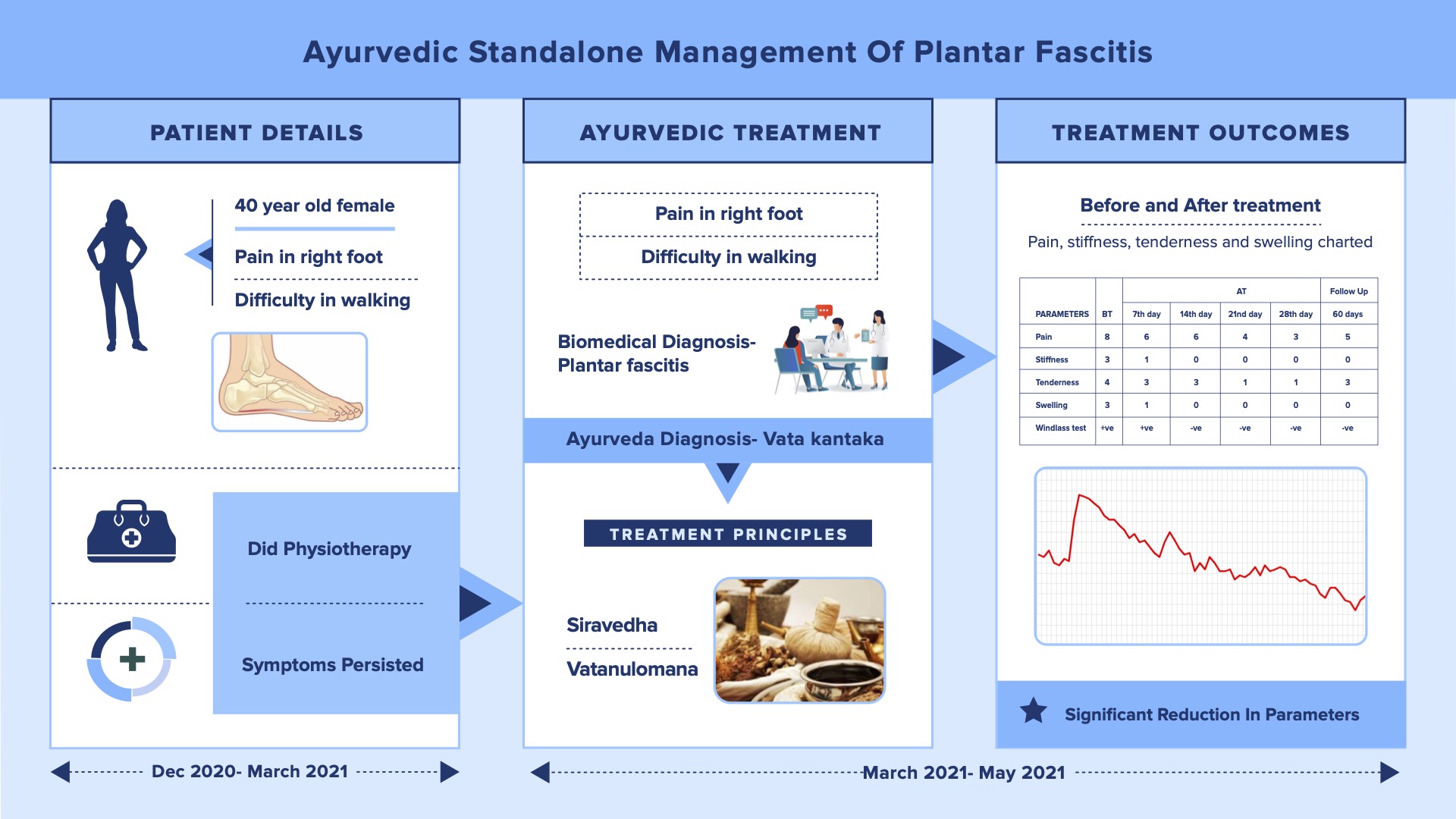
A 40-year-old female patient presented with pain in the right foot for 3 months associated with difficulty in walking. The pain aggravates during the initial footsteps after resting. She tried physiotherapy for 3 months, but the symptoms persisted. So, she approached Dr Dudhmal, who made the Biomedical diagnosis as Plantar fasciitis based on VAS and physical examination. The ayurvedic diagnosis was Vatakantaka. Siravedha and internal medications were the treatments planned. Siravedha is ardha cikitsa for pain management and Rasnasaptaka Kashayam balances vata and stimulates anulomana. The assessment criteria used pre and post-treatment were VAS, stiffness, tenderness, and swelling. VAS was 8 at baseline and was recorded as 5 after treatment. There was a significant reduction in stiffness, tenderness and swelling. The ayurvedic treatment was stopped after 1 month. At this point, there was only occasional pain. Follow-up was done after 2 months- there was only mild pain while walking. There was no pain during initial footsteps after rest. The patient is in remission.
-
Summaries
-
Listen
-
Watch
-
View
-
Read
A 40-year-old female patient presented with pain in the right foot for 3 months associated with difficulty in walking. The pain aggravates during the initial footsteps after resting. She tried physiotherapy for 3 months, but the symptoms persisted. So, she approached Dr Dudhmal, who made the Biomedical diagnosis as Plantar fasciitis based on VAS and physical examination. The ayurvedic diagnosis was Vatakantaka. Siravedha and internal medications were the treatments planned. Siravedha is ardha cikitsa for pain management and Rasnasaptaka Kashayam balances vata and stimulates anulomana. The assessment criteria used pre and post-treatment were VAS, stiffness, tenderness, and swelling. VAS was 8 at baseline and was recorded as 5 after treatment. There was a significant reduction in stiffness, tenderness and swelling. The ayurvedic treatment was stopped after 1 month. At this point, there was only occasional pain. Follow-up was done after 2 months- there was only mild pain while walking. There was no pain during initial footsteps after rest. The patient is in remission.
-
-
Timeline
-
Tabulated Summary
-
Narrative
TITLE OF CASE
Standalone successful ayurvedic management of Plantar fasciitis - A case report.
Dr Dudhmal
ABSTRACT
A 40-year-old female patient presented with pain in the right foot for 3 months associated with difficulty in walking. The pain aggravates during the initial footsteps after resting. She tried physiotherapy for 3 months, but the symptoms persisted. So, she approached Dr Dudhmal, who made the Biomedical diagnosis as Plantar fasciitis based on VAS and physical examination. The ayurvedic diagnosis was Vatakantaka. Siravedha and internal medications were the treatments planned. Siravedha is ardha cikitsa for pain management and Rasnasaptaka Kashayam balances vata and stimulates anulomana. The assessment criteria used pre and post-treatment were VAS, stiffness, tenderness, and swelling. VAS was 8 at baseline and was recorded as 5 after treatment. There was a significant reduction in stiffness, tenderness and swelling. The ayurvedic treatment was stopped after 1 month. At this point, there was only occasional pain. Follow-up was done after 2 months- there was only mild pain while walking. There was no pain during initial footsteps after rest. The patient is in remission.
KEYWORDS
Plantar fasciitis, Vatakantaka , Standalone, Case report, Siravedha
INTRODUCTION
Plantar fasciitis is a common and often disabling condition. Because the natural history of plantar fasciitis is not understood, it is difficult to distinguish between those patients who recover spontaneously and those who respond to formal treatment. Surgical release of the plantar fascia is effective in the small proportion of patients who do not respond to conservative measures. New techniques such as endoscopic plantar release and extracorporeal shockwave therapy may have a role but the limited availability of equipment and skills means that most patients will continue to be treated by more traditional techniques. [1]
PATIENT INFORMATION
The patient is a 40-year-old female patient presenting with pain in the right foot for 3 months, and difficulty in walking. The pain aggravates during the initial footsteps after rest.
Medical History: The patient was suffering from pain in the right foot for 3 months associated with difficulty in walking. Pain aggravates during the initial footsteps after rest.
The patient underwent physiotherapy for 3 months. The symptoms persisted and hence approached Dr Dudhmal for Ayurvedic treatment.PHYSICAL EXAMINATION/CLINICAL FINDINGS
Very strong long-standing pain+
Stiffness +++
Tenderness ++++
Swelling +++
Windlass test: Positive
TIMELINE
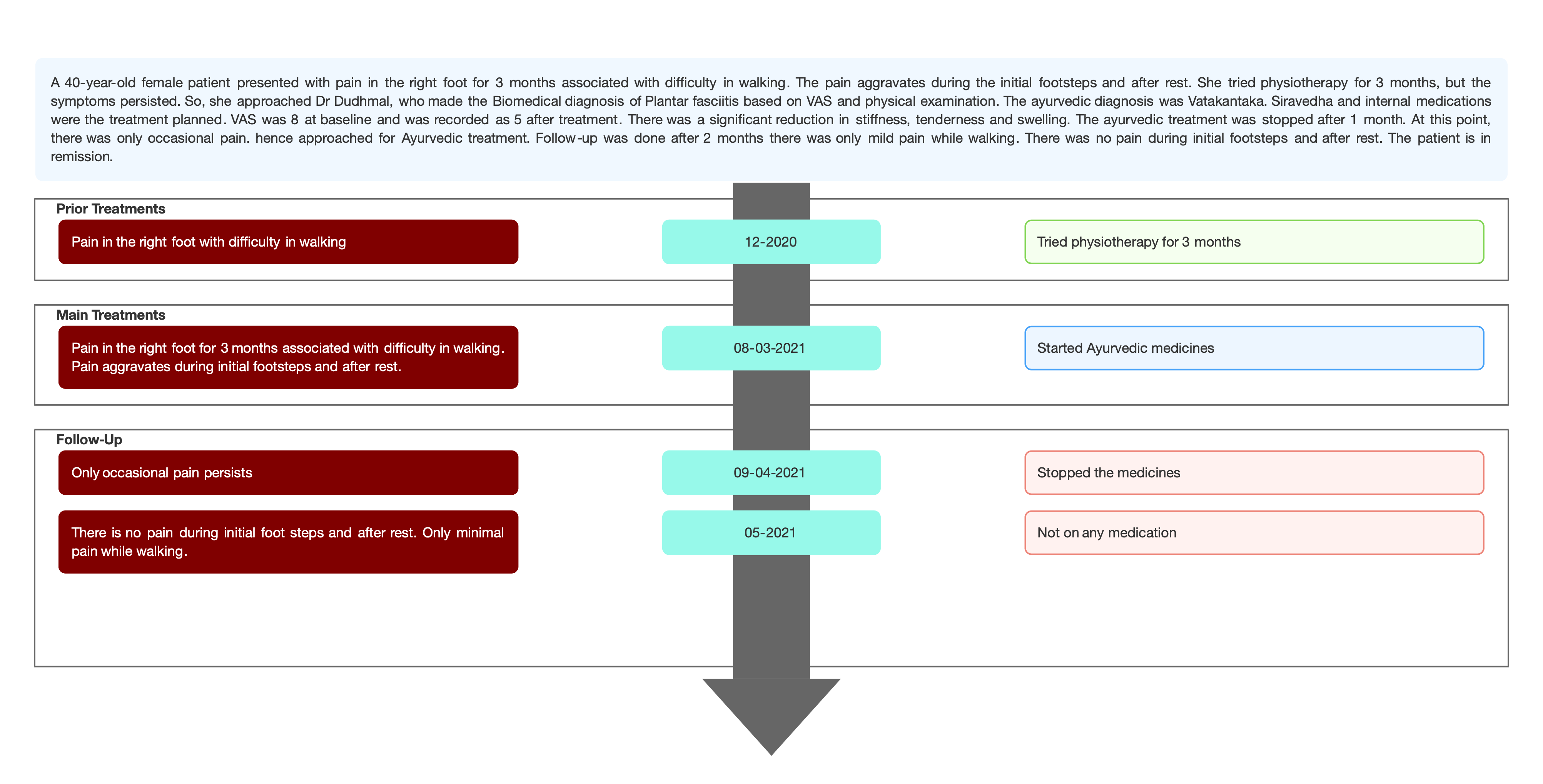
Image 1. Timeline of events added below
DIAGNOSTIC ASSESSMENT
Modern Diagnostic parameter: Based on the clinical presentation and examination, the biomedical diagnosis was made as Plantar fasciitis and ayurvedic diagnosis Vatakantaka by Dr Dudhmal.
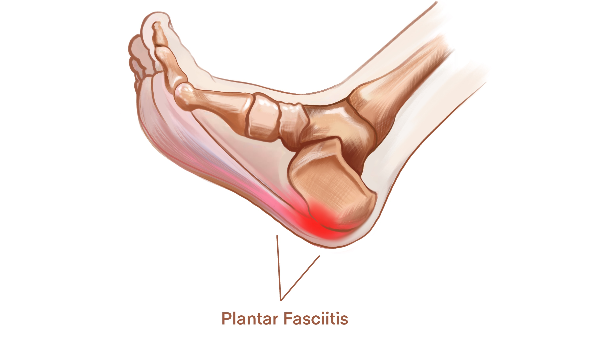
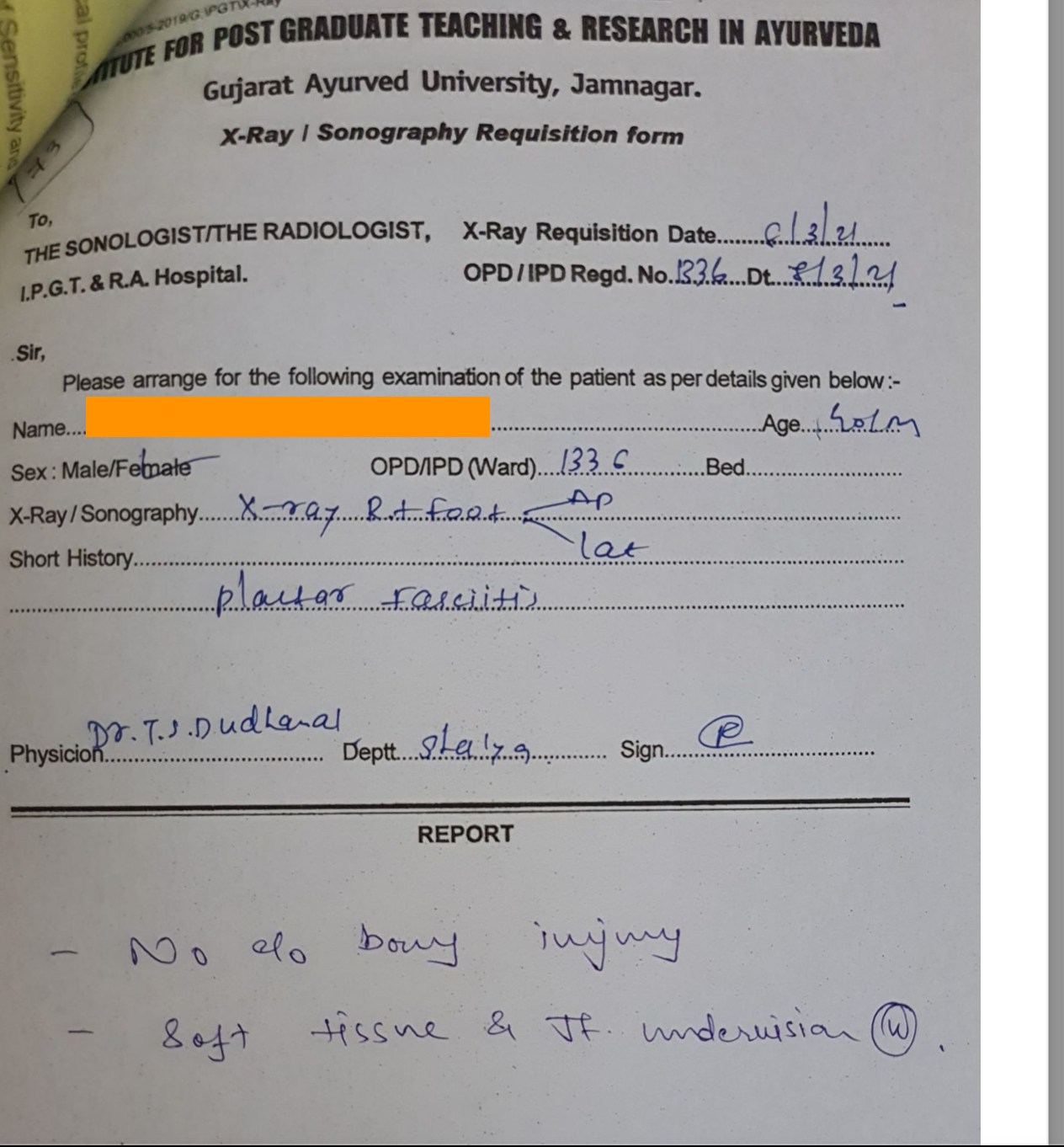
Image 2. X-Ray of the right foot dated 6.3.2021 added below
Ayurvedic Assessment was done based on the clinical evaluation by the ayurvedic physician.
Differential Diagnosis- This does not apply as the patient came in with a definite diagnosis.
Prognosis- 5% of cases resolves spontaneously within 12 months. Even with treatment, the resolution of symptoms can take weeks or months. It is usually a self-limiting condition, and with conservative therapy, symptoms are usually resolved within 12 months of initial presentation and often sooner. In this patient, after 1 month the condition improved with reduced pain. In further follow-ups, the patient could walk without pain in the initial steps after rest.
THERAPEUTIC INTERVENTION
See the tab ‘Treatment details’
FOLLOW-UP AND OUTCOMES
After 1 month of treatment - Stiffness- Absent
Tenderness +
Swelling- Absent
Windlass test: Positive
- VAS- Scoring is done before and after treatment. Pain reduced while walking
No pain during initial footsteps after rest.
Table 1. Assessments recorded before, during and after treatment
Parameters
Before treatment
After treatment
Follow up
7th day
14th day
21st day
28th day
60 days
Pain
08
06
06
04
03
05
Stiffness
03
01
00
00
00
00
Tenderness
04
03
03
01
01
03
Swelling
03
01
00
00
00
00
Windlass test
+ve
+ve
-ve
-ve
-ve
-ve
Intervention adherence and tolerability – The patient adhered to the prescribed treatments and tolerated the treatments well.
Method of assessment- By monitoring the patient.
Adverse and unanticipated events: None reported.
DISCUSSION ;
In Ayurveda, Siravedha is described as Ardha cikitsa or one of the supreme pain management modalities in Shalya Tantra.
Rasna Saptaka Kwatha has a significant role in balancing vitiated vata along with it leads to VatanulomanaPATIENT’S PERSPECTIVE
Not available.
LEARNING POINTS/TAKE-HOME MESSAGES
This case report demonstrates the successful standalone ayurvedic management of Plantar fasciitis. The patient had tried physiotherapy for 3 months and did not get any relief. But with ayurvedic treatment, within 1 month her symptoms started reducing. The patient is in remission.
INFORMED CONSENT
Written consent was obtained from the patient to publish the case report.
CONFLICT OF INTEREST
None declared.
FUNDING
None
REFERENCE
- Cutts S, Obi N, Pasapula C, Chan W. Plantar fasciitis. Ann R Coll Surg Engl. 2012 Nov;94(8):539-42.
- Sushruta, Sushruta Samhita with the Nibandhasangraha commentary of Sri Dalhanacharya and Nyayachandrika paanjika of Sri Gayadasacharya on Nidana Sthana edited by V aidya Y adavji Trikamji Achary; Choukhamba Surabharati Prakashan; Varanasi; Reprint – 20o8; Nidana sthana, 1/ 79
Image 1. Timeline of events
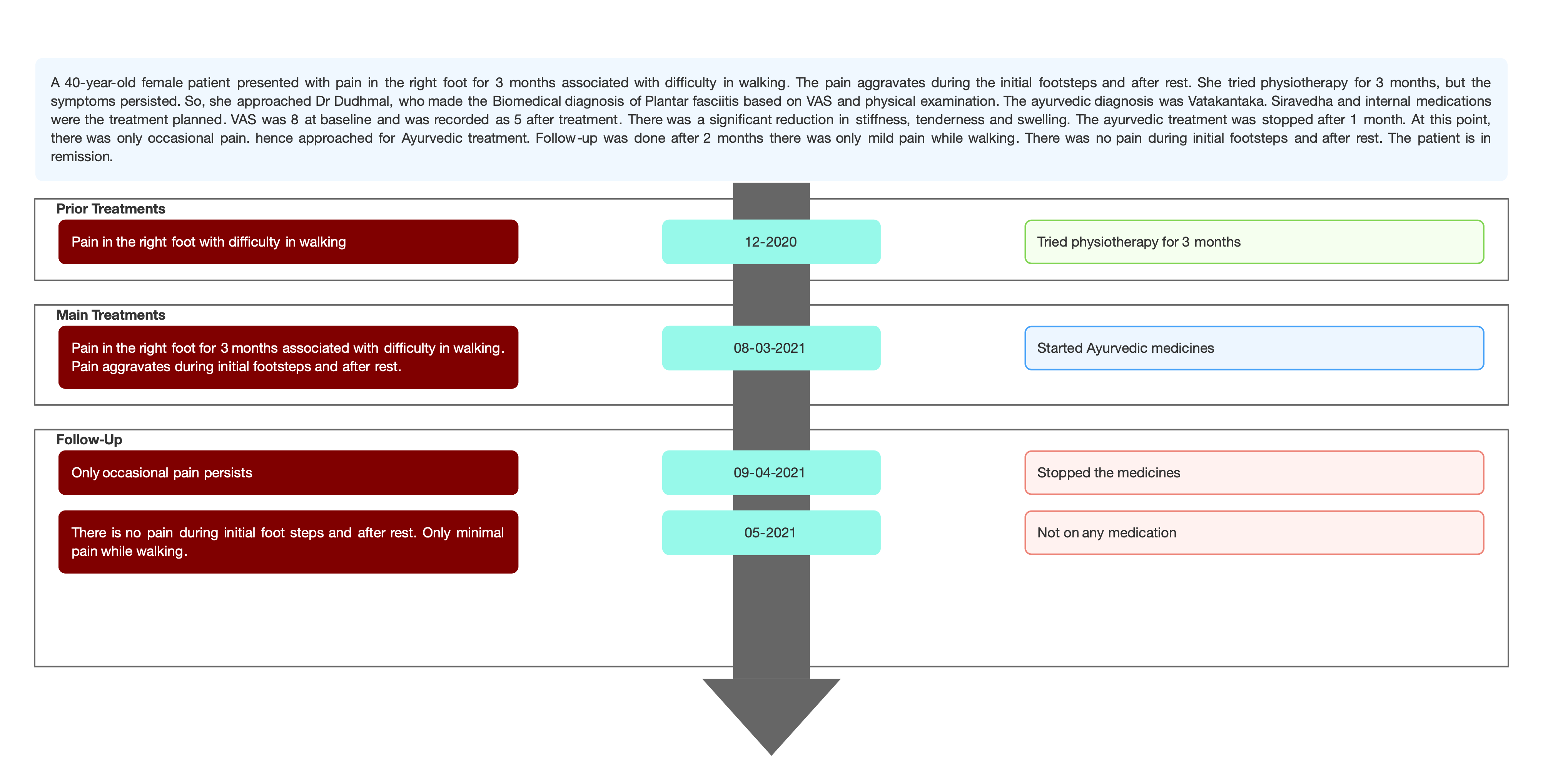
Image 2. X-Ray of the right foot
- VAS- Scoring is done before and after treatment. Pain reduced while walking
-
Immersive Learning
-
Modern Diagnosis
MODERN DIAGNOSIS: Plantar fasciitis
ABOUT THE DISEASE:
Plantar fasciitis is a common and often disabling condition. Because the natural history of plantar fasciitis is not understood, it is difficult to distinguish between those patients who recover spontaneously and those who respond to formal treatment. Surgical release of the plantar fascia is effective in the small proportion of patients who do not respond to conservative measures. New techniques such as endoscopic plantar release and extracorporeal shockwave therapy may have a role but the limited availability of equipment and skills means that most patients will continue to be treated by more traditional techniques. [1]
Symptoms: Plantar fasciitis, a chronic degenerative process that causes medial plantar heel pain. The heel pain is most intense during the first few steps of the day or after prolonged standing. [2]
Diagnosis and management: Physical examination findings are often limited to tenderness to palpation of the proximal plantar fascial insertion at the anteromedial calcaneus. Ultrasonography is a reasonable and inexpensive diagnostic tool for patients with pain that persists beyond three months despite treatment. Treatment should start with stretching of the plantar fascia, ice massage, and nonsteroidal anti-inflammatory drugs. Many standard treatments such as night splints and orthoses have not shown benefit over placebo. Recalcitrant plantar fasciitis can be treated with injections, extracorporeal shock wave therapy, or surgical procedures, although evidence is lacking. Endoscopic fasciotomy may be required in patients who continue to have pain that limits activity and function despite exhausting nonoperative treatment options.[3] In this case report, the patient was diagnosed on the basis of clinical presentation and examination. Routine blood tests were done to rule out other possible pathologies. X Ray right foot was done at baseline.
Image 1. X Ray right foot dated 6.3.21 added below.
Prognosis- Most reported treatment outcomes rely on anecdotal experience or combinations of multiple modalities. Nevertheless, nonsurgical management of plantar fasciitis is successful in approximately 90% of patients. Surgical treatment is considered in only a small subset of patients with persistent, severe symptoms refractory to nonsurgical intervention for at least 6 to 12 months. In this patient, the symptoms persisted for 3 months and she was not getting relief, inspite of doing physiotherapy.
Reference
- Cutts S, Obi N, Pasapula C, Chan W. Plantar fasciitis. Ann R Coll Surg Engl. 2012 Nov;94(8):539-42.
- Thompson JV, Saini SS, Reb CW, Daniel JN. Diagnosis and management of plantar fasciitis. J Am Osteopath Assoc. 2014 Dec;114(12):900-6.
- Trojian T, Tucker AK. Plantar Fasciitis. Am Fam Physician. 2019 Jun 15;99(12):744-750. PMID: 31194492.
Image 1. X Ray right foot
-
Ayurveda Diagnosis
AYURVEDA DIAGNOSIS: Vatakantaka
ABOUT THE DISEASE:
Vatakantaka [1] is also called as Padakantaka. There is also an opinion as to this disease being called Khuddaka vata or Parshni Ashrita vata. The medical term correlated with this condition is calcaneal spur or heel spur characterized by pain on standing or walking. The 40-year-old female patient was suffering from severe pain in the right foot for 3 months.
Causes: Structural deformities, excess stress on heels, walking on uneven grounds or irregularities, prolonged standing, hard footwear, and pressure over the heel are the general causes. Due to the nidana, the vata gets aggravated and localizes in the ankle, especially in the dependent parts like the heel.
Line of treatment: If the pain is very severe, raktamokshana is carried out. Snehana and svedana help in pacifying pain. Agnikarma is also a treatment choice by some ayurvedic physicians. In this case report, the patient was given oral medications and siravedha was done.
Treatment rationale: In Ayurveda, Siravedha is described as Ardha cikitsa or one of the supreme pain management modalities in Shalya Tantra. Rasna Saptaka Kwatha has a significant role in balancing vitiated Vata and initiate the anulomana.
Reference
- Sushruta, Sushruta Samhita with the Nibandhasangraha commentary of Sri Dalhanacharya and Nyayachandrika paanjika of Sri Gayadasacharya on Nidana Sthana edited by V aidya Y adavji Trikamji Achary; Choukhamba Surabharati Prakashan; Varanasi; Reprint – 20o8; Nidana sthana, 1/ 79
-
Treatment
Name of Medicine Dosage Form Dosage Mode of Administrtation From - To (Date) Medicine Reference Rasnasaptakam kwatham Kashayam 40ml Oral, twice daily before meal 2021-03-08 - 2021-04-09 Sahasrayogam. Kashaya prakaranam Siravedha Specific details not provided External 2021-03-10 - 2021-03-10 Siravedha Specific details not provided External 2021-03-24 - 2021-03-24 -
Outcome Measures
OUTCOME MEASURES
The 40-year-old female patient was suffering from pain in the right foot for 3 months associated with difficulty in walking. Pain aggravates during the initial footsteps after rest.
The patient underwent physiotherapy for 3 months. The symptoms persisted and hence approached Dr Dudhmal for Ayurvedic treatment.Assessment of the treatment was done using VAS, stiffness, tenderness and swelling before, during and after treatment.
Table 1. The assessments recorded before, during and after treatment are listed below
Parameters
Before treatment
After treatment
Follow up
7th day
14th day
21st day
28th day
60 days
Pain
08
06
06
04
03
05
Stiffness
03
01
00
00
00
00
Tenderness
04
03
03
01
01
03
Swelling
03
01
00
00
00
00
Windlass test
+ve
+ve
-ve
-ve
-ve
-ve
After 1 month, the symptoms improved with reduced pain. In further follow-ups, the patient could walk without pain in the initial steps after rest. Stiffness- Absent. Tenderness +.
Swelling- Absent
Windlass test -Negative
VAS was recorded 8 before treatment, which reduced to 5 after 60 days, indicating a significant improvement.
Disease-modifying effect: The patient is in remission.
-