Featured Case
-
Abstract
A 21 year of female complained of severe itching all over the face, eyelids, ears and nose associated with severe burning sensation and hypopigmentation for 2 days. At the onset of the complaints, she consulted an allopathic doctor. The cause was identified as the anti-acne cream she had been using for 4 months. The biomedical diagnosis was chemical burn. But in spite of taking antihistamines prescribed by her doctor for 2 days, she did not get any relief. So, she approached Dr Jyoti Joshi and was diagnosed as Garavisha. The line of treatment followed was rakta shodhana and pittahara. With Jalaukavacaranam and the application of lepa, the patient got relief from the chief complaints within 24 hours. Her skin tone became completely normal after 2 months of Ayurvedic treatment
-
Summaries
-
Listen
-
Watch
-
View
-
Read
A 21 year of female complained of severe itching all over the face, eyelids, ears and nose associated with severe burning sensation and hypopigmentation for 2 days. At the onset of the complaints, she consulted an allopathic doctor and took antihistamines. But in spite of taking antihistamines for 2 days, she did not get any relief. So, she approached Dr Jyoti Joshi and was diagnosed as Garavisha.[2] The line of treatment followed was rakta shodhanam and pittaharam. With Jalaukavacaranam and application of lepa, the patient got relief from the chief complaints within 24 hours. Her skin tone became completely normal after 2 months of ayurvedic treatment
-
-
Timeline
-
Tabulated Summary
-
Narrative
TITLE OF CASESuccessful standalone ayurvedic management of chemical burn- A case report
Dr Jyoti Joshi
ABSTRACT
A 21 year of female complained of severe itching all over the face, eyelids, ears and nose associated with severe burning sensation and hypopigmentation for 2 days. At the onset of the complaints, she consulted an allopathic doctor. The cause was identified as the anti-acne cream she had been using for 4 months. But in spite of taking antihistamines prescribed by her doctor for 2 days, she did not get any relief. So, she approached Dr Jyoti Joshi and was diagnosed as Garavisha.[2] The line of treatment followed was rakta shodhana and pittahara. With Jalaukavacaranam and the application of lepa, the patient got relief from the chief complaints within 24 hours. Her skin tone became completely normal after 2 months of Ayurvedic treatment
KEYWORDS
Chemical burn, Garavisa, Standalone, Case report, Jalauka
INTRODUCTION
Chemical burn is the term used to indicate a condition where an injury is caused by contact with a chemical agent. This can denature the skin by causing cell damage. The chemicals that usually cause chemical burns are acids, alkalis or other organic substances. Chemical burns can cause deep injury and subsequently significant scarring to the skin. The mechanism and pathophysiology of chemical burns are distinct from thermal burns and recommended first aid approaches are consequently different.
Symptoms: The symptoms vary depending upon the chemical agent involved and also the area affected. In this case report, the patient was on anti-acne treatment past 4 months. The topical application on the face contained salicylic acid, which caused the chemical burn.
Prognosis & Treatment: They have the potential to be life-threatening with serious aesthetic and functional consequences, accounting for 30% of all deaths from burns. Chemical burns are caused by corrosive agents (acids and alkalis) leading to extensive tissue damage. Understanding the pathophysiology of a chemical burn injury and identifying the nature of the offending agent is important for effective management. Prompt assessment and management of chemical injuries are vital to reduce the deleterious effect of the compound involved. [1]
PATIENT INFORMATION
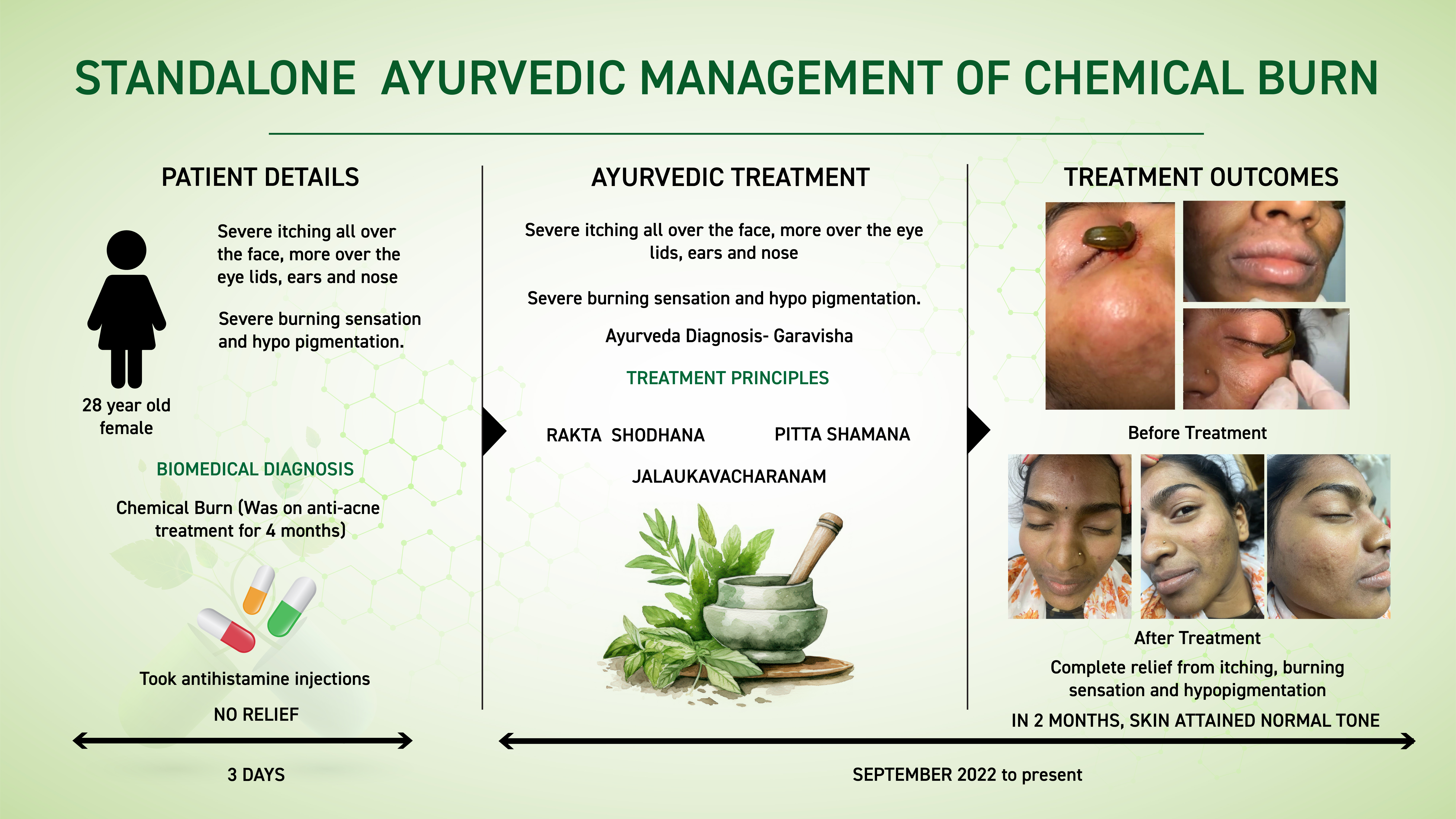
The 21 year old female patient was suffering from severe itching all over the face, more over the eyelids, ears and nose associated with severe burning sensation and hypopigmentation.
Medical History: She was on anti-acne treatments for 4 months. After the topical application of the ointment (containing salicylic acid), she developed the symptom. In spite of taking antihistamines for 2 days, there was no relief. After commencing ayurveda treatment she got relief from itching and burning sensation in 24 hours. With 2 months of treatment, she was able to attain a normal skin tone.
No history of surgery or comorbidities. Family/genetic and psychosocial history- nothing significant.
CLINICAL FINDINGS
A skin examination was done. Hypopigmentation on the face, the sensation was present - no numbness.
TIMELINE
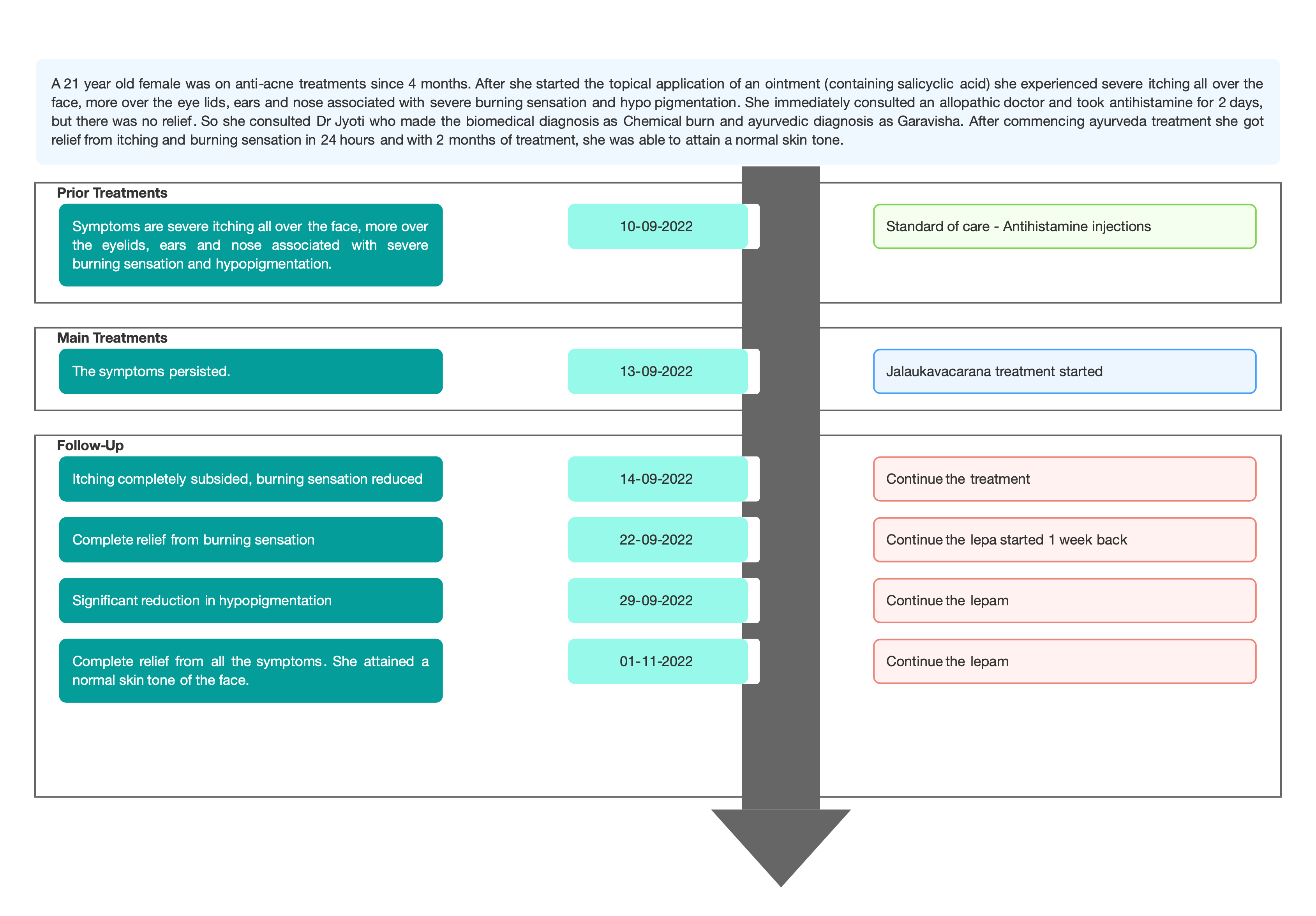
Image 1. Timeline of events is attached below
DIAGNOSTIC ASSESSMENT
Modern Diagnostic parameter: The allopathic doctor gave the biomedical diagnosis as a Chemical burn based on history taking and clinical examination.
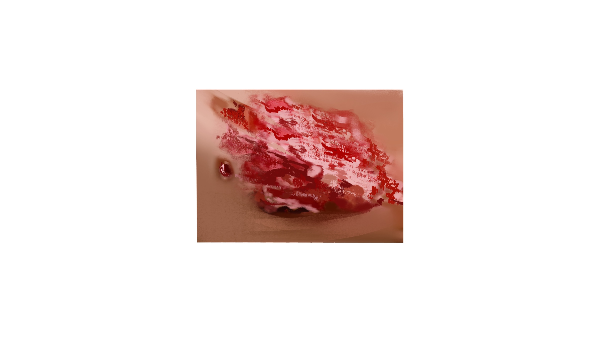
Image 2. Patient image captured before treatment dated 13.9.2022 added below
Ayurvedic Assessment was done based on the clinical evaluation by the ayurvedic physician.
Differential Diagnosis- The diagnosis was confirmed with clinical examination and medical history.
Prognosis- The prognosis depends on the type of chemical and extent of the injury. Most small lesions heal well, but larger wounds often do not heal and can develop into scars. Chemical injuries to the eye are the most serious, resulting in severe scarring and permanent loss of vision. In this case, the condition was associated with continuous itching which can worsen the condition further. In spite of taking antihistamine drugs, it was not subsiding. With Ayurveda care, the patient got relief from the chief complaints in 24 hours and she was able to get back to normal skin tone in 2 months.
THERAPEUTIC INTERVENTION
See the tab ‘Treatment details’
FOLLOW-UP AND OUTCOMES
Clinician-based assessment; After the jalaukavacaranam, the itching subsided completely with a reduced burning sensation. After 2 months of Ayurveda treatment, the patient got relief from hypopigmentation and attained a normal skin tone.
Objective parameters: Not relevant
Image 3. Patient image during treatment dated 22.9.2022 added below
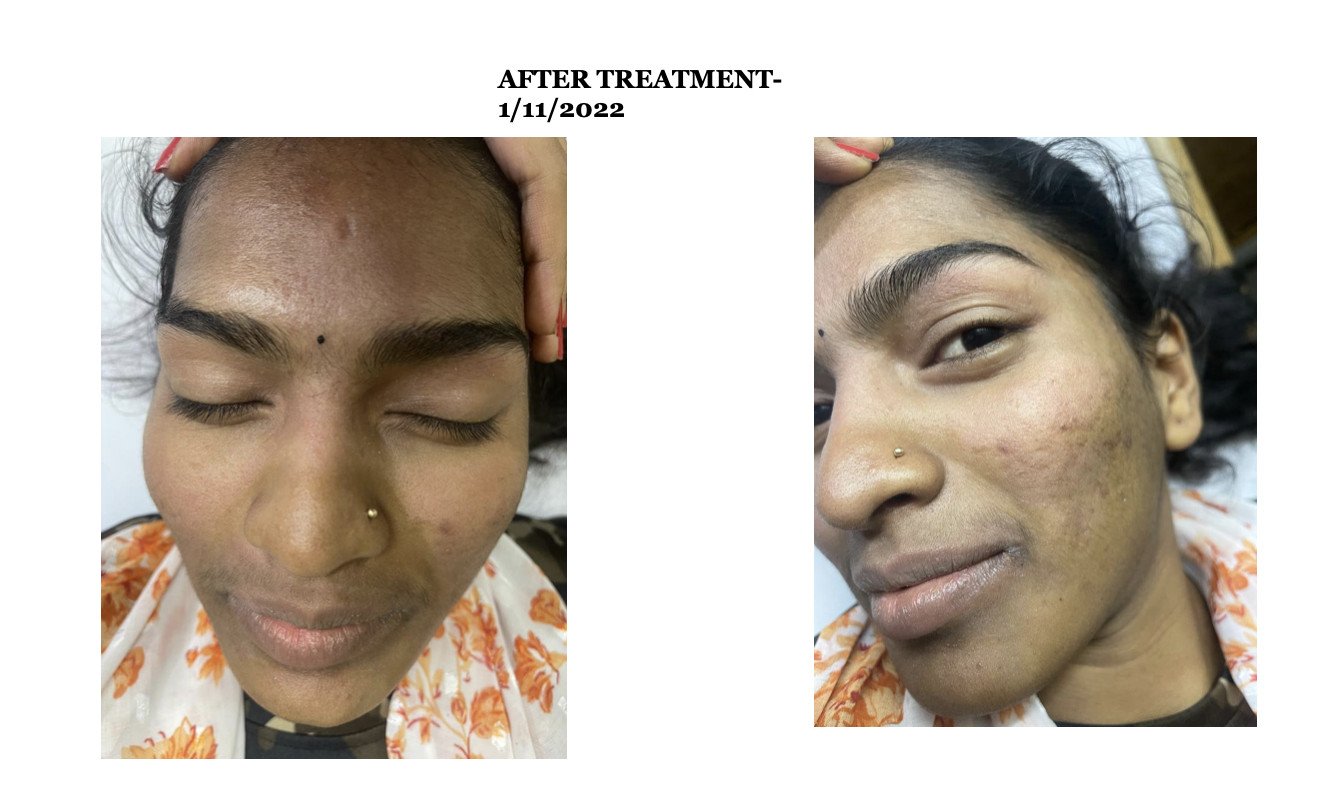
Image 4. Patient image after treatment dated 1.11.2022 added below
Video 1. Jalaukavacaranam recorded.
Video 2. Status of the patient after treatment
Patient assessed: Not relevant.
Intervention adherence and tolerability – The patient adhered to the prescribed treatments and tolerated the treatments well.
Method of assessment- By monitoring the patient.
Adverse and unanticipated events; None reported.
DISCUSSION ;
In this case report, the main target of the treatment planned was rakta shodhana. So, jalaukavacaranam was done. To pacify pitta, lepa with a combination of herbs was applied.
PATIENT’S PERSPECTIVE
Not available.
LEARNING POINTS/TAKE-HOME MESSAGES
This case report demonstrates the successful management of chemical burn with ayurveda.
INFORMED CONSENT
Written consent was obtained from the patient to publish the case report.
CONFLICT OF INTEREST
None declared.
FUNDING
None
REFERENCE
- Walsh K, Hughes I, Dheansa B. Management of chemical burns. Br J Hosp Med (Lond). 2022 Mar 2;83(3):1-12.
- Dr Brmhanand Tripathi, editor, Caraka Samhita, Cikitsasthana. 23, Choukhamba Surbharati Prakashan, Reprint, 2012; 799-80
Image 1. Timeline of events
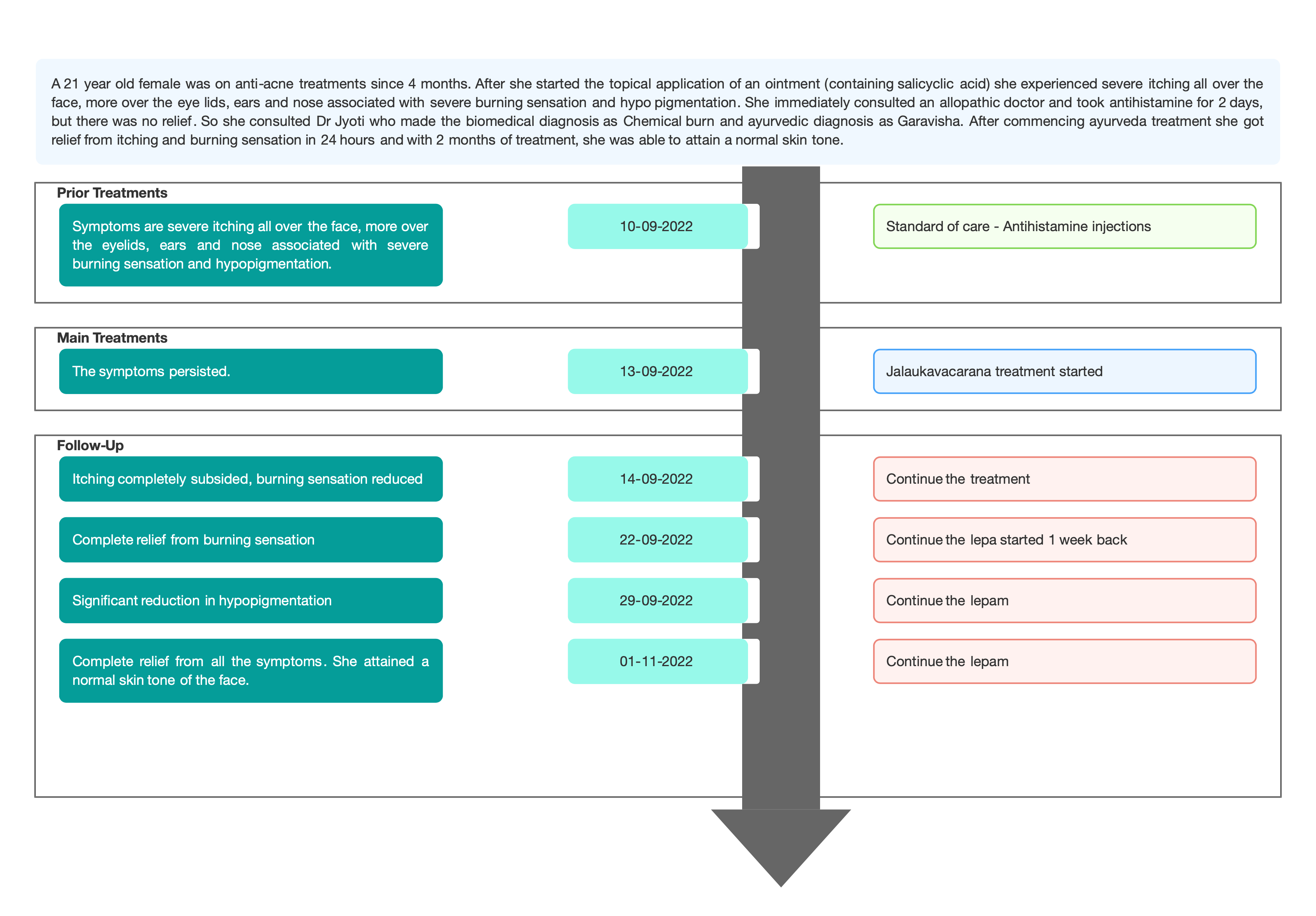
Image 2. Patient image captured before treatment
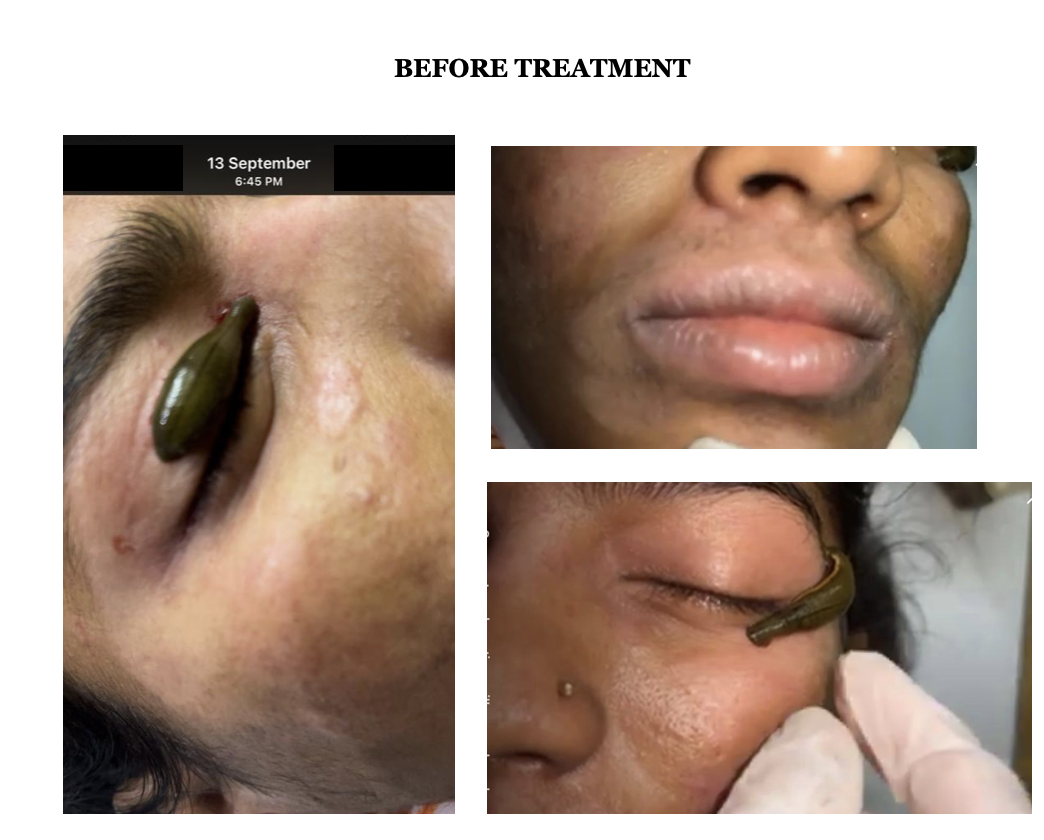
Image 3. Patient image during treatment dated 22.9.2022
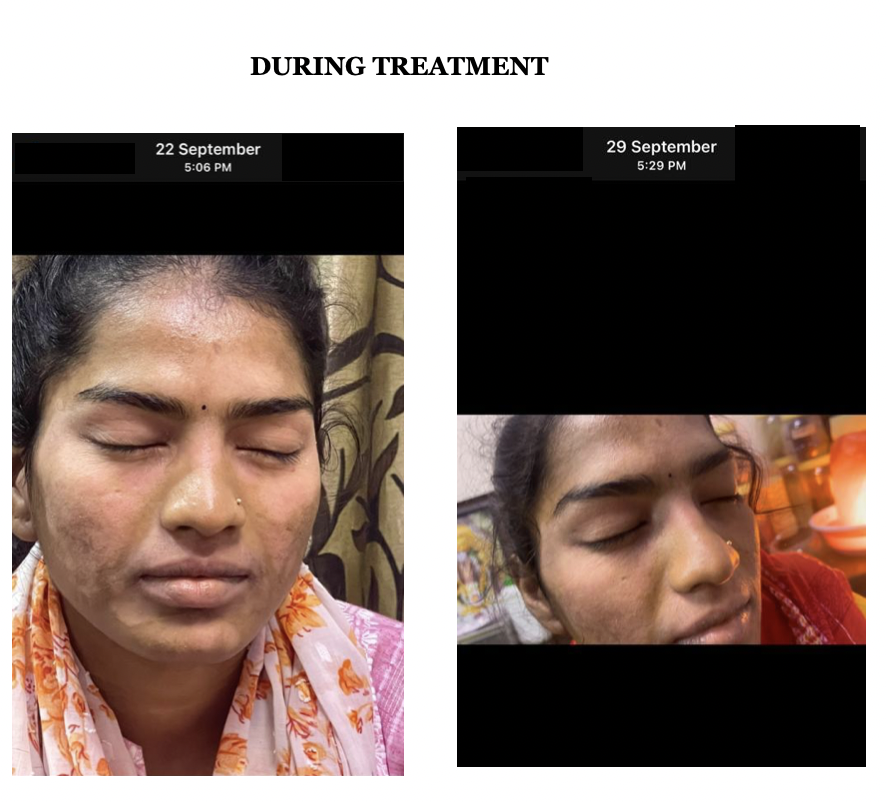
Image 4. Patient image after treatment
Video 1. Jalaukavacaranam recording
-
Immersive Learning
-
Modern Diagnosis
MODERN DIAGNOSIS: Chemical Burn
ABOUT THE DISEASE:
Chemical burn is the term used to indicate a condition where an injury is caused by contact with a chemical agent. This can denature the skin by causing cell damage. The chemicals that usually cause chemical burns are acids, alkalis or other organic substances. Chemical burns can cause deep injury and subsequently significant scarring to the skin. The mechanism and pathophysiology of chemical burns are distinct from thermal burns and recommended first aid approaches are consequently different.
Symptoms: The symptoms vary depending upon the chemical agent involved and also the area affected. In this case report, the patient was on anti-acne treatment past 4 months. The topical application on the face contained salicylic acid, which caused the chemical burn.
Prognosis & Treatment: They have the potential to be life-threatening with serious aesthetic and functional consequences, accounting for 30% of all deaths from burns. Chemical burns are caused by corrosive agents (acids and alkalis) leading to extensive tissue damage. Understanding the pathophysiology of a chemical burn injury and identifying the nature of the offending agent is important for effective management. Prompt assessment and management of chemical injuries are vital to reduce the deleterious effect of the compound involved. [1]
For chemical burns, first aid recommendations are to remove the burning agent and irrigate with copious amounts of water, and these guidelines have not changed since 1950. Water irrigation aims to dilute and remove the agent from the skin and return the skin to normal pH. It has been reported that continuous irrigation of cool running water for 0.5–2 h is required to produce an improved, but still abnormal, cutaneous pH of 5–11. Water irrigation may be important to improve outcomes, although it should be noted that limited reporting in early publications may restrict the interpretation of this data. Other chemicals burn first aid includes the application of neutralising agents, specific antidotes, such as calcium gluconate for hydrofluoric acid burns, and chelating agents, such as Diphoterine [2]. The patient tried antihistamines for 2 days, but did not get relief. Hence she opted for ayurveda.
Image 1. Patient images taken before treatment are added below
Reference
- Walsh K, Hughes I, Dheansa B. Management of chemical burns. Br J Hosp Med (Lond). 2022 Mar 2;83(3):1-12.
- Chai H, Chaudhari N, Kornhaber R, Cuttle L, Fear M, Wood F, Martin L. Chemical burn to the skin: A systematic review of first aid impacts on clinical outcomes. Burns. 2022 Nov;48(7):1527-1543.
Image 1. Patient images taken before treatment
-
Ayurveda Diagnosis
AYURVEDA DIAGNOSIS: Garavisa
ABOUT THE DISEASE:
The word gara comes from ‘gR’ and ‘ach’ which means to diglute or in liquid form. It is classified under kritrima or samyogajavisa by Acaryas.
Garavisa is prepared artificially by a mixture of various substances to produce various diseases. Kritrimvisa is called as garavisa according to Vagbhatta. Gara Visa means the Dravya which causes Visada, is also known as Visa. Laghu, ruksha, aashu, visada, vyavayi, tikshna, vikaashi, sookshma, ushna, anirdeshya rasa are the ten qualities of visa.[1]Poison is a substance which when administered, inhaled, or ingested can act deleteriously on the human body and produce ill health. Poison may be synthetic, mineral, vegetable or of animal origin, gara visa is one of them. Ayurveda has elucidated Gara visa as a non-natural poison. The presentation of symptoms can appear very slowly; hence the patient feels well most of the time. [2]
A direct correlation of Chemical burns cannot be made to the Ayurvedic diagnosis. In this case, report the 21-year-old female was on anti-acne treatment for 4 months. The symptoms of severe itching, burning sensation, itching and hypopigmentation started after this. Hence the treating physician has diagnosed this condition as a gara visa, based on the clinical presentation and examination.
Causes for gara visa: Sweda, raja, vid- akshi, karna, nasa, kesha and mamsa, kita curna, virudha aushadha bhasmanaa are some causes mentioned. [Panditkashinath shastri 2011]
Treatment rationale: Caraka recommends vamana, suvarnaprasha and agadapana for managing gara visa [3]. Vaghbhata suggests Vamana, sharkarasuvarnadi lehyam, Suvarna Makshika, Suvarna Bhasma for managing the gara visa. [4]. In this patient, the physician planned jalaukavacaranam for rakta shodhanam and external lepa for pacifying pitta.
Reference
1. Dr Brmhanand Tripathi, editor, Caraka Samhita, Cikitsasthana. 23, Choukhamba Surbharati Prakashan, Reprint, 2012; 799-80
2. Literary review on gara visa w.s.r. in ayurvedic reserve. available from: https://www.researchgate.net/publication/350121664_literary_review_on_gara_visa_wsr_in_ayurvedic_reserve [accessed Mar 26 2023].
3.Kaviraj Atridev Gupta, Ashtanga Hrudayam, Uttarasthana, Visha pratishedha adhyaya 35/6, Varanasi, Chokhamba Prakashan, Reprint, 2016; 785.
4. Dr Brmhanand Tripathi, editor, Caraka Samhita Cikitsa sthana- 23, Choukhamba Surbharati Prakasan, Reprint, 2012; 799-80.
-
Treatment
Name of Medicine Dosage Form Dosage Mode of Administrtation From - To (Date) Medicine Reference Jalukavacaranam As decided by the physician External blood letting therapy 2022-09-13 - 2022-09-13 ShstriASushruta Samhita. Su. Jalaukavacaraniyadhyaya Nimbapatra churnam, Haridra, Alum Lepa Dravyam Required quantity External application as lepam 2022-09-17 - 2022-12-31 Anubhuta Yogam -
Outcome Measures
OUTCOME MEASURES
The 21-year-old female patient was suffering from itching all over the face, severe in the eyelids, ears and nose associated with severe burning sensation and hypopigmentation. She was on anti-acne treatment for 4 months, which caused the chemical burn.
She tried antihistamines as prescribed by an allopathic doctor for 2 days, but got no relief. Dr Jyoti planned jalaukavacarana and lepa for pacifying pitta.
The outcome measures were based on subjective parameters. Images pre, during and post-treatment were taken. A video of the treatment being done is also available.
Image 1. Patient image taken during treatment added below
Image 2. Patient image taken after treatment added below
Video 1. Jalaukavacaranam procedure
Within 24 hours of starting ayurvedic treatment, the itching completely subsided, burning sensation was reduced. Complete relief from burning sensation in 9 days. Hypopigmentation reduced after 16 days. The patient attained a normal skin tone after 2 months of ayurvedic treatment.
Disease-modifying effect: The patient is in remission.
Image 1. Patient image taken during treatment
Image 2. Patient image after treatment added below
Video 1. Jalaukavacaranam procedure
-