Featured Case
-
Abstract
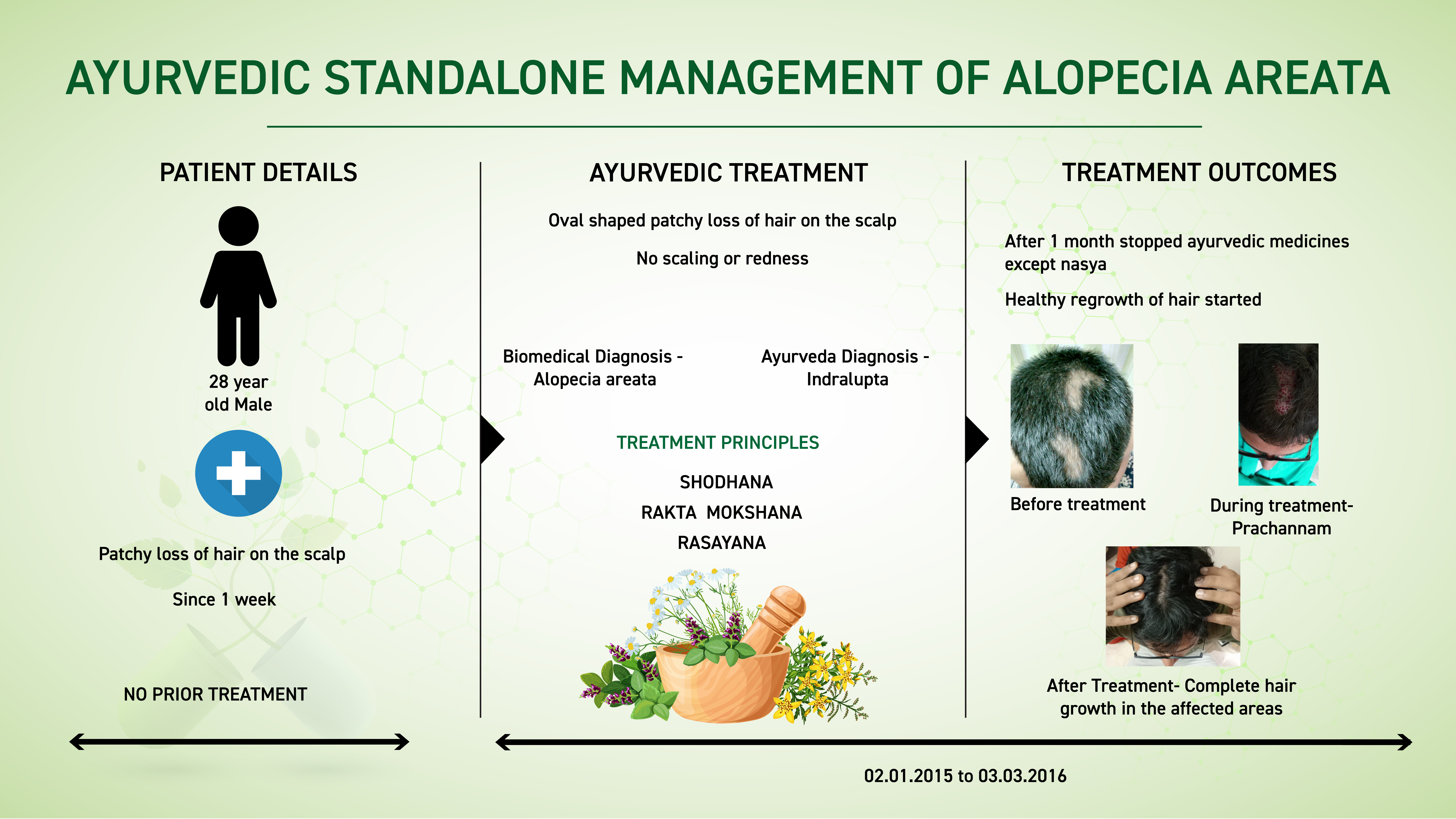
A 28-year-old male engineering student presented with the complaint of patchy loss of hair on the scalp for 1 week. One day he noticed a loss of hair in a small area in the front portion of the scalp while combing his hair, which gradually increased in the area. On examination, there was two circumscribed oval-shaped patchy loss of hair on the anteromedial part of the scalp with demarcated borders. There were no signs of scaling or redness. On the basis of examination, the condition was clinically diagnosed as Alopecia areata and was treated as Indralupta in Ayurveda. Assessment of alopecia was done using photographs taken before and after the treatments. The treatment was carried out in three phases- shodhana cikitsa, raktamokshanam and rasayanam. In the follow-up after 1 month, healthy hair growth started on the affected areas of the scalp. A follow-up conducted after 1 year revealed healthy regrowth of hair in affected areas.
-
Summaries
-
Listen
-
Watch
-
View
-
Read
A 28-year-old male engineering student presented with the complaint of patchy loss of hair on the scalp for 1 week. One day he noticed a loss of hair in a small area in the front portion of the scalp while combing his hair, which gradually increased in the area. On examination, there were two circumscribed oval-shaped patchy hair loss on the anteromedial part of the scalp with demarcated borders. There were no signs of scaling or redness. On the basis of examination, the condition was clinically diagnosed as Alopecia areata and was treated as Indralupta [2] in Ayurveda. Assessment of alopecia was done using photographs taken before and after the treatments. The treatment was carried out in three phases- shodhana cikitsa, raktamokshanam and rasayanam. In the follow up after 1-month healthy hair growth started on the affected areas of the scalp. A follow-up conducted after 1 year revealed healthy regrowth of hair in affected areas.
-
-
Timeline

-
Tabulated Summary
-
Narrative
TITLE OF CASE
Standalone Ayurvedic Management of Alopecia areata - A case report
Dr Shanti K
ABSTRACT
A 28-year-old male engineering student presented with the complaint of patchy loss of hair on the scalp for 1 week. One day he noticed a loss of hair in a small area in the front portion of the scalp while combing his hair, which gradually increased in the area. On examination, there was two circumscribed oval-shaped patchy loss of hair on the anteromedial part of the scalp with demarcated borders. There were no signs of scaling or redness. On the basis of examination, the condition was clinically diagnosed as Alopecia areata[1] and was treated as Indralupta [2] in Ayurveda. Assessment of alopecia was done using photographs taken before and after the treatments. The treatment was carried out in three phases- shodhana cikitsa, raktamokshanam and rasayanam. In the follow-up after 1 month healthy hair growth started on the affected areas of the scalp. A follow-up conducted after 1 year revealed healthy regrowth of hair in affected areas.
KEYWORDS
Alopecia, Indraluptam, Ayurveda, Case report, Pracchanam
INTRODUCTION
Appendicitis[1] is the inflammation of the appendix, a finger-shaped pouch that projects from the colon on the lower right side of the abdomen. Although appendicitis can affect any age group, it generally prevails between the age of 10 and 30.
The symptoms of Appendicitis are pain in the lower right abdomen. Sometimes, the pain begins around the navel, and then it spreads. As the inflammation worsens, the pain becomes intense and excruciating. Associated symptoms like nausea, loss of appetite, low-grade fever, constipation or diarrhoea, and abdominal bloating, can also appear along with the pain.
Cause- An infection caused by the blockage in the lining of appendicitis. The bacteria multiply rapidly causing inflammation and swelling and this is filled with pus. At this stage, if not treated, the appendix can rupture and cause grave health issues.
PATIENT INFORMATION
The patient is a 28-year-old male patient presenting with Complaints of patchy loss of hair on the scalp for 1 week.
Medical History: The patient was suffering from complaints for 1 week. One day he noticed a loss of hair in a small area in the front portion of the scalp while combing his hair, which gradually increased in the area. It was not associated with dandruff and this was the first episode of the same. The patient did not have any autoimmune disease and was not under medication for any other disease. The patient opted for Ayurvedic management.
CLINICAL FINDINGS
Hair and Scalp examinations were done. On examination, there were two circumscribed oval-shaped patchy losses of hair on the anteromedial part of the scalp with demarcated borders. There were no signs of scaling or redness.
TIMELINE
Image 1. Timeline of events added as an attachment
DIAGNOSTIC ASSESSMENT
Modern Diagnostic parameter: The patient did not have any prior consultation. The Ayurvedic physician did the biomedical consultation based on the clinical presentation and examination.
Image 2. The image taken before the treatment
Ayurvedic Assessment was done based on the clinical evaluation by the ayurvedic physician.
Differential Diagnosis- This does not apply as the patient came in with a definite diagnosis.
Prognosis- The outlook for most patients is good with or without treatment. However, because of poor cosmesis, some people may become withdrawn and depressed. In this case, because of this condition, he became less confident and was not interested to go to college. The patient opted for Ayurvedic treatment, which could provide supportive care for a healthy recovery and possible side effects from the standard medical care could be avoided.
THERAPEUTIC INTERVENTION
See the tab ‘Treatment details’
FOLLOW-UP AND OUTCOMES
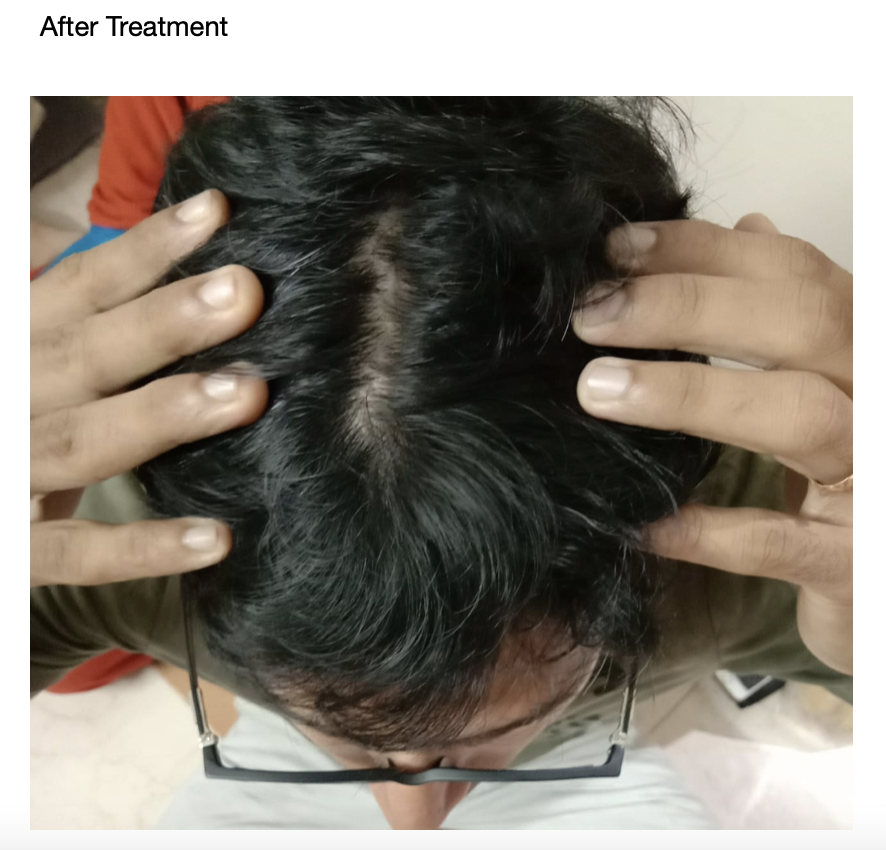
In the follow-up after 1 month, healthy hair growth started on the affected areas of the scalp. A follow-up conducted after 1 year revealed healthy regrowth of hair in affected areas. After 48 days, except nasyam all the medicines were stopped. A follow-up done via telephone after 1 year revealed that the areas in the scalp that had patchy losses of hair, were covered with healthy hair.
Image 3. The image during treatment is added below
Image 4. The image was taken at the endpoint added below
Clinician-based assessment; After 1 month of treatment, there was regrowth of hair on the scalp in the areas where there was a loss of hair. A follow-up done after 2 months documented complete hair growth on the affected areas on the scalp.
Patient assessed- Not relevant.
Intervention adherence and tolerability – The patient adhered to the prescribed treatments and tolerated the treatments well.
Method of assessment- By monitoring the patient.
Adverse and unanticipated events; None reported.
DISCUSSION ;
The main causative factors involved in Indraluptam are tridosas along with Rakta. Snehanam by virtue of its dosa utkleshana (increasing the dosa) separates toxins accumulated in the patient’s body. It then centralizes the dosas from other parts of the body in the pakvashaya (distal part of the alimentary canal). Sodhana chikitsa to evacuate the separated morbid dosas from the body and helped to attain srotoshudhi. Prachannam helped to remove the vitiated Rakta from the body and Indralupta mashi helped in romasamjananam. Rasayana therapy was done to strengthen the new tissues on the scalp after prachannam.
PATIENT’S PERSPECTIVE
Not available.
LEARNING POINTS/TAKE-HOME MESSAGES
This case report demonstrates the successful standalone ayurvedic management of alopecia areata. The patient did not have any prior consultation, and within 1 month of starting ayurvedic treatments, symptoms started reducing. A follow-up done after 1 year revealed the affected areas in the scalp are fully covered with a dense growth of healthy hair.
INFORMED CONSENT
Written consent was obtained from the patient to publish the case report.
CONFLICT OF INTEREST
None declared.
FUNDING
None
REFERENCE
- Zhou C, Li X, Wang C, Zhang J. Alopecia Areata: an Update on Etiopathogenesis, Diagnosis, and Management. Clin Rev Allergy Immunol. 2021 Dec;61(3):403-423.
- Ashtanga Hrdaya. Uttara sthana. 23.25
Image 1. Timeline of events
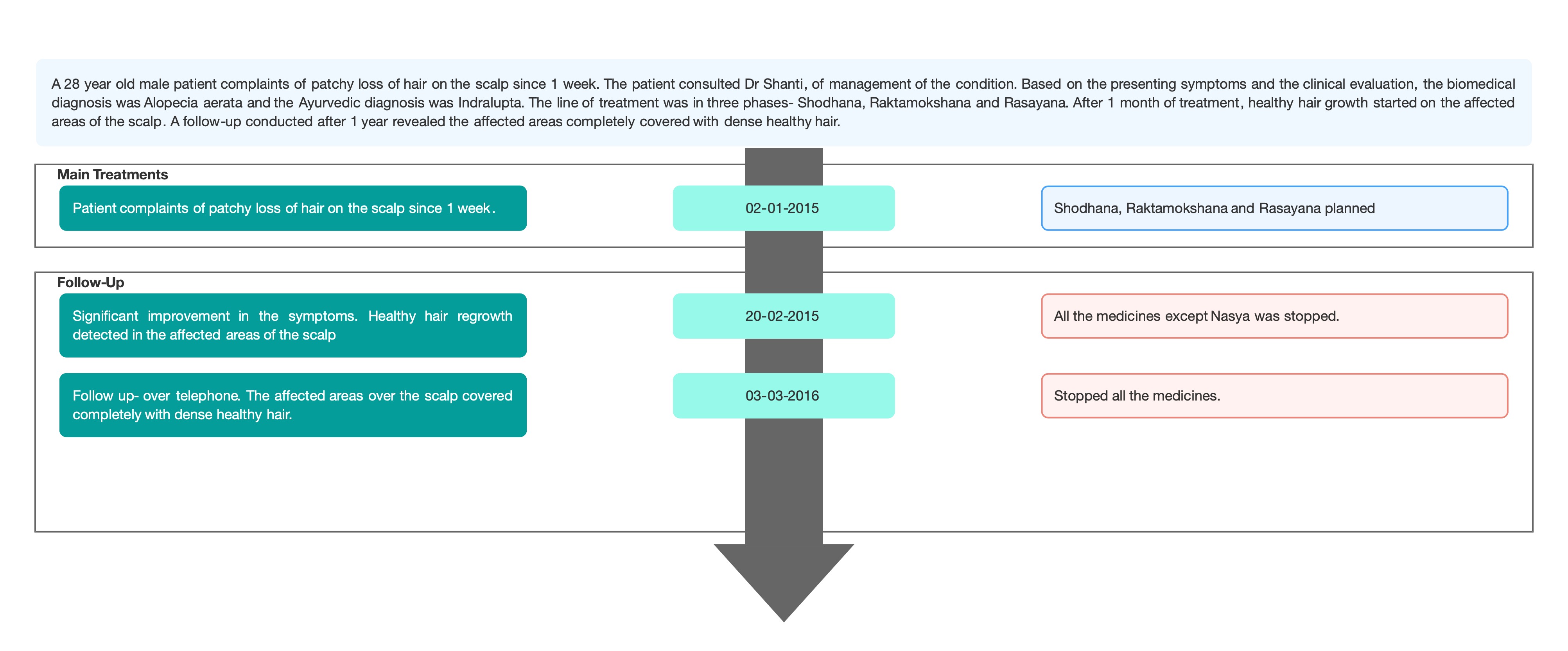
Image 2. The image taken before the treatment
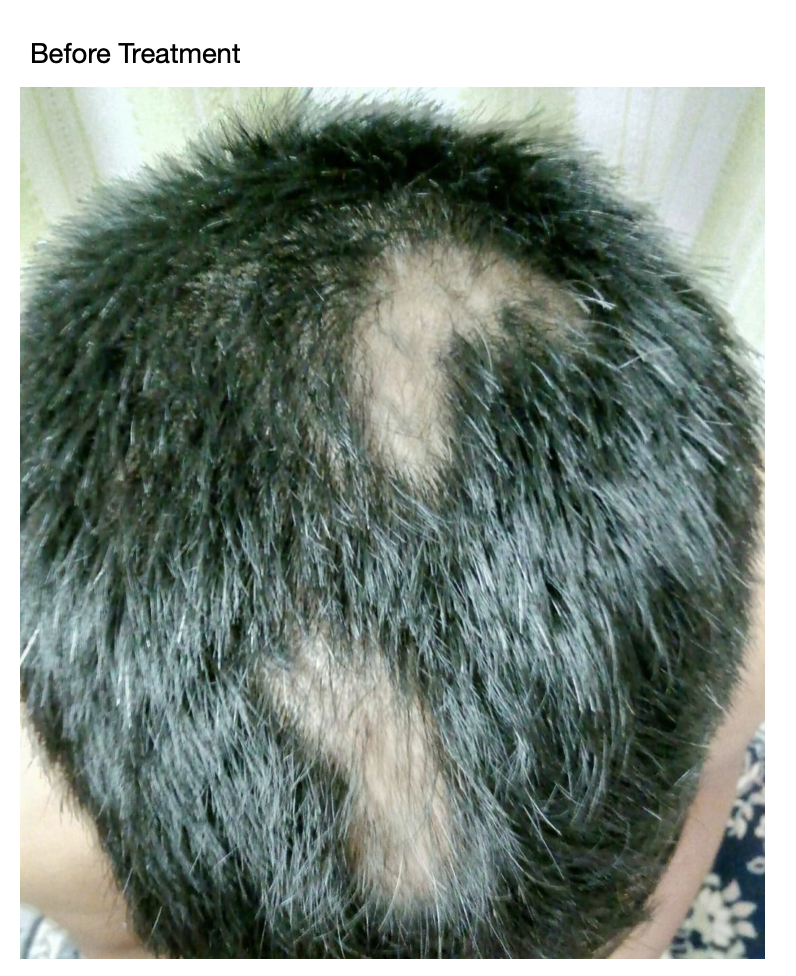
Image 3. The image during treatment
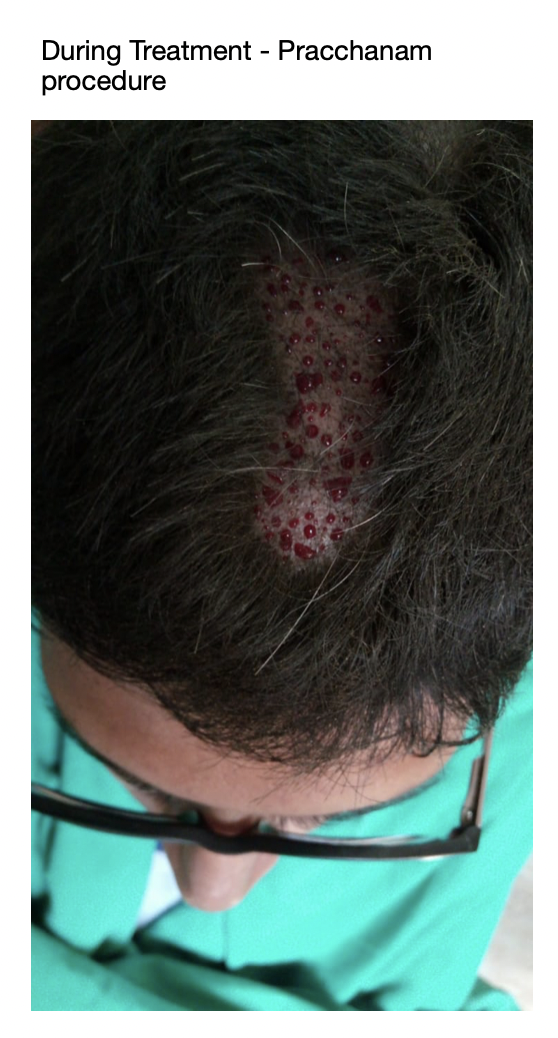
Image 4. The image taken at the endpoint
-
Immersive Learning
-
Modern Diagnosis
MODERN DIAGNOSIS: Alopecia areata
ABOUT THE DISEASE
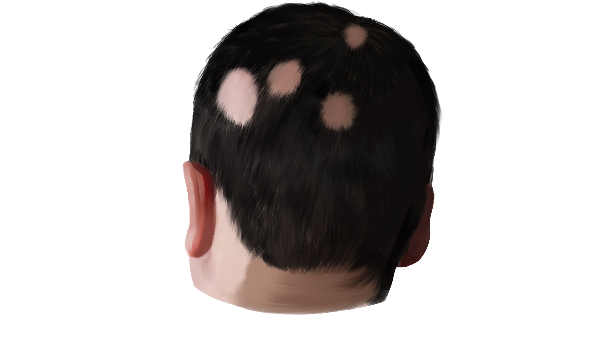
Alopecia areata [1] is a disease that happens when the immune system attacks hair follicles and causes hair loss. Hair follicles are the structures in the skin that form hair. While hair can be lost from any part of the body, alopecia areata usually affects the head and face. The symptoms are hair typically falls out in small, round patches about the size of a quarter, but in some cases, hair loss is more extensive. Most people with the disease are healthy and have no other symptoms.
The course of alopecia areata varies from person to person. Some have bouts of hair loss throughout their lives, while others only have one episode. Recovery is unpredictable too, with hair regrowing fully in some people but not others. In some, the nails are affected too.
Causes: The immune system attacks the hair follicles. The exact reason for the hair follicles to attack the immune system is not known. It can be genetic or environmental.
Prognosis- There is no cure for alopecia. There are treatments to help people regrow their hair.
In this patient, the complaints of patchy loss of hair from the scalp of the head persisted for 1 week. He did not have any prior consultation, and so the biomedical diagnosis was given by the ayurvedic physician Dr Shanti.
Image 1. The image taken before treatment added below
Diagnosis & Treatment- Medical history taking and examination is the basic diagnostic criteria.
Reference
- Zhou C, Li X, Wang C, Zhang J. Alopecia Areata: An Update on Etiopathogenesis, Diagnosis, and Management. Clin Rev Allergy Immunol. 2021 Dec;61(3):403-423.
Image 1. The image taken before treatment
-
Ayurveda Diagnosis
AYURVEDA DIAGNOSIS: Indralupta
ABOUT THE DISEASE:
Indralupta is a disease of the scalp in which the major symptom is a patchy loss of hair. The tridosa and the rakta are involved in the pathophysiology of Indralupta The pathology also reveals the blockage of hair follicles with aggravated Rakta and Kapha (one among Tridosha) which further prevents the regrowth of hairs. This can be correlated to the condition called alopecia areata.
रोमकूपान्नुणद्धस्यस्यतेनान्येषामसंभवः ।
तदिन्द्रलुप्तं रुज्यं च प्राहुश्चाचेतिचापरे ॥ AH. Utt.23. 25
Indralupta is also called as Rujya and Chacha. The treatment is planned at pacifying the tridosas.
Treatment rationale: The main causative factors involved in Indraluptam are tridosas along with Rakta. Snehanam by virtue of its dosa utkleshana (increasing the dosa) separates toxins accumulated in the patient’s body. It then centralizes the dosas from other parts of the body in the pakwashaya (distal part of the alimentary canal). Shodhana cikitsa to evacuate the separated morbid dosas from the body and helped to attain srotoshudhi. Prachannam helped to remove the vitiated Rakta from the body and Indralupta mashi helped in romasamjananam. Rasayana therapy was done to strengthen the new tissues on the scalp after pracchannam.
Reference
- Susruta Samhita.Nidana sthana 13.34
-
Treatment
Name of Medicine Dosage Form Dosage Mode of Administrtation From - To (Date) Medicine Reference Tiktaka ghritam Gritham 25ml, bed time Panam 2015-01-02 - 2015-01-04 Sahasrayogam, Gritha prakaranam Avipathi churnam Curnam For Mridu Virechanam- 30 g mixed with warm water, 6 am Oral 2015-01-05 - 2015-01-05 Sahasrayogam. Curna prakarana Anu tailam Tailam 5 drops Pratimarsha nasyam 2015-01-02 - 2016-03-03 Caraka Samhita, Su.5.56 Tiktaka ghritam Ghritham Tiktaka ghritam Oral 2015-01-07 - 2015-01-09 Sahasrayogam, ghrita prakaranam Indralupta mashi Lepam As desired by the physician External 2015-01-10 - 2015-01-18 Patent & Proprietary Medicine Narasimha rasayana Rasayana 5 gm at bedtime Oral 2015-01-19 - 2015-02-20 AH.Utt.39.170-172 -
Outcome Measures
OUTCOME MEASURES
A 28-year-old male engineering student presented with the complaints of patchy loss of hair on the scalp for 1 week. One day he noticed a loss of hair in a small area in the front portion of the scalp while combing his hair, which gradually increased in the area.
Assessment of alopecia was done using photographs taken before and after the treatments. The treatment was carried out in three phases- shodhana cikitsa, raktamokshanam and rasayanam. In the follow-up after 1 month healthy hair growth started on the affected areas of the scalp. All the medicines except nasyam were stopped. After 2 months, the affected areas were completely covered with dense regrowth of healthy hair. A follow-up conducted after 1 year revealed there were no bald areas in the head.
Image 1. Image taken during treatment
Image 2. Image taken after treatment
-