Featured Case
-
Abstract
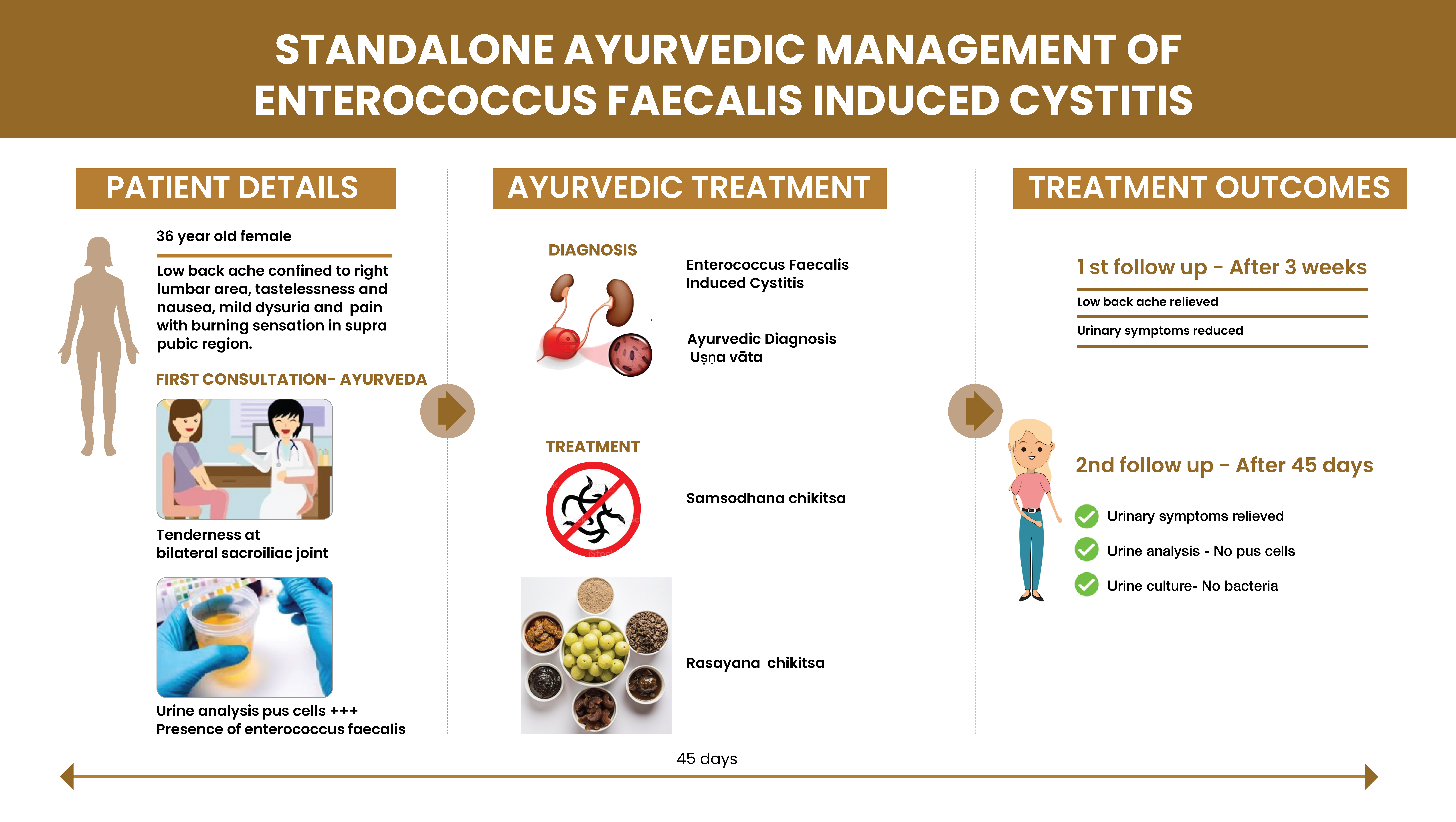
A 36-year-old female, an IT professional, patient presented with low back ache confined to the right lumbar area and with mild dysuria for the past two weeks. She also had mild pain and a burning sensation in the suprapubic region. She opted for Ayurvedic treatment and approached Dr Rajeshwari. The Urine analysis revealed numerous pus cells and many epithelial cells. Urine culture revealed the presence of Enterococcus faecalis. The diagnosis was confirmed as enterococcus faecalis-induced cystitis on the basis of clinical examination and urine analysis. The condition was treated as ushnavata. Samshodhana chikitsa, followed by Rasayana chikitsa, was administered. After three weeks of Ayurvedic medications along with necessary dietary regimens and lifestyle modifications, the patient got a significant reduction in symptoms. In the follow-up after 45 days, the patient was completely relieved from the urinary symptoms and the suprapubic pain. The repeated urine routine and culture reports were normal.
This case report demonstrates the scope of Ayurvedic treatment in managing chronic infections of the urinary tract.
-
Summaries
-
Listen
-
Watch
-
View
-
Read
Standalone Ayurvedic Management of enterococcus faecalis induced cystitis
A 36-year-old female, an IT professional, patient presented with low back ache confined to the right lumbar area and with mild dysuria for the past two weeks. She also had mild pain and a burning sensation in the suprapubic region. She opted for Ayurvedic treatment and approached Dr Rajeshwari. The Urine analysis revealed numerous pus cells and many epithelial cells. Urine culture revealed the presence of Enterococcus faecalis. The diagnosis was confirmed as enterococcus faecalis-induced cystitis on the basis of clinical examination and urine analysis. The condition was treated as ushnavata. Samshodhana chikitsa, followed by Rasayana chikitsa, was administered. After three weeks of Ayurvedic medications along with necessary dietary regimens and lifestyle modifications, the patient got a significant reduction in symptoms. In the follow-up after 45 days, the patient was completely relieved from the urinary symptoms and the suprapubic pain. The repeated urine routine and culture reports were normal.
This case report demonstrates the scope of Ayurvedic treatment in managing chronic infections of the urinary tract.
-
-
Timeline
-
Tabulated Summary
-
Narrative
TITLE OF CASE:
Standalone Ayurvedic Management of enterococcus faecalis induced cystitis - a case report
Dr Rajeshwari
ABSTRACT
A 36-year-old female, an IT professional was diagnosed with enterococcus faecalis-induced cystitis. The diagnosis was confirmed based on clinical examination and urine analysis. The patient presented with low back ache confined to the right lumbar area and mild dysuria in the past two weeks. She also had mild pain and a burning sensation in the suprapubic region. Urine analysis revealed numerous pus cells and many epithelial cells. Urine culture revealed the presence of Enterococcus faecalis. Dr Rajeshwari treated the condition as ushnavata. Samshodhana chikitsa followed by Rasayana chikitsa was administered. After 3 weeks of Ayurvedic medications along with necessary dietary regimens and lifestyle modifications, the patient got a significant reduction in symptoms. In the follow-up after 45 days, the patient was completely relieved from the urinary symptoms and the suprapubic pain. Repeated urine routine and culture reports were normal. This case report reveals the utility of Ayurvedic treatments in multi drug resistant infections.
KEYWORDS
Enterococcus faecalis, cystitis, Urinary tract infections, case report
INTRODUCTION
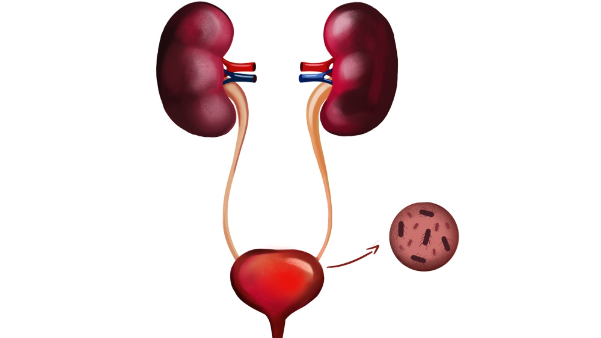
Cystitis is a medical term for inflammation of the bladder. Approximately one-third of women will have had a UTI by age 24 and one-half by age 32. Enterococcus faecalis is a gram positive, facultative anaerobic bacterium that can be found in normal intestinal flora in humans and animals1. These can cause a variety of infections among which urinary tract infections are common. Since it is present naturally in intestinal tract, nosocomial, person to person as well as food products contaminated with faecal matter can cause transmission. Enterococcus faecalis has both natural and acquired immunity from antibiotic treatment, hence these infections are exceptionally difficult to treat due to drug resistance. Awareness and information of the illness must be given to the patients to combat the infection and its complications. Cystitis is the most common among urinary tract infection caused by enterococcus faecalis, having an array of symptoms such as increased frequency of micturition, cloudy/strong smelling urine, low grade fever and post voidal urgency.
PATIENT INFORMATION
36 yr old female IT professional patient complained of low back ache confined to right lumbar area in the past two weeks disturbing her routine activities.
Medical history: The patient was unable to lie on her back due to pain. Pain in the low back region aggravates during sitting, long-standing and doing strenuous work. She also complained of mild dysuria with pain and a burning sensation in the suprapubic region. No previous consultations were done for this condition. The patient does not have any other systemic illness.
CLINICAL FINDINGS
General tiredness, Nausea
pallor+,
O/E- tenderness at the bilateral sacroiliac joint
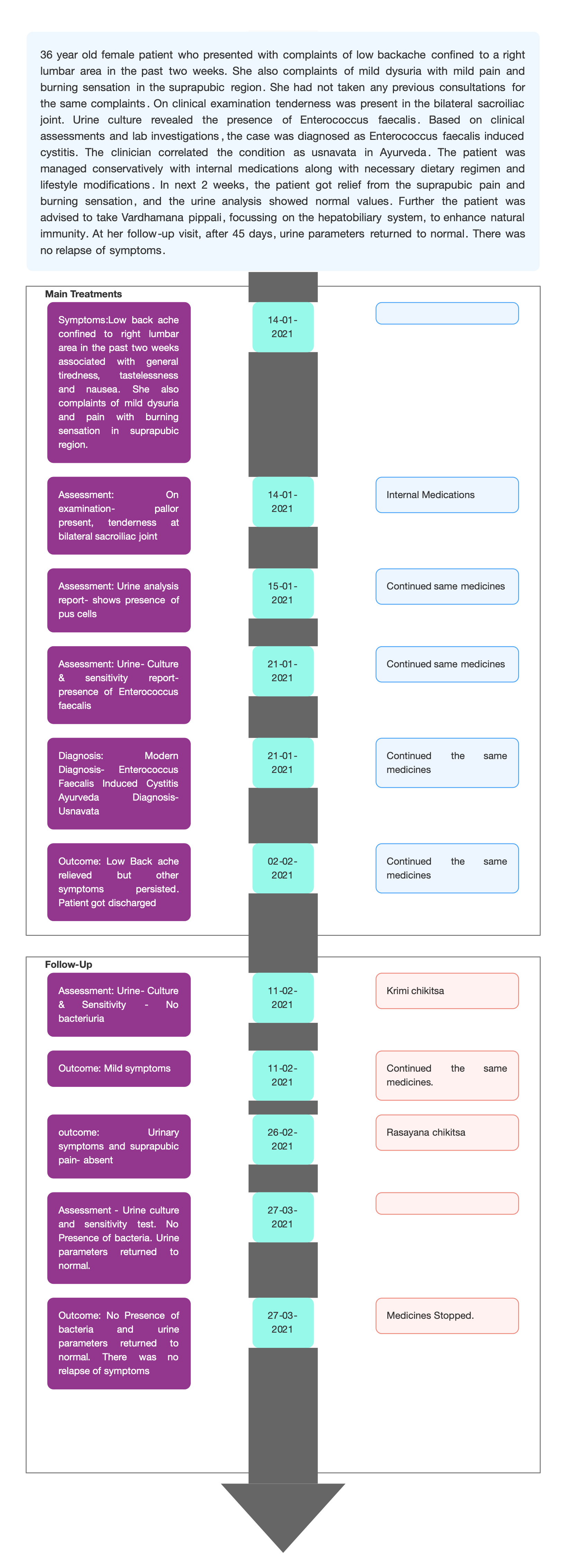
TIMELINE
Image 1 : Attached
DIAGNOSTIC ASSESSMENT
Modern Diagnosis: On clinical examination, tenderness was present in the bilateral sacroiliac joint. Urine analysis revealed numerous pus cells and many epithelial cells. Urine culture revealed the presence of Enterococcus faecalis. Based on clinical assessments and lab investigations, including urine analysis, urine culture and sensitivity test, the case was diagnosed as Enterococcus faecalis induced cystitis.
Ayurveda Diagnosis: This case cannot be exactly correlated in Ayurveda, it may come under u??a v?ta as the patient presented with the symptoms like dysuria and pain and burning sensation in supra pubic region
Prognosis: Enterococcus faecalis has both natural and acquired immunity from antibiotic treatment, hence these infections are exceptionally difficult to treat due to drug resistance. In this case, the patient presenting with cystitis caused by Enterococcus faecalis is successfully treated with Ayurvedic formulations
Differential Diagnosis: Pyelonephritis, Painful bladder syndrome, Pelvic inflammatory disease, Vaginitis, Urethritis
Image 2: Lab investigation report: Urine analysis - 15/1/2021
THERAPEUTIC INTERVENTION
Image 3: See treatment details
FOLLOW-UP AND OUTCOMES
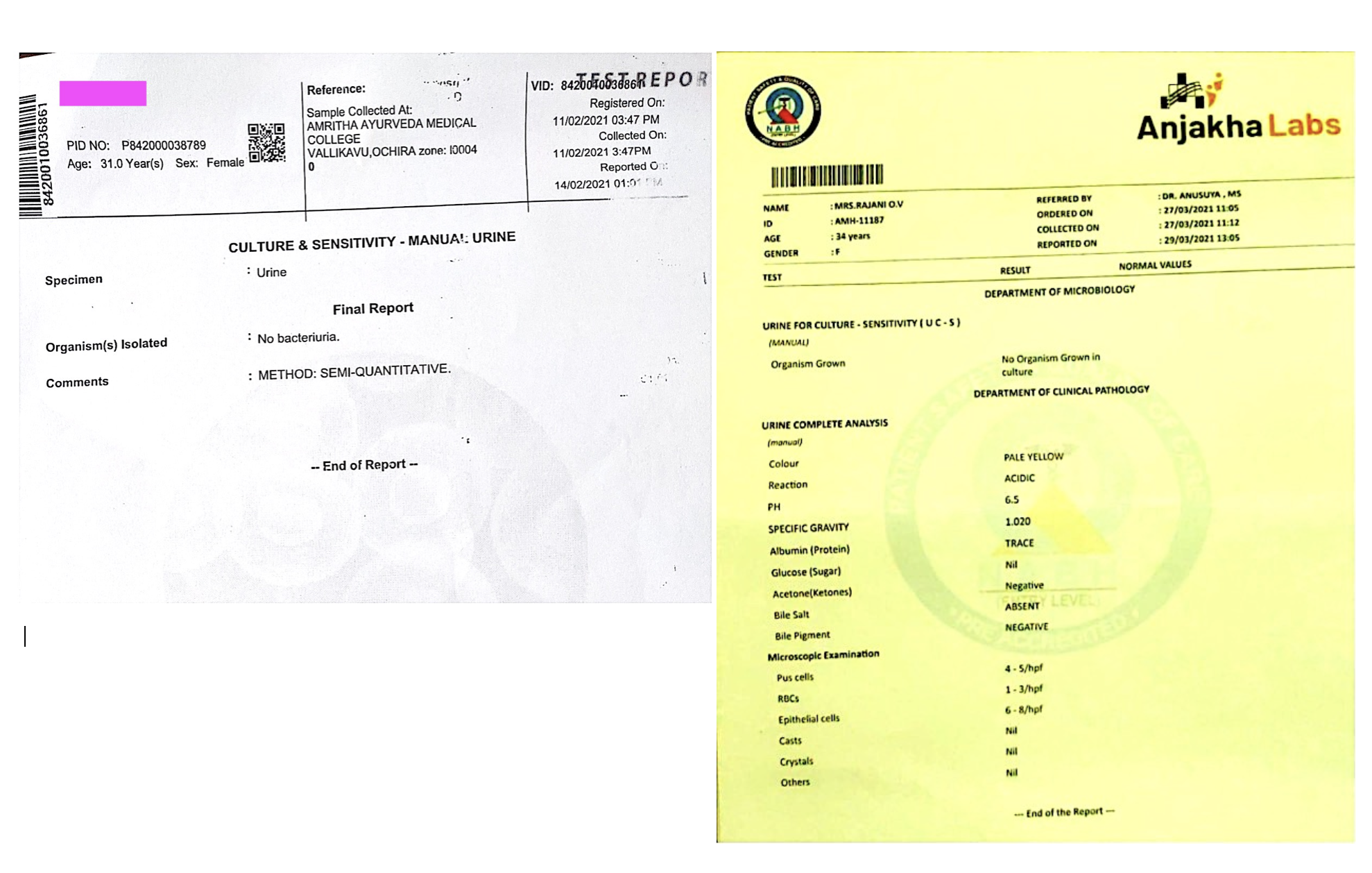
11/2/21 (after 1month treatment) - Urine- Culture & Sensitivity - No bacteriuria
The patient had mild symptoms
26/2/21- Urinary symptoms and suprapubic pain- absent
27/3/21- Urine culture and Sensitivity test - No Presence of bacteria.
Urine parameters - normalClinician-based assessment: Periodical observations were done once in 15 days. At the time of discharge after 2 weeks, LBA got relieved but other symptoms persist. So Krimi chikitsa was planned to reduce the bacterial load. In the next 2 weeks, the patient got relief from the suprapubic pain and burning sensation and the urine analysis showed normal values. At her follow-up visit, after 45 days the patient’s urinary symptoms were significantly improved and the suprapubic pain was absent with no presence of bacteria.
Image 3. Urine culture reports during follow-ups
Patient assessed: not relevant
Intervention adherence and tolerability: The patient adhered to the prescribed treatments and tolerated the treatments well.
Method of assessment- By monitoring the patient.
Adverse and unanticipated events: None reported
DISCUSSION
This case cannot be exactly correlated in Ayurveda, it may come under u??a v?ta as the patient presented with the symptoms like dysuria and pain and burning sensation in the supra pubic region. U??a v?ta can be correlated with inflammatory conditions like cystitis, urethritis, ureteritis or prostatitis.
Enterococcus faecalis have emerged as one of the important pathogens causing several clinical conditions like endocarditis, bacteraemia, and wound infections. The microbe is extremely resilient to all types of environments and has natural and acquired antibiotic resistance. It can spread to different parts of the body and cause severe infections that can be life-threatening. In this case report, the treatment guidelines incorporate a combination of Personalized hygiene and awareness, Healthy Gut flora, Krimi chikitsa was followed as a Treatment protocol to combat the infection. Treatment was done in 2 phases. The first treatment was planned to focus on the urinary tract infection but after 2weeks also no improvement occurred. On the next phase samshodhana chikitsa for gut cleansing was done to reduce the bacterial load. Vardhamana pippali was given focusing on hepato biliary system, to enhance the natural immunity.
PATIENT’S PERSPECTIVE:
Not available
LEARNING POINTS:
The course of the disease is usually marked by flare-ups and remissions. This case report illustrates the utility of ayurvedic concepts and the efficiency of ayurvedic medications in treating infectious conditions caused by multidrug-resistant bacteria and in improving the general health of the patient.
INFORMED CONSENT
The patient gave written informed consent for publication.
ACKNOWLEDGEMENTS
None
CONFLICT OF INTEREST
None declared
FUNDING
None
Reference
1. Minardi, D., d'Anzeo, G., Cantoro, D., Conti, A., & Muzzonigro, G. (2011). Urinary tract infections in women: etiology and treatment options. International journal of general medicine, 4, 333–343. https://doi.org/10.2147/IJGM.S11767
2. Agnivesha, charaka samhita, Vaidya yadavji trikamji acharya, Charak chikitsa 26/76, edition reprint 2018, publication: chaukhambha Sanskrit sansthana, Vara- nasi
Image 1.
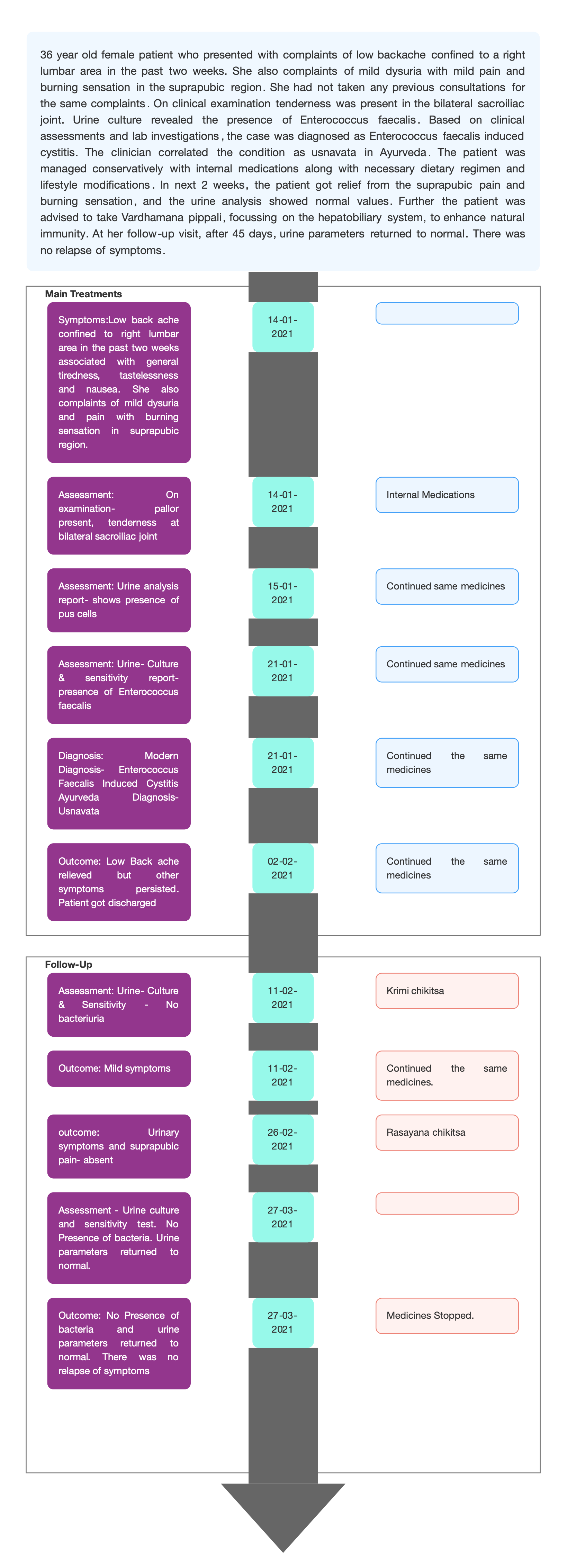 Image 2.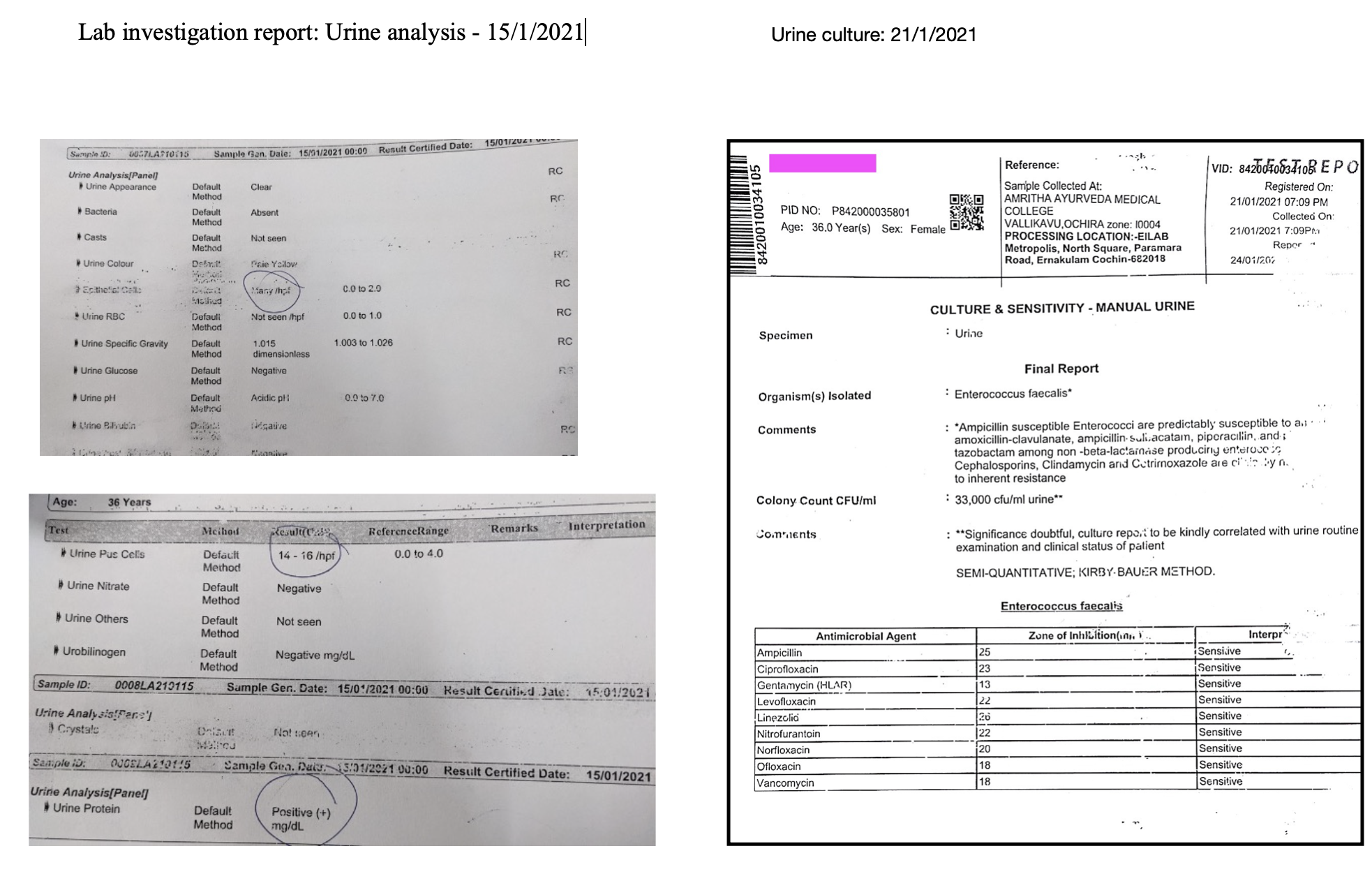
Image 3.
-
Immersive Learning
-
Modern Diagnosis
Biomedical Diagnosis: Enterococcus faecalis-induced cystitis
About the disease: Cystitis is a medical term for inflammation of the bladder. Most of the time, the inflammation is caused by a bacterial infection, and it's called a urinary tract infection (UTI). Acute cystitis often presents with urinary symptoms which include dysuria, urinary frequency, urgency, suprapubic pain or tenderness, and occasionally hematuria.
Diagnosis:
The diagnosis of acute cystitis is usually made clinically in a patient with signs and symptoms consistent with a lower UTI in combination with laboratory evidence of pyuria. A urine culture is extremely useful for identifying etiologic pathogens and for determining antimicrobial susceptibility profiles.
Treatment:
Acute cystitis is treated with antibiotic therapy. The selection of an antimicrobial agent depends on a patient’s risk factors for infection with multiple drug-resistant organisms.
Diagnostic criteria:
Urinalysis
Urine culture and sensitivity test - to detect the organism
Imaging - includes, x-ray, ultrasound, cystoscopy etc.
Diagnosis of this case: In this case, a 36-year-old female, IT professional presented with complaints of low back ache confined to right lumbar area in the past two weeks. On clinical examination, tenderness was present in the bilateral sacroiliac joint. Urine analysis revealed numerous pus cells and many epithelial cells. Urine culture revealed the presence of Enterococcus faecalis. Based on clinical examination and lab investigation the clinician diagnosed the case as Enterococcus faecalis-induced cystitis.
Prognosis:
Patients with uncomplicated cystitis typically have improvement of symptoms within 3 days after initiation of antibiotic therapy. Recurrent cystitis occurs in 25% of women within 6 months after their first UTI and the rate increases in women with more than one prior UTI. In this case, the patient had persisting symptoms for 2 weeks. With 3 weeks of Ayurvedic treatment along with necessary dietary regimens and lifestyle modifications, the patient got a significant reduction in symptoms. Repeated urine investigations, done on further follow-up reveal no bacterial presence.
Image 1: Lab investigation report: Urine analysis and culture reports before treatment

-
Ayurveda Diagnosis
Ayurveda Diagnosis: Ushnavata
The clinician's opinion regarding the case is that it cannot be exactly correlated with usnavata; it may come under u??a vata as the patient presented with the symptoms like dysuria and pain and burning sensation in the suprapubic region.
About the disease
व्यायामाध्वातपैः पित्तं बस्तिं प्राप्यानिलाव्ऱ्तम् |
बस्तिं मेढ्रं गुदं चैव प्रदहन् स्रावयेदधः॥२२॥
मूत्रं हारिद्रमथवा सरक्तं रक्तमेव वा |
क्ऱ्च्च्रात् प्रवर्तते जन्तोरुष्णवातं वदन्ति तम्॥२३॥. (Su. u- 58)
Etiology:- excessive exercise, excessive walking, excessive wandering /sitting in sunlight
Pathogenesis: - Because of indulgence in causative factors, Vata accompanied with Pitta enters Basti. Heavy exercise, long walk under extreme sunlight leads to the aggravation of pitta and vata dosa. The aggravated dosas are lodged in the urinary pathway, which causes inflammation in nearby areas: the bladder, urethra, rectum, etc. This, in turn, leads to the yellowish discolouration of urine or blood mixed with urine. Apana vayu vaigunya is also involved in the samprapthi of the disease. Any derangement of Apana Vayu is responsible for any type of urinary system pathology. So, the treatment principle to be followed is to correct the vitiated Apana Vayu, thereby attaining the normal physiology of the urinary system.
Clinical features: - haridra coloured urine, with blood or high red coloured urine,or only blood and difficulty in micturition
उष्मणा सोष्मकं मूत्रं छोषयन् रक्तपीतकम्॥
उष्णवातः स्ऱ्जेत् क्ऱ्च्च्राद्बस्त्युपस्थार्तिदाहवान्॥३८॥ (Ca. Ci. 9.38)
Treatment
कषायकल्कसर्पींषि भक्ष्यान् लेहान् पयांसि च |
क्षारमद्या(ध्वा)सवस्वेदान् बस्तींश्चोत्तरसञ्ज्ञितान् ||२७||
विदध्यान्मतिमांस्तत्र विधिं चाश्मरिनाशनम् |२८|
मूत्रोदावर्तयोगांश्च कार्त्स्न्येनात्र प्रयोजयेत् ||२८|| (Su.U.58.)According to Charaka Samhita, the treatment measures adopted for Mutrakricchra are also applicable in all the varieties of Mutraghata. (Ca. Ci. 26 . 45-54)
Ayurvedic diagnosis of this case: The patient was a 36-year-old female experiencing low back pain confined to the right lumbar area for the past 2 weeks and had been gradually worsening, disturbing her routine activities. She also complained of mild dysuria with mild pain and a burning sensation in the suprapubic region. The clinician's opinion regarding the case is that it cannot be exactly correlated with usnavata; it may come under u??a vata as the patient presented with the symptoms like dysuria and pain and burning sensation in the suprapubic region.
Treatment Rationale:
The patient was managed conservatively with internal medications along with necessary dietary regimen and lifestyle modifications. Treatment was done in 2 phases. The first treatment was planned to focus on the urinary tract infection, but after 2 weeks also, no improvement occurred. In the next phase, samshodhana cikitsa for gut cleansing was done to reduce the bacterial load. At her follow-up visit, after 45 days of medication the patient’s urinary symptoms were significantly improved, and the suprapubic pain was absent with no presence of bacteria. After that patient was given Vardhamana pippali prayoga, focussing on the hepatobiliary system, to enhance natural immunity.
-
Treatment
Name of Medicine Dosage Form Dosage Mode of Administrtation From - To (Date) Medicine Reference Chandraprabha vati Tablet 1-0-1 Oral, 2021-01-14 - 2021-02-04 Sharangdharasamhita, Brihatyadi kashaya Brihatyadi kashaya 20ml twice daily Oral, With warm water, before food 2021-01-14 - 2021-01-28 Ashtanga Hrudayam Chikitsasthana 11.35 Dhatri Mix Choornam 2tsp twice daily after food Oral, with hot water 2021-01-14 - 2021-01-21 Anubhuta yogam Punarnavadi Kashayam Kashayam 20ml, Oral, 2021-02-11 - 2021-02-25 Sahasrayogam Gokshuradi guggulu Tablet 1-0-1 Oral 2021-02-11 - 2021-02-25 Sharangdharasamhita, Vidangarishtam Arishta 20ml, Oral 2021-02-11 - 2021-02-25 Sharngdhara Abhayarishtam Arishta 20ml Oral 2021-02-11 - 2021-02-25 Bhaishajya Krimishodhani Vati Tablet 1-0-1 Oral 2021-02-11 - 2021-02-25 Yogagrantham Vardhamana Pippali Prayogam Choornam 3gm,6gm,9gm,12gm,12gm,9gm, 6gm, 3gm Oral, with 1 glass lukewarm milk in empty stomach 2021-02-06 - 2021-03-06 Bhaishajya Ratnavali - Urusthambha chikitsa prakarana -
Outcome Measures
Standalone Ayurvedic Management of Enterococcus faecalis induced cystitis - A case report
36-year-old female patient presented with complaints of low backache confined to right lumbar area in the past two weeks. She also complained of mild dysuria with mild pain and a burning sensation in the suprapubic region. She had not taken any previous consultations for the same complaints. On clinical examination, tenderness was present in the bilateral sacroiliac joint. Urine analysis revealed numerous pus cells and many epithelial cells and the presence of bacteria. Urine culture revealed the presence of Enterococcus faecalis. Based on clinical assessments and lab investigations, including urinalysis, urine culture, and sensitivity test, the case was diagnosed as Enterococcus faecalis-induced cystitis. The condition was diagnosed as usnavata in terms of Ayurveda. The outcome was assessed based on the urine analysis and symptoms of the patient.
Objective Assessments DATE
SAMPLE & TEST
PARAMETER
VALUE
15.01.2021
Urinalysis
Pus cells
14 - 16/hpf
Protein
Positive (+) mg/dl
Bacteria
Absent
Epithelial cells
Many/hpf
21.01.2021
Urine Culture & Sensitivity
Organism Isolated
Enterococcus faecalis
11.02.2021
Urine Culture & Sensitivity
No bacteriuria
27.03.2021
Urinalysis
Pus cells
4-5/hpf
Protein
Trace
Epithelial cells
6-8/hpf
Urine Culture & Sensitivity
No Organism
Subjective Assessments Date
Symptoms
15/1/2021
Dysuria
Pain and burning sensation in suprapubic region
2/2/2021
Patient discharged
LBA relieved
26/2/2021
Symptoms relieved
29/3/2021- Follow up
No relapse of symptoms
Image 1: Urine Culture & Sensitivity during follow-ups
-