Featured Case
-
Abstract
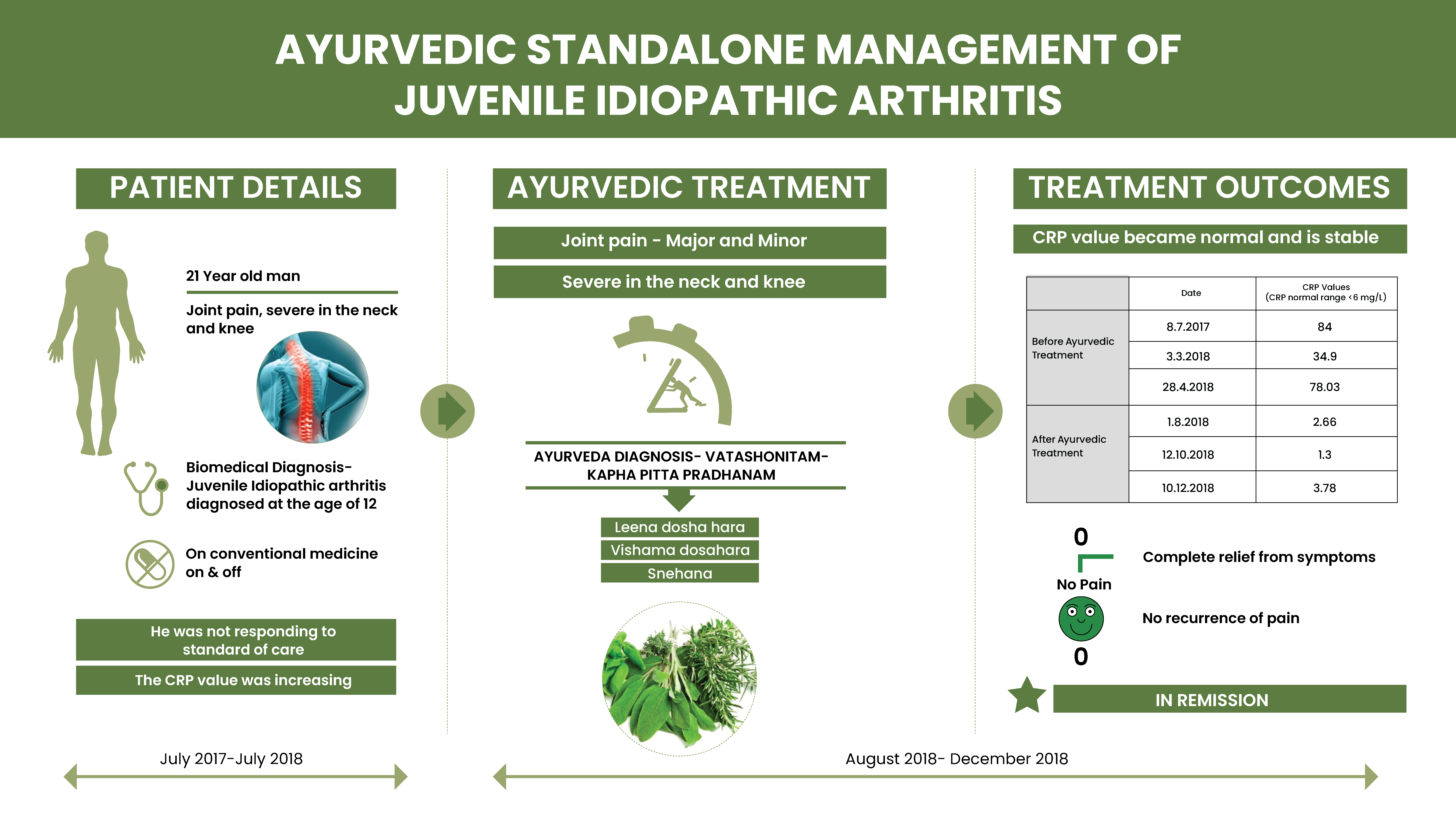
A 21-year-old male patient was diagnosed with Juvenile Idiopathic Arthritis at the age of 12. He suffered from joint pain- both major and minor on and off. He would take conventional medicines and get relief. But since the past 4 months, in spite of taking conventional medicine, he was not getting relief from the joint pain. His CRP value was constantly elevated. His Rheumatologist suggested taking Disease Modifying Anti Rheumatic Drugs like Adalimumab / Etanercept, to control the symptoms, but patient was not willing. So, he approached Dr Syamakrishnan, presenting with major and minor joint pain and difficulty in movement. The pain was severe in the knees and neck. This was diagnosed as Pitta Kapha Pradhana Vatashonita in the amavastha. After 5 months of Ayurvedic medicines, he got complete relief from his symptoms and his elevated CRP value became normal. For the past 1 year, the patient has had no complaints and is in remission.
-
Summaries
-
Listen
-
Watch
-
View
-
Read
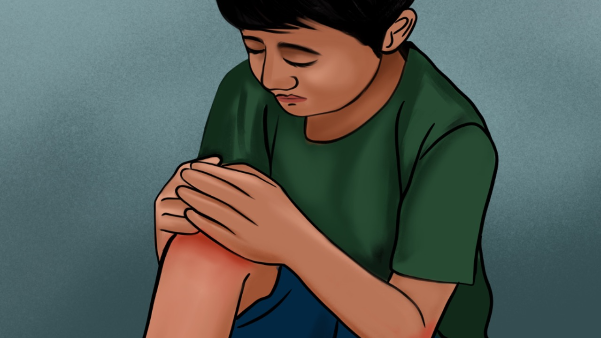
A 21-year-old male patient was diagnosed with Juvenile Idiopathic Arthritis at the age of 12. He suffered from joint pain- both major and minor on and off. He would take conventional medicines and get relief. But since the past 4 months, in spite of taking conventional medicine, he was not getting relief from the joint pain. His CRP value was constantly elevated. His Rheumatologist suggested taking Disease Modifying Anti Rheumatic Drugs like Adalimumab / Etanercept, to control the symptoms, but patient was not willing. So, he approached Dr Syamakrishnan, presenting with major and minor joint pain and difficulty in movement. The pain was severe in the knees and neck. This was diagnosed as Pitta Kapha Pradhana Vatashonita in the amavastha. After 5 months of Ayurvedic medicines, he got complete relief from his symptoms and his elevated CRP value became normal. For the past 1 year, the patient has had no complaints and is in remission.
-
-
Timeline
-
Tabulated Summary
-
Narrative
TITLE OF CASE
Standalone Ayurvedic management of a chronic case of Juvenile Idiopathic Arthritis in a young male with poor response to NSAIDs and DMARDs-A Case report
Dr G Syamakrishnan
ABSTRACT
A 21-year-old male patient was diagnosed with Juvenile Idiopathic Arthritis1 at the age of 12. He suffered from joint pain- both major and minor on and off. He would take conventional medicines and get relief. But since the past 4 months, despite taking conventional medicine, he was not getting relief from the joint pain. His CRP value was constantly elevated. His Rheumatologist suggested taking Disease Modifying Anti Rheumatic Drugs like Adalimumab / Etanercept, to control the symptoms, but patient was not willing. So, he approached Dr Syamakrishnan, presenting with major and minor joint pain and difficulty in movement. The pain was severe in the knees and neck. This was diagnosed as Pitta Kapha Pradhana Vatashonita2 in the amavastha. After 5 months of Ayurvedic medicines, he got complete relief from his symptoms and his elevated CRP value became normal. For the past 1 year, the patient has had no complaints and is in remission.
KEYWORDS
Juvenile Idiopathic Arthritis, Vatashonita, Vatarakta, Ayurveda
INTRODUCTION
Juvenile idiopathic arthritis indicates a spectrum of arthritic symptoms whose cause is unknown, and symptoms manifest before 16 years of age. This term includes several categories of diseases, each of which presents distinctly, with its characteristic clinical manifestations, and mostly has a genetic background and etiopathogenesis. There is no definitive cure from the available treatment options, but the disease can be managed with medicines.
Diagnostic Criteria- There are no specific diagnostic criteria for this condition. The ESR and CRP are taken as associated factors indicating the extent of inflammation in the body. The diagnosis is made basically by clinical evaluation, supported by blood parameters.
Prognosis- The condition may resolve within months, but some, suffer from the complaints lifelong. Juvenile idiopathic arthritis can cause serious complications, such as growth problems, joint damage and eye inflammation. So appropriate medical intervention is mandatory.
PATIENT INFORMATION
A 21-year-old male patient, a physiotherapy student suffered from major and minor joint pain and restricted movements. Associated complaints were severe pain mainly in the knee and neck. He was under treatment by a Rheumatologist for 4 months but was not responding. No significant family, genetic and psychosocial history. Surgical History: Knee joint aspiration at the age of 9, following trauma. The patient has no addictions.
Medical History: Patient was diagnosed with Juvenile Idiopathic Arthritis at the age of 12. At the age of 12, he had trauma in the knee and developed swelling in both knee joints. He underwent aspiration of fluid from knee joint twice and took conventional medication for it. Developed arthritis following this and was cured after 10 months of conventional medication. RF and, HLA B 27 were Negative. In 2015 he had recurrent episodes of myalgia and was managed by fomentation and pain balms (self-prescribed). In 2018 March developed generalised arthritis- general joint pain. He consulted a Rheumatologist and started allopathic medicines. But he did not get significant relief and his CRP value was high. So, he decided to stop conventional medicines and opt for Ayurveda.
CLINICAL FINDINGS
Swelling in B/L knee joints, Pain, Knee, Neck, Shoulder, Elbow, Wrist, and Interphalangeal joints. Fever.
Physical examination: Antalgic gait, Erythematous lesions in body. Joint tenderness, Restricted Joint movements.
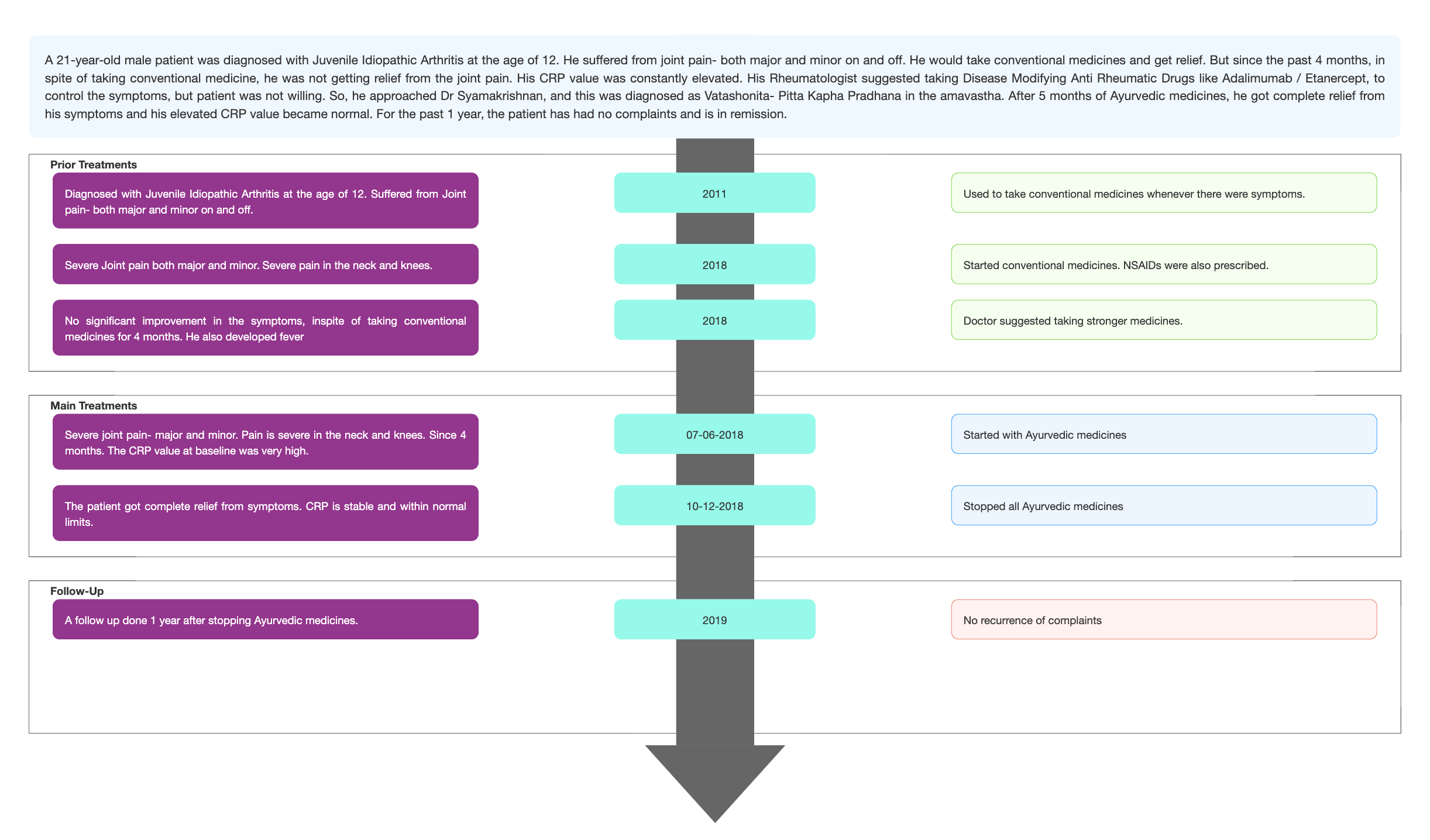
TIMELINE
Image 1. Timeline of events attached below
DIAGNOSTIC ASSESSMENT
Modern Diagnostic parameter: There are no specific diagnostic criteria for this condition. The ESR and CRP are taken as associated factors indicating the extent of inflammation in the body. The diagnosis is made basically by clinical evaluation, supported by blood parameters. In this case report, the patient was already diagnosed at the age of 12 years by a Rheumatologist and has had joint complaints on & off for many years.
Confirmed Diagnosis Documents & previous medicines:
Image 2. Confirmed diagnosis documents and previous medicines
Image 3. Blood reports at baseline attached below
Ayurvedic Assessment was done based on the clinical evaluation by the ayurvedic physician, the confirmed diagnosis from the modern hospital.
Differential Diagnosis- This does not apply as the patient came in with a definite diagnosis.
Prognosis- The condition may resolve within months, but some, suffer from the complaints for a longer duration. Juvenile idiopathic arthritis can cause serious complications, such as growth problems, damage to the joints and eye inflammation. So appropriate medical intervention is mandatory. This patient was non-responsive to the standard of care that he was given.
THERAPEUTIC INTERVENTION
See the tab 'Treatment Details'
FOLLOW-UP AND OUTCOMES
Both subjective and objective parameters were assessed. At the end of the ayurvedic treatment, the patient got complete relief from symptoms. The CRP level became normal and remained stable even after stopping the ayurvedic treatments.
Patient-assessed: Not relevant
Follow up test results: Blood parameters- CRP was continuously monitored throughout and after treatment also.
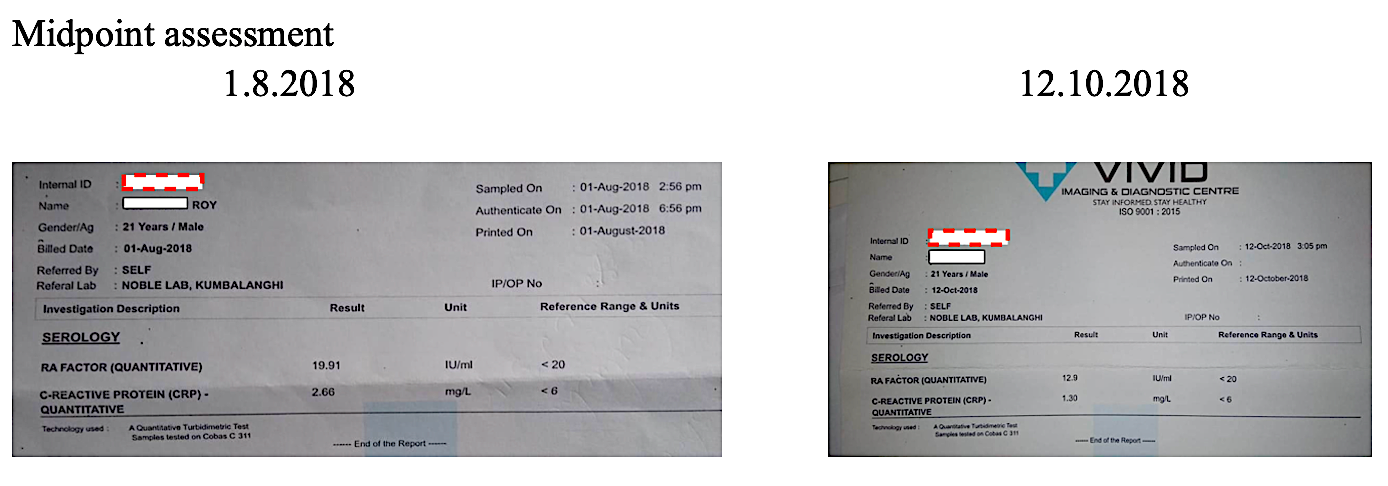
Image 4. Blood reports at midpoint and endpoint attached below
Table 1. CRP Values before and after Ayurvedic Treatment
Date
CRP Values
(Normal value <6 mg/L)
Before Treatment
8- 7- 17
84
3 - 3 -18
34.9
28 - 4- 18
78.03
After Treatment
1-8-18
2.66
12-10-18
1.3
10-12-18
3.78
Intervention adherence and tolerability – The patient adhered to the prescribed treatments and tolerated the treatments well.
Method of assessment- By monitoring the patient and the CRP level.
Adverse and unanticipated events: Initially after 5 days of medication, he developed complaints of hemorrhoids, bleeding per rectum, cracks in lips, raw tongue, chest pain, night fever, cough, constipation, etc. which resolved completely on changing an unhealthy diet like red chillie, bread etc. There were no medicines prescribed to manage this condition. These symptoms were managed just with changes in diet.
DISCUSSION:
The basic principle of treatment in Ayurveda is to assist the body in self-healing, rather than suppressing symptoms. Importance is given to the stage of disease than the disease proper. Treatments may be categorised into 3 stages. The first stage is (ama) a Metabolic/Immune toxic stage where the body is striving hard to eliminate the toxic radicals. Here the symptoms and signs may be severe but should not suppress symptomatically. Using painkillers, external applications and food and regimes suppress the symptoms, that Ayurveda does not propagate. Because it will only mask the disease process and make it a chronic one with remissions and exacerbations. (Vishama / Leena dosha). This case is a classic example of this. The first line is to avoid food and regimes which cause tissue toxicity. Mainly to avoid heavy dinner, Junk foods, highly processed food items, Addictive like black tea etc. And to follow a healthy lifestyle. So here pacana drugs (Antioxidants like acting drugs) were prescribed aiming at disintegration and elimination of metabolic toxins. Before entering the second stage a safe and transitional stage of medication was tried, wherein a smaller dose of Sneha (medicated fats) was administered along with decoctions to check the tolerance. As it was well tolerated, this was followed by smaller doses of sneha alone. The positive results assured that the body has attained the nontoxic stage or niramavastha and is fit for Sneha.
Then the Shamana dose of Sneha was administered to strengthen the system. This gave full symptomatic relief, and the blood parameters also normalised. To prevent the recurrence Rasayana drugs were prescribed. Even after stopping the medicines, the lab parameters remained stable. He has not reported any recurrence after one year of stopping the ayurvedic medicines. This shows the positive compliance of the Ayurveda approach. Sweda is generally contraindicated in Vatashonitam, and cause complications. Avipatti curna virechana in daily dose augmented the net outcome of the treatment by blood purification which will help to prevent a recurrence.
PATIENT’S PERSPECTIVE
Not available.
LEARNING POINTS/TAKE-HOME MESSAGES
A 21-year-old male patient, with a confirmed diagnosis of Juvenile Idiopathic Arthritis has been taking conventional medicine on & off since the age of 12. During the latest episode, being non-responsive to conventional medicine for 4 months, he opted for Ayurveda. With 5 months of ayurvedic medication, he got complete relief from symptoms and his CRP became normal. Even after stopping ayurvedic medicines, the CRP remained stable.
INFORMED CONSENT
Written consent was obtained from the patient.
ACKNOWLEDGEMENTS
None
CONFLICT OF INTEREST
None declared.
FUNDING
None
REFERENCE
- Barut K, Adrovic A, ?ahin S, Kasapçopur Ö. Juvenile Idiopathic Arthritis. Balkan Med J. 2017 Apr 5;34(2):90-101. doi: 10.4274/balkanmedj.2017.0111. PMID: 28418334; PMCID: PMC5394305.
- Gupta, A., and S. Sharma. “Concept of Gouty Arthritis (Vatarakta) in Ayurveda”. Himalayan Journal of Health Sciences, Vol. 5, no. 3, Dec. 2020, pp. 56-61. doi:10.22270/hjhs.v5i3.80.
Image 1. Timeline of events
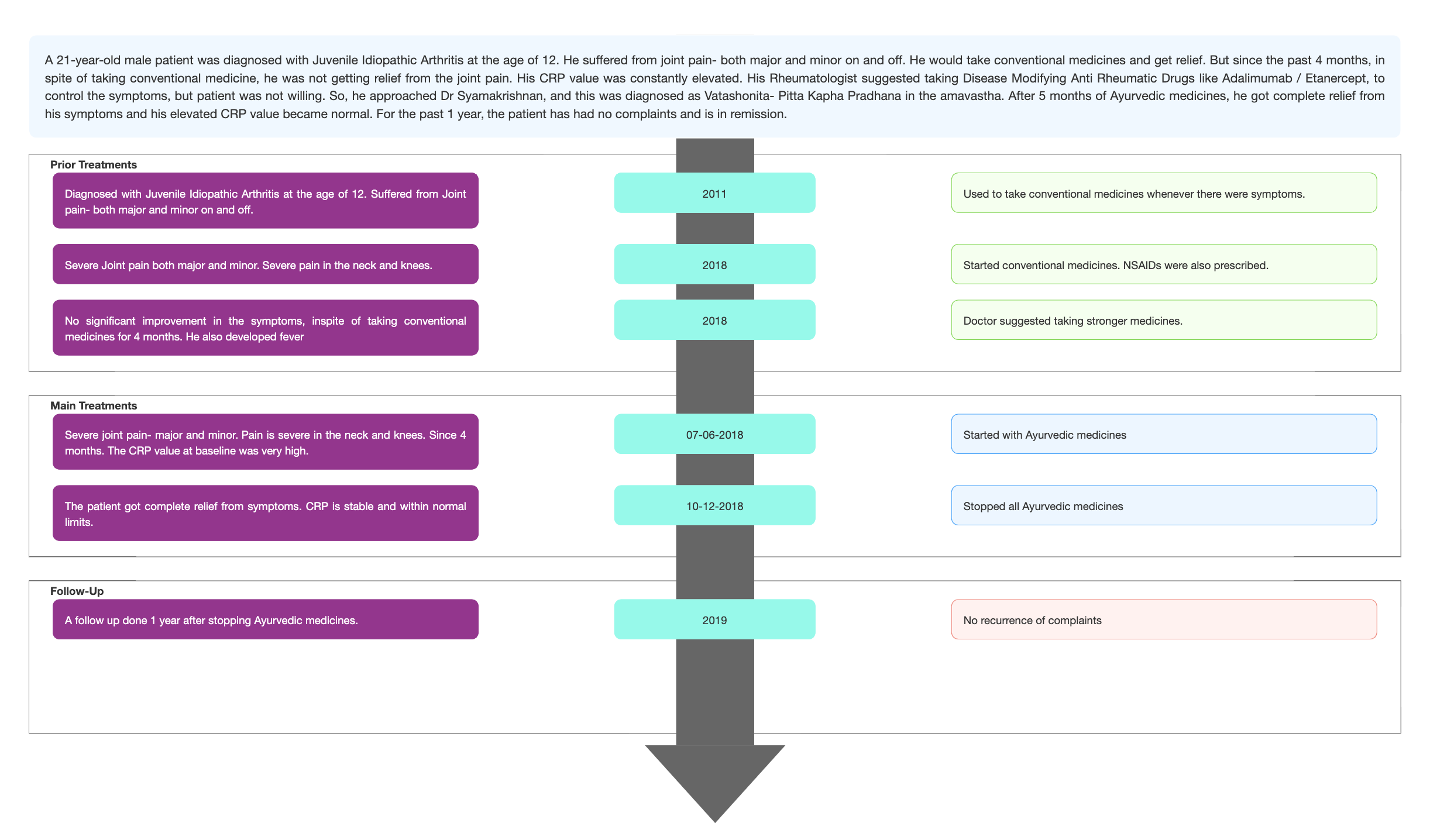
Image 2. Confirmed diagnosis documents and previous medicines

Image 3. Blood reports at baseline dated March 2018 and April 2018 attached below
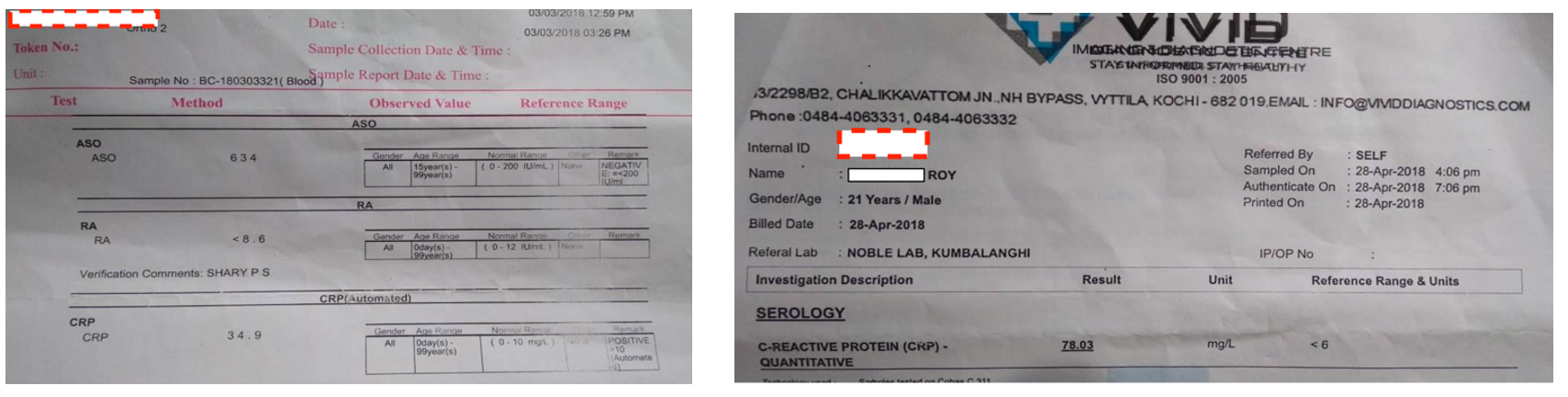
Image 4. Blood reports at midpoint and endpoint attached below
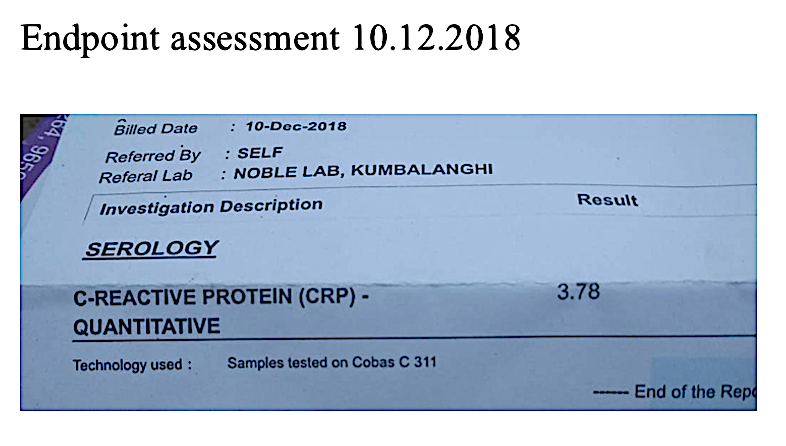
-
Immersive Learning
-
Modern Diagnosis
MODERN DIAGNOSIS; Juvenile Idiopathic Arthritis (JIA)
About the Disease:
Juvenile idiopathic arthritis indicates a spectrum of arthritic symptoms whose cause is unknown, and symptoms manifest before 16 years of age. This term includes several categories of diseases, each of which presents distinctly, with its characteristic clinical manifestations, and mostly has a genetic background and etiopathogenesis. There is no definitive cure from the available treatment options, but the disease can be managed with medicines.
Diagnostic Criteria- There are no specific diagnostic criteria sfor this condition. The ESR and CRP are taken as associated factors indicating the extent of inflammation in the body. The diagnosis is made basically by clinical evaluation, supported by blood parameters.
In this case report, the patient was already diagnosed at the age of 12 years by a Rheumatologist and has had joint complaints on & off since many years. At the time of the Ayurvedic consultation, he was on Methotrexate, sulfasalazine, and Folic Acid, but stopped medicines of his own choice, a week back as the response was very poor. He was also on antibiotics for fever and taking NSAIDs for pain but feeling no relief. Usually whenever the complaints manifested, he would take conventional medicine and get relief. But this episode in spite of taking medicines for almost 4 months, he got no relief. The Rheumatologist noted down that the response to the conventional medicines was very poor. So he will have to be prescribed stronger medications.
Image 1. Confirmed Diagnosis Documents & previous medicines: Attached Below
Image 2. Blood reports at baseline dated March and April 2018 attached below
Prognosis- The condition may resolve within months, but some, suffer from the complaints lifelong. Juvenile idiopathic arthritis can cause serious complications, such as growth problems, damage to the joints and eye inflammation. As there is the availability of several novel drugs that can inhibit the biological mechanisms causing the inflammation, there is scope for managing the condition effectively. Accurate diagnosis and prompt treatment can help prevent damage to the joint and preserve the functionality of the joint. This patient was non responsive to the standard of care that he was given.
Treatment- The optimal approach to the management of a child with JIA advocated is a multidisciplinary approach comprising an ophthalmologist, orthopaedic surgeon paediatric rheumatologist, psychologist, physical therapist, specialist nurse, and occupational therapist. Non-pharmacological and pharmacological interventions may be required in the management of JIA, as it affects the kids and presents with a spectrum of symptoms. The type of treatment chosen will depend upon the subtype, severity and the damage caused by the disease. NSAIDs are the mainstay treatment in all the subtypes of JIA.
Image 1. Confirmed Diagnosis Documents & previous medicines
Image 2. Blood reports at baseline dated March and April 2018
-
Ayurveda Diagnosis
AYURVEDIC DIAGNOSIS: Vatashonitam Pitta Kapha Pradhanam (amavastha)
About the Disease:
There is no direct correlation of Juvenile Idiopathic Arthritis to Ayurveda. But taking into consideration, the clinical presentation, the treating physician has correlated it as Vatashonitam or Vatarakta. The dosha been identified as Pitta Kapha pradhana. And the avastha is amavastha. There are diseases that can be directly linked to the diseases mentioned in the Ayurvedic texts. But sometimes, the diagnosis is such that the physician uses his yukti to create a term for the disease. Though the classical text clearly mentions that giving a name for a disease is not mandatory for treating a condition, here a terminology was given for the purpose of educating the reader.
Prognosis- There are basically two types of Vatarakta- Utthana and Gambhira. In the utthana avastha, it is sukhasadhya when supported with the appropriate medications. But in the Gambhiravastha, it is krcchrasadhya. In this patient, the symptoms have been prevailing since the age of 12 years, on and off. The patient used to take conventional medicines on & off whenever he had symptoms. He would undergo treatment and get relief. In this patient the onset is chronic, so the assumption is that it is in the gambhiravastha. So, the vyadhi is krcchrasadhya.
Treatment & Rationale of treatment: The basic principle of treatment in Ayurveda is to assist the body in self-healing, rather than suppressing symptoms. Importance is given to the stage of disease so the treatments can be planned likewise. Treatments may be categorised into 3 stages. The first stage is (ama) a Metabolic/Immune toxic stage where the body is striving hard to eliminate the toxic radicals. Here the symptoms and signs may be severe but should not suppress symptomatically. Using painkillers, external applications and food and regimes suppresses the symptoms, that Ayurveda does not propagate. Because it will only mask the disease process and make it a chronic one with remissions and exacerbations. (Vishama / Leena dosha). This case is a classic example of this. The first line is to avoid food and regimes which cause tissue toxicity. Mainly to avoid heavy dinner, Junk foods, highly processed food items, Addictive like black tea etc. And to follow a healthy lifestyle. So here pacana drugs (Antioxidants like acting drugs) were prescribed aiming at disintegration and elimination of metabolic toxins. Also avoided external symptomatic prescriptions. Before entering the second stage a safe and transitional stage of medication was tried, wherein a smaller dose of Sneha (medicated fats) was administered along with decoctions to check the tolerance. As it was well tolerated, this was followed by smaller doses of sneha alone. The positive results assured that the body has attained the nontoxic stage or niramavastha and is fit for Sneha.
Then the Shamana dose of Sneha was administered to strengthen the system. This gave full symptomatic relief, and the blood parameters also normalised. To prevent the recurrence Rasayana drugs were prescribed. Even after stopping the medicines, the lab parameters remained stable. He has not reported any recurrence after one year of stopping the ayurvedic medicines. This shows the positive compliance of the Ayurveda approach. Sweda is generally contraindicated in Vatashonitam, so treatments like Pinda sweda were not suggested. Avipatti curna virecana in daily dose augmented the net outcome of the treatment by blood purification which will help to prevent a recurrence.
-
Treatment
Name of Medicine Dosage Form Dosage Mode of Administrtation From - To (Date) Medicine Reference Pachanamrutam Kasayam Extract sachet 1 Oral with warm water twice daily 2018-06-07 - 2018-06-27 Sahasrayogam, Kashaya Prakaranam Gopichandanadi Gulika Gulika 1 Oral with warm water twice daily 2018-06-07 - 2018-06-27 Sahasrayogam, Gutika Prakaranam Sudarsanam Tablet Tablet 1 Oral, with warm water twice daily 2018-06-07 - 2018-06-27 Proprietary Medicine Rasnasaptakam Kasaya Extract sachet 1 Oral, with warm water twice daily 2018-06-07 - 2018-06-27 Cakradatta, Amavatadhikaram Erandasukumaram Tailam Tailam 10 drops Oral with warm water at bedtime 2018-06-07 - 2018-06-27 Proprietary Medicine Erandasukumaram Tailam Tailam 10 ml On empty stomach once daily 2018-07-10 - 2018-09-01 Ksheera Guduchi Capsule Capsule 2 Oral, with warm water twice daily after food 2018-06-27 - 2018-07-09 Proprietary Medicine Balaguducyadi Kasayam Tablet 2 Oral, with warm water twice daily 2018-07-10 - 2018-09-01 Proprietary Medicine Sukumara Ghrtam Ghrtam 20 ml Oral on empty stomach 2018-09-02 - 2018-09-02 AH.Su.15 Guduci Tablet 2 Oral, with warm water twice daily 12018-09-03 - 2018-09-13 Proprietary Medicine Sukumara Rasayanam Lehyam 10 gms Oral at bedtime 2018-09-14 - 2018-11-14 AH.Ci.14.41-47 Ksheera Guduci 101 Capsule Capsule 2-0-2 Oral with warm water 2018-09-14 - 2018-11-14 Proprietary Medicine -
Outcome Measures
OUTCOME MEASURES:
In this case report, the patient was already diagnosed as Juvenile Idiopathic Arthritis, at the age of 12 by a Rheumatologist. The patient has had joint complaints on & off since many years. Whenever the symptoms presented, he would take conventional medicines and get relief. But this episode, in spite of taking medicines for the past 4 months, he was not getting relief from his symptoms. So he decided to try Ayurvedic medicines. At the time of the Ayurvedic consultation, he was on Methotrexate, Sulfasalazine, and Folic Acid, until a week back. He was also on antibiotics for fever and taking NSAIDs for pain but no satisfactory outcome. The Rheumatologist noted down that the response to the conventional medicines was very poor. So he will have to switch over to stronger medications.
Outcomes: The outcomes were measured by assessing the subjective and objective parameters. The blood tests were repeated to measure the CRP. As there is no specific parameter to assess the outcome of treatment in Juvenile Idiopathic Arthritis, CRP was taken as an assessment criteria. CRP would indicate the rate of inflammation in the body.
Image 1. Mid point CRP values dasted 1.8.2018 and 12.10.2018 attached below
Image 2. Endpoint CRP values dated 10.12.2018 attached below
Disease Modifying effect: In Remission.
The patient got complete relief from symptoms. CRP is stable and within normal limits. Even after stopping the ayurvedic treatments, it remained stable. For 1 year, the patient has had no episode of joint pain and is leading a normal life.
Table 1. Blood parameters (CRP) monitored (Before treatment and After Treatment)
Date
CRP Values
(CRP normal range
<6 mg/L)Before Ayurvedic Treatment
8.7.2017
84
3 - 3 -18
34.9
28 - 4- 18
78.03
After Ayurvedic Treatment
1-8-18
2.66
12-10-18
1.3
10-12-18
3.78
Image 1. Mid point CRP values dasted 1.8.2018 and 12.10.2018
Image 2. Endpoint CRP values dated 10.12.2018
-