Featured Case
-
Abstract
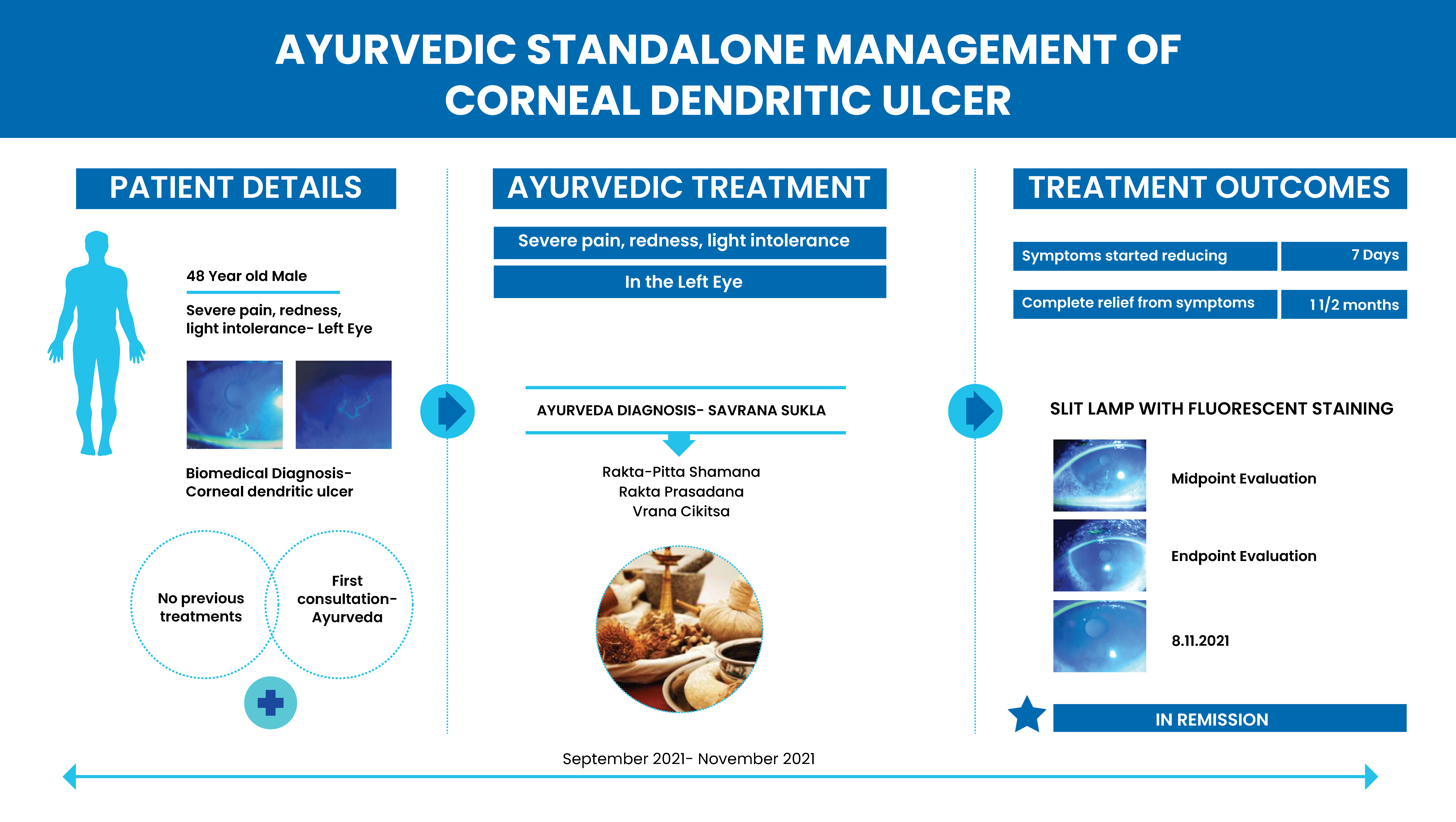
A 48-year-old male, approached Dr Sreekumar, presenting with severe pain, redness and light intolerance in the left eye for 1 week. Along with this he also had a blurring of vision in the Left Eye. As this was his first consultation, after a preliminary torch light examination at the OPD an opacity was noted in the inferior cornea of the left eye and the patient was sent for a detailed slit lamp evaluation and visual acuity assessment. The clinical diagnosis was Corneal Dendritic Ulcer. On history taking, the patient had a history of Chickenpox several years back and similar eye complaints a few years back, for which he took conventional medicines. But was not satisfied with the treatment. He also developed side effects in response to these medicines. So, in this episode, he opted for Ayurveda. The Ayurvedic Diagnosis was Savrana Shukla, In this patient, snehana, vranahara, vranaropana, shophahara treatments were given to pacify the aggravated rakta and pitta and do rakta prasadana. After 1 and half months of OP Ayurvedic medicines, he was completely asymptomatic and Slit lamp evaluation stained negative for ulcer without any opacities in the cornea.
-
Summaries
-
Listen
-
Watch
-
View
-
Read
A 48-year-old male, approached Dr Sreekumar, presenting with severe pain, redness and light intolerance in the left eye for 1 week. Along with this he also had a blurring of vision in the Left Eye. As this was his first consultation, after a preliminary torch light examination at the OPD an opacity was noted in the inferior cornea of the left eye and the patient was sent for a detailed slit lamp evaluation and visual acuity assessment. The clinical diagnosis was Corneal Dendritic Ulcer. On history taking, the patient had a history of Chickenpox several years back and similar eye complaints a few years back, for which he took conventional medicines. But was not satisfied with the treatment. He also developed side effects in response to these medicines. So, in this episode, he opted for Ayurveda. The Ayurvedic Diagnosis was Savrana Shukla, In this patient, snehana, vranahara, vranaropana, shophahara treatments were given to pacify the aggravated rakta and pitta and do rakta prasadana. After 1 and half months of OP Ayurvedic medicines, he was completely asymptomatic and Slit lamp evaluation stained negative for ulcer without any opacities in the cornea.
-
-
Timeline
-
Tabulated Summary
-
Narrative
TITLE OF CASE
Standalone Ayurvedic management of Dendritic Corneal Ulcer - A Case report
Dr Sreekumar. K, Dr Amrutha.S
ABSTRACT
A 48-year-old male, approached Dr Sreekumar, presenting with severe pain, redness and light intolerance in the left eye for 1 week. Along with this he also had a blurring of vision in the Left Eye. As this was his first consultation, after a preliminary torch light examination at the OPD an opacity was noted in the inferior cornea of the left eye and the patient was sent for a detailed slit lamp evaluation and visual acuity assessment. The clinical diagnosis was Corneal Dendritic Ulcer1. On history taking, the patient had a history of Chickenpox several years back and similar eye complaints a few years back, for which he took conventional medicines. But was not satisfied with the treatment. He also developed side effects in response to these medicines. So, in this episode, he opted for Ayurveda. The Ayurvedic Diagnosis was Savrana Shukla2, In this patient, snehana, vranahara, vranaropana, shophahara treatments were given to pacify the aggravated rakta and pitta and do rakta prasadana. After 1 and half months of OP Ayurvedic medicines, he was completely asymptomatic and Slit lamp evaluation stained negative for ulcer without any opacities in the cornea.
KEYWORDS
Dendritic Corneal ulcer, Keratitis, Savrana Sukla, Ksata sukra, Slit lamp, Fluorescein staining, Ayurveda, Standalone
INTRODUCTION
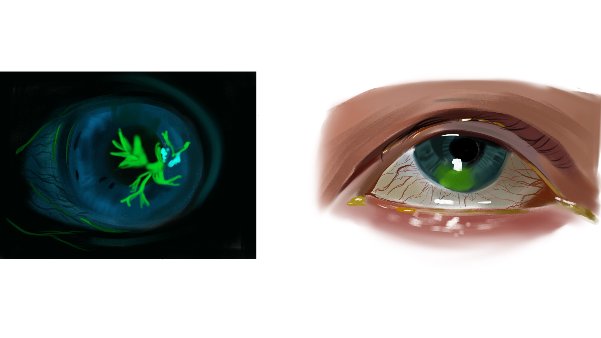
A dendritic ulcer is the best example of a herpetic corneal lesion, caused by the replicating herpes simplex virus. The pattern of the lesion is linear, and branching is dichotomous, with each branch ending with a bulb. The biggest concern with this disease is the recurrence that causes morbidity triggered by Herpes Simplex Keratitis. With each recurrence, the inflammation and scarring increase and corneal sensation decrease. Along with this, the possibility of being affected with a stromal disease increases followed by multiple recurrences. Even if immediate treatment is done, and the patient responds well, still scarring is common, leading to morbidity. Normally the recurrence is very close to the site of the previous episode—eventually, the visual axis is involved.
PATIENT INFORMATION
A 48-year-old male patient reported in regular OPD with complaints of severe pain, redness and light intolerance in left eye since 1 week. Along with this he also had blurring of vision for LE. No relevant family, surgical, genetic and psychosocial history.
Medical History: The patient had chicken pox when he was a kid, this may have been the cause for the patient to be the host of Herpes simplex virus. 10 years back, he developed similar eye complaints (in the patient’s words) and took allopathic treatment, but he was not satisfied, as his symptoms are worsened, and had side effects of the medicines for a specific period of time, after which he got relief from the symptoms. So this time, when he got similar symptoms he decided to opt for Ayurveda.
CLINICAL FINDINGS
Visual acuity was 6/60 for LE which is not improving with power glass correction. Slit lamp evaluation with Fluorescein staining identified the presence of branching linear lesion suggestive of Dendritic ulcer
TIMELINE
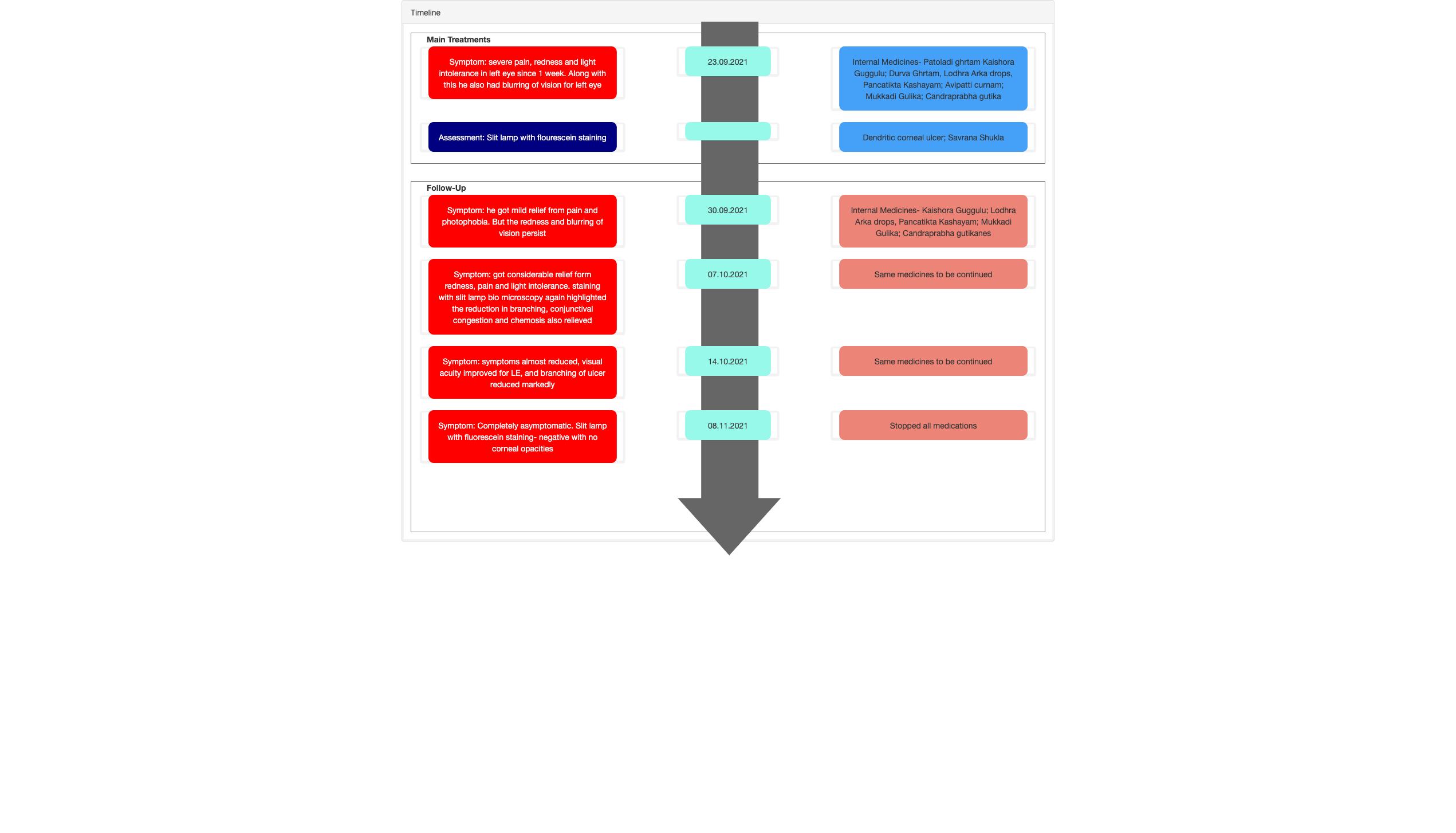
Image1 timeline attached
DIAGNOSTIC ASSESSMENT
Modern Diagnostic parameter: The patient explained this as a recurrent episode. Based on the previous history and clinical evaluation, the diagnosis was made. And this was confirmed with Slit lamp fluorescein staining.
Image 2- Baseline Evaluation attached
Ayurvedic Assessment was done based on the clinical evaluation by the ayurvedic physician
Differential Diagnosis- This does not apply as the patient came in with a definite diagnosis.
Prognosis: Good prognosis. This disease has a recurrent nature and with every episode of recurrence, the damage caused can be more. Though the clinical condition can be resolved with anti-viral treatments, if non-responsive, then can cause blindness. In the patient word’s several years back, had similar symptoms and took modern medicines. But the condition aggravated and developed side effects due to the strong medications. So he opted for Ayurveda this time, and within 7 days of ayurvedic medication, his symptoms started subsiding and in 1 and half months, the fluorescein staining was negative with no corneal opacities.
THERAPEUTIC INTERVENTION
See the tab 'Treatment Details'
FOLLOW-UP AND OUTCOMES
First Follow up- 30.9.21. He got mild relief from pain and photophobia. But the redness and blurring of vision persisted. Slit lamp staining revealed a reduced number of branching of ulcers but conjunctival congestion and chemosis got mild relief only.
Second Follow up- 7.10.21: patient got considerable relief from redness, pain and light intolerance. Staining with slit lamp biomicroscopy again highlighted the reduction in branching, conjunctival congestion and chemosis also relieved.
Image 3. Midpoint evaluation attached.
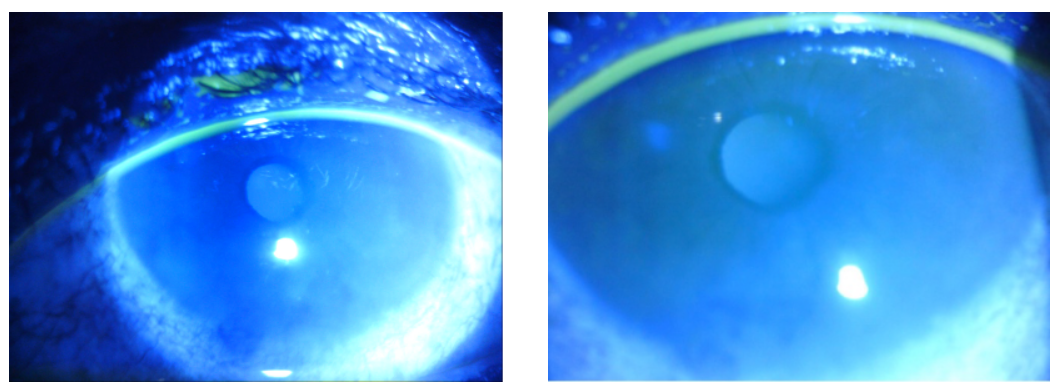
Third Follow up -14.10.21: symptoms almost reduced, visual acuity improved for LE, and branching of ulcer reduced markedly. After 1 and half months, he reported to the OPD, completely asymptomatic. Slit lamp evaluation stained negative for ulcer without any opacities in the cornea.
Clinician-based assessment; The patient was advised to report for review at OPD after every 7 days of medications for a period of 1 month. Every review of the symptomatic assessment and slit lamp examination for the evaluation of the status of the ulcer. The symptoms reduced significantly with every passing week.
Image 4. Endpoint Evaluation attached.
Patient-assessed; Not relevant
Intervention adherence and tolerability – The patient adhered to the prescribed treatments and tolerated the treatments well.
Method of assessment- Subjective and Objective parameters were assessed.
Adverse and unanticipated events; None reported
DISCUSSION:
This condition was explained as Savrana sukla by Susruta and Ksata sukra by Vagbhata. Patient reported in OPD with ocular pain, photophobia, watering and redness while exploring kshata sukra Vagabata incorporated these symptoms as Toda, Asru and Raga, depending upon the depth of ulcer severity of symptoms also changes.
Acharya also explained the prognosis of the ulcer by analyzing the nature of the ulcer such as condition is easily curable if the wound is not so deep, not near the pupil, not more than one in number with no discharge and no pain. This condition is considered as Pitta dosa pradhana by Vagbata and Rakta dosa pradhana by Susruta. So, we can adopt Rakta-pitta samana and rakta prasadana line of managements. Vagabhata gave detailed choices of treatments for Khata sukra whereas Susruta described it under Raktabhisyandha cikitsa. Vrana cikitsa was described in detail by Acarya Susruta in Dwivraneeya Adyaya and in this case kshata sukra cikitsa of Vagbhata is integrated with Dwivraneeya cikitsa of Susruta. In kshata sukra cikitsa it is advised to start with snehapana with ghrta corresponding to dosa dominance followed by rakta mokshana by jaluka or sira vyadha. For getting relief from the pain kshiraseka processed with madhura rasa drugs and lekhana anjanas are also mentioned. But the use of anajna is restricted here because the condition is associated with conjunctival congestion and chemosis.
Due to the severity of pain, the treatment started with the internal administration of Patoladi ghrta as samana matra along with Panchatiktaka Kashaya and Kaisora guggulu. Panchatiktaka Kashaya is basically pitta samana and anti-inflammatory. The active stage of corneal ulcerations are characterized by hyperaemia of circum corneal vessels, some degree of iritis and vascular congestion of the ciliary body and iris. So rakta –pitta samana, vranahara and sophahara medicines are important in the management of corneal ulcer. As an emergency management, Kaisora guggulu is very effective and having vranahara and rakta-pitta samana qualities. Chandraprabha gutika is having good results in the management of various types of sopha. Patoladi grita is the best choice of snehapana in this category as it has effects on sukra, kushta and even for dushta vrana. Distilled form of lodhra is prepared in Shalakyatantra department- Trivandrum and administered to the patient as eye drops. Durva ghrta manufactured from durva svarasa, yashti madhu, ghee and cow’s milk is highly effective in vrana ropana, which is applied as netra pichu for the left eye from the first course of treatment itself. As a result of this, the patient got mild symptomatic relief and the branching of the ulcer started to heal and respond well to treatments from the beginning itself.
To get relief from the persisting symptoms like pain, chemosis and congestion, additional treatments like lodhrakshira seka and lepa are incorporated. Lodhra is basically sita virya and tikta kashaya rasa, so is rakta-pitta samana and has proven anti-inflammatory and wound healing qualities. Among Shashtirupakrama, lepa is best indicated when the ulcer is associated with pain and swelling and the drugs of choice for lepa depend on the predominance of dosa. Mukkadi gutika along with milk for lepa yielded the best results. Mukkadi gutika is a combination of drugs having pitta-rakta samana properties and best in netra rogas presenting with swelling, pain and redness. Avipatti curna virecana in daily dose augmented the net outcome of the treatment by purifying the blood which will help to prevent a recurrence.
PATIENT’S PERSPECTIVE
Not available.
LEARNING POINTS/TAKE-HOME MESSAGES
The dendritic corneal ulcer has a good prognosis, but the disease has a recurrent nature. According to the patient, as he did not have satisfactory results with modern medicines in his previous episode, he tried Ayurveda in this recurrent episode. Within 7 days the symptoms started subsiding and he got complete relief within 1 and half months. Slit lamp with fluorescein stained negative. Ayurveda can be considered as an alternative treatment in recurrent episodes of Dendritic corneal ulcer, where there is always a risk of losing vision if the appropriate treatments are not given.
INFORMED CONSENT
Written consent was obtained from the patient.
ACKNOWLEDGEMENTS
None
CONFLICT OF INTEREST
None declared.
FUNDING
None
REFERENCE
- Teng CC. Images in clinical medicine. Corneal dendritic ulcer from herpes simplex virus infection. N Engl J Med. 2008 Oct 23;359(17):e22. doi: 10.1056/NEJMicm070168. PMID: 18946058.
- Agarwal Riju et.al., Clinical aspects of diseases of cornea in Ayurveda. 2016, 7(4), 130-135
Image 1. Timeline
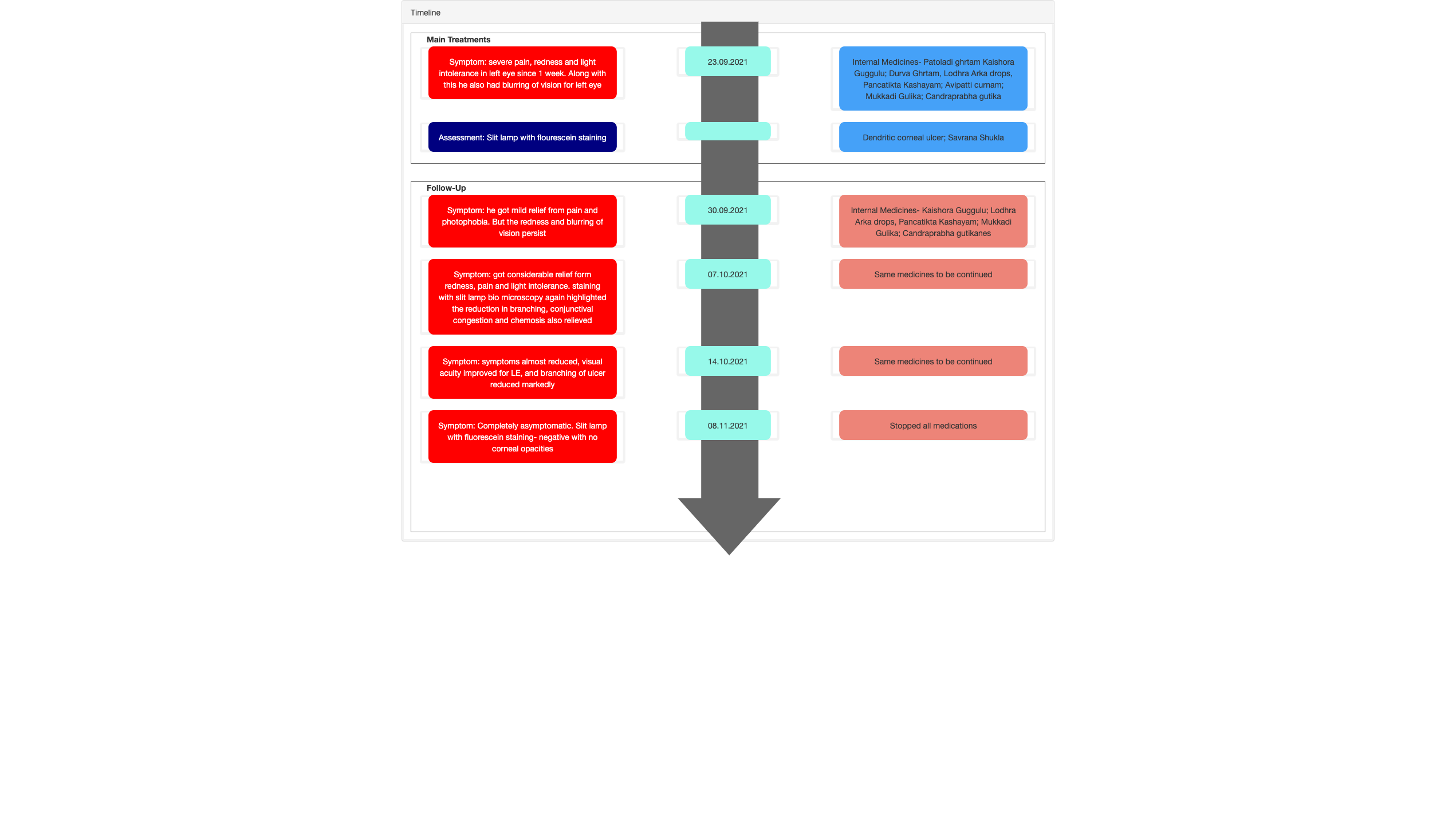 Image 2. Baseline Images. Slitlamp with fluorescein staining. 23.09.2021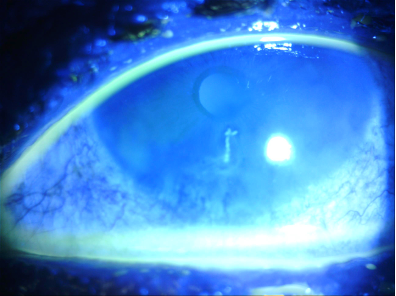
Image 3. Midpoint Evaluation
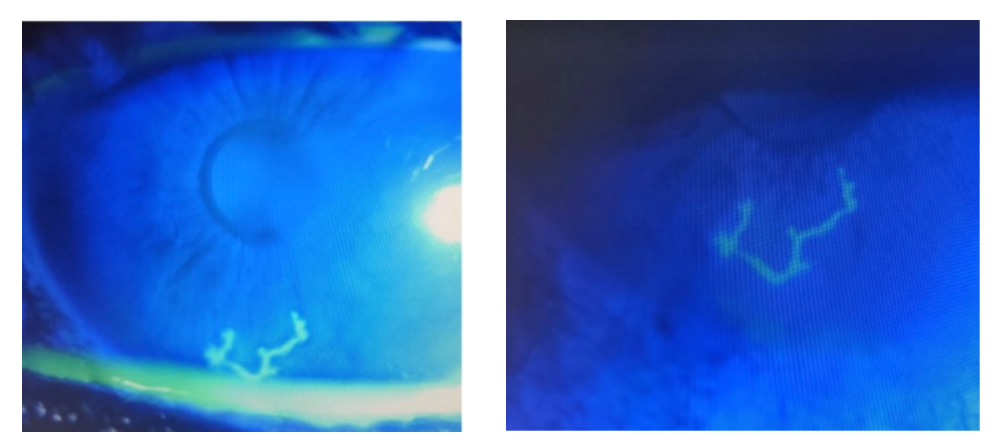
Image 4. Endpoint Evaluation. Slitlamp with Fluorescein staining. 8.11.2021
-
Immersive Learning
-
Modern Diagnosis
MODERN DIAGNOSIS: Dendritic corneal ulcer
ABOUT THE DISEASE:
Dendritic ulcer is the best example of a herpetic corneal lesion, caused by the replicating herpes simplex virus. The pattern of the lesion is linear, and branching is dichotomous, with each branch ending with a bulb.
The biggest concern with this disease is the recurrence that causes morbidity triggered by Herpes Simplex Keratitis. With each recurrence, the inflammation and scarring increase and corneal sensation decrease. Along with this, the possibility of being affected with a stromal disease increases followed by multiple recurrences.
Even if immediate treatment is done, and the patient responds well, still scarring is common, leading to morbidity. Normally the recurrence is very close to the site of the previous episode—eventually, the visual axis is involved.
Diagnostic Criteria- Clinical evaluation and slit lamp with fluorescein staining. In this patient, a chicken pox infection several years back might have been the cause of the virus infection. In the patient’s words, he suffered from similar complaints a few years back for which he sought modern treatment, but he developed side effects due to the medicines, and it was a struggle for him. So this time, when he got pain, intolerance to bright light and blurring of vision in the left eye, he opted for Ayurveda.
Image 1.Baseline Images attached below
Prognosis- Normally resolution happens very fast, but scarring is very common. But if the treatment does not work then it can cause permanent loss of vision.
Treatment- The primary drug of choice is topical trifluridine for best results. For prophylaxis of HSV infection, the most used is acyclovir, valacyclovir, and famciclovir are the main systemic antivirals used in the treatment of HSK. Though the therapeutic index is high, the problem is with the resistance as in the case of immunocompromised patients. Apart from this, there is also a cross-resistance among Acyclovir, valacyclovir, and famciclovir.
Baseline- Slit lamp with fluorescein staining 23.9.2021
-
Ayurveda Diagnosis
AYURVEDIC DIAGNOSIS: Savrana Shukla
ABOUT THE DISEASE:
The clinical presentation of dendritic ulcer can be correlated with Savrana sukla or Kshata sukla mentioned in Ayurveda classical textbooks. These conditions are dominated with Rakta – Pitta dosas and are always associated with Toda, Asru srava and Raga. This always manifests as an acute condition and the patient may have a severe degree of ocular pain and visual impairments.
Savrana sukla has been explained by Acarya Susruta and on the same note Ksata sukra by Acarya Vagbhata. In this case report, the patient came to the OPD with ocular pain, photophobia, watering, and redness of the eyes. In kshata sukra, Vagabhata has incorporated these symptoms as Toda, Asru and Raga, depending upon the depth of the ulcer, the severity of symptoms also intensifies.
Acarya also explained the prognosis of the ulcer by analyzing the nature of the ulcer such as the condition is easily curable if the wound is not so deep, not located near the pupil, not more than one in number, with no discharge and is painless. Most of these symptoms match with the clinical presentation of the patient, the condition is considered to have a good prognosis. This condition is considered as Pitta dosa pradhana by Vagbhata and Rakta dosa pradhana by Susruta. So we can adopt Rakta-pitta samana and rakta prasadana line of managements. Vagabhata gave detailed options of treatment for Khata sukra whereas Susruta described it under Raktabhisyandha chikitsa. Vrana cikitsa was described in detail by Acarya Susruta in Dwivraneeya Adhyaya and in this case kshata sukra cikitsa of Vagbhata can be integrated with Dwivraneeya cikitsa of Susruta. In kshata sukra cikitsa it is advised to start with snehapana with ghrta corresponding to dosa dominance followed by rakta mokshana by jaluka or sira vyadha. For getting relief from the pain kshiraseka processed with madhura rasa drugs and lekhana anjanas are also mentioned. But the use of anjana is restricted here because the condition is associated with conjunctival congestion and chemosis.
Prognosis- Sadhya Vyadhi
Treatment: Here the treatment target was basically Rakta-pitta shamana and rakta prasadana. Rakta-pitta shamana would reduce inflammation and give relief from symptoms. Medicines like Candraprabha which is shopha hara and Kaishora guggulu which is vranahara helped in pacifying the clinical condition. Avipatti curna virecana in daily dose augmented the net outcome of the treatment by purifying the blood which will help to prevent a recurrence.
In this patient, snehanam, vranahara, vranaropana, shophahara treatments were given to pacify the aggravated rakta and pitta and do rakta prasadana. In the process, the symptoms would subside, and the recurrence can be prevented.
-
Treatment
Name of Medicine Dosage Form Dosage Mode of Administrtation From - To (Date) Medicine Reference Panchatiktakam kashayam Kashaya Panam 90ml (diluted), twice daily on empty stomach at 6am and 6pm. 2021-09-23 - 2021-11-10 Cakradatta, Jvara Cikitsa132 Kaishora guggulu Tablet 1 BID before food Oral, with warm water 2021-09-23 - 2021-10-20 Sahasrayogam, Gutika Prakaranam Patoladi gritham Ghrtam 10gm twice daily before food Oral 2021-09-23 - 2021-09-25 Ashtanga Hridayam, Uttarasthana 13/6-9 Durva ghrtam Ghrtam Required quantity External application as Netra Picu in the left eye. 2021-09-23 - 2021-09-29 Proprietary Medicine Avipatti curnam Curnam 10 gm a bedtime Oral, with warm water 2021-09-23 - 2021-09-29 Sahasrayogam, Curna Prakaranam Mukkadi Gutika Gutika 1 powdered External, powdered and mixed with milk and applied as lepa on the left eye 2021-09-30 - 2021-10-13 Sahasrayogam, Gutika Prakaranam Lodhra curnam Curnam Made into a Kshira Kashaya Made into Ksheera Kashaya and seka done on the left eye 2021-09-30 - 2021-11-11 Anubhuta Yogam Chandraprabha gutika Gutika 1 BID- before meals Oral, with warm water 2021-09-30 - 2021-10-27 Sahasrayogam, Gutika Prakaranam -
Outcome Measures
OUTCOME MEASURES:
A 48-year-old male patient complained of severe pain, redness and light intolerance in the left eye for 1 week. Along with this he also had blurring of vision in the Left eye. He had similar problem years back, and he took conventional medicines. He developed side effects, and symptoms worsened for a specific time before he got complete relief. So this episode, he decided to try Ayurvedic treatment.
The outcomes were measured by continuous monitoring and weekly follow-up. Subjective and objective parameters were measured. A slit lamp with fluorescein staining was done at the midpoint and at the endpoint. The linear branching lesions in the cornea have disappeared. There are no corneal opacities.
Images- Midpoint and Endpoint added as attachments
Disease-modifying effect: In Remission
Within 7 days of ayurvedic medication, his symptoms started subsiding and in 1 and half months, the fluorescein staining was negative with no corneal opacities. The patient got complete relief from symptoms. Visual acuity improved in the left eye.
Image 1.Midpoint Evaluatiion
Image 2. Endpoint Evaluation. 8.11.2021
-