Featured Case
-
Abstract
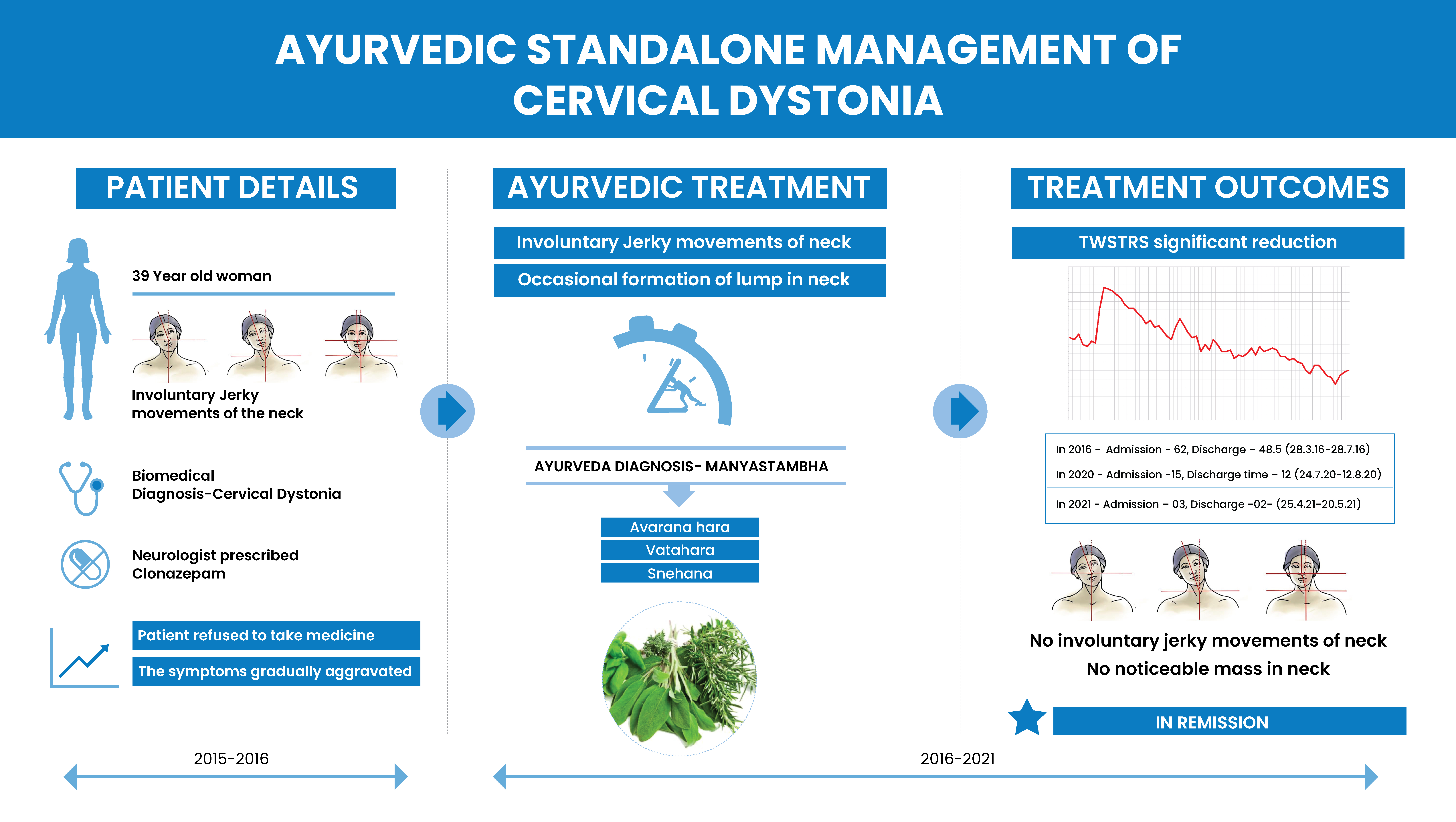
A 39-year-old female diagnosed as Cervical dystonia/Torticollis presented with involuntary jerky movement of head towards the left side without any tremor. Neck stiffness present occasionally. Clinical diagnosis was made based on the presentation. She was prescribed Clonazepam by Neurologist, the patient being reluctant to take this medicine approached Dr KG Raveendran. This condition was diagnosed as Manyasthambham. The line of treatment given was Vatahara, Avaranahara, Brhmana and Snehana. She underwent follow up courses of In-Patient Ayurvedic treatments in 2020 and 2021, as instructed by the Physician. After the Ayurvedic treatments, she was able to place her head in a straight position without any jerky movements.
The TWSTRS (Toronto Western Spasmodic Torticollis Rating Scale) pre and post treatment was used for assessing the outcomes. The Score for the 3 courses of treatments were recorded as follows:
In 2016 - Admission - 62, Discharge – 48.5 (28.3.16-28.7.16)
In 2020 - Admission -15, Discharge time – 12 (24.7.20-12.8.20)
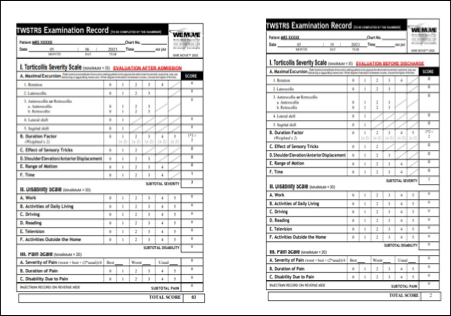
In 2021 - Admission – 03, Discharge -02- (6.5.21-19.5.21)
-
Summaries
-
Listen
-
Watch
-
View
-
Read
A 39-year-old female diagnosed as Cervical dystonia/Torticollis presented with involuntary jerky movement of head towards the left side without any tremor. Neck stiffness present occasionally. Clinical diagnosis was made based on the presentation. She was prescribed Clonazepam by Neurologist, the patient being reluctant to take this medicine approached Dr KG Raveendran. This condition was diagnosed as Manyasthambham. The line of treatment given was Vatahara, Avaranahara, Brhmana and Snehana. She underwent follow up courses of In-Patient Ayurvedic treatments in 2020 and 2021, as instructed by the Physician. After the Ayurvedic treatments, she was able to place her head in a straight position without any jerky movements.
The TWSTRS (Toronto Western Spasmodic Torticollis Rating Scale) pre and post treatment was used for assessing the outcomes. The Score for the 3 courses of treatments were recorded as follows:
In 2016 - Admission - 62, Discharge – 48.5 (28.3.16-28.7.16)
In 2020 - Admission -15, Discharge time – 12 (24.7.20-12.8.20)
In 2021 - Admission – 03, Discharge -02- (6.5.21-19.5.21)
-
-
Timeline
-
Tabulated Summary
-
Narrative
TITLE OF CASE
Successful Ayurvedic management of a chronic case of Cervical Dystonia - A Case report
Dr K G Raveendran
ABSTRACT
A 39-year-old female diagnosed as Cervical dystonia/Torticollis [1] presented with involuntary jerky movement of head towards the left side without any tremor. Neck stiffness present occasionally. Clinical diagnosis was made based on the presentation. She was prescribed Clonazepam by Neurologist, the patient being reluctant to take this medicine approached Dr KG Raveendran. This condition was diagnosed as Manyasthambham2. The line of treatment given was Vatahara, Avaranahara, Brhmana and Snehana. She underwent follow up courses of In-Patient Ayurvedic treatments in 2020 and 2021, as instructed by the Physician. After the Ayurvedic treatments, she was able to place her head in a straight position without any jerky movements. The TWSTRS (Toronto Western Spasmodic Torticollis Rating Scale) pre and post treatment was used for assessing the outcomes. The Score for the 3 courses of treatments were recorded as follows:
In 2016 - Admission - 62, Discharge – 48.5 (28.3.16-28.7.16): In 2020 - Admission -15, Discharge time – 12 (24.7.20-12.8.20) and in 2021 - Admission – 03, Discharge -02- (6.5.21-19.5.21)
KEYWORDS
Ayurveda, Manyasthambha, Cervical Dystonia, Torticollis, Ayurveda, Standalone
INTRODUCTION
Cervical dystonia, also called spasmodic torticollis, is a very painful condition where the neck muscles involuntarily contract, resulting in the head twisting or turning to one side. Sometimes, this condition can also cause the head to tilt forward or backwards uncontrollably. This is a rare disorder that can occur at any age, is more prevalent in women than men and is normally found during middle age.
Diagnostic Criteria: The manifestations of the symptoms are very gradual, and they reach a point where they become a constant clinical presentation. Diagnosis is made based on the clinical presentation. But the doctor may suggest some additional blood tests and MRI to rule out or assess any underlying disease condition. In this patient, the provisional diagnosis was made by her Neurologist based on the clinical presentations.
PATIENT INFORMATION
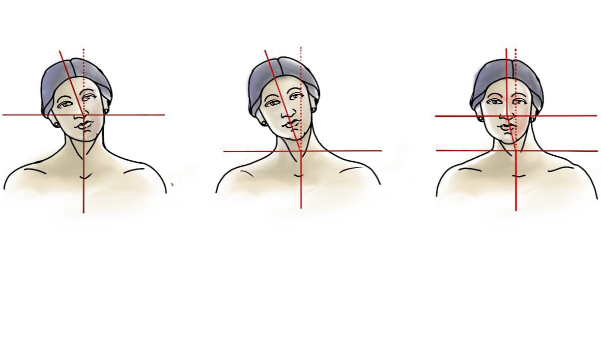
A 39-year-old female patient presented with involuntary jerky movement of head towards the left side without any tremor. There is occasional stiffness and a noticeable presence of mass on one side of neck that recuperates itself.
Medical History: The patient is a known case of Torticollis / Cervical Dystonia since February 2016. The patient was apparently healthy till end of December 2015. She noticed slight pain in the nape of the neck but did not consult anybody and eventually felt some instability of the neck with slightest tremor. This would gradually end up as involuntary movement of the neck to left side. Initially, the movement of the neck was slow and uniform to left side without jerk and eventually presented with jerky movement to the left side and then presented with complete tilt of the head to left side. This was also accompanied with pain in the nape of the neck. She used to try to control the jerk with back support or by applying pressure in the back of the head. These symptoms were absent while on lying position. Now she consulted a Neurologist, who made the provisional diagnosis. She was prescribed Clonazepam which she was reluctant to consume. So, in 2016 she consulted the specific Ayurvedic physician and took Inpatient treatment for 3 months. On discharge, she found less intensity and frequency of jerking of the neck. The position of neck was tilted to the left side back then. Since then, she underwent 3 courses of Inpatient treatment over a span of 5 years (2016-2021). So, in 2016 she consulted the specific Ayurvedic physician, and took Inpatient treatment for 3 months. On discharge, she found less intensity and frequency of jerking of the neck. The position of neck was tilted to the left side back then. Since then, she underwent 3 courses of Inpatient treatment over a span of 5 years (2016-2021).
PHYSICAL EXAMINATION/CLINICAL FINDINGS
General Examination: Normal; Respiratory System; B/L Lung fields are clear. Cardiovascular System: S1, S2 Heard. Gastrointestinal System: No bloatedness, Tenderness or Organomegaly
TIMELINE
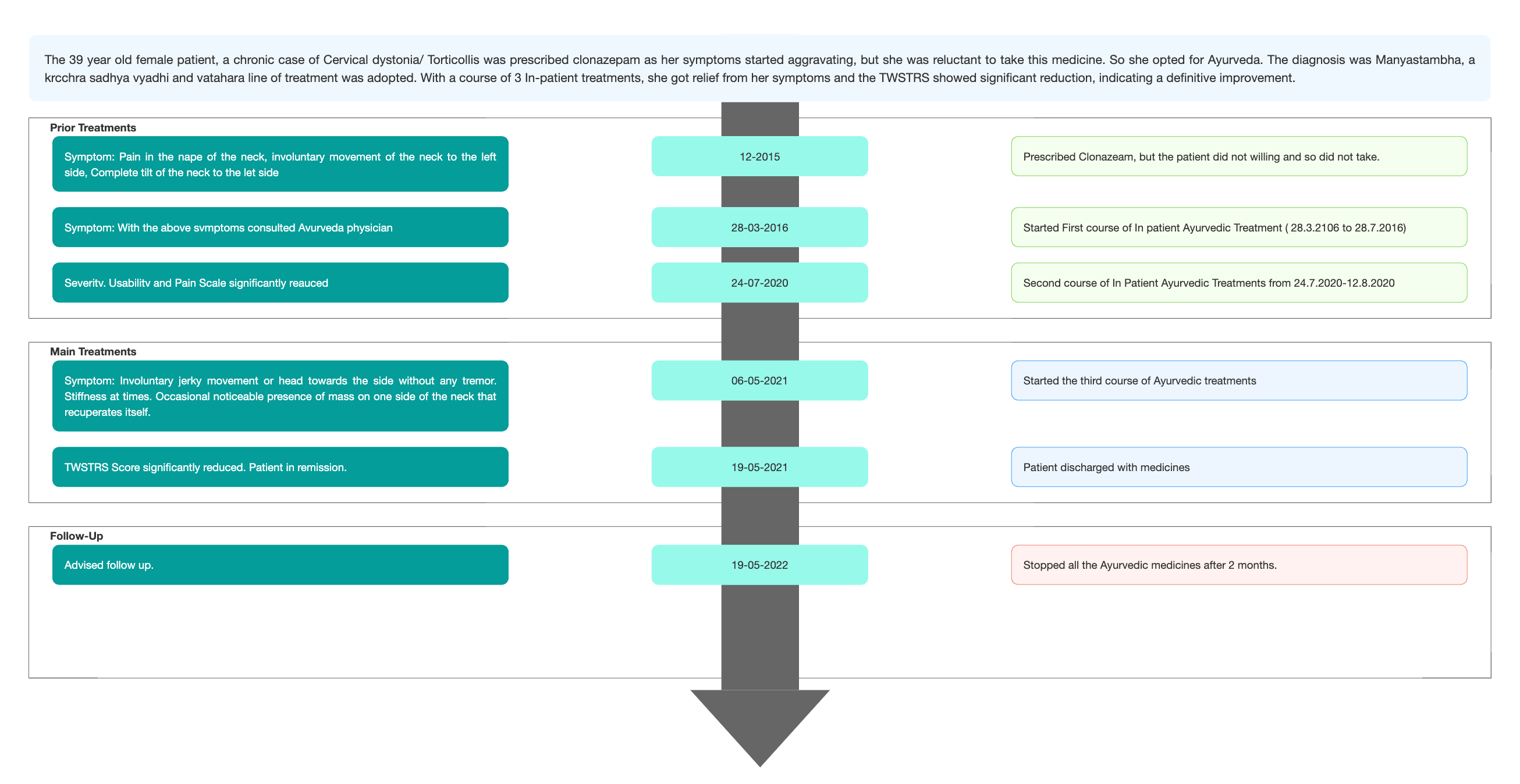
Image 1. Timeline of events Attched below
DIAGNOSTIC ASSESSMENT
Modern Diagnostic parameter: A Provisional diagnosis was made based on the clinical presentation.
Ayurvedic Assessment was done based on the clinical evaluation by the ayurvedic physician Differential Diagnosis- There was no clinical presentation indicating any other pathology.
Prognosis- Prognosis & Treatment: The safest and efficient treatment of choice is injection of Botulinum toxin into the affected neck muscles. Studies show that most patients have good efficacy and health-related quality of life also in the long term. The minority of patients with unsatisfactory treatment responses should be evaluated for pallidal deep brain stimulation. Treatment may be considered ineffective if neither the patient nor the therapist has observed a satisfactory reduction of symptoms or if significant adverse effects occur. Studies have shown that most patients stop their treatments finding it unsatisfactory. This patient did not want to take Clonazepam and so opted for Ayurveda. This was stated as a Krcchrasadhya vyadhi by the treating physician.
THERAPEUTIC INTERVENTION
See the tab 'Treatment Details'
FOLLOW-UP AND OUTCOMES
The patient is advised to come for a follow up next year for assessment.
Clinician-based assessment; Absence of involuntary jerky movements throughout the course of treatment. No noticeable mass over the neck and pulsating sensation inside the neck.
Patient-based assessment: TWSTRS SCORE (TORONTO WESTERN SPASMODIC TRTICOLLIS RATING SCALE SCORE) done pre and post treatment were as follows:
In 2016 - Admission - 62, Discharge – 48.5 (28.3.16-28.7.16)
In 2020 - Admission -15, Discharge time – 12 (24.7.20-12.8.20)
In 2021 - Admission – 03, Discharge -02 (25.4.21-20.5.21)
Image 2. TWSTRS documented in 2016
Image 3. TWSTRS documented in 2020
Image 4. TWSTRS documented in 2021
Intervention adherence and tolerability – The patient adhered to the prescribed treatments and tolerated the treatments well.
Method of assessment- By monitoring the patient.
Adverse and unanticipated events; None reported
DISCUSSION:
Cervical dystonia cannot be exactly correlated to any specific clinical condition mentioned in the classical Ayurvedic textbooks. This was diagnosed as Manyasthambha by the treating physician, based on the clinical presentation. The main line of treatment adopted was vatahara to reduce the atipravritti of vata and to address the avarana.
The target of the treatment was:
a. Avaranahara
b. Vatahara
c. Snehana
d. Brimhana
PATIENT’S PERSPECTIVE
Not available.
LEARNING POINTS/TAKE-HOME MESSAGES
The patient, a chronic case of Cervical dystonia was reluctant to take clonazepam, so she opted for Ayurveda. She was diagnosed as Manyastambha, a krcchra sadhya vyadhi and vatahara line of treatment was adopted. With a course of 3 Inpatient treatments, she got relief from her symptoms and the TWSTRS showed significant reduction.
INFORMED CONSENT
Written consent obtained from patient.
ACKNOWLEDGEMENTS
None
CONFLICT OF INTEREST
None declared
FUNDING
None
REFERENCE
-
Reichel G, Kamm C, Kang JS, Müngersdorf M, Paus S, Reuter I, Stenner A, Weise D. Zervikale Dystonien [Cervical Dystonia]. Fortschr Neurol Psychiatr. 2018 Jun;86(6):368-386. German. doi: 10.1055/s-0043-107834. Epub 2018 Jun 28. PMID: 29954019.
-
Katkar et al. Conceptual study of Mashadi Taila Nasya in Manyastambha with special reference to Sharangdhara Samhita. World Journal of Pharmaceutical Research. Vol 8, Issue 13, 2019.
Image 1. Timeline of events
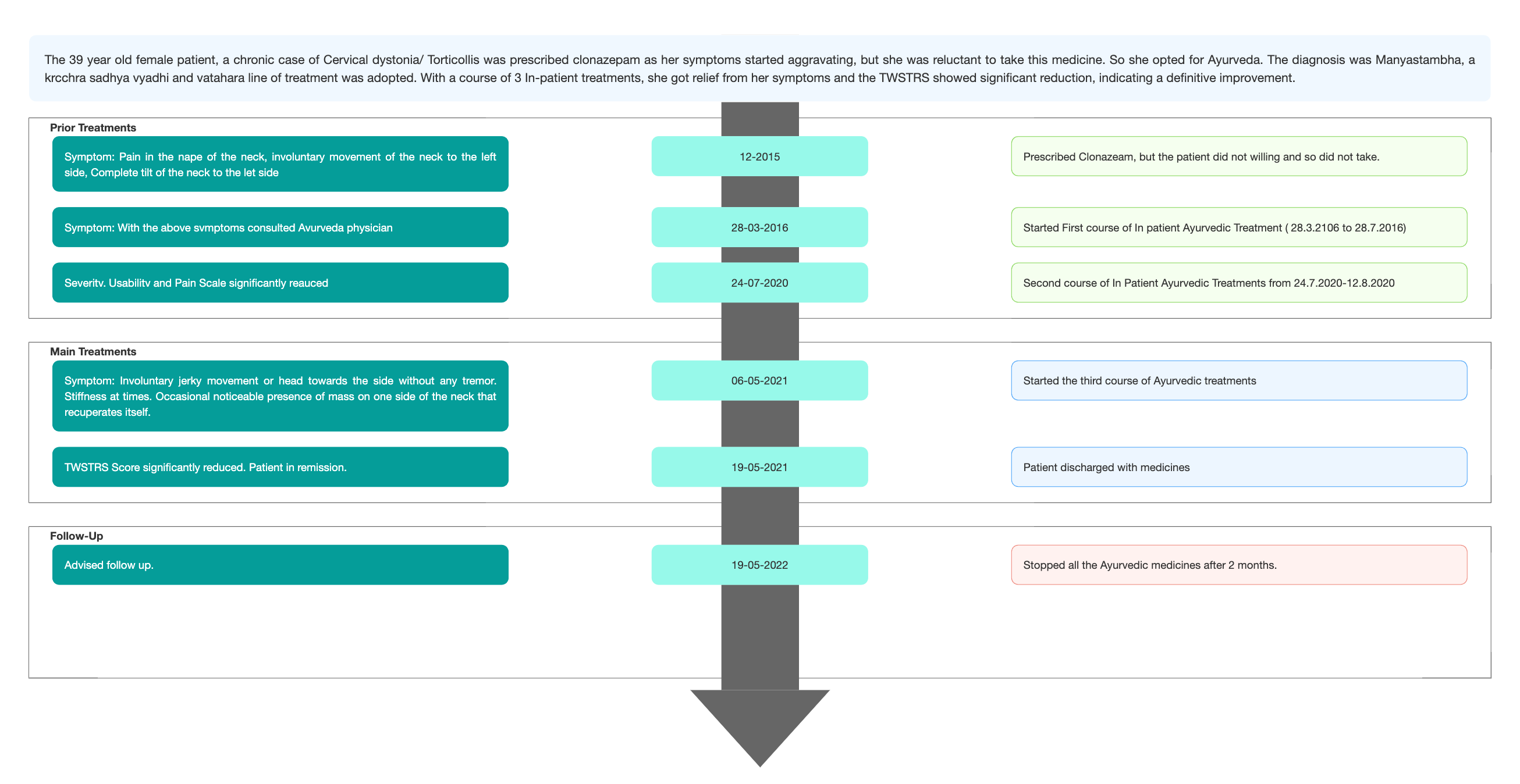
Image 2. TWSTRS documented in 2016
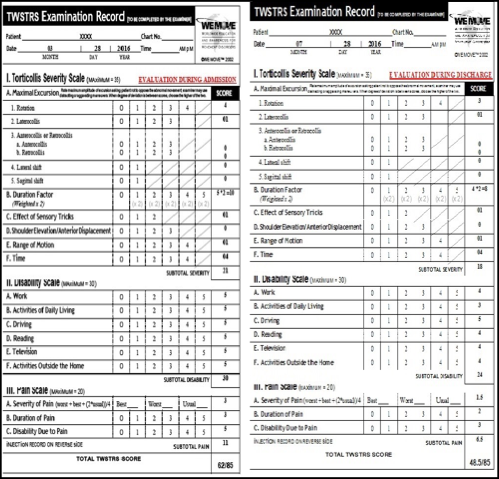
Image 3. TWSTRS documented in 2020
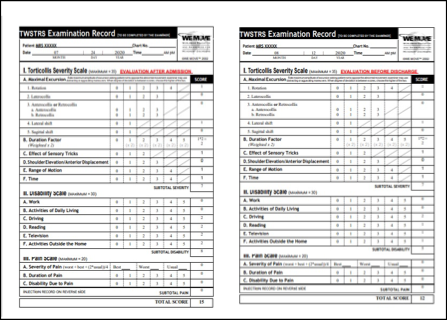
Image 4. TWSTRS documented in 2021
-
-
Immersive Learning
-
Modern Diagnosis
MODERN DIAGNOSIS: CERVICAL DYSTONIA
ABOUT THE DISEASE:
Cervical dystonia, also called spasmodic torticollis, is a very painful condition where the neck muscles involuntarily contract, resulting in your head twisting or turning to one side. Sometimes, this condition can also cause the head to tilt forward or backwards uncontrollably. This is a rare disorder that can occur at any age, is more prevalent in women than men and is normally found during middle age.
This case report is of a 39-year-old female, who was provisionally diagnosed with Cervical dystonia in 2015. When the symptoms of instability with the slightest tremor in the neck, which gradually ended up as an involuntary movement of the neck to the left side started aggravating, and her neurologist prescribed clonazepam, she opted for Ayurveda.
Diagnostic Criteria; The manifestations of the symptoms are very gradual and they reach a point where they become a constant clinical presentation. Diagnosis is made based on the clinical presentation. But the doctor may suggest some additional blood tests and MRI to rule out or assess any underlying disease condition. In this patient, the provisional diagnosis was made by her consultant based on the clinical presentations. Physical examination and range of movements of the neck were tabulated at baseline and endpoint. The patient had taken three courses of IP Ayurvedic treatments. The TWSTRS (Toronto Western Spasmodic Torticollis Rating Scale was used as the assessment tool at baseline and endpoint)
Table 1. 28.3.2016-28.7.2016 (1st Admission)
During Admission
During Discharge
Movement
Degree of Movement Movement Degree of Movement Flexion
35 degree
Flexion
35 degree
Extension
45 degree
Extension
45 degree
Right lateral bending
---
Right lateral bending
---
Left lateral bending
---
Left lateral bending
---
Right rotation
60 degree
Right rotation
60 degree
Left rotation
70 degree
Left rotation
70 degree
TWSTRS Score
62/85
TWSTRS Score
48.5/85
Table 2. 24.7.2020- 12.8.2020 (2nd Admission)
During admission
During discharge
No structural deformity
No structural deformity
Position of neck – Slight lateral shift
Position of neck – Slight lateral shift
Tremors – Slight resting tremor
Tremors – Slight resting tremor
Neck- Observed periodic jerky movements while evaluation
JNeck- Observed periodic jerky movements while evaluation
Tenderness- Absent
Tenderness- Absent
Swelling – Absent
Swelling – Absent
Rigidity – Slightly present
Rigidity – Slightly present
Table 3. Movements recorded druing Treatment
During Admission
During Discharge
Movement
Degree of Movement Movement
Degree of Movement
Flexion
55 degree
Flexion
55 degree
Extension
50 degree
Extension
55degree
Right lateral bending
20 degree
Right lateral bending
20 degree
Left lateral bending
20 degree
Left lateral bending
20 degree
Right rotation
65 degree
Right rotation
70degree
Left rotation
80 degree
Left rotation
80 degree
TWSTRS Score
15/85
TWSTRS Score
12/85
Table 4. 25.4.21- 20.5.21 (3rd Admission)
During Admission
MOVEMENT
DEGREE OF MOVEMENT
Flexion
55 degree
Extension
50 degree
Right lateral bending
20 degree
Left lateral bending
20 degree
Right rotation
65 degree
Left rotation
80 degree
TWSTRS Score
03/85
Prognosis & Treatment; Botulinum toxin injected into the affected neck muscles has proven to be efficient and safe and is the treatment of choice. Studies show that the majority of patients have good efficacy and health-related quality of life also in the long term. The minority of patients with unsatisfactory treatment responses should be evaluated for pallidal deep brain stimulation. Treatment may be considered ineffective if neither the patient nor the therapist has observed a satisfactory reduction of symptoms or if significant adverse effects occur. Studies have shown that most patients stop their treatments finding it unsatisfactory. This patient was on medication s since 1 year, but when clonazepam was suggested by her neurologist, she opted for Ayurveda. She took three courses of IP treatment, and eaxh time the number of days she needed admission was less.
-
Ayurveda Diagnosis
AYURVEDIC DIAGNOSIS: MANYA STHAMBHAM
ABOUT THE DISEASE:
The clinical condition called Cervical Dystonia cannot be directly correlated to a specific disease condition mentioned in the classical textbooks of Ayurveda. But the treating physician has correlated this condition to Manya sthambha based on the clinical presentations. Manyastambha is explained as one of the Vataja Nanatmaja Vikara. Amarkosha describes 'Manya' (Neck region) as ‘greeva pashchal sira (Nerves of Neck region). Due to its location and compound structure, and mobility, the cervical region gets injuries. By consuming Vataprakopaka Nidana, the Vata dosa gets aggravated along with acquiring localize to Manyapradesha (neck region), vitiating the Manyagata Siras (nerves of the neck) leading to Stambha (stiffness or difficulty in mobility) and Ruja (pain) to neck that ultimately leads to Manyastambha. The Stambha is the resultant spasticity of neck muscles, which stretches and makes the neck stiff.
In this patient, the symptoms were stiffness in the neck with a restricted range of movements. She finds stiffness at times and the occasional noticeable presence of a mass on one side of the neck which recuperates itself. Sometimes exhibiting with pulsating sensation inside the neck without any pain.According to Sushruta Nidana Parivarjana (avoiding etiological factors) is the first line of treatment. Accordingto Caraka, less exposure to causative factors will help prevent the disease and the restoration of Dosha equilibrium. Based on the clinical presentation the diagnosis was made.
Treatment Rationale; Mainly treatment adopted as for vatahara line of treatment like to reduce the atipravritti of Vata and associated with reducing the avarana too.
a. Avaranahara
b. Vatahara
c. Snehana
d. Brimhana.
The internal medications and external applications are given were targeted at these points.Prognosis: Krcchrasadhya vyadhi
-
Treatment
Name of Medicine Dosage Form Dosage Mode of Administrtation From - To (Date) Medicine Reference Special Nagaradi kasayam + Special Dasamoolajeerakadi kasayam+ Mashatmaguptadi kasayam + Vidaryadi kasayam + Indeevari Tailam + Bala Tailam Kasayam 15 ml of Kasayam + 60 ml of warm water+ Indeevari Tailam (15 drops) + Bala Tailam (7 drops) + Dhanva Oral 2021-04-25 - 2021-05-20 Spl Nagaradi & Spl Dasamoolajeerakadi Kashaya- Anubhuta Yogam; Mashatmaguptadi; Vidaryadi Kashaya- Ashtangahrdaya.Sutra sthana..15; Indeevari Taila- Anubhuta Yoga; Bala Tailam- Sahasra Yogam. Taila Prakarana; Dhanvanataram (101)- Proprietary Medicine Manjistadi kashayam + Thiktakam kashayam+ Patolakaturohinyadi kashayam Kasayam 10 ml of Kasayam + 40 ml of warm water Oral 2021-04-25 - 2021-05-20 Manjishtadi Ks- Sharngadhara Samhita. Parishishta Prakarana; Thiktakam Ks- Ashtangahrdaya.Cikitsa sthana.19; Patolakaturohinyadi Ks- Ashtangahrdaya. Sutrasthana.15 Vaiswanara Curnam Curnam 1tsp Oral, with warm water before lunch 2021-04-25 - 2021-05-20 Ashtangahrdaya.Cikitsa.14 Rasnadasamuladi Ghrtam Ghrtam 1 tsp Oral, at bedtime 2021-04-25 - 2021-05-20 Mashatmaguptadi Kashayam+ Prasarinyadi Kashayam+ Special Dasamoolajeerakadi ksheera kasayam + Ksheerabala (101) Kasayam 150 ml of Ka?ayam in total + Ksheerabala (101) 10 drops Oral, at bedtime 2021-04-25 - 2021-05-20 Prasarinyadi Ks- Sahasra Yogam. Kashaya Prakaranam; Ksheerabala (101)- Ashtangahrdaya.Cikitsa.22 Ksirabala Tailam Tailam Required Abhya?gam 2021-04-25 - 2021-05-01 Anubhuta Yogam Sahacharadi Tailam + Mahamasha Tailam + Balaguluchyadi Tailam + Lakshadi Tailam Tailam Required Abhyangam on body in the moprning 2021-04-25 - 2021-05-01 Sahacaradi- Ashtangahrdaya.Cikitsa.29; Mahamasha- Bhaishajyaratnavali. Vatavyadhi Prakaranam; Balagulucyadi- Sahasra Yogam. Taila Prakaranam; Lakshadi- Ashtangahrdaya.Uttara.2 Kshirabala special avarti+ Mahakukkudamamsa Tailam + Dhanwantarm Tailam + Murivenna Tailam Required quantity Picu on neck 2021-04-25 - 2021-05-01 Kshirabala spl avarti- Anubhuta Yogam; Mahakukkudamamsa Taila- Anubhuta Yogam; Dhanvantaram Taila- Sahasra Yogam. Taila Prakaranam Mahamasha thailam Tailam 1 Dhara on head, in the morning 2021-05-02 - 2021-05-08 Bhaishajyaratnavali, Vatavyadhi adhikara Sahacharadi Tailam + Mahamasha Tailam, + Balaswagandhadi Tailam Tailam Required quantity Pizhichil on the body in the morning 2021-05-02 - 2021-05-08 Balashwagandhadi- Sahasra Yogam. Taila Prakaranam Mahamasha thailam Tailam 60 ml Matravasti after Lunch- given on specific dates (8, 13, 15th May) 2021-05-08 - 2021-05-15 Mahamasha thailam Tailam 60 ml Matravasti after Dinner- given on specific dates (8, 13, 15th May) 2021-05-16 - 2021-05-18 Mustadi Rajayapana Vasti Vasti Dravya 600ml Vasti administered in the morning 2021-05-16 - 2021-05-18 Susruta Samhita. Cikitsa sthanam. Ksirabala (7) Tailam Tailam Required Siro 2021-05-13 - 2021-05-20 Navara Dhara Required quantity Dhara - whole body 2021-05-13 - 2021-05-20 Anubhuta Yogam Special Nagaradi kasayam + Special Dasamoolajeerakadi kasayam+ Mashatmaguptadi kasayam + Vidaryadi kasayam + Indeevari Tailam + Bala Tailam Kasayam 15 ml of Kasayam + 60 ml of warm water+ Indeevari Tailam (15 drops) + Bala Tailam (7 drops) + Dhanva Oral, On empty stomach Morning and evening 2021-05-20 - 2021-07-20 Maharajaprasarini Tailam capsule Capsule 1 Oral with warm water after dinner 2021-05-20 - 2021-07-20 Proprietary Medicine Dhanwantaram (101) capsule Capsule 1 Oral with warm water after dinner 2021-05-20 - 2021-07-20 Proprietary Medicine Bala Tailam capsule Capsule 1 Oral with warm water after dinner 2021-05-20 - 2021-07-20 Proprietary Medicine Rasnadasamuladi Ghrtam Ghrtam 1 tsp Oral at bedtime 2021-05-20 - 2021-07-20 Mashatmaguptadi Kasayam+ Prasarinyadi Kasayam+ Patolakaturohinyadi Kasayam (10 ml) + Warm milk (100 ml) + Kshirabala (101) 10 drops Kasayam 10ml of Kasayam + 100 ml warm water + Ksirabala (101) 10 drops Oral, at bedtime 2021-05-20 - 2021-07-20 -
Outcome Measures
OUTCOMES:
A 39 year old female, was provisional diagnosed as Cervical Dystonia by Neurologist. Inspire of taking conventional medicine for almost a year, her symptoms aggravated. When her Neurologist suggested Clonazepam, she was reluctant to take and opted for Ayurveda. She took three courses of treatment in the year 2016, 2020 and 2021. The time duration of the Inpatient treatments was reduced with each admission. Her TWSTRS has significantly reduced over the years on the Severity, Usability and the Pain scale.
The outcome measures were measured both by subjective and objective parameters.
Objective parameters; The range of movements of the neck was tabulated every admission; at baseline and endpoint.
Table 1. 28.3.2016-28.7.2016 (1st IP Treatment)
During Admission
During Discharge
Movement
Degree of Movement Movement
Degree of Movement
Flexion
35 degree
Flexion
35 degree
Extension
45 degree
Extension
45 degree
Right lateral bending
---
Right lateral bending
---
Left lateral bending
---
Left lateral bending
---
Right rotation
60 degree
Right rotation
60 degree
Left rotation
70 degree
Left rotation
70 degree
Table 2. 24.7.2020- 12.8.2020 (2nd IP Treatment)
During admission
During discharge
No structural deformity
No structural deformity
Position of neck – Slight lateral shift
Position of neck – Slight lateral shift
Tremors – Slight resting tremor
Tremors – Slight resting tremor
Neck – Observed periodic jerky movements while evaluation
Neck – Observed periodic jerky movements while evaluation
Tenderness- Absent
Tenderness- Absent
Swelling – Absent
Swelling – Absent
Rigidity – Slightly present
Rigidity – Slightly present
Table 3. Movements recorded during treatment
During Admission
During Discharge
Movement
Degree of Movement
Movement
Degree of Movement
Flexion
55 degree
Flexion
55 degree
Extension
50 degree
Extension
55degree
Right lateral bending
20 degree
Right lateral bending
20 degree
Left lateral bending
20 degree
Left lateral bending
20 degree
Right rotation
65 degree
Right rotation
70degree
Left rotation
80 degree
Left rotation
80 degree
Table 4. 25.4.21- 20.5.21 (3rd IP Treatment)
During Admission
During Discharge
Movement
Degree of Movement
Movement
Degree of Movement
Flexion
55 degree
Flexion
55 degree
Extension
50 degree
Extension
55degree
Right lateral bending
20 degree
Right lateral bending
20 degree
Left lateral bending
20 degree
Left lateral bending
20 degree
Right rotation
65 degree
Right rotation
70degree
Left rotation
80 degree
Left rotation
80 degree
TWSTRS Score
03/85
TWSTRS Score
02/85
Table 5. Vital parameters assessed before and after treatment were satisfactory.
During admission (25/04/21)
During discharge 20/05/21
Appetite -- good
Appetite -- good
Bowel – Regular – once
Bowel – Regular – once
Micturition - Normal
Micturition - Normal
Temperature - Normal
Temperature - Normal
Tongue – Clear
Tongue – Clear
Sleep - Normal
Sleep - Normal
Pulse – 70/min
Pulse – 70/min
Weight – 50.5 kgs
Weight – 50.8 kgs
The Toronto Western Spasmodic Torticollis Rating Scale - patient assessment tool was documented over the three courses of treatment also.
Images attached- In order - TWSTRS documented in 2016, 2020 and 2021.
-