Featured Case
-
Abstract
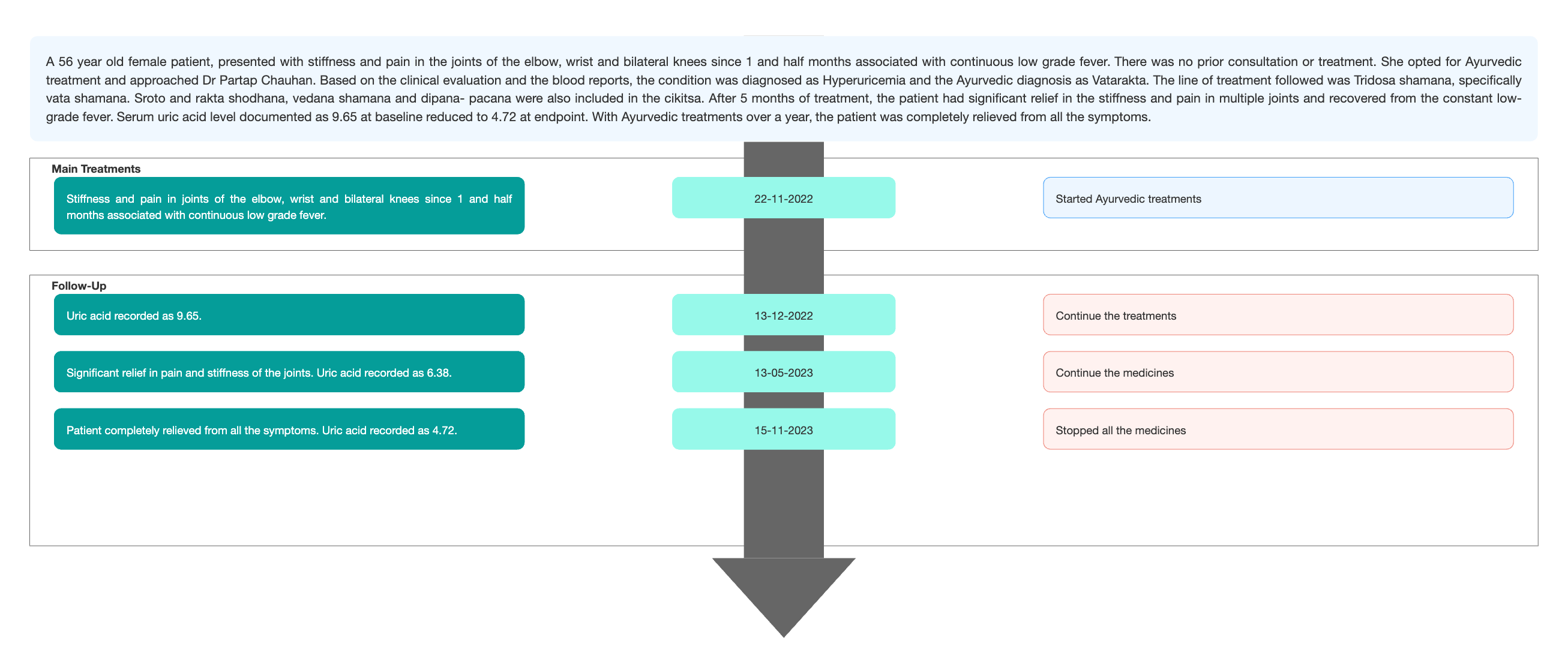
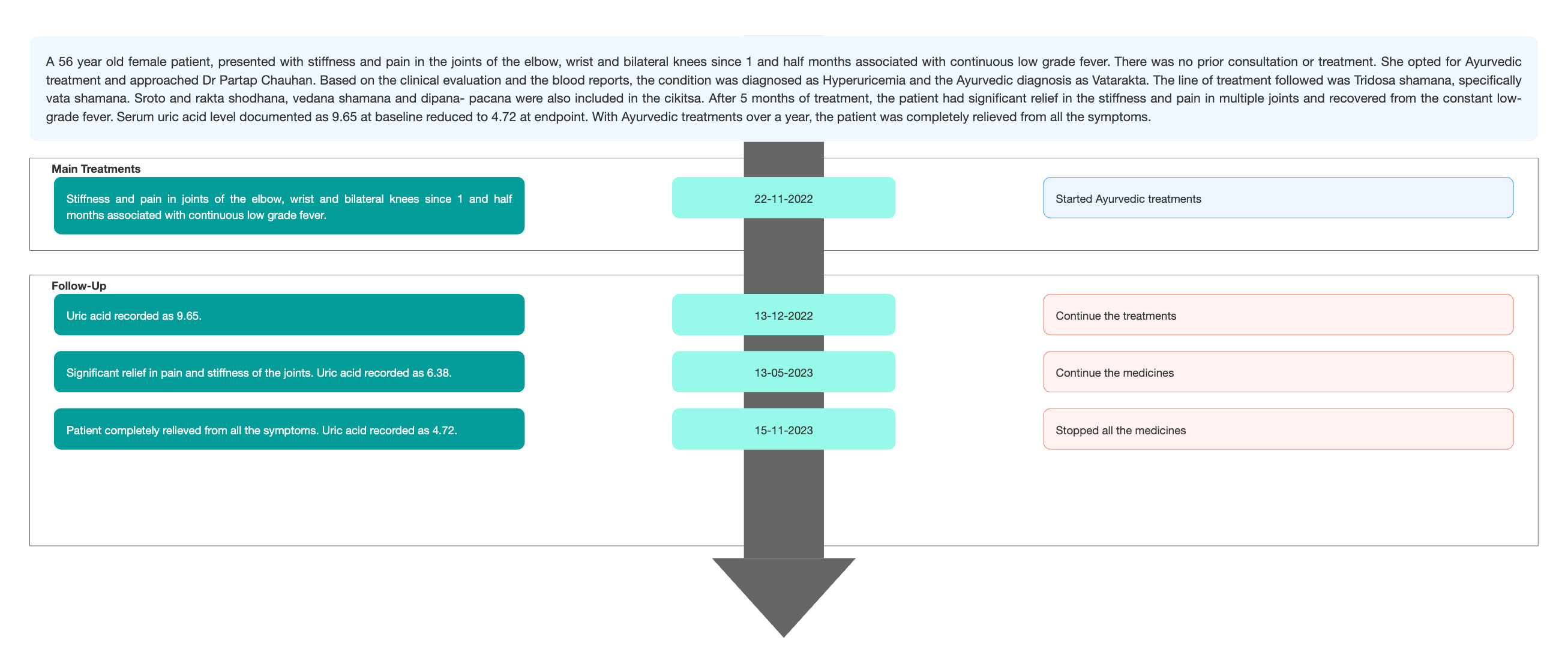
A 56 year old female patient, presented with stiffness and pain in the joints of the elbow, wrist and bilateral knees since 1 and half months associated with continuous low grade fever. There was no prior consultation or treatment. She opted for Ayurvedic treatment and approached Dr Partap Chauhan. Based on the clinical evaluation and the blood reports, the condition was diagnosed as Hyperuricemia and the Ayurvedic diagnosis as Vatarakta. The line of treatment followed was Tridosa shamana, specifically vata shamana. Sroto and rakta shodhana, vedana shamana and dipana- pacana were also included in the cikitsa. After 5 months of treatment, the patient had significant relief in the stiffness and pain in multiple joints and recovered from the constant low-grade fever. Serum uric acid level documented as 9.65 at baseline reduced to 4.72 at endpoint. With Ayurvedic treatments over a year, the patient was completely relieved from all the symptoms. This case report demonstrates the successful standalone ayurvedic management of Hyperuricemia in a patient who opted for Ayurvedic management as the first line of consultation.
-
Summaries
-
Listen
-
Watch
-
View

-
Read

A 56 year old female patient, presented with stiffness and pain in the joints of the elbow, wrist and bilateral knees since 1 and half months associated with continuous low grade fever. There was no prior consultation or treatment. She opted for Ayurvedic treatment and approached Dr Partap Chauhan. Based on the clinical evaluation and the blood reports, the condition was diagnosed as Hyperuricemia and the Ayurvedic diagnosis as Vatarakta. The line of treatment followed was Tridosa shamana, specifically vata shamana. Sroto and rakta shodhana, vedana shamana and dipana- pacana were also included in the cikitsa. After 5 months of treatment, the patient had significant relief in the stiffness and pain in multiple joints and recovered from the constant low-grade fever. Serum uric acid level documented as 9.65 at baseline reduced to 4.72 at endpoint. With Ayurvedic treatments over a year, the patient was completely relieved from all the symptoms. This case report demonstrates the successful standalone ayurvedic management of Hyperuricemia in a patient who opted for Ayurvedic management as the first line of consultation.
-
-
Timeline
-
Tabulated Summary
-
Narrative
TITLE OF CASE
Successful Ayurvedic management of hyperuricemia- a case report
Dr Partap Chauhan
ABSTRACT
A 56 year old female patient, presented with stiffness and pain in the joints of the elbow, wrist and bilateral knees since 1 and half months associated with continuous low grade fever. There was no prior consultation or treatment. She opted for Ayurvedic treatment and approached Dr Partap Chauhan. Based on the clinical evaluation and the blood reports, the condition was diagnosed as Hyperuricemia and the Ayurvedic diagnosis as Vatarakta. The line of treatment followed was Tridosa shamana, specifically vata shamana. Sroto and rakta shodhana, vedana shamana and dipana- pacana were also included in the cikitsa. After 5 months of treatment, the patient had significant relief in the stiffness and pain in multiple joints and recovered from the constant low-grade fever. Serum uric acid level documented as 9.65 at baseline reduced to 4.72 at endpoint. With Ayurvedic treatments over a year, the patient was completely relieved from all the symptoms. This case report demonstrates the successful standalone ayurvedic management of Hyperuricemia in a patient who opted for Ayurvedic management as the first line of consultation.
KEYWORDS
Hyperuricemia, vatarakta, uric acid, joint pain, ayurveda, case report
INTRODUCTION
Hyperuricemia occurs when there’s too much uric acid in your blood. Only about a third of people experience symptoms. If uric acid levels remain high, over time they can lead to several diseases, such as gout or kidney stones. High uric acid levels can lead to several diseases, including a painful type of arthritis called gout. Elevated uric acid levels are also associated with health conditions such as heart disease, diabetes, and kidney disease.
Causes: Uric acid is formed when purines break down in your body. Purines are chemicals found in certain foods. This typically includes:
- red meat
- organ meat
- seafood
- beans
Normally, your body rids itself of uric acid when you urinate. Hyperuricemia occurs when your body either makes too much uric acid or is unable to excrete enough of it. It usually happens because your kidneys aren’t eliminating it quickly enough.
Excess uric acid levels in your blood can lead to the formation of crystals. Although these can form anywhere in the body, they tend to form in and around your joints and in your kidneys. Your body’s defensive white blood cells may attack the crystals, causing inflammation and pain.
Only about one-third of people with hyperuricemia experience symptoms. This is known as asymptomatic hyperuricemia.
Although hyperuricemia isn’t a disease, if uric acid levels remain high, over time they can lead to several diseases like gout, Tophaceous gout, Kidney stones.
Diagnosis: Medical history and clinical evaluation are the primary diagnostic tools. Blood test and urine test are the laboratory investigations that is used in confirming the diagnosis. Uric acid is normally found in your urine as your body excretes it. A 24-hour urine collection if elevated levels of uric acid are found in your blood. This urine test is then repeated after a purine-restricted diet, which helps in determining whether:
you’re eating too much high-purine foods:
your body is making too much uric acid;
your body isn’t excreting enough uric acid.
Treatment & prognosis: The treatment for hyperuricemia will depend on its cause. If hyperuricemia is asymptomatic, treatment isn’t recommended. If hyperuricemia is caused by an underlying cause, then the cause is addressed. This as such, is not life threatening, but this leads to other conditions, over time that can cause serious health issues. These definitely require medical intervention and can become life threatening.
PATIENT INFORMATION
In this case report, In this case report, a 56 year old female patient, presented with stiffness and pain in the joints of the elbow, wrist and bilateral knees since 1 and half months associated with continuous low grade fever. There was no prior consultation or treatment. She opted for Ayurvedic treatment and approached Dr Partap Chauhan. Based on the clinical evaluation and the blood reports, the condition was diagnosed as Hyperuricemia and the Ayurvedic diagnosis as Vatarakta.
No relevant Family/genetic history.
Surgical History- Hysterectomy done.
Psychosocial History- Patient is stressed and the sleep is disturbed.
Addictions- Nil
CLINICAL FINDINGS
General examination.
Vitals- Normal
BP- 150/110 mmHgTIMELINE
Image 1. Timeline of events added below
DIAGNOSTIC ASSESSMENT
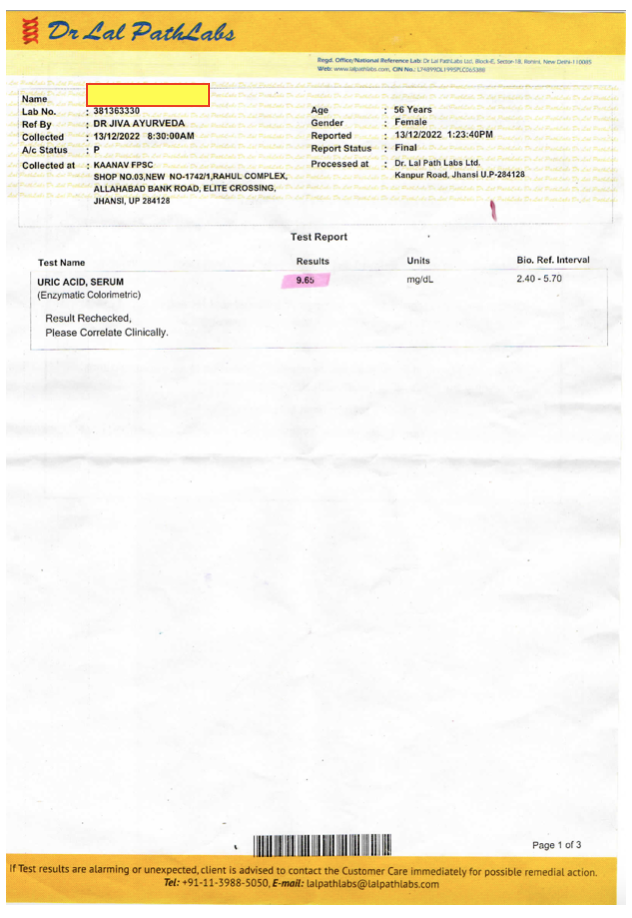
Modern Diagnostic parameter; The biomedical diagnosis was confirmed based on the clinical evaluation and the lab investigation done at baseline.
Image 2. Lab report at baseline dated 13.12.2022
Ayurvedic Assessment was done based on the presenting complaints and clinical evaluation. The treating physician confirmed the Ayurvedic diagnosis as Vatarakta.
Differential Diagnosis-
Alcoholic ketoacidosis,
Diabetic ketoacidosis,
Gout and pseudogout,
Hemolytic anemia.
Based on the blood investigation, and the clinical evaluation, the biomedical diagnosis was diagnosed as Hyperuricemia.Prognosis: Increased levels of uric acid predispose for gout and, if very high, can cause kidney failure. Prognosis is good with regular consumption of allopurinol or febuxostat. In this case report, with 1-month of Ayurvedic treatment, the patient could get relief from all the symptoms. The repeated blood investigation reveals uric acid level within normal limits.
THERAPEUTIC INTERVENTION
Refer the tab ‘Treatment’ in the Portal.
FOLLOW-UP AND OUTCOMES
The patient had 3 follow ups in total, over a period of 1 year. The subjective and objective parameters were the primary assessment modality.
Clinician-based assessment;
After 5 months of treatment, the patient had significant relief in the multiple joint stiffness and pain and recovered from the persistent low-grade fever. Serum uric acid level has reduced to 6.38. With ongoing treatments for 1 year, the patient was completely relieved from all the symptoms and the uric acid level reached within the normal limits.
Table 1. The symptoms observed and tabulated throughout the treatment
Chief complaints
Nov 22
Jan 23
Feb 23
Mar 23
May 23
Nov 23
Stiffness
Severe
Mild relief
Moderate relief
Significant relief
Significant relief
Absent
Pain in elbows and wrists
Severe
Mild relief
Moderate relief
Significant relief
Absent
Absent
Knee pain
Severe
Mild relief
Moderate relief
Significant relief
Significant relief
Absent
Fever
Moderate
Moderate relief
Nil
Nil
Absent
Absent
Patient-assessed; Not relevant
Objective parameters: Uric acid was constantly monitored during and after treatment to assess the outcome of the treatment.
Image 1. Uric acid value during treatment dated 12.5.2023
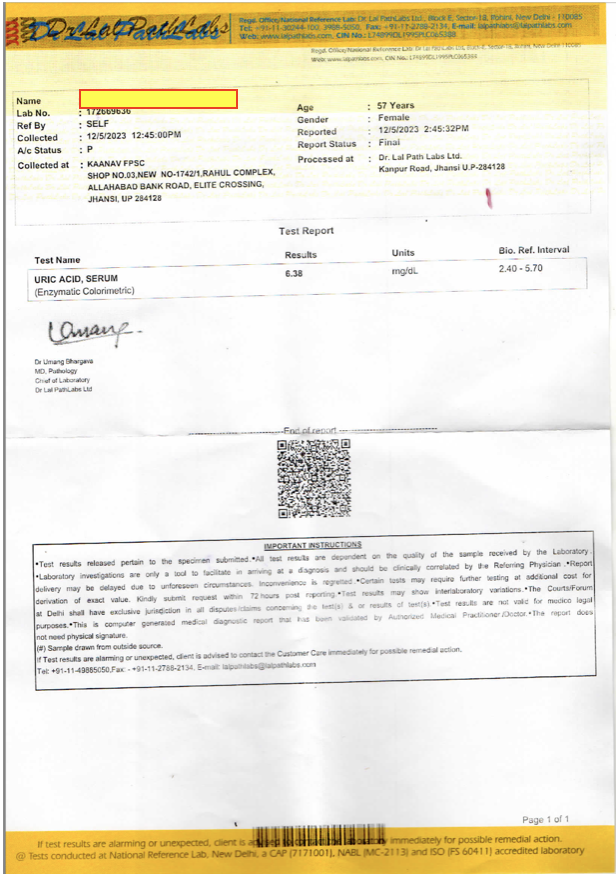
Image 2. Uric acid value after treatment dated 15.11.2023
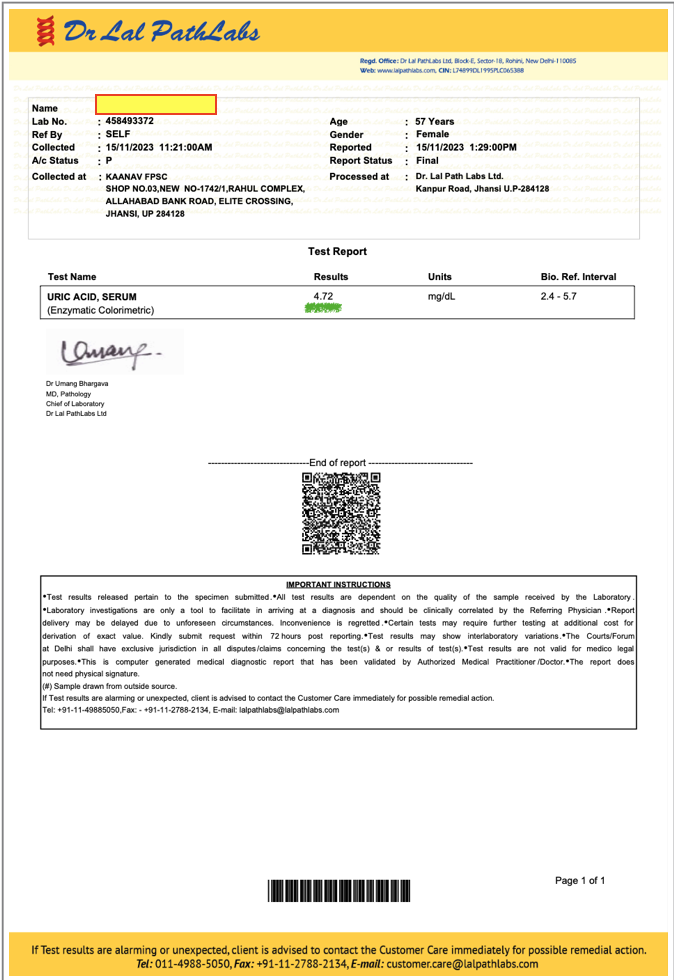
The uric acid value at baseline was 9.65. During treatment, it became 6.38 and after treatment, it was recorded 4.72.
Intervention adherence and tolerability – The patient adhered to the prescribed treatments and tolerated the treatments well.
Method of assessment- Lab investigations, images, questionnaire and symptom evaluation were the primary assessment criteria.
Adverse and unanticipated events; None reported
DISCUSSION:
Increased levels predispose for gout and, if very high, kidney failure. Prognosis is good with regular consumption of allopurinol or febuxostat. In this case, with 1-month of Ayurvedic treatment, the patient could get relief from all the symptoms. The repeated blood investigation reveals uric acid level within normal limits. In this case report, the patient’s first choice of treatment was Ayurveda. The line of treatment followed was Tridosa shamana specifically vata. Sroto and rakta shodhana, vedana shamana, dipana and pacana were also included in the chikitsa sutra.
PATIENT’S PERSPECTIVE
Not available.
LEARNING POINTS/TAKE HOME MESSAGES
This case underscores the significant clinical efficacy of Ayurveda as a supportive therapy in hyperuricemia, with a very simple formulation for a short span of time. Ayurveda can be considered as an alternative in patients who are not getting satisfactory outcomes inspite of taking allopathic medicines.
INFORMED CONSENT
Written consent obtained from patient for publishing of the case report in the Portal
ACKNOWLEDGEMENTS
None
CONFLICT OF INTEREST
None declared.
FUNDING
None
REFERENCE
- https://www.healthline.com/health/hyperuricemia
- AH. Ni.16 and AH.Ci.22
-
Immersive Learning
-
Modern Diagnosis
MODERN DIAGNOSIS: Hyperuricemia
ABOUT THE DISEASE:
Hyperuricemia occurs when there’s too much uric acid in your blood. Only about a third of people experience symptoms. If uric acid levels remain high, over time they can lead to several diseases, such as gout or kidney stones.
High uric acid levels can lead to several diseases, including a painful type of arthritis called gout. Elevated uric acid levels are also associated with health conditions such as heart disease, diabetes, and kidney disease.
Causes: Uric acid is formed when purines break down in your body. Purines are chemicals found in certain foods. This typically includes:
- red meat
- organ meat
- seafood
- beans
Normally, your body rids itself of uric acid when you urinate. Hyperuricemia occurs when your body either makes too much uric acid or is unable to excrete enough of it. It usually happens because your kidneys aren’t eliminating it quickly enough.
Excess uric acid levels in your blood can lead to the formation of crystals. Although these can form anywhere in the body, they tend to form in and around your joints and in your kidneys. Your body’s defensive white blood cells may attack the crystals, causing inflammation and pain.
Only about one-third of people with hyperuricemia experience symptoms. This is known as asymptomatic hyperuricemia.
Although hyperuricemia isn’t a disease, if uric acid levels remain high, over time they can lead to several diseases like gout, Tophaceous gout, Kidney stones.
Diagnosis: Medical history and clinical evaluation are the primary diagnostic tools. Blood test and urine test are the laboratory investigations that is used in confirming the diagnosis. Uric acid is normally found in your urine as your body excretes it. A 24-hour urine collection if elevated levels of uric acid are found in your blood. This urine test is then repeated after a purine-restricted diet, which helps in determining whether:
you’re eating too much high-purine foods:
your body is making too much uric acid;
your body isn’t excreting enough uric acid.
In this case report, a 56 year old female patient, presented with stiffness and pain in the joints of the elbow, wrist and bilateral knees since 1 and half months associated with continuous low grade fever. There was no prior consultation or treatment. She opted for Ayurvedic treatment and approached Dr Partap Chauhan. Based on the clinical evaluation and the blood reports, the condition was diagnosed as Hyperuricemia and the Ayurvedic diagnosis as Vatarakta.
Image 1. Lab report at baseline dated 13.12.2022
Treatment & prognosis: The treatment for hyperuricemia will depend on its cause. If hyperuricemia is asymptomatic, treatment isn’t recommended. If hyperuricemia is caused by an underlying cause, then the cause is addressed. This as such, is not life threatening, but this leads to other conditions, over time that can cause serious health issues. These definitely require medical intervention and can become life threatening.
Reference
-
Ayurveda Diagnosis
AYURVEDA DIAGNOSIS: Vatarakta
The biomedical diagnosis of Hyperuricemia cannot be directly correlated to any specific condition mentioned in the classical textbooks of Ayurveda. There are diseases that can be directly linked to the diseases mentioned in the Ayurvedic texts. But sometimes, the diagnosis is such that the physician uses his yukti to create a term for the disease. Though the classical text clearly mentions that giving a name for a disease is not mandatory for treating a condition, here a terminology was given for the purpose of educating the reader. Based on the symptoms, the ayurvedic correlation is made to vatarakta.
Prognosis- There are basically two types of Vatarakta- Utthana and Gambhira. In the utthana avastha, it is sukhasadhya when supported with the appropriate medications. But in the Gambhiravastha, it is krcchrasadhya.
About vatarakta:
Nidana & Samprapti:
प्रायेण सुकुमाराणामचङ्क्रमणशीलिनाम्। अभिघातादशुद्धेश्च नृणामसृजि दूषिते।
वातलैः शीतलैर्वायुर्वृद्धः क्रुद्धो विमार्गगः। तादृशैवासृजा रुद्धः प्राक्तदेव प्रदूषयेत्॥३॥
आढ्यरोगं खुडं वातबलासं वातशोणितम्। तदाहुर्नामभिः———————————॥४॥(AH.Ni.16)
When a person takes excessive foods and exposes to lifestyle activities which aggravate Vata and also is used to long distance rides on animals like elephants, camels, horses, the vata gets severely aggravated by its own causes. On the other hand rakta or blood gets vitiated by the consumption of lavana, amla, katu, kshara etc causes mentioned above. The vitiated rakta quickly blocks the passages of vayu and interferes with its smooth movements. The vata, whose passages are blocked by rakta further undergoes vitiation and further contaminates the rakta or blood. The blood vitiated by vayu later burns the whole blood in the body. The blood contaminated by vitiated Vayu leaves its place and gravitates towards the foot. This vicious amalgamation of vitiated vata and rakta is called vatarakta. This is said to be a dangerous amalgamation which causes serious painful symptoms comprising of a disease called vatarakta. Later the pitta and kapha join this amalgamation and make the clinical picture of the disease even more complicated.
Lakshana:
The symptoms are specifically mentioned for Uttana and Gambhira Vatarakta. The symptoms vary depending on the dosa predominance.
In this case report, a 56 year old female patient, presented with stiffness and pain in the joints of the elbow, wrist and bilateral knees since 1 and half months associated with continuous low grade fever. There was no prior consultation or treatment. She opted for Ayurvedic treatment and approached Dr Partap Chauhan. Based on the clinical evaluation and the blood reports, the condition was diagnosed as Hyperuricemia and the Ayurvedic diagnosis as Vatarakta. The treating physician has not specified the type of vatarakta, or the dosa predominant.
Sadhyasadhyata: As this considered to be mild compared to that of the Gambhiravastha, the management is possible, but as this patient had been suffering from the condition since sometime, the chronicity can be attributed to being Kricchrasadhya. In this case report, considering the chronicity of the symptoms, and the pattern of recurrence, it is chronic. So it can be categorised as Kricchra sadhya.
Line of treatment:
वातशोणितिनो रक्तं स्निग्धस्य बहुषो हरेत्।
अल्पाल्पं पालयन् वायुं यथादोषं यथाबलम्॥१॥(AH.Ci.22)
The general line of treatment advocated is raktamokshana, along with the maintenance of the snigdha guna. According to the dosa and the bala, the vitiated vata has to be addressed tactfully.
Treatment and rationale of treatment as specified by the treating physician:
Table 1. The medicines/therapies chosen by the treating physician and the rationale has been tabulated
Medicines/ Procedure
Rationale
Guduci curna
Tridoshaghna, pacana, jwaraghna
Mahasudarshan curna
Jwaraghna, strotoshodhana
Jwarantaka curna
Jwaraghna
Peedantaka curna
Dipana, pacana, vatanulomana, shoolaghna
Rasna vishesh curna
Vataghna, vedana shamana
Shiva rasayan
Dipana, pacan, vatanulomana
Sandhi dosha hara rasayan
Vataghna, vedana shamana
Panchanimbadi curna
Rakta shodhana
Rakta shodhak guggulu
Rakta shodhana
Sandhi rog har guggulu
Vataghna, vedanashamana, pacana
Chandrakala ras
Pitta shamana
Mrityunjay ras
Jwaraghna, strotoshodhana
Diaboherb capsule
Pramehaghna
Maharasnadi kwatha
Vataghna, vedana shamana
Equiline tab
Vata shamaka, controlls blood pressure
Pain calm tab
Vedana shamana, vataghna
Ashwagandha tab
Balya, vataghna
Diatrin tab
Pramehaghna
Ksheerbala taila
Balya, vataghna
Tila taila
Vatahara
-
Treatment
Name of Medicine Dosage Form Dosage Mode of Administrtation From - To (Date) Medicine Reference Guduchi curna + Rasna vishesh curna+ Shiva rasayan+ Sandhi dosha hara rasayan+ Panchanimbadi curna Curna 4 gms Oral- with warm water twice daily 2023-03-18 - 2023-05-12 Guduchi curna- Bhavaprakasha nighantu. Guduchyadi varga. Mahasudarshan curna, Jwarantak curna, Peedantaka curna- Ayurvedic patent & Proprietary Medicine. Rasna vishesh curna, Shiva rasayan, Sandhi dosha hara rasayan, Panchanimbadi curna- No information obtained Guduchi curna + Mahasudarshan curna+ Jwarantak curna+ Peedantaka curna+ Rasna vishesh curna Curna 4 gms Oral- with warm water twice daily 2022-11-22 - 2023-01-06 Guduchi curna- Bhavaprakasha nighantu. Guduchyadi varga. Mahasudarshan curna, Jwarantak curna, Peedantaka curna- Ayurvedic patent & Proprietary Medicine. Rasna vishesh curna, Shiva rasayan, Sandhi dosha hara rasayan, Panchanimbadi curna- No information obtained Rakta shodhak guggulu Tablet 1-0-1 Oral- with warm water twice daily 2022-11-22 - 2023-11-14 No information obtained Sandhi rog har guggulu Tablet 1-0-1 Oral- with warm water twice daily 2022-11-22 - 2023-11-14 No information obtained Chandrakala ras Tablet 1-0-1 Oral- with warm water twice daily 2022-11-22 - 2023-11-14 Ayurvedic Patent & Proprietary Medicine Mrityunjay ras Tablet 1-0-1 Oral- with warm water twice daily 2022-11-22 - 2023-11-14 Bhaishajya Ratnavali. Jwaracikitsa Prakarana Diaboherb capsule Capsule 1-0-1 Oral- with warm water twice daily 2023-02-11 - 2023-11-14 Ayurvedic Patent & Proprietary Medicine Maharasnadi Kvatha Kvatha 15 ml Oral- with warm water twice daily, before food 2022-11-22 - 2023-11-14 Sharangdhara Samhita Madhyamakhanda 2.89 - 95 Jvarhara kvatha Kvatha 15 ml Oral- with warm water twice daily, before food 2022-11-22 - 2023-01-06 Ayurvedic Patent & Proprietary Medicine Punarnvadi kvatha Kvatha 15 ml Oral- with warm water twice daily, before food 2022-01-07 - 2023-11-14 Bhaishajya Ratnavali Udararoga. 43-44 Equiline tab Tablet 1-0-1 Oral- with warm water twice daily 2022-11-22 - 2023-11-14 Ayurvedic Patent & Proprietary Medicine Pain calm tab Tablet 1-0-1 Oral- with warm water twice daily 2023-01-07 - 2023-02-10 Ayurvedic Patent & Proprietary Medicine Ashwagandha tab Tablet 1-0-1 Oral- with warm water twice daily 2023-01-07 - 2023-02-10 Ayurvedic Patent & Proprietary Medicine Diatrin tab Tablet 1-0-1 Oral- with warm water twice daily 2023-01-07 - 2023-02-10 Ayurvedic Patent & Proprietary Medicine Ksheerbala Taila Taila Required Quantity For External application 2023-05-13 - 2023-11-14 Sahasrayoga, Taila prakarana Tila taila Taila Required Quantity For External application 2023-05-13 - 2023-11-14 Bhavaprakasha. 20.1-7 -
Outcome Measures
OUTCOME MEASURE
In this case report, a 56 year old female patient, presented with stiffness and pain in the joints of the elbow, wrist and bilateral knees since 1 and half months associated with continuous low grade fever. There was no prior consultation or treatment. She opted for Ayurvedic treatment and approached Dr Partap Chauhan. Based on the clinical evaluation and the blood reports, the condition was diagnosed as Hyperuricemia and the Ayurvedic diagnosis as Vatarakta. The treating physician has not specified the type of vatarakta, or the dosa predominant.
Assessment: Subjective and objective parameters were assessed to analyse the outcome of the treatment.
Subjective parameters: The symptoms were documented date wise and tabulated to assess the outcome of the treatments.
Table 1. The symptoms observed and tabulated throughout the treatment
Chief complaints
Nov 22
Jan 23
Feb 23
Mar 23
May 23
Nov 23
Stiffness
Severe
Mild relief
Moderate relief
Significant relief
Significant relief
Absent
Pain in elbows and wrists
Severe
Mild relief
Moderate relief
Significant relief
Absent
Absent
Knee pain
Severe
Mild relief
Moderate relief
Significant relief
Significant relief
Absent
Fever
Moderate
Moderate relief
Nil
Nil
Absent
Absent
Objective parameters: Uric acid was constantly monitored during and after treatment to assess the outcome of the treatment.
Image 1. Uric acid value during treatment dated 12.5.2023
Image 2. Uric acid value after treatment dated 15.11.2023
The uric acid value at baseline was 9.65. During treatment, it became 6.38 and after treatment, it was recorded 4.72.
-