Featured Case
-
Abstract
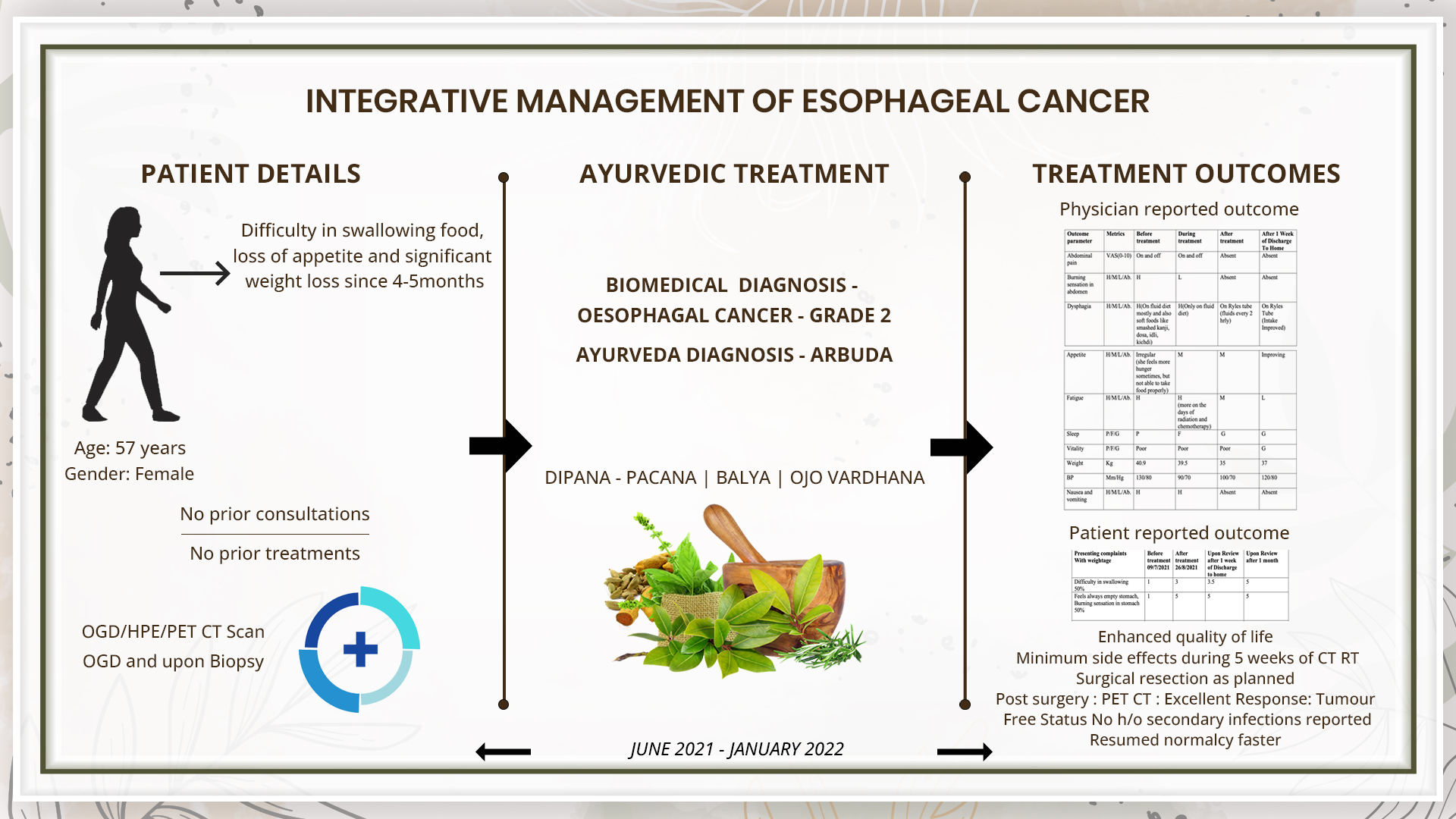
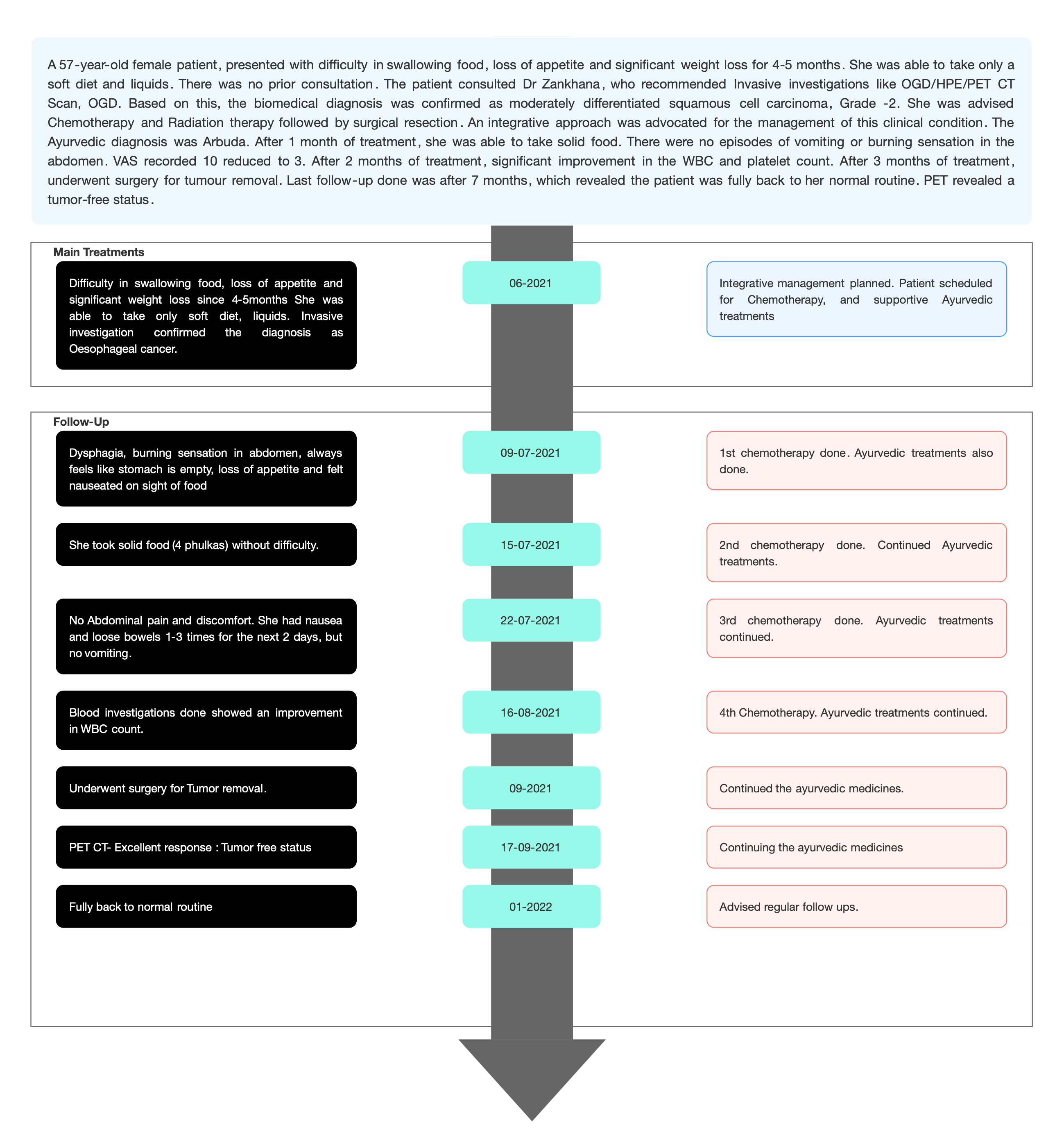
A 57-year-old female patient, presented with difficulty in swallowing food, loss of appetite and significant weight loss for 4-5 months. She was able to take only a soft diet and liquids. She aslo had abdominal pain on & off. There was no prior consultation. The patient consulted Dr Zankhana, who recommended Invasive investigations like OGD/HPE/PET-CT Scan. Based on the reports, the biomedical diagnosis was confirmed as moderately differentiated squamous cell carcinoma of the esophagus, grade -2. She was directed to an Oncologist, who advised Chemotherapy and Radiation therapy followed by surgical resection. An integrative approach was advocated for the management of this clinical condition. The Ayurvedic diagnosis was Arbuda. The line of ayurvedic treatment followed was dipana, pacana, balya and ojo vardhana. The medicines also targeted at addressing the symptoms like lack of sleep, colic and stress. The Chemo and radiation therapy were also carried on as scheduled by her oncologist. Based on the Patient-reported outcome scale and the Physician outcome scale, it was evident that there was a significant improvement in the symptoms. After 1 month of treatment, she was able to take solid food. There were no episodes of vomiting or burning sensation in the abdomen. VAS recorded 10 at baseline reduced to 3. After 2 months of treatment, there was a significant improvement in the WBC and platelet count. After 3 months of treatment, she underwent surgery for tumour removal. Last follow-up done was after 7 months, which revealed the patient was fully back to her normal routine. PET revealed a tumor-free status. This case report demonstrates the successful intergrative management of Esophageal cancer.
-
Summaries
-
Listen
-
Watch
-
View
-
Read
A 57-year-old female patient, presented with difficulty in swallowing food, loss of appetite and significant weight loss for 4-5 months. She was able to take only a soft diet and liquids. She aslo had abdominal pain on & off. There was no prior consultation. The patient consulted Dr Zankhana, who recommended Invasive investigations like OGD/HPE/PET-CT Scan. Based on the reports, the biomedical diagnosis was confirmed as moderately differentiated squamous cell carcinoma of the esophagus, grade -2. She was directed to an Oncologist, who advised Chemotherapy and Radiation therapy followed by surgical resection. . An integrative approach was advocated for the management of this clinical condition. The Ayurvedic diagnosis was Arbuda. The line of ayurvedic treatment followed was dipana, pacana, balya and ojo vardhana. The medicines also targeted at addressing the symptoms like lack of sleep, colic and stress. The Chemo and radiation therapy were also carried on as scheduled by her oncologist. Based on the Patient-reported outcome scale and the Physician outcome scale, it was evident that there was a significant change in the symptoms. After 1 month of treatment, she was able to take solid food. There were no episodes of vomiting or burning sensation in the abdomen. VAS recorded 10 at baseline reduced to 3. After 2 months of treatment, there was a significant improvement in the WBC and platelet count. After 3 months of treatment, she underwent surgery for tumour removal. Last follow-up done was after 7 months, which revealed the patient was fully back to her normal routine. PET revealed a tumor-free status. This case report demonstrates the successful intergrative management of Esophageal cancer.
-
-
Timeline
-
Tabulated Summary
-
Narrative
TITLE OF CASE
A successful integrative approach for cancer care - A case report
Dr Zankhana Buch
ABSTRACT
A 57-year-old female patient, presented with difficulty in swallowing food, loss of appetite and significant weight loss for 4-5 months. She was able to take only a soft diet and liquids. She aslo had abdominal pain on & off. There was no prior consultation. The patient consulted Dr Zankhana, who recommended Invasive investigations like OGD/HPE/PET-CT Scan. Based on the reports, the biomedical diagnosis was confirmed as moderately differentiated squamous cell carcinoma of the esophagus, grade -2. She was directed to an Oncologist, who advised Chemotherapy and Radiation therapy followed by surgical resection. An integrative approach was advocated for the management of this clinical condition. The Ayurvedic diagnosis was Arbuda. The line of ayurvedic treatment followed was dipana, pacana, balya and ojo vardhana. The medicines also targeted at addressing the symptoms like lack of sleep, colic and stress. The Chemo and radiation therapy were also carried on as scheduled by her oncologist. Based on the Patient-reported outcome scale and the Physician outcome scale, it was evident that there was a significant change in the symptoms. After 1 month of treatment, she was able to take solid food. There were no episodes of vomiting or burning sensation in the abdomen. VAS recorded 10 at baseline reduced to 3. After 2 months of treatment, there was a significant improvement in the WBC and platelet count. After 3 months of treatment, she underwent surgery for tumour removal. Last follow-up done was after 7 months, which revealed the patient was fully back to her normal routine. PET revealed a tumor-free status. This case report demonstrates the successful intergrative management of Esophageal cancer.
KEYWORDS
Integrative, cancer, arbuda, case report
INTRODUCTION
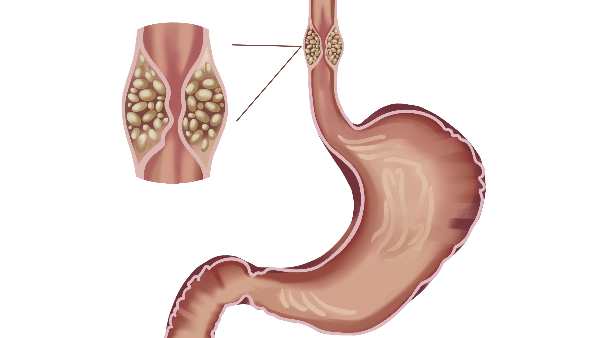
Esophageal cancer is cancer that occurs in the esophagus — a long, hollow tube that runs from your throat to your stomach. Your esophagus helps move the food you swallow from the back of your throat to your stomach to be digested.Esophageal cancer usually begins in the cells that line the inside of the esophagus. Esophageal cancer can occur anywhere along the esophagus. More men than women get esophageal cancer.
Esophageal cancer is the sixth most common cause of cancer deaths worldwide. Incidence rates vary within different geographic locations. In some regions, higher rates of esophageal cancer may be attributed to tobacco and alcohol use or particular nutritional habits and obesity.
Signs and symptoms of esophageal cancer include:
- Difficulty swallowing (dysphagia)
- Weight loss without trying
- Chest pain, pressure or burning
- Worsening indigestion or heartburn
- Coughing or hoarseness
Early esophageal cancer typically causes no signs or symptoms.
Causes
It's not exactly clear what causes esophageal cancer. Esophageal cancer occurs when cells in the esophagus develop changes (mutations) in their DNA. The changes make cells grow and divide out of control. The accumulating abnormal cells form a tumor in the esophagus that can grow to invade nearby structures and spread to other parts of the body.
Types of Esophageal cancer: It can be adenocarcinoma, squamous cell carcinoma, or rare types like sarcoma, lymphoma, melanoma and choriocarcinoma.
Complications
As esophageal cancer advances, it can cause complications, such as:
- Obstruction of the esophagus. Cancer may make it difficult for food and liquid to pass through your esophagus.
- Pain. Advanced esophageal cancer can cause pain.
- Bleeding in the esophagus. Esophageal cancer can cause bleeding. Though bleeding is usually gradual, it can be sudden and severe at times.
Diagnosis: Barium swallow study, endoscopy and biopsy are the common diagnostic tools used. To determine the extent of the spread of cancer, Bronchoscopy, Endoscopic ultrasound (EUS), Computerized tomography (CT) and Positron emission tomography (PET) will be done. With these techniques, the stage of the cancer will be determined, that also plays a crucial role in deciding the treatment.
Treatment & prognosis: The treatment chosen will vary depending upon the stage, and the condition of the patient. The general treatments advocated are Therapies like endoscopic mucosal resection, radiofrequency ablation or photodynamic therapy. These treatments cause minimal esophageal trauma, have a low risk of complications and preserve the esophagus. The other options includes chemotherapy, radiation therapy, proton beam therapy, and minimally invasive and traditional operations, such as esophagectomy. About 15% of people diagnosed with esophageal cancer will survive for at least 5 years. Relative survival looks at how likely people with cancer are to survive after their diagnosis compared to people in the general population who do not have cancer, but who share similar characteristics.
PATIENT INFORMATION
In this case report, a 57 year old female patient presented with difficulty in swallowing food, loss of appetite and significant weight loss since 4-5months. She was able to take only soft diet, liquids.
There was no prior consultation or medication. The Ayurvedic doctor, referred the patient to a Multispecialty hospital, for invasive investigations and the Biomedical diagnosis was confirmed as Carcinoma Oesophagus/GEJ. She was prescribed a schedule of chemotherapy, and an intergrative approach was followed to manage the condition of the patient.
No relevant Family/surgical/genetic history.
Psychosocial History- Socio economic status - Poor
Addictions- Nil
CLINICAL FINDINGS
General condition: Stable, Afebrile P0 E0 N0 C0 I0 L0 GENERAL FINDINGS:
Sleep: Disturbed Appetite: Manda
Bowel: Saama: Micturition: Normal: Vitality: Poor: Well-being: Poor:
Blood pressure:130/80 mm of Hg: Pulse:78/min:
SpO2: 97%Clinical examination:
CVS: S1, S2 heard
RS: left side reduced breath sounds PA: Soft, non-tender
CNS: Stable, oriented, drowsy
MS: Not-Affected:Samprapti ghataka
DOSHA: Pitta Kapha
DUSHYA: Rasa, Rakta, Mamsa
AMA: Both Jatharagni & Dhatuagni
SROTAS: Rasa, Rakta, Mamsa
SROTODUSHTI: Sanga, VimargagamanaTIMELINE
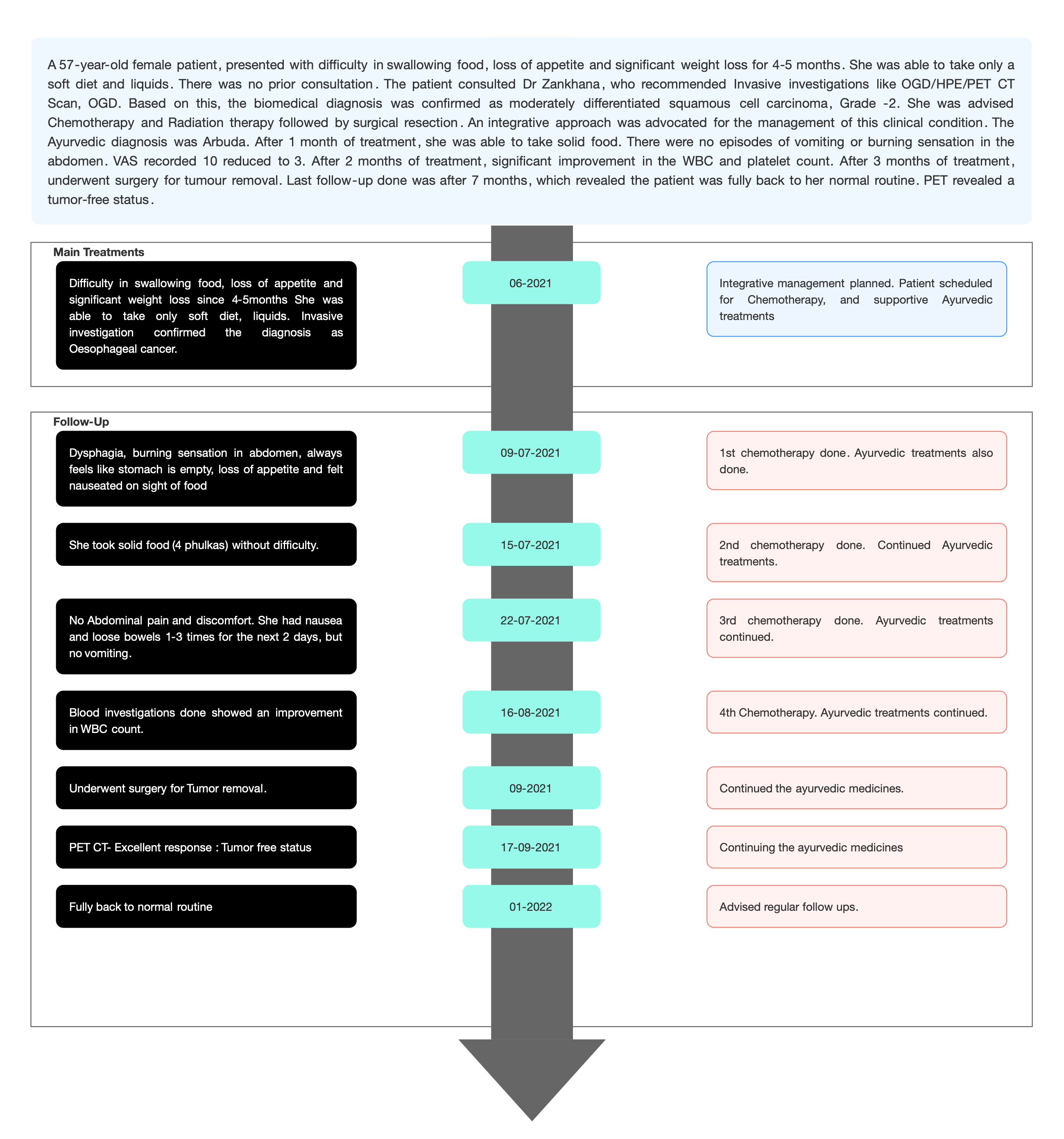
Image 1. Timeline of events added below
DIAGNOSTIC ASSESSMENT
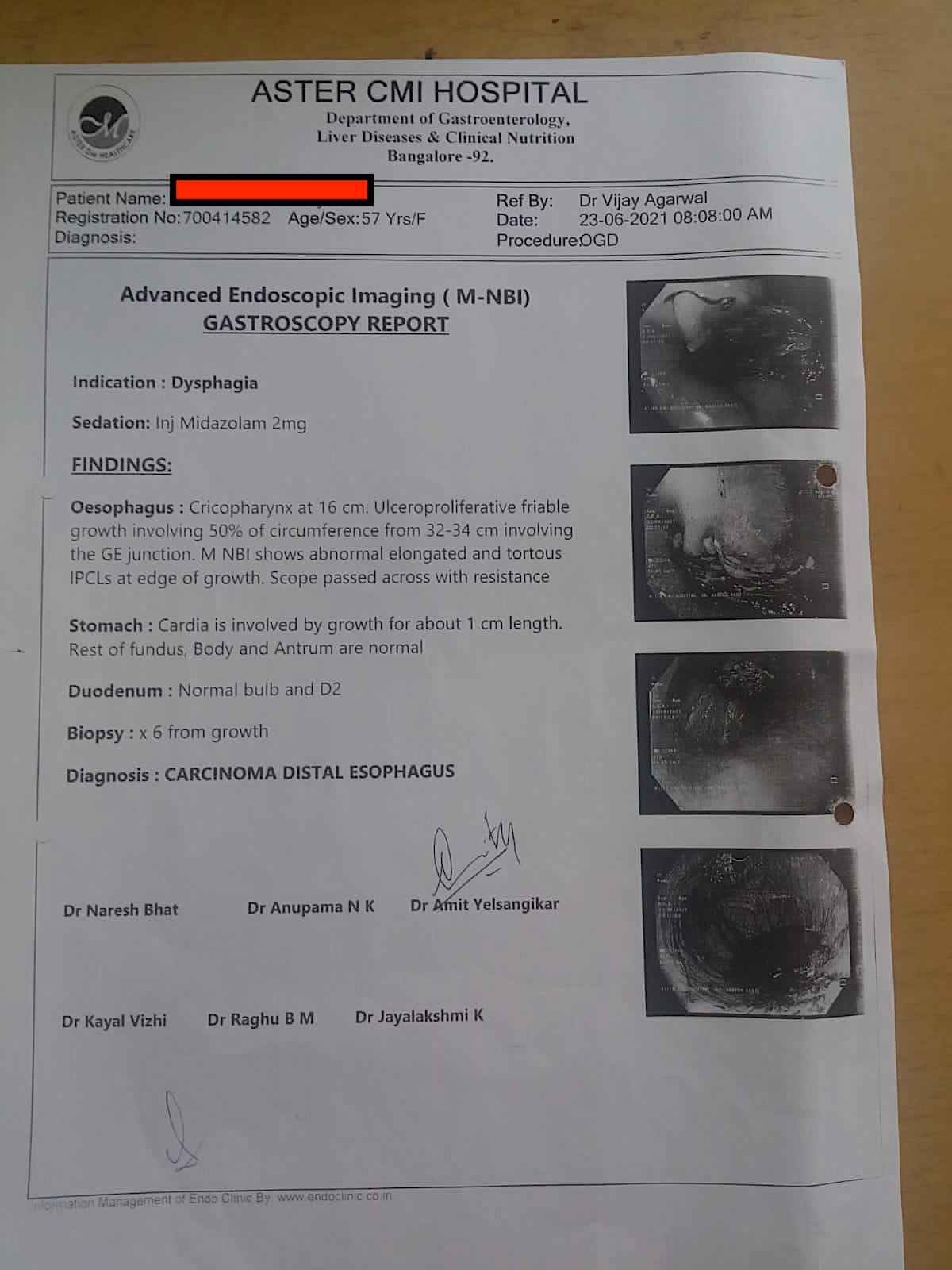
Modern Diagnostic parameter; The patient had a confirmed biomedical diagnosis based on OGD, Biopsy and PET CT SCAN REPORTS.
Image 2. Proof of diagnosis at baseline from the multispecialty hospital dated 23.6.2021
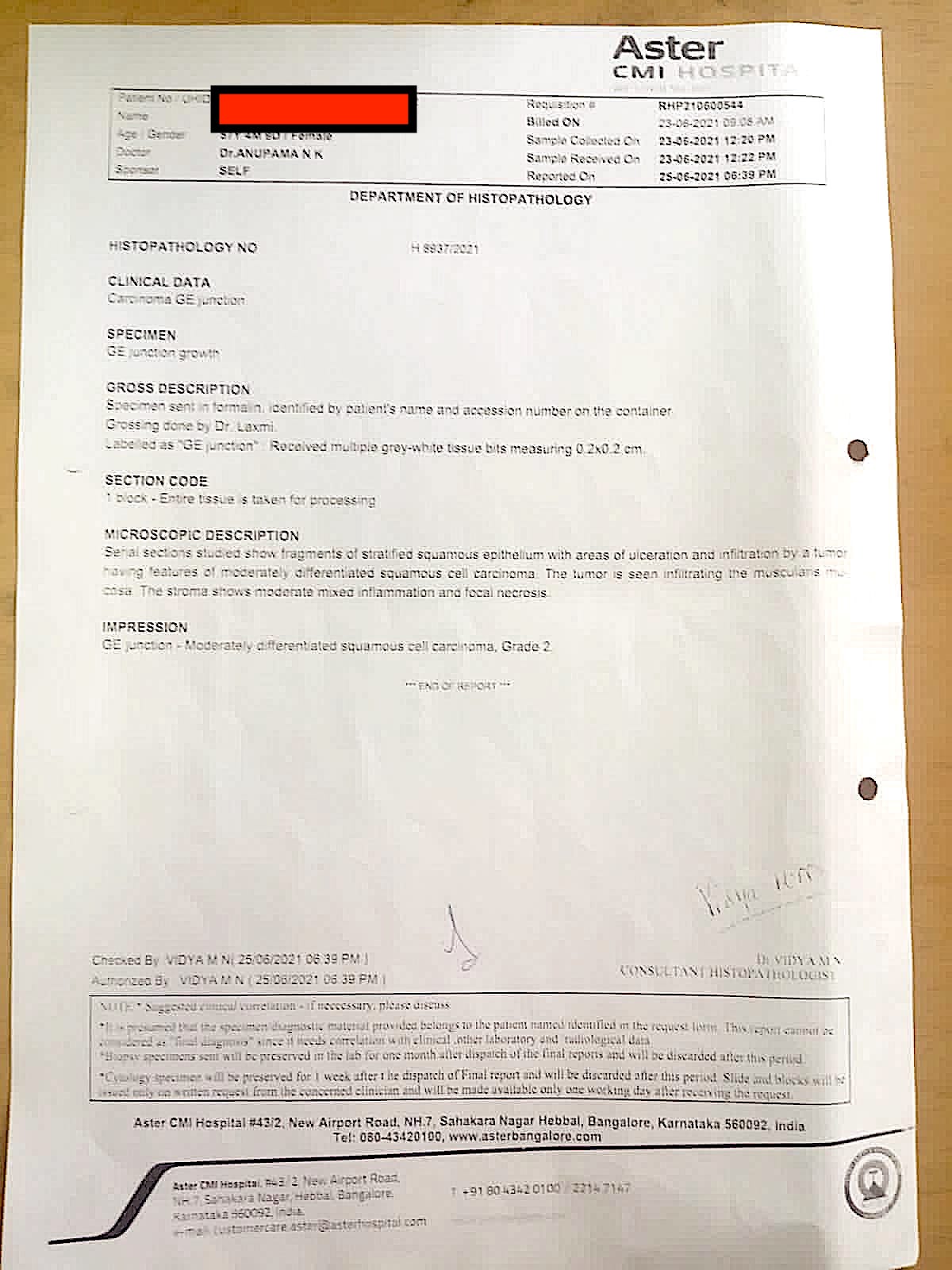
Image 3. Advanced endoscopy imaging dated 23.6.2021
Ayurvedic Assessment was done based on the presenting complaints and clinical evaluation. The treating physician confirmed the Ayurvedic diagnosis as Arbuda.
Baseline evaluation
Table 1. Physician outcome scale before treatment
Criteria
Before Treatment
Difficulty in swallowing 50%
1
Feels always an empty stomach, burning sensation in stomach 50%
1
Differential Diagnosis- Achalasia, Esophageal stricture, Esophageal leiomyoma. In this case report, OGD and upon further Biopsy– GE Junction which revealed moderately differentiated squamous cell carcinoma, Grade -2.
Prognosis: Esophageal cancer is a deadly malignancy with very low survival, even with treatment. Surgery has slightly increased survival rates, but the postoperative complications are often serious, and the quality of life is poor. In this case report, integrative treatment could enhance the quality of life, minimise the side effects after CT RT, No delay in CT RT. After Surgical resection there was no history of secondary infections reported and the patient resumed normalcy faster.
THERAPEUTIC INTERVENTION
Refer the tab ‘Treatment’ in the Portal.
FOLLOW-UP AND OUTCOMES
The patient had 21 follow ups in total. The subjective and objective parameters were the primary assessment modality.
Clinician-based assessment;
Enhanced quality of life
Minimum side effects during 5 weeks of CT RT
No delay in CT RT
Surgical resection as planned
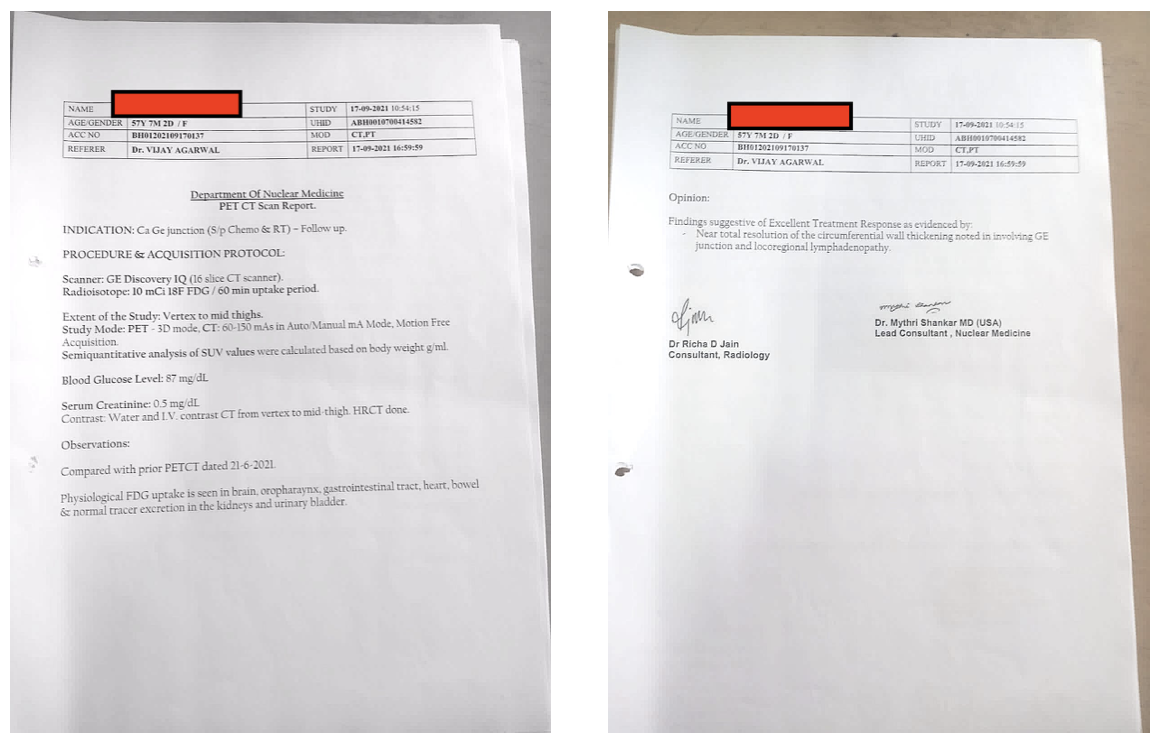
Post surgery : PET CT : Excellent Response: Tumor Free Status
No history of secondary infections reported
Resumed normalcy fasterPhysician, Patient and outcome scale were documented before, during and after treatment to analyse the outcome of the treatments.
Patient-assessed; Not relevant
Image 4. Physician outcome scale before, during and after treatment charted
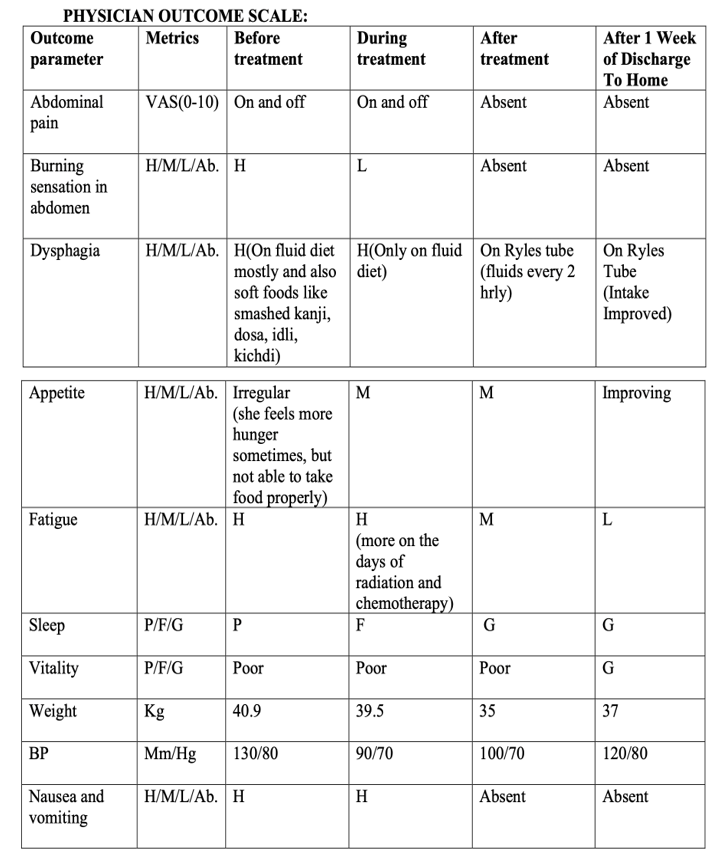
Image 5. Patient outcome scale before, during and after treatment charted

Image 6. WBC count monitored throughout the treatment
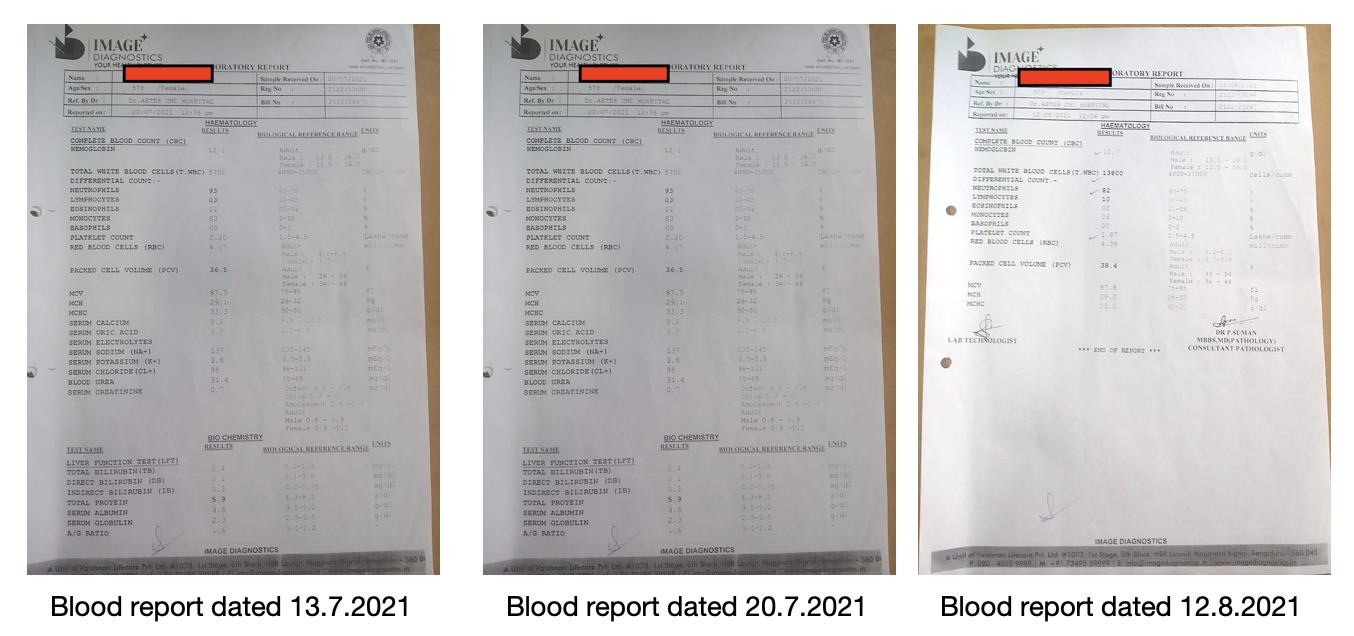
Image 7. PET-CT Scan dated 17.09.2021 indicated a tumor free status
Intervention adherence and tolerability – The patient adhered to the prescribed treatments and tolerated the treatments well.
Method of assessment- Lab investigations, images, questionnaire and symptom evaluation were the primary assessment criteria.
Adverse and unanticipated events; None reported
DISCUSSION:
Esophageal cancer is a deadly malignancy with very low survival, even with treatment. Surgery has slightly increased survival rates, but the postoperative complications are often serious, and the quality of life is poor. In this case report, integrative treatment could enhance the quality of life, minimise the side effects after CT RT, No delay in CT RT. After Surgical resection there was no history of secondary infections reported and the patient resumed normalcy faster.
The rationale of treatment as explained by the physician for selecting the particular medicine and therapy is elaborated.
Dhanwantaram gutika- Improves sleep quality, induces relaxation by relieving stress thereby promotes healing
Aswagandhadi lehyam- To relieve pain in abdomen, increase appetite, improve digestion and absorption.
Astachurnam- To improve sleep, relieve stress, promote healing
Shiro abhyangam- Increases strength by activating metabolism, relieves stress, brings relaxation
Sarvanga Ksheera dhara - Vatapittahara, improve strength and mobility
Sarvanga Jambeera Pinda sweda- To improve blood circulation, muscle relaxation
Sarvanga Abhyanga- Vatahara, Balya, Brimhana
Bashpa Sweda- To improve Range of movement
Shiro basti- To relive stress, improve sleep and QOL
Shirodhara- To relieve stress, Vatashamana
Matra vasti- Balajanana, Vatahara
PATIENT’S PERSPECTIVE
Not available.
LEARNING POINTS/TAKE HOME MESSAGES
This case underscores the significant clinical efficacy of Ayurveda as a supportive therapy in cancer treatment, ensuring an enhanced quality of life with minimal side effects during the 5 weeks of CT RT. Post-surgery, the PET CT scan showed an excellent response with a tumor-free status, and there were no reported secondary infections. Patients also resumed normalcy faster with the use of Ayurveda alongside conventional cancer treatments.
INFORMED CONSENT
Written consent obtained from patient for publishing of the case report in the Portal
ACKNOWLEDGEMENTS
None
CONFLICT OF INTEREST
None declared.
FUNDING
None
REFERENCE
- https://www.mayoclinic.org/diseases-conditions/esophageal-cancer/symptoms-causes/syc-20356084
- https://www.mayoclinic.org/tests-procedures/esophagectomy/about/pac-20385084
- Sushruta Samhita. Nidanam Chapter 11.
- https://www.easyayurveda.com/2014/01/22/cancer-ayurvedic-understanding-hopeful-treatment-modalities/
-
Immersive Learning
-
Modern Diagnosis
MODERN DIAGNOSIS: Esophageal cancer
ABOUT THE DISEASE:
Esophageal cancer is cancer that occurs in the esophagus — a long, hollow tube that runs from your throat to your stomach. Your esophagus helps move the food you swallow from the back of your throat to your stomach to be digested.
Esophageal cancer usually begins in the cells that line the inside of the esophagus. Esophageal cancer can occur anywhere along the esophagus. More men than women get esophageal cancer.
Esophageal cancer is the sixth most common cause of cancer deaths worldwide. Incidence rates vary within different geographic locations. In some regions, higher rates of esophageal cancer may be attributed to tobacco and alcohol use or particular nutritional habits and obesity.
Signs and symptoms of esophageal cancer include:
- Difficulty swallowing (dysphagia)
- Weight loss without trying
- Chest pain, pressure or burning
- Worsening indigestion or heartburn
- Coughing or hoarseness
Early esophageal cancer typically causes no signs or symptoms.
Causes
It's not exactly clear what causes esophageal cancer.
Esophageal cancer occurs when cells in the esophagus develop changes (mutations) in their DNA. The changes make cells grow and divide out of control. The accumulating abnormal cells form a tumor in the esophagus that can grow to invade nearby structures and spread to other parts of the body.
Types of Esophageal cancer: It can be adenocarcinoma, squamous cell carcinoma, or rare types like sarcoma, lymphoma, melanoma and choriocarcinoma.
Complications
As esophageal cancer advances, it can cause complications, such as:
- Obstruction of the esophagus. Cancer may make it difficult for food and liquid to pass through your esophagus.
- Pain. Advanced esophageal cancer can cause pain.
- Bleeding in the esophagus. Esophageal cancer can cause bleeding. Though bleeding is usually gradual, it can be sudden and severe at times.
Diagnosis: Barium swallow study, endoscopy and biopsy are the common diagnostic tools used. To determine the extent of the spread of cancer, Bronchoscopy, Endoscopic ultrasound (EUS), Computerized tomography (CT) and Positron emission tomography (PET) will be done. With these techniques, the stage of the cancer will be determined, that also plays a crucial role in deciding the treatment.
In this case report, a 57 year old female patient presented with difficulty in swallowing food, loss of appetite and significant weight loss since 4-5months. She was able to take only soft diet, liquids.
There was no prior consultation or medication. The Ayurvedic doctor, referred the patient to a Multispecialty hospital, for invasive investigations and the Biomedical diagnosis was confirmed as Carcinoma Oesophagus/GEJ. She was prescribed a schedule of chemotherapy, and an intergrative approach was followed to manage the condition of the patient.
The method of assessment was the Physician outcome and the patient outcome scale, before treatment.
Image 1. Physician outcome scale before treatment
Criteria
Before Treatment
Difficulty in swallowing 50%
1
Feels always an empty stomach, burning sensation in stomach 50%
1
Image 2. Proof of diagnosis at baseline from the multispecialty hospital dated 23.6.2021
Image 3. Advanced endoscopy imaging dated 23.6.2021
Treatment & prognosis: The treatment chosen will vary depending upon the stage, and the condition of the patient. The general treatments advocated are Therapies like endoscopic mucosal resection, radiofrequency ablation or photodynamic therapy. These treatments cause minimal esophageal trauma, have a low risk of complications and preserve the esophagus. The other options includes chemotherapy, radiation therapy, proton beam therapy, and minimally invasive and traditional operations, such as esophagectomy. About 15% of people diagnosed with esophageal cancer will survive for at least 5 years. Relative survival looks at how likely people with cancer are to survive after their diagnosis compared to people in the general population who do not have cancer, but who share similar characteristics.
Survival rates according to the stage of the Cancer:
Stage 1:Almost 55 out of 100 people (almost 55%) with stage 1 Esophageal cancer will survive their cancer for 5 years or more after they're diagnosed.
Stage 2: 30 out of 100 people (30%) with stage 2 Esophageal cancer will survive their cancer for 5 years or more after they're diagnosed.
Stage 3: Around 15 out of 100 people (around 15%) with stage 3 Esophageal cancer will survive their cancer for 5 years or more after they're diagnosed.
Stage 4: There are no 5 year survival statistics for stage 4 cancer because sadly many people don't live for that long after diagnosis.
Reference
- https://www.mayoclinic.org/diseases-conditions/esophageal-cancer/symptoms-causes/syc-20356084
- https://www.mayoclinic.org/tests-procedures/esophagectomy/about/pac-20385084
-
Ayurveda Diagnosis
AYURVEDA DIAGNOSIS: Arbuda
The biomedical diagnosis of Oesophageal cancer in this case report has been correlated to Arbuda by the treating physician. The biomedical diagnosis specifies the stage as Grade 2, and the location as Esophageal. But the treating physician has not specified any subtype in this case report.
According to Acharya Sushruta, the father of surgery, the aggravated Dosas are accumulated in a particular localised area of the body. There, they cause excess aberration in muscular tissues (mamsa pradushana) and hence in the area, circular- stable-mild painful-larger-broad based-non suppurative growths are caused which are gradually maturing in nature. Such muscular growths will have broader (wider) base and often the base (site of origin) is not visible too. Such abnormal, prominent growths are termed as Arbuda.
गात्रदेशे क्विचदेव दोषा: सम्मूर्च्छिता मांसं अिभप्रदूष्य ।
वृत्तं स्थिरं मन्दरूजं महान्तं अनल्पमूलं चिरवृधिं अपाकं॥
कुर्वन्ति मांसोच्छ्रायं अत्यगाधं तदर्बुदं शस्त्रविदो वदिन्त ॥ (Su.Ni. )Types
Based upon the dominance of dosha factor and tissues involved, they are classified as-
1. Vataja arbuda
2. Pittaja arbuda
3. Kaphaja arbuda4. Raktarbuda
5. Mamsarabuda6. Medo arbuda
The symptoms will vary depending upon the type of arbuda. In the case report, a 57 year old female patient presented with difficulty in swallowing food, loss of appetite and significant weight loss since 4-5months. She was able to take only soft diet, liquids. There was no prior consultation or medication. The Ayurvedic doctor, referred the patient to a Multispecialty hospital, for invasive investigations and the Biomedical diagnosis was confirmed as Carcinoma Oesophagus/GEJ. She was prescribed a schedule of chemotherapy, and an intergrative approach was followed to manage the condition of the patient. The subtype of arbuda has not been specified by the treating physician.
Line of treatment & prognosis: The protocol of treatment followed will vary depending upon the predominant dosa, causing the condition. In general, Line of treatment
According to Sushruta, following line of treatment is advocated in arbuda:
1. Vataja
a. Mild sudation
b. Oil swab application by bitter oils c. Blood letting2. Pittaja
a. Mild sudation
b. Purgation
c. Scraping by the leaves of teak
d.Application of medicated paste of Aragwadha, Gojihwa, Trivrit.3. Kaphaja
a. Emesis
b. Purgation
c. Blood letting
d. Medicinal application- Fine paste of langali, karavira
e. Application of alkali, cautery and surgeryMetastasis should be treated as like the cysts or abscesses, as they have similar site of origin, aetiology, characteristic features, dosa and dushya. The efforts should be carried to mature the growth (if possible) and later cautery is carried. Rakta Arubada is sadhya, whereas, mamsa arbuda is asadhya.
Treatment and rationale of treatment as specified by the treating physician:
Table 1. The medicines/therapies chosen and the specific rationale is being mentioned
MEDICINE
RATIONALE
Dhanwantaram gutika
Improves sleep quality, induces relaxation by relieving stress thereby promotes healing
Aswagandhadi lehyam
To relieve pain in abdomen, increase appetite, improve digestion and absorption.
Astachurnam
To improve sleep, relieve stress, promote healing
Shiro abhyangam
Increases strength by activating metabolism, relieves stress, brings relaxation
Sarvanga Ksheera dhara
Vatapittahara, improve strength and mobility
Sarvanga Jambeera Pinda sweda
To improve blood circulation, muscle relaxation
Sarvanga Abhyanga
Vatahara, Balya, Brimhana
Bashpa Sweda
To improve Range of movement
Shiro basti
To relive stress, improve sleep and QOL
Shirodhara
To relieve stress, Vatashamana
Matra vasti
Balajanana, Vatahara
Reference:
- Sushruta Samhita. Nidanam Chapter 11.
- https://www.easyayurveda.com/2014/01/22/cancer-ayurvedic-understanding-hopeful-treatment-modalities/
-
Treatment
Name of Medicine Dosage Form Dosage Mode of Administrtation From - To (Date) Medicine Reference Dhanwantaram Gutika Gutika 1 With warm water, after lunch and dinner 2021-07-09 - 2021-08-26 Sahasrayogam. Gutika Prakaranam Aswagandhadi lehyam Lehya 1/2 teaspoon Oral, twice daily at 9 am and 5 pm 2021-07-13 - 2021-12-10 Sahasrayogam. Lehya Prakarana Asta curnam Curna 1 teaspoon With warm water, twice daily before food 2021-07-09 - 2021-08-26 Sahasrayogam. Curna Prakaranam Balaguluchyadi tailam Taila Required Quantity Shiro abhyangam 2021-07-10 - 2021-12-14 Sahasrayogam. Taila Prakarana Balaguluchyadi tailam Taila Required Quantity Shiro abhyangam 2021-07-17 - 2021-07-21 Sahasrayogam. Taila Prakarana Balaguluchyadi tailam Taila Required Quantity Shiro abhyangam 2021-07-23 - 2021-07-26 Sahasrayogam. Taila Prakarana Balaguluchyadi tailam Taila Required Quantity Shiro abhyangam 2021-07-30 - 2021-08-02 Sahasrayogam. Taila Prakarana Hinguvachadi curnam + Hingutriguna Taila Samyoga Required Quantity Nabhinala Pooranam 2021-07-10 - 2021-07-14 Hinguvachadi- AH. Ci.14.31-33: Hingutriguna- AH.Ci.14. 39-40 Hinguvachadi curnam + Hingutriguna Taila Samyoga Required Quantity Nabhinala Pooranam 2021-07-17 - 2021-07-21 Hinguvachadi- AH. Ci.14.31-33: Hingutriguna- AH.Ci.14. 39-40 Hinguvachadi curnam + Hingutriguna Taila Samyoga Required Quantity Nabhinala Pooranam 2021-07-30 - 2021-08-06 Hinguvachadi- AH. Ci.14.31-33: Hingutriguna- AH.Ci.14. 39-40 Hinguvachadi curnam + Hingutriguna Taila Samyoga Required Quantity Nabhinala Pooranam 2021-08-08 - 2021-08-10 Hinguvachadi- AH. Ci.14.31-33: Hingutriguna- AH.Ci.14. 39-40 Hinguvachadi curnam + Hingutriguna Taila Samyoga Required Quantity Nabhinala Pooranam 2021-08-17 - 2021-08-25 Hinguvachadi- AH. Ci.14.31-33: Hingutriguna- AH.Ci.14. 39-40 Balaguluchyadi tailam Taila Required Quantity Shiro dhara 2021-07-17 - 2021-07-18 Sahasrayogam. Taila Prakarana Balaguluchyadi tailam Taila Required Quantity Shiro dhara 2021-07-25 - 2021-08-08 Sahasrayogam. Taila Prakarana Dhanvantara tailam Taila Required Quantity Padabhyangam 2021-07-10 - 2021-07-14 Sahasrayogam. Taila Prakarana Dhanvantara tailam Taila Required Quantity Padabhyangam 2021-07-17 - 2021-07-26 Sahasrayogam. Taila Prakarana Dhanvantara tailam Taila Required Quantity Padabhyangam 2021-07-30 - 2021-08-01 Sahasrayogam. Taila Prakarana Dhanvantara tailam Taila Required Quantity Padabhyangam 2021-08-03 - 2021-08-14 Sahasrayogam. Taila Prakarana Dhanvantara tailam Taila Required Quantity Padabhyangam 2021-08-17 - 2021-08-25 Sahasrayogam. Taila Prakarana Dhanvantara tailam Taila Required Quantity Local application 2021-08-26 - 2021-12-10 Sahasrayogam. Taila Prakarana Brahma Rasayana Lehya 1 teaspoon Oral, twice daily at 9 am and 5 pm 2021-08-26 - 2021-12-10 Sahasrayogam. Lehya Prakarana -
Outcome Measures
OUTCOME MEASURES
In the case report, a 57 year old female patient presented with difficulty in swallowing food, loss of appetite and significant weight loss since 4-5months. She was able to take only soft diet, liquids. There was no prior consultation or medication. The Ayurvedic doctor, referred the patient to a Multispecialty hospital, for invasive investigations and the Biomedical diagnosis was confirmed as Carcinoma Oesophagus/GEJ. She was prescribed a schedule of chemotherapy, and an intergrative approach was followed to manage the condition of the patient
Assessment: Subjective and objective parameters were assessed to analyse the outcome of the treatment.
Subjective parameters: The physician, patient and the standard outcome scale were documented before, during and after treatment to analyse the outcome.
Image 1. Physician outcome scale before, during and after treatment charted
Image 2. Patient outcome scale before, during and after treatment charted
The outcome scales charted indicated a significant improvement in the symptoms and the quality of life.
Image 3. WBC count monitored throughout the treatment
Image 4. PET-CT Scan dated 17.09.2021 indicated a tumor free status
Over a span of 6 months, with integrative management, the patient could switch back to her regular routine.
-