Featured Case
-
Abstract
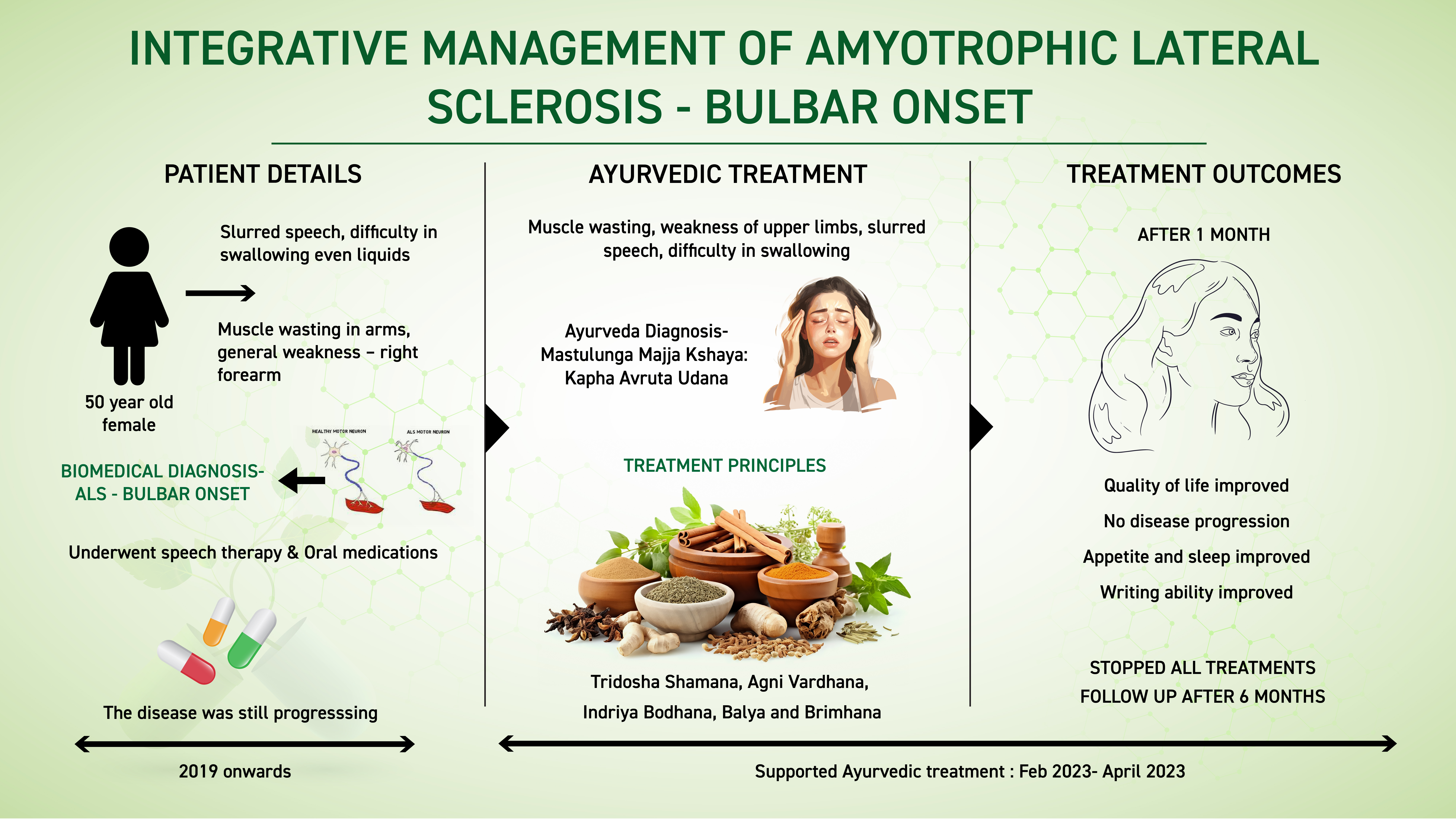
A 50-year-old female patient presented with muscle wasting and weakness in both upper and lower limbs for the past 5 years, along with slurred speech, difficulty in swallowing liquids, and a weight loss of nearly 12 kgs over the last year. The symptoms started in 2019. She took allopathic medicines, but there was no relief in symptoms, and the condition was progressing. In 2021, based on the focused exome sequencing and deletion/duplication test report, the allopathic doctor confirmed the biomedical diagnosis was confirmed as Amyotrophic Lateral Sclerosis- Bulbar onset. She wanted to try Ayurveda and so she consulted Dr Zankhana in February 2023. The ayurvedic diagnosis was Mastulunga Majja Kshaya: Kapha Avruta Udana. The line of treatment followed was tridosha shamana, agni vardhana, indriya bodhana, balya and brimhana. After 1 month of starting ayurvedic treatments, the appetite, sleep and writing ability improved. The Standard and patient outcome scales indicated that the disease has not progressed. The ayurvedic medicines were stopped after 2 months and the patient was advised to come for a follow-up after 6 months. This case report narrates the successful integrative management of ALS- bulbar onset in a female, who was on conventional medicine for a long time, but the disease was progressing and the symptoms were worsening. With supportive Āyurvedic treatments, the symptoms could be maintained without further deterioration.
-
Summaries
-
Listen
-
Watch
-
View
-
Read
A 50-year-old female patient presented with muscle wasting and weakness in both upper and lower limbs for the past 5 years, along with slurred speech, difficulty in swallowing liquids, and a weight loss of nearly 12 kgs over the last year. The symptoms started in 2019. She took allopathic medicines, but there was no relief in symptoms, and the condition was progressing. In 2021, based on the focused exome sequencing and deletion/duplication test report, the allopathic doctor confirmed the biomedical diagnosis was confirmed as Amyotrophic Lateral Sclerosis- Bulbar onset. She wanted to try Ayurveda and so she consulted Dr Zankhana in February 2023. The ayurvedic diagnosis was Mastulunga Majja Kshaya: Kapha Avruta Udana. The line of treatment followed was tridosha shamana, agni vardhana, indriya bodhana, balya and brimhana. After 1 month of starting ayurvedic treatments, the appetite, sleep and writing ability improved. The Standard and patient outcome scales indicated that the disease has not progressed. The ayurvedic medicines were stopped after 2 months and the patient was advised to come for a follow-up after 6 months. This case report narrates the successful integrative management of ALS- bulbar onset in a female, who was on conventional medicine for a long time, but the disease was progressing and the symptoms were worsening. With supportive Āyurvedic treatments, the symptoms could be maintained without further deterioration.
-
-
Timeline
-
Tabulated Summary
-
Narrative
TITLE OF CASE
An Integrative Ayurvedic approach in Amyotrophic Lateral Sclerosis- Bulbar Onset - A case report
Dr Zankhana Buch
ABSTRACT
A 50-year-old female patient presented with muscle wasting and weakness in both upper and lower limbs for the past 5 years, along with slurred speech, difficulty in swallowing liquids, and a weight loss of nearly 12 kgs over the last year. The symptoms started in 2019. She took allopathic medicines, but there was no relief in symptoms, and the condition was progressing. In 2021, based on the focused exome sequencing and deletion/duplication test report, the allopathic doctor confirmed the biomedical diagnosis was confirmed as Amyotrophic Lateral Sclerosis- Bulbar onset. She wanted to try Ayurveda and so she consulted Dr Zankhana in February 2023. The ayurvedic diagnosis was Mastulunga Majja Kshaya: Kapha Avruta Udana. The line of treatment followed was tridosha shamana, agni vardhana, indriya bodhana, balya and brimhana. After 1 month of starting ayurvedic treatments, the appetite, sleep and writing ability improved The Standard and patient outcome scales indicated that the disease has not progressed. The ayurvedic medicines were stopped after 2 months and the patient was advised to come for a follow-up after 6 months. This case report narrates the successful integrative management of ALS- bulbar onset in a female, who was on conventional medicine for a long time, but the disease was progressing and the symptoms were worsening. With supportive Āyurvedic treatments, the symptoms could be maintained without further deterioration.
KEYWORDS
ALS, integrative, amyotrophic lateral sclerosis, case report, majja kshaya, mastulunga majja kshaya, avarana, kapha avruta vata
INTRODUCTION
Amyotrophic lateral sclerosis (ALS), also known as Lou Gehrig’s disease, is a neurodegenerative condition affecting motor neurons — neurons responsible for voluntary muscle control — in the brain and spinal cord.It’s a progressive, terminal disease that ultimately leads to muscle wasting and paralysis. Most people experience limb onset ALS, in which symptoms begin your arms or legs. But 25 % of cases are bulbar onset ALS, in which symptoms start from affected neurons in the corticobulbar area of the brain stem.
In bulbar onset ALS, control of muscles of the face, head, and neck is affected before the weakness of the limbs or trunk develops. Significant speech impairment, tongue immobility, and difficulty swallowing are common early stage symptoms. Bulbar onset ALS is considered one of the most severe variants of ALS. It’s associated with cognitive decline, decreased quality of life, and shortened survival expectancy.
Causes: The exact cause of bulbar onset ALS is unknown. In general, 90 % or more of ALS cases are sporadic, meaning they happen without the influence of hereditary or genetic factors. Approximately 10% of ALS cases can be traced to specific genetics.
Diagnostic criteria: Medical history and clinical evaluation is the basis of the diagnosis. Apart from this, EMG, nerve conduction study, MRI, blood and urine tests, spinal tap, muscle and nerve biopsy are some other options that are considered to confirm the diagnosis.
Progression of the disease: ALS is a progressive condition, but how rapidly motor neurons are affected can vary between people. In bulbar onset ALS, early stage symptoms include facial muscle weakness and difficulty swallowing. In advanced stages of the condition, posture challenges develop and you may have difficulty holding up your head. Approximately of people experiencing bulbar onset ALS will also develop uncontrollable episodes of laughing or crying, known as a pseudobulbar affect.
Treatment & prognosis: There is no cure for ALS and no medication that can stop its progression.
The medications that are generally prescribed are as follows:
- amitriptyline (Endep) for drooling
- dextromethorphan/quinidine (Nuedexta) for pseudobulbar affect
- analgesics for pain management
- antidepressants and anti-anxiety medications for mood symptoms
- riluzole (Rilutek) to potentially slow disease progression
Ultimately, treatment involves a focus on quality-of-life measures, like supporting breathing, improving communication, and managing pain.A speech pathologist can work with you to develop new ways to communicate and make speech understandable. As ALS progresses, gesture-based language and the use of technology help you continue to communicate.
Early stage bulbar onset ALS, in which swallowing and chewing are impaired, is initially treated with dietary changes. These changes aren’t always extreme. For example, cutting your food into smaller pieces can help, as can choosing foods that are broken down quickly by chewing. In time, the paralysis of the head, face, and neck muscles may require you to switch to meal-replacement beverages and nutrient-dense liquids.As bulbar onset ALS progresses, the risk of aspiration and weight loss increases, and the placement of a feeding tube becomes necessary.
PATIENT INFORMATION
In this case report, a 50-year-old female patient presented with muscle wasting and weakness in both upper and lower limbs for the past 5 years, along with slurred speech, difficulty swallowing liquids, and a weight loss of nearly 12 kgs over the last year. ALS-Bulbar Onset was diagnosed based on MRI, Nerve conduction study, and EMG findings. Despite receiving standard care, the condition continued to progress. The patient chose Ayurvedic treatment for better management.
Family history- Father – healthy. Mother – CA uterus, HTN. Four sisters and 1 brother - healthy.
No surgical history.
Genetic history- The genetic report shows a heterozygous likely pathogenic variant in MYH2 gene (AD/AR) which is known to result in proximal Myopathy and Opthalmoplegia. The clinical features are in keeping with an anterior horn cell disease and so is the electrophysiology. This finding along with the clinical profile of this individual is suggestive her to be a case of Proximal myopathy and Opthalmoplegia.
Psychosocial history: Stress+
Addictions- None
CLINICAL FINDINGS
General examination, systemic examinations, CNS examinations were done. Sleep: Good. Appetite: Good. Bowel: Clear. Micturition: Normal. Pulse: 74/min Vitality: Good. Stress: 2/5. Wellbeing: Good. Blood pressure: 120/80 mm of Hg SPO2: 98%. CNS examination- attached.
TIMELINE
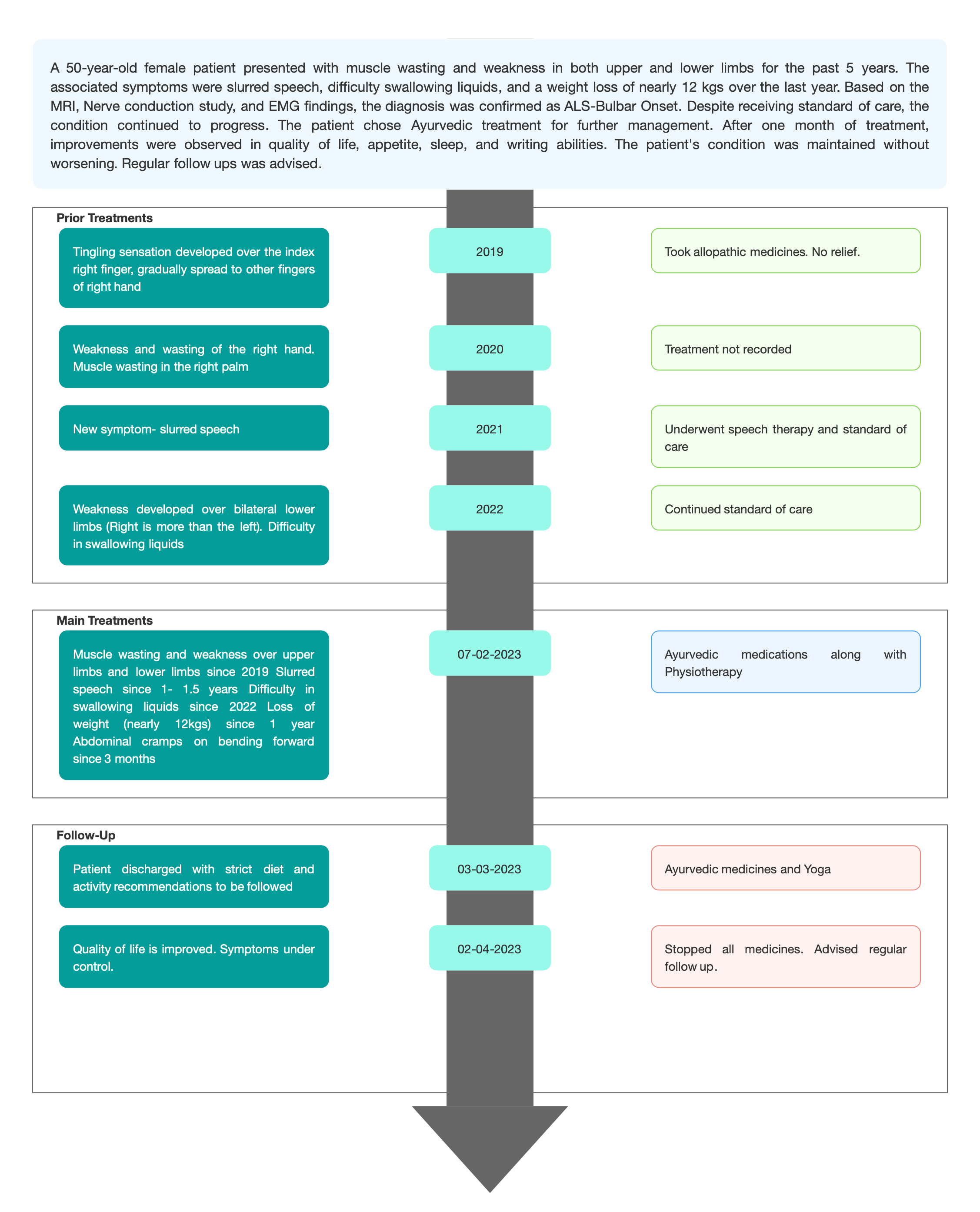
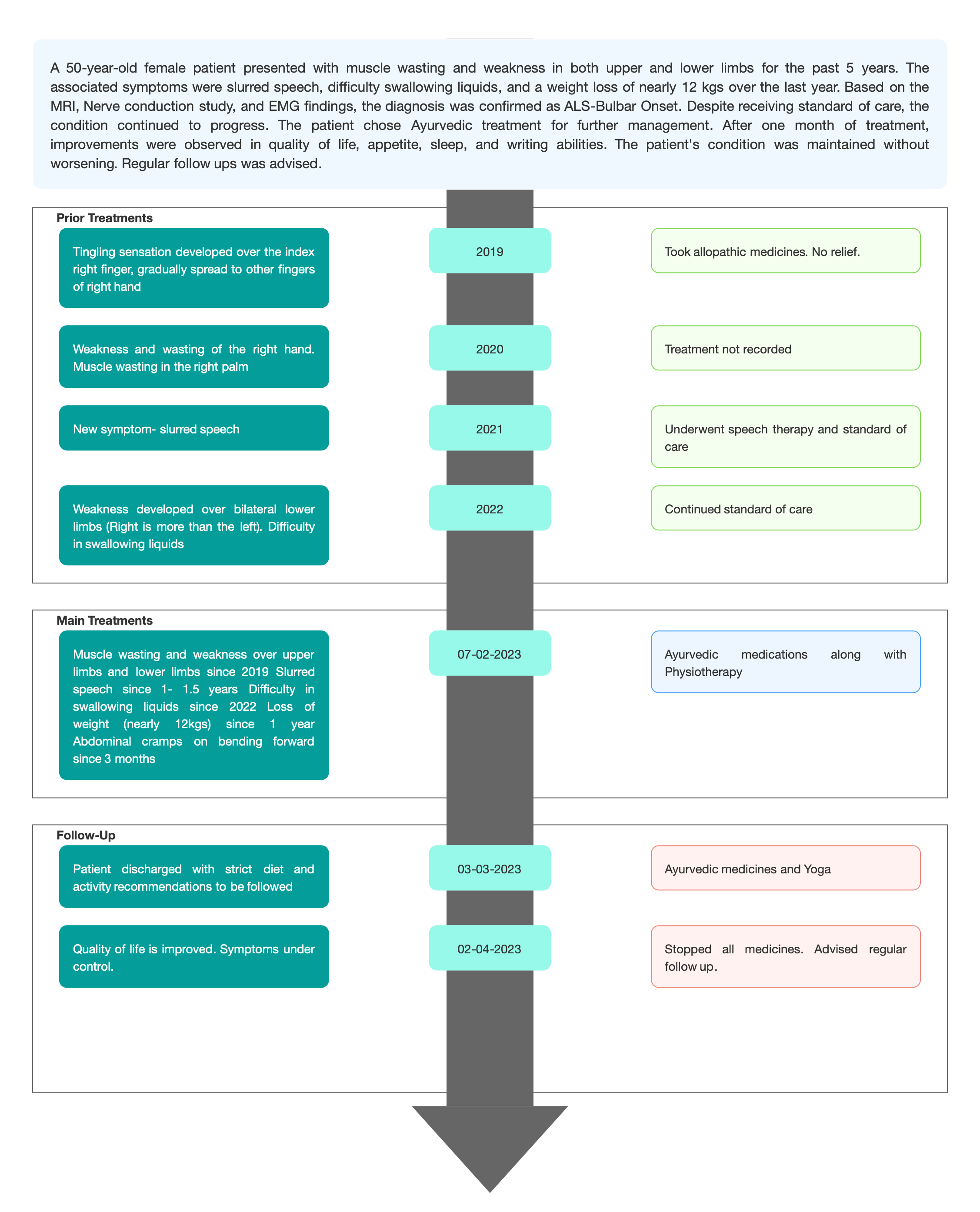
Image 1. Timeline of events added below
DIAGNOSTIC ASSESSMENT
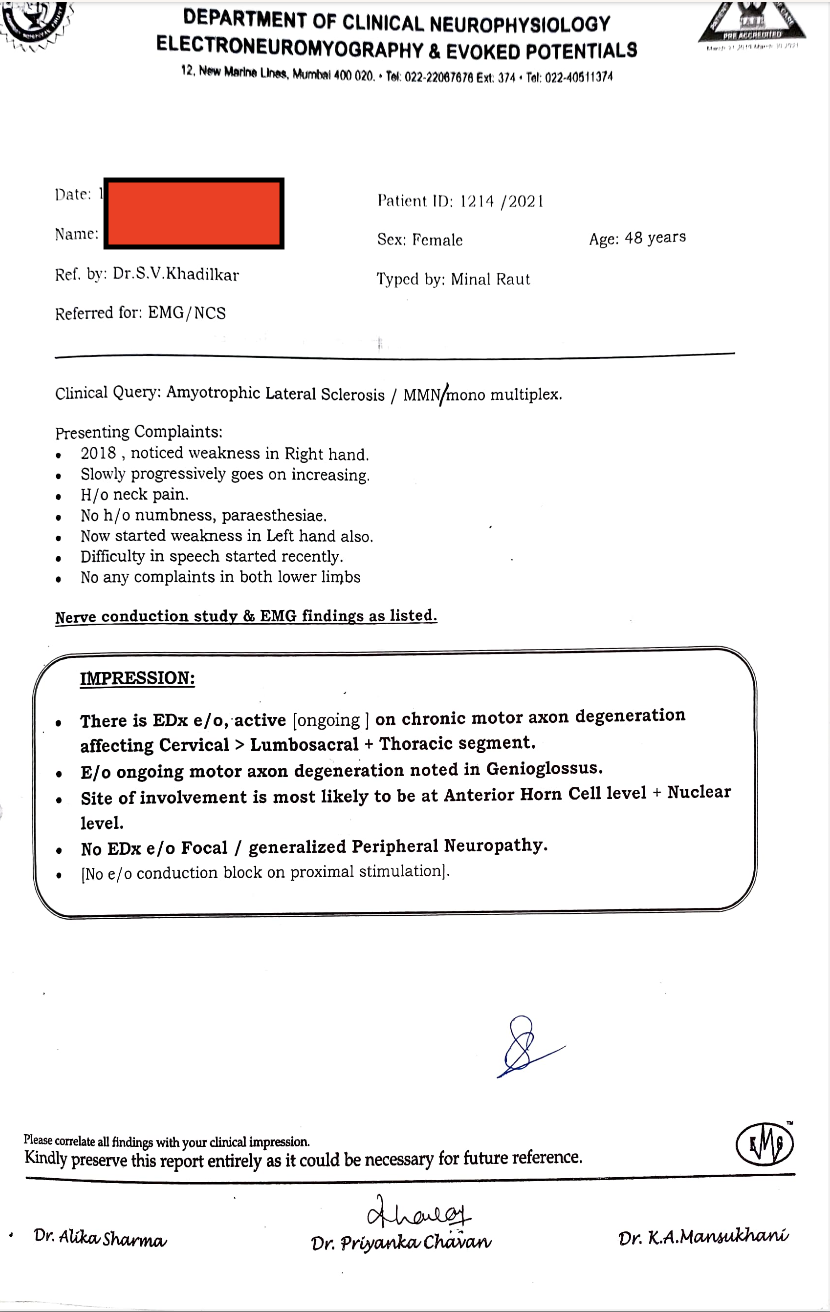
Modern Diagnostic parameter; The patient had a confirmed biomedical diagnosis based on Nerve conduction study and EMG Findings dated 13.8.2021 and Foscussed exome sequencing and deletion/duplication test report dated 17.8.2022.
Image 1. Diagnosis proof document dated 13.8.2021
Ayurvedic Assessment was done based on the presenting complaints and clinical evaluation. The treating physician confirmed the Ayurvedic diagnosis as Mastulunga majja kshaya- kapha avruta vata.
Baseline evaluation
Image 2. Physician outcome scale- at baseline
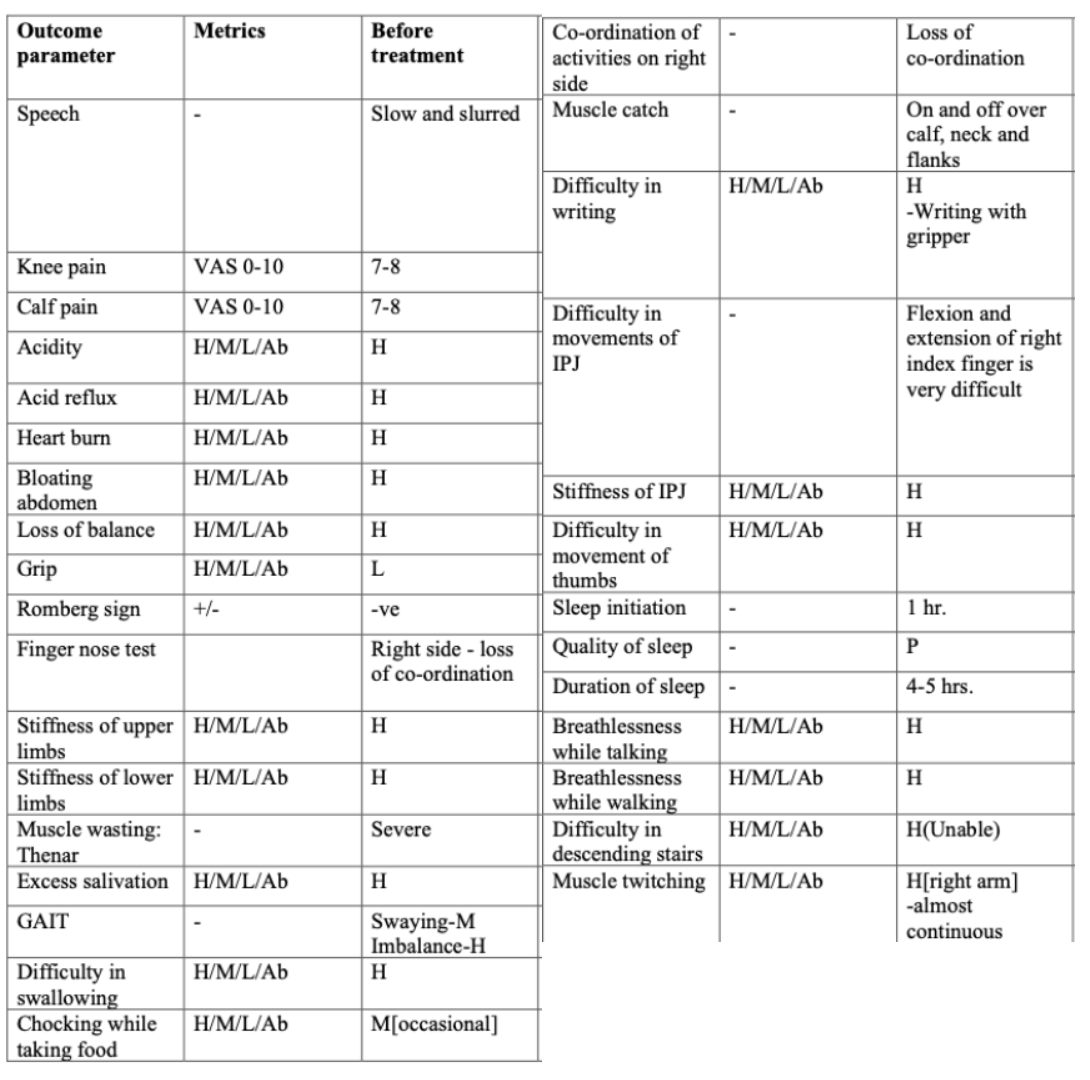
Image 3. Patient outcome scale- at baseline
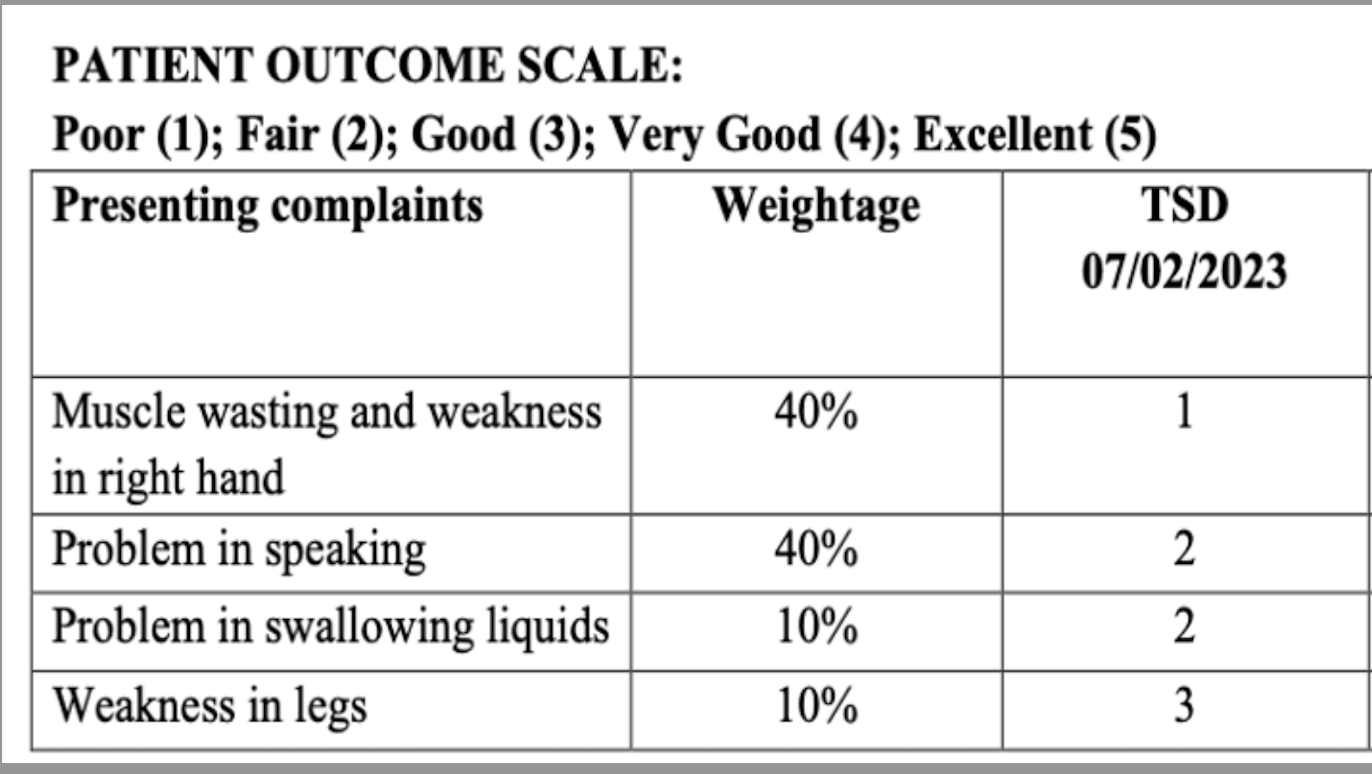
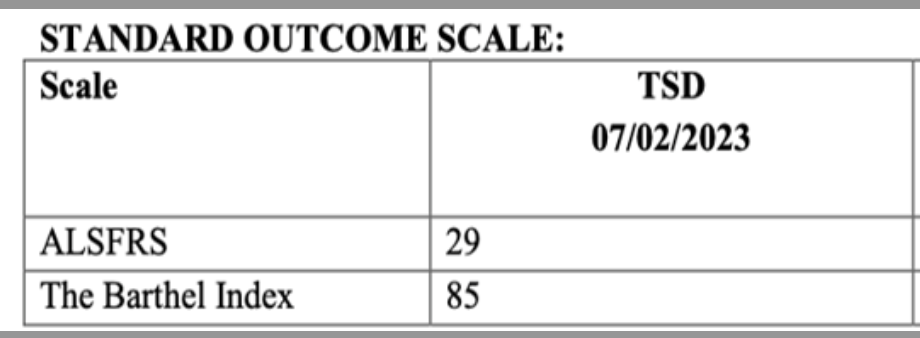
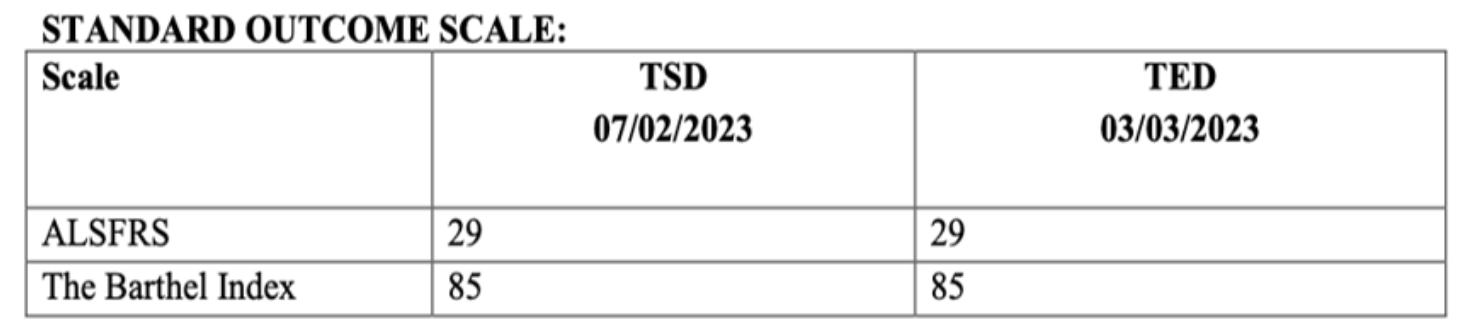
Image 4. Standard outcome scale- at baseline
Differential Diagnosis- Benign fasciculation, Cramp-fasciculation syndrome, Multifocal motor neuropathy, Myasthenia gravis, Myopathies, Lambert-Eaton syndrome, Hexosaminidase A deficiency, Inclusion body myositis, Neuromyotonia, Poliomyelitis, Radiation spinal myelopathy
Spinal bulbar muscular atrophy, Spinal muscular atrophy, Thyrotoxicosis.
Based on clinical examination and electrodiagnostic studies this case was diagnosed as Amyotrophic Lateral Sclerosis- Bulbar Onset
Prognosis: The median survival is of 3 to 5 years; however, around 30% of patients are alive after five years of diagnosis and 10% to 20% after ten years. Factors associated with better survival include increased weight at diagnosis (mild obesity by BMI), younger age at onset, higher ALS functional rating scale score, FVC at presentation, and limb rather than bulbar symptoms. In this case report, one month after the treatment - quality of life improved, appetite and sleep improved, writing ability improved.
THERAPEUTIC INTERVENTION
Refer the tab ‘Treatment’ in the Portal.
FOLLOW-UP AND OUTCOMES
The patient had 3 follow ups in total. The subjective parameters were the primary assessment modality.
Clinician-based assessment; After one month after the treatment - quality of life improved, appetite and sleep improved, writing ability improved.
Physician, Patient and Standard outcome scale were documented before, during and after treatment to analyse the outcome of the treatments.
Patient-assessed; Not relevant
Image 5. Physician outcome scale before, during and after treatment charted

Image 6. Patient outcome scale before, during and after treatment charted
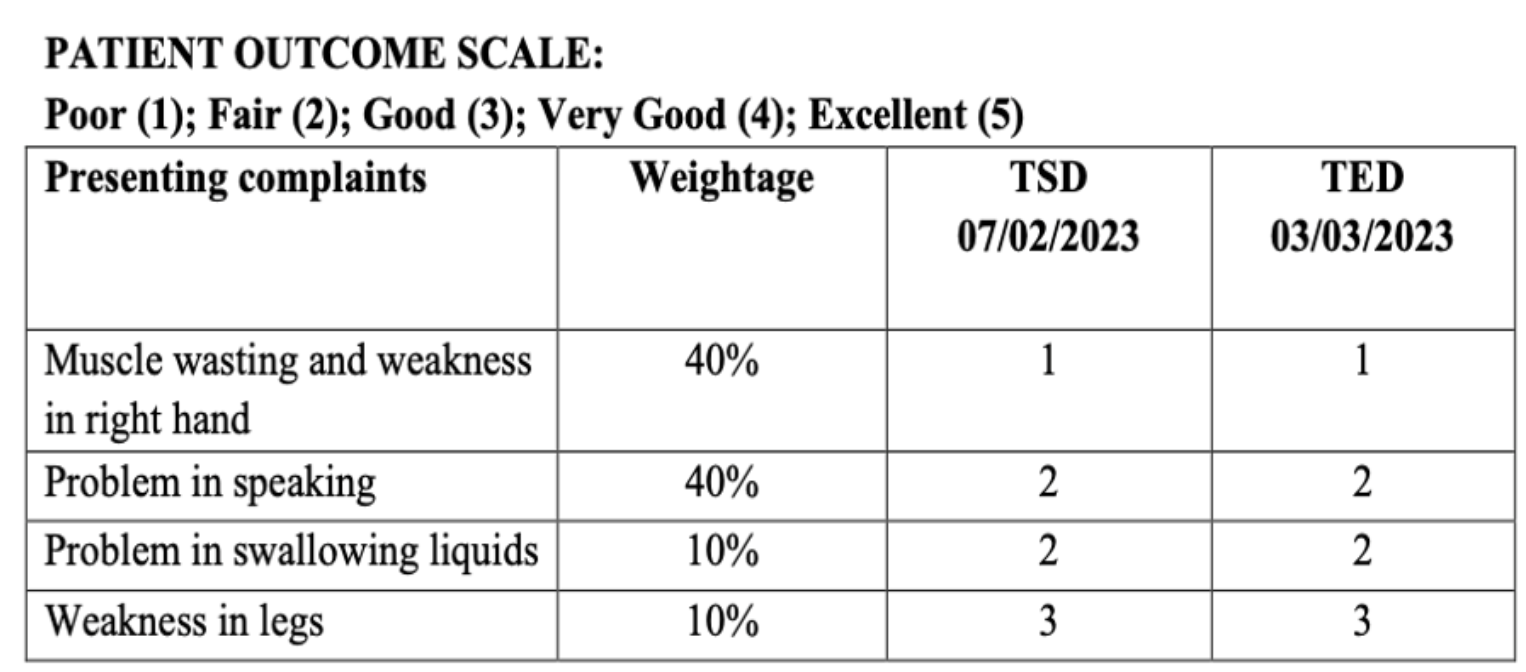
Image 7. Standard outcome scale, before and after treatment charted.
Intervention adherence and tolerability – The patient adhered to the prescribed treatments and tolerated the treatments well.
Method of assessment- Lab investigations, images, questionnaire and symptom evaluation were the primary assessment criteria.
Adverse and unanticipated events; None reported
DISCUSSION:
The median survival of ALS, is of 3 to 5 years; however, around 30% of patients are alive after five years of diagnosis and 10% to 20% after ten years. Factors associated with better survival include increased weight at diagnosis (mild obesity by BMI), younger age at onset, higher ALS functional rating scale score, FVC at presentation, and limb rather than bulbar symptoms. In this case report, one month after the treatment - quality of life improved, appetite and sleep improved, writing ability improved. The medicines were chosen with the following targets:
Balasaireyakadi Kashayam- Srotoshodhana, Avarana Vatahara, Vatanulomana
Ksheerabala 101- Vata Shamana, Indriya Bodhana
Saraswatharishta- Vak Indriya Bodhana
Kushmanda Rasayana- Balavarna Prasadana, Brimhana, Swaravardhana
Swarna Prashana mixture- Medha, Bala, Agni, Ayu vardhana
Dashamoolakatutrayadi Kashayam- Anti -inflammatory and broncho dilatory effect
Nasya- Vata shamana, Indriya Bodhana
Jihwa Pratisarana- Vak Pravartana, Tridosha Shamana, Agni Vardhana
Sarvanga Ksheera dhara- Vatapittahara, improve strength and mobility
Sarvanga Jambeera Pinda sweda- To improve blood circulation, muscle relaxation
Sarvanga Abhyanga- Vatahara, Balya, Brimhana
Bashpa Sweda- To improve ROM
Shiro basti- To relive stress, improve sleep and QOL
Shirodhara- To relieve stress, Vatashamana
Matra vasti- Balajanana, Vatahara
PATIENT’S PERSPECTIVE
Not available.
LEARNING POINTS/TAKE HOME MESSAGES
This case report narrates the successful integrative management of ALS- bulbar onset in a 50-year-old female, who was on conventional medicine for a long time, but the disease was progressing and the symptoms were worsening. With supportive Ayurvedic treatments, the symptoms could be maintained without further deterioration.
INFORMED CONSENT
Written consent obtained from patient for publishing of the case report in the Portal
ACKNOWLEDGEMENTS
None
CONFLICT OF INTEREST
None declared.
FUNDING
None
REFERENCE
1. https://www.healthline.com/health/bulbar-onset-als#treatment
2. Ashtanga Hrdaya. Su.11
3. Caraka Samhita. Cikitsa. 28
-
Immersive Learning
-
Modern Diagnosis
MODERN DIAGNOSIS: Amyotrophic Lateral Sclerosis- Bulbar onset
ABOUT THE DISEASE:
Amyotrophic lateral sclerosis (ALS), also known as Lou Gehrig’s disease, is a neurodegenerative condition affecting motor neurons — neurons responsible for voluntary muscle control — in the brain and spinal cord.It’s a progressive, terminal disease that ultimately leads to muscle wasting and paralysis. Most people experience limb onset ALS, in which symptoms begin your arms or legs. But 25 % of cases are bulbar onset ALS, in which symptoms start from affected neurons in the corticobulbar area of the brain stem.
In bulbar onset ALS, control of muscles of the face, head, and neck is affected before the weakness of the limbs or trunk develops. Significant speech impairment, tongue immobility, and difficulty swallowing are common early stage symptoms. Bulbar onset ALS is considered one of the most severe variants of ALS. It’s associated with cognitive decline, decreased quality of life, and shortened survival expectancy.
Causes: The exact cause of bulbar onset ALS is unknown. In general, 90 % or more of ALS cases are sporadic, meaning they happen without the influence of hereditary or genetic factors. Approximately 10% of ALS cases can be traced to specific genetics.
Diagnostic criteria: Medical history and clinical evaluation is the basis of the diagnosis. Apart from this, EMG, nerve conduction study, MRI, blood and urine tests, spinal tap, muscle and nerve biopsy are some other options that are considered to confirm the diagnosis.
In this case report, a 50-year-old female patient presented with muscle wasting and weakness in both upper and lower limbs for the past 5 years, along with slurred speech, difficulty swallowing liquids, and a weight loss of nearly 12 kgs over the last year. In 2021, based on the focused exome sequencing and deletion/duplication test report, the allopathic doctor confirmed the biomedical diagnosis was confirmed as Amyotrophic Lateral Sclerosis- Bulbar onset. Despite receiving standard care, the condition continued to progress. The patient chose Ayurvedic treatment for better management.
Baseline evaluation:
Image 1. Diagnosis proof document dated 13.8.2021
Image 2. Focussed exome sequencing deletion/duplication test report dated 17.8.2022
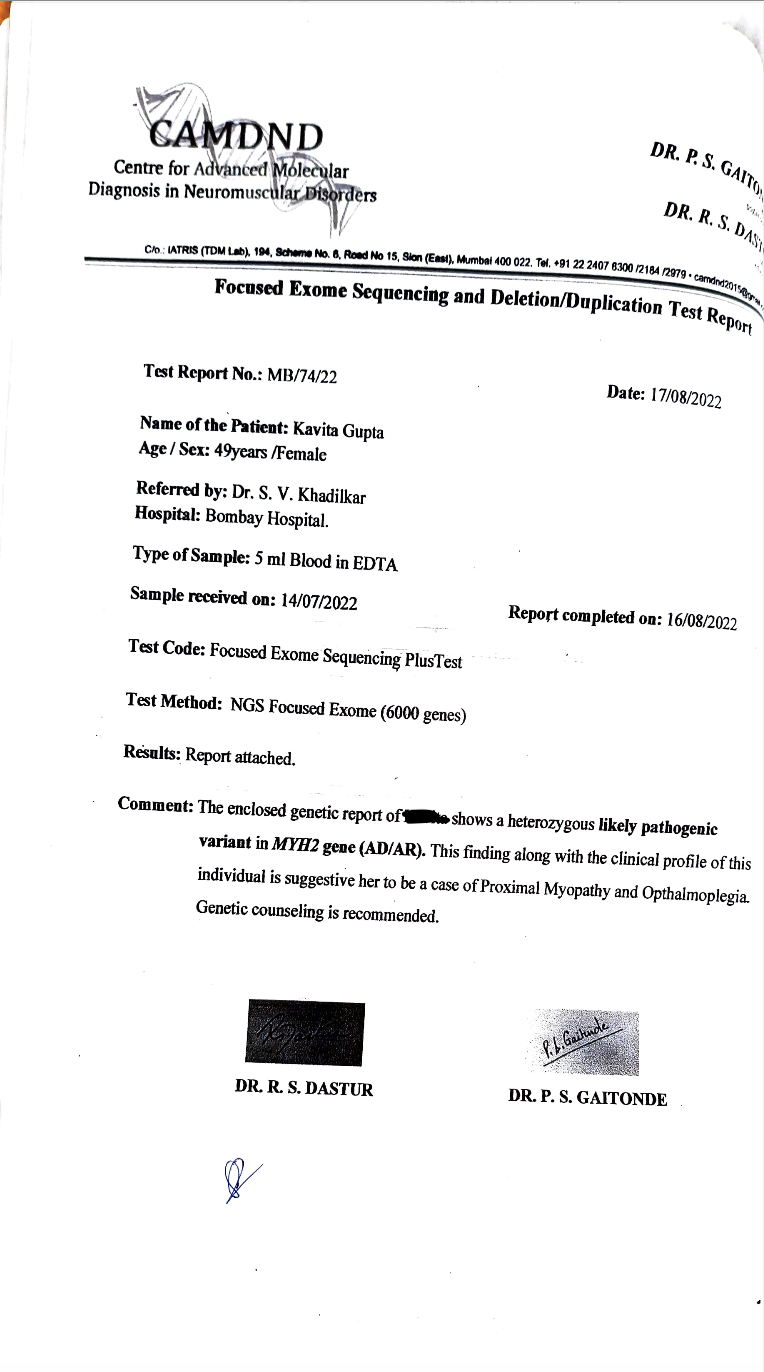
Image 3. Physician outcome scale- at baseline
Image 4. Patient outcome scale- at baseline
Image 5. Standard outcome scale- at baseline
Progression of the disease: ALS is a progressive condition, but how rapidly motor neurons are affected can vary between people. In bulbar onset ALS, early stage symptoms include facial muscle weakness and difficulty swallowing. In advanced stages of the condition, posture challenges develop and you may have difficulty holding up your head. Approximately of people experiencing bulbar onset ALS will also develop uncontrollable episodes of laughing or crying, known as a pseudobulbar affect.
Research suggests symptoms in other areas of the body tend to appear an average of 7 months after bulbar onset symptoms. Secondary areas affected earlier than 7 months are associated with shortened life expectancy.
The full progression of bulbar onset ALS occurs over an average of 2 years.
Treatment & prognosis: There is no cure for ALS and no medication that can stop its progression.
The medications that are generally prescribed are as follows:
- amitriptyline (Endep) for drooling
- dextromethorphan/quinidine (Nuedexta) for pseudobulbar affect
- analgesics for pain management
- antidepressants and anti-anxiety medications for mood symptoms
- riluzole (Rilutek) to potentially slow disease progression
Ultimately, treatment involves a focus on quality-of-life measures, like supporting breathing, improving communication, and managing pain.A speech pathologist can work with you to develop new ways to communicate and make speech understandable. As ALS progresses, gesture-based language and the use of technology help you continue to communicate.
Early stage bulbar onset ALS, in which swallowing and chewing are impaired, is initially treated with dietary changes. These changes aren’t always extreme. For example, cutting your food into smaller pieces can help, as can choosing foods that are broken down quickly by chewing. In time, the paralysis of the head, face, and neck muscles may require you to switch to meal-replacement beverages and nutrient-dense liquids.As bulbar onset ALS progresses, the risk of aspiration and weight loss increases, and the placement of a feeding tube becomes necessary.
Reference
-
Ayurveda Diagnosis
AYURVEDA DIAGNOSIS: Mastulunga Majja Kshaya: Kapha Avruta Udana
The biomedical diagnosis of Amyotrophic lateral sclerosis- bulbar onset cannot be directly correlated to any specific condition mentioned in the classical textbooks of Ayurveda. There are diseases that can be directly linked to the diseases mentioned in the Ayurvedic texts. But sometimes, the diagnosis is such that the physician uses his yukti to create a term for the disease. Though the classical text clearly mentions that giving a name for a disease is not mandatory for treating a condition, here a terminology was given for the purpose of educating the reader. Based on the symptoms, the ayurvedic correlation is made to Mastulunga majja kshaya- kapha avruta dana
About Majja dhatu:
करोति तत्र सौशीर्यम् अस्थिनाम् मध्ये समीरणः
मेदसस्तानि पूरयन्ते स्नेहो मज्ज ततः स्मृतः||
During the formation of asthi dhatu or bone, vayu bhuta or air element (one of 5 basic elements or pancha mahabhuta) creates spaces in bones. These spaces are filled with nourishing tissues of medha or fat which help in the formation of majja or bone marrow.
Functions of majja dhatu:
मज्जा स्नेहं बलं शुक्रपुश्टिं पूरणम् अस्थिनां च करोति |
It nourishes the body and helps to maintain its functions. Majja dhatu strengthens the body, fills bones, and nourishes shukra dhatu. Majja vriddhi will cause netra- manga guarava and parva sthoulya. Majja kshaya will cause asthma shaushirya, bhrama and timira darshana.
In this case report, a 50-year-old female patient presented with muscle wasting and weakness in both upper and lower limbs for the past 5 years, along with slurred speech, difficulty swallowing liquids, and a weight loss of nearly 12 kgs over the last year. ALS-Bulbar Onset was diagnosed based on MRI, Nerve conduction study, and EMG findings. Despite receiving standard care, the condition continued to progress. The patient chose Ayurvedic treatment for better management. The diagnosis is defined as Majja kshaya. And this is specified to the Mastulunga- brain. ALS is a degenerative disease that is basically neurological, and hence the physician has mentioned as majja kshaya of the mastulunga.
About Kapha avruta udana: Avarana means covering, enveloping or enclosing. In this condition the ‘free flowing’ and ‘all pervading’ vata is obstructed and enveloped by pitta, kapha, tissues, food and excreta. This obstructed vata causes many disorders. These diseases are called avarana janya vyadhis. Vayu gets aggravated by two factors –
Marga avarana and dhatu kshaya – depletion of essence of tissues. In this case report, dhatu kshaya and avarana have been included in the diagnosis, which points out that Vata is the deranged dosa basically. Caraka explains in Cikitsa sthana,शैत्य गौरव शूलानि कटु आध्यो उपशयो अधिकं।
लङ्घनं आयास रूक्ष उष्ण कामिता च कफ आवृते॥Ca.Ci.28/62॥The symptoms when vata is enveloped by kapha are coldness, heaviness in body, pain, symptoms reduce on consumption of pungent, sour, salt tastes and hot foods, there is inclination to eat such foods, desire to starve, eat light foods, exercise, to consume dry and hot foods and comforts. Here the subtype of vata that is enveloped is udana vata.
Treatment and rationale as explained by the physician: There is no line of treatment that can be proposed from the classical textbooks of Ayurveda. As this is a unique diagnosis, given by the physician according to his yukti. But as vata is very predominant in this condition, vata hara line of treatment would be ideal.
Table 1. The medicines/therapies chosen and the specific rationale is being mentioned
MEDICINE
RATIONALE
Balasaireyakadi Kashayam
Srotoshodhana, Avarana Vatahara, Vatanulomana
Ksheerabala 101
Vata Shamana, Indriya Bodhana
Saraswatharishta
Vak Indriya Bodhana
Kushmanda Rasayana
Balavarna Prasadana, Brimhana, Swaravardhana
Swarna Prashana mixture
Medha, Bala, Agni, Ayu vardhana
Dashamoolakatutrayadi Kashayam
Anti -inflammatory and broncho dilatory effect
Nasya
Vata shamana, Indriya Bodhana
Jihwa Pratisarana
Vak Pravartana, Tridosha Shamana, Agni Vardhana
Sarvanga Ksheera dhara
Vatapittahara, improve strength and mobility
Sarvanga Jambeera Pinda sweda
To improve blood circulation, muscle relaxation
Sarvanga Abhyanga
Vatahara, Balya, Brimhana
Bashpa Sweda
To improve ROM
Shiro basti
To relive stress, improve sleep and QOL
Shirodhara
To relieve stress, Vatashamana
Matra vasti
Balajanana, Vatahara
Reference:
1. AH.Su.11
-
Treatment
Name of Medicine Dosage Form Dosage Mode of Administrtation From - To (Date) Medicine Reference Balasaireyakadi Kasayam Kasayam 15 ml With 45 ml of luke warm water on empty stomach twice daily 2023-02-07 - 2023-03-03 Arogyakalpadrumam. Dashamoolakatutrayadi Kasayam Kasayam 15 ml With 45 ml of luke warm water on empty stomach twice daily 2023-02-07 - 2023-03-03 Sahasrayogam. Kasaya Prakarana Ksheerabala 101 Taila 10 drops With warm milk at bedtime 2023-02-07 - 2023-03-03 Sahasrayogam. Taila Prakarana Saraswatarishta Arista 15 ml Twice daily after food 2023-02-07 - 2023-03-03 Sahasrayogam. Asava- Arista Prakarana Kushmanda Rasayana Lehya 1 teaspoon At bedtime 2023-02-07 - 2023-03-03 AH.Ci.3.114-117 Swarna Prashana mixture Samyoga 1?4 teaspoon swarna mixture + 1 teaspoon honey + 1?2 teaspoon Brahmi ghrita Oral, on empty stomach 2023-02-07 - 2023-03-03 Kashyapa Samhita. Ksheerabala 101 Taila 7 drops As nasya, in the early morning 2023-02-10 - 2023-03-16 Sahasrayogam. Taila Prakarana Kalyana Avaleha churna + Vacha churna + Honey + Panchagavya ghrita Samyoga Required Quantity Jihva pratisarana- once daily 2023-02-10 - 2023-03-03 Kalyanaka avaleha – Bhaishajya Ratnavali – Swarabhedadikara.17.34-36: Panchagavya grutha : AH. Utt. 7.18-20 Dashamoola Ksheera Dhara Dravya Required Quantity As Sarvanga Ksheera dhara, once daily 2023-02-10 - 2023-02-22 CS.Su.14.44 Jambira pinda sveda with Dhanvantara Taila+ Kottamcukkadi Taila Sveda Dravya Required Quantity As Sarvanga Ksheera dhara, once daily 2023-02-11 - 2023-02-14 Dhanvantara Taila & Kottamcukkadi Taila- Sahasrayogam. Taila Prakarana Ksheerabala Taila Taila Required Quantity Sirovasti 2023-02-27 - 2023-03-28 Sahasrayogam. Taila Prakarana Ksheerabala Taila Taila Required Quantity Sirodhara 2023-03-01 - 2023-03-02 Sahasrayogam. Taila Prakarana Dhanwantharam mezhukupakam Taila Required Quantity Matra vasti given on 28th Jan, 2nd and 3rd March 2023-03-01 - 2023-03-02 Keraliya Ayurveda Cikitsa -
Outcome Measures
OUTCOME MEASURES
In this case report, a 50-year-old female patient presented with muscle wasting and weakness in both upper and lower limbs for the past 5 years, along with slurred speech, difficulty swallowing liquids, and a weight loss of nearly 12 kgs over the last year. ALS-Bulbar Onset was diagnosed based on MRI, Nerve conduction study, and EMG findings. Despite receiving standard care, the condition continued to progress. The patient chose Ayurvedic treatment for better management. The diagnosis is defined as Majja kshaya. And this is specified to the Mastulunga- brain. ALS is a degenerative disease that is basically neurological, and hence the physician has mentioned as majja kshaya of the mastulunga.
Assessment: Subjective parameters were assessed to analyse the outcome of the treatment.
Subjective parameters: In this case, one month after the treatment - quality of life improved, appetite and sleep improved, writing ability improved. The physician, patient and the standard outcome scale were documented before, during and after treatment to analyse the outcome.
Image 1. Physician outcome scale before, during and after treatment charted
Image 2. Patient outcome scale before, during and after treatment charted
Image 3. Standard outcome scale, before and after treatment charted.
The ayurvedic treatments definitely helped in improving the quality of health. The disease progression was not seen after starting the Ayurvedic treatments.
-