Featured Case
-
Abstract
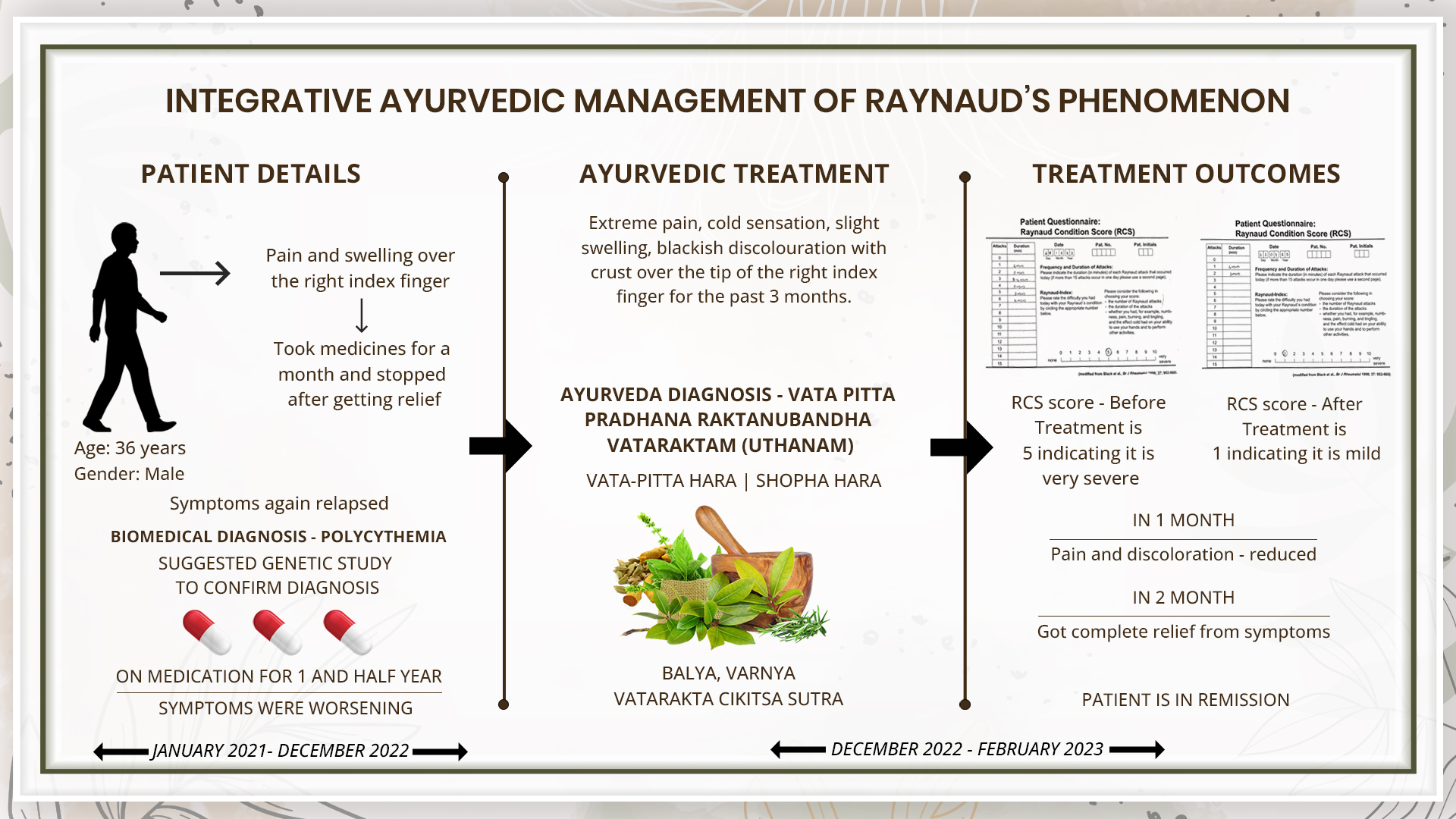
A 36-year-old male patient presented with extreme pain, cold sensation, slight swelling, and blackish discolouration with crust over the tip of the right index finger for the past 3 months.
The onset of the symptoms was in January 2021. He took allopathic medicines and got relief, but the condition relapsed after some time. The biomedical diagnosis was confirmed as Raynaud’s phenomenon based on the capillaroscopy of both hands. During this episode, in spite of taking allopathic medicines, he did not get relief and the symptoms worsened. He approached Dr Narayana Nambi in December 2022, for Ayurvedic management. The Ayurvedic diagnosis was Vatapitta pradhana raktanubandha uttana vataraktam. The line of treatment followed was Shopha hara, vata-pitta hara, balya and varnya. In general the Vatarakta cikitsa sutra was followed. After 1 month of treatment, there was a reduction in symptoms like pain and discolouration. After 2 months, the patient got significant symptomatic relief. Raynaud condition score before treatment was 5 which became 1 after treatment. This case report explains the successful integrative approach in the management of Raynaud’s phenomenon, in a patient, who has been suffering from the condition past 3 months and was not responding to standard of care.
-
Summaries
-
Listen
-
Watch
-
View
-
Read
A 36-year-old male patient presented with extreme pain, cold sensation, slight swelling, and blackish discolouration with crust over the tip of the right index finger for the past 3 months. The onset of the symptoms was in January 2021. He took allopathic medicines and got relief, but the condition relapsed after some time. The biomedical diagnosis was confirmed as Raynaud’s phenomenon based on the capillaroscopy of both hands. During this episode, in spite of taking allopathic medicines, he did not get relief and the symptoms worsened. He approached Dr Narayana Nambi in December 2022, for Ayurvedic management. The Ayurvedic diagnosis was Vatapitta pradhana raktanubandha uttana vataraktam.. The line of treatment followed was Shopha hara, vata-pitta hara, balya and varnya. In general the Vatarakta cikitsa sutra was followed. After 1 month of treatment, there was a reduction in symptoms like pain and discolouration. After 2 months, the patient got significant symptomatic relief. Raynaud condition score before treatment was 5 which became 1 after treatment. This case report explains the successful integrative approach in the management of Raynaud’s phenomenon, in a patient, who has been suffering from the condition past 3 months and was not responding to standard of care.
-
-
Timeline
-
Tabulated Summary
-
Narrative
TITLE OF CASE
An Integrative approach in the successful management of Raynaud’s phenomenon - A case report.
Dr Narayanan nambi
ABSTRACT
A 36 year old patient presented with extreme pain, cold sensation, slight swelling, blackish discoloration with crust over the tip of right index finger since past 3 months. Based on genetic study and capillaroscopy, the biomedical diagnosis was made as Raynaud’s phenomenon. Patient underwent standard of care for some years and discontinued taking medications without medical advise. Then the condition started worsening even with medications. So he opted for Ayurvedic treatment for better management. After 1 month of treatment, the patient had a reduction in symptoms like pain and discolouration. After 2 months, the patient got significant symptomatic relief. Raynaud condition score before treatment was 5 which became 1 after treatment.
KEYWORDS
Raynaud's phenomenon, vata rakta, ayurveda, vatapitta pradhana vatarakta, uttana vatarakta
INTRODUCTION
Raynaud's (ray-NOSE) disease causes some areas of the body — such as fingers and toes — to feel numb and cold in response to cold temperatures or stress. In Raynaud's disease, smaller arteries that supply blood to the skin narrow. This limits blood flow to affected areas, which is called vasospasm. Women are more likely than men to have Raynaud's disease. It seems to be more common in people who live in colder climates.
Other names for this condition are:
- Raynaud's phenomenon.
- Raynaud syndrome.
Symptoms of Raynaud's disease include:
-Cold fingers or toes.
-Areas of skin that turn white then blue. Depending on your skin color, these color changes may be harder or easier to see.
-Numb, prickly feeling or stinging pain upon warming or stress relief.
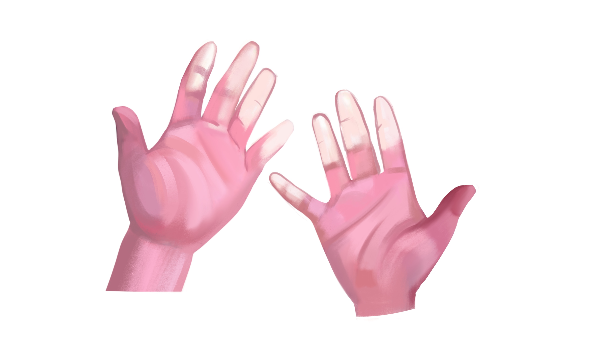
During an attack of Raynaud's, affected areas of the skin usually first turn pale. Next, they often change color and feel cold and numb. When the skin warms and blood flow improves, the affected areas may change color again, throb, tingle or swell.
Raynaud's most commonly affects fingers and toes. But it also can affect other areas of the body, such as nose, lips, ears and even nipples. After warming up, the return of blood flow to the area can take 15 minutes.
Causes: But blood vessels in the hands and feet appear to react too strongly to cold temperatures or stress.
With Raynaud's, arteries to the fingers and toes narrow when exposed to cold or stress. The narrowed arteries limit blood flow. Over time, these small arteries can thicken slightly and limit blood flow even more.
Cold temperatures are the most likely cause of an attack. There are 2 types of Raynaud’s - Primary and Secondary. Primary is mild, such that it goes away on its own and no treatment is required. Secondary occurs due to the incidence of another disease. Symptoms of secondary usually appear around 40 years of age. Sex, age, climate and family history are the common risk factors for this condition.
Complications:
If secondary Raynaud's is severe, reduced blood flow to fingers or toes could cause tissue damage. But that's rare. A completely blocked artery can lead to skin sores or dead tissue. This can be difficult to treat. Rarely, very bad untreated instances might require removing the affected part of the body.
Diagnostic criteria: medical history and clinical evaluation is the basis of diagnosis. Apart from this, tests like nailfold capillaroscopy, ANA, ESR are usually relied upon as the main diagnostic tools.
PATIENT INFORMATION
In this case report, a 36 year old male patient presented with extreme pain ,cold sensation, slight swelling, blackish discoloration with crust over the tip of right index finger since past 3 months. Based on genetic study and capillaroscopy this condition was diagnosed as Raynaud's phenomenon. Patient underwent standard of care for some years and discontinued taking medications without medical advise. Then the condition started worsening even with medications. So he opted for Ayurvedic treatment for better management.
No relevant family/surgical history.
Genetic history- None reported.
Addictions- Smoking, Occasional alcohol intake
CLINICAL FINDINGS
On examination:
Physical examination – Locomotor system: Flexion and extension – bilateral inter phalangeal joint possible. Cutaneous examination – Discolouration – blackish over tip of right index finger (proximal nail fold): Colour – blackish. Size – 1 to 1.5 cm (approx) Border – ill defined. Ulceration – Absent. Hyperkeratosis – Present. Tenderness – Absent. Rise in temperature – cold in touch. Nature of lesion – rough and thickened. Elevation – Absent
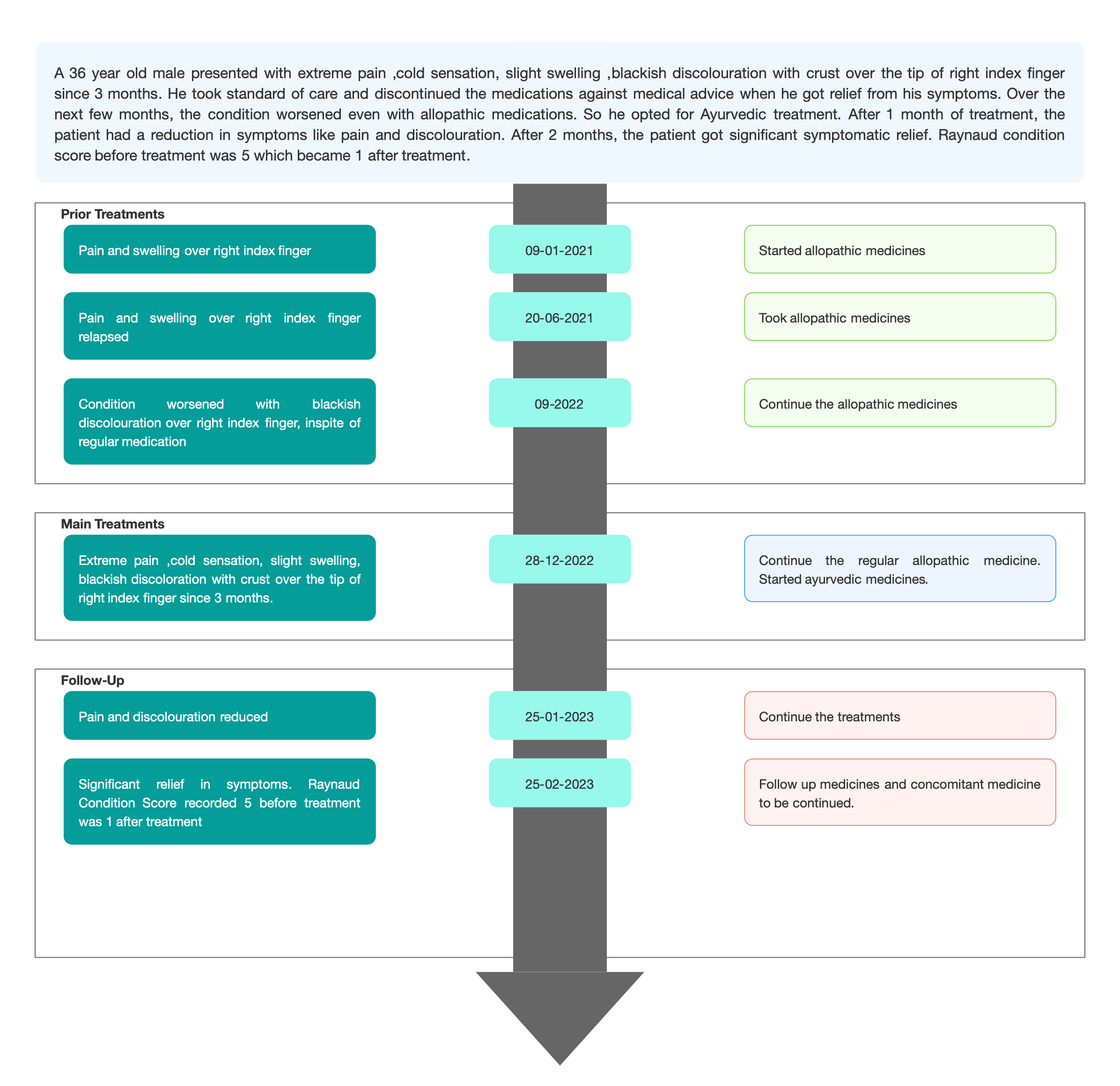
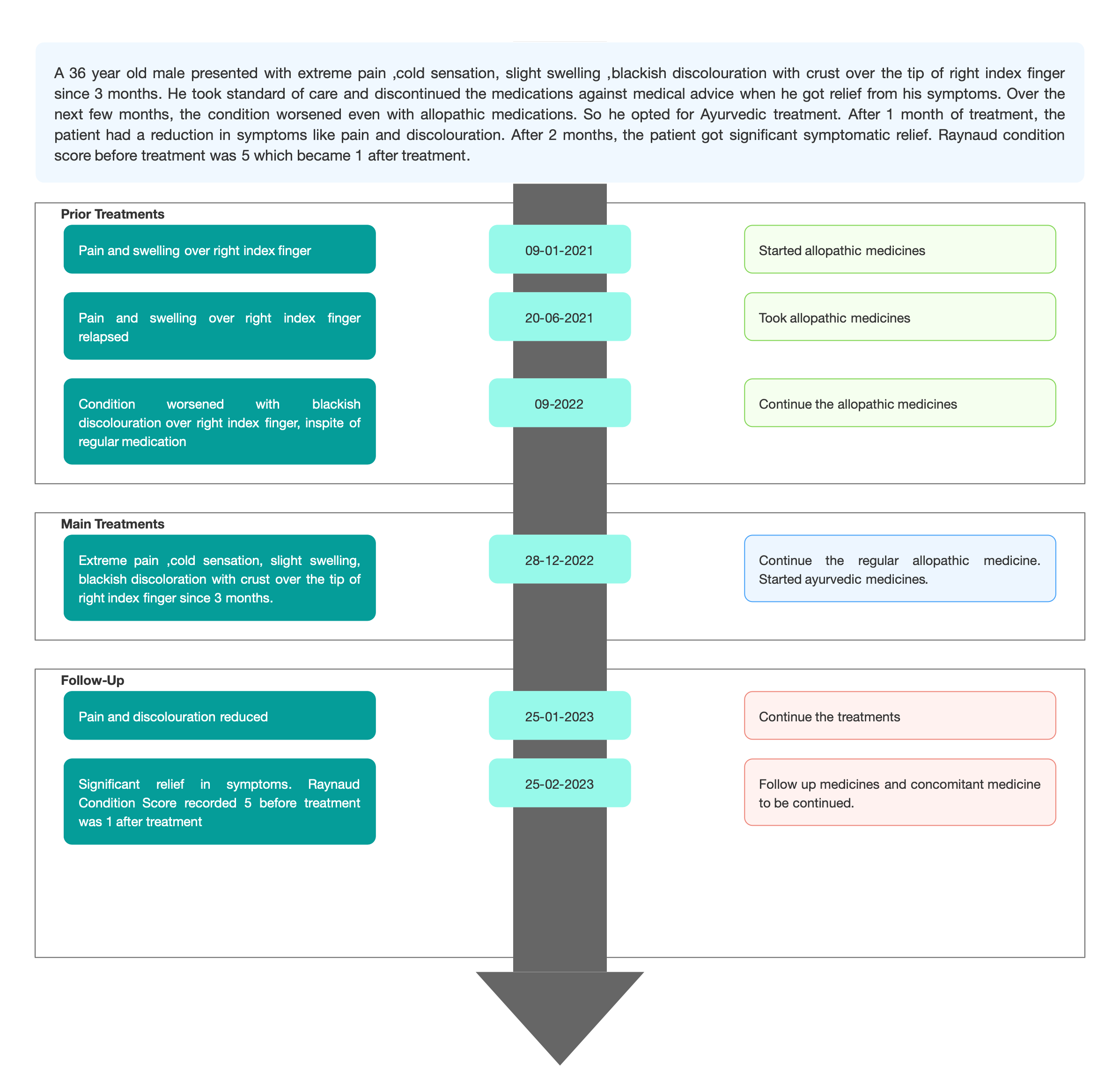
TIMELINE
Image 1. Timeline of events added below
DIAGNOSTIC ASSESSMENT
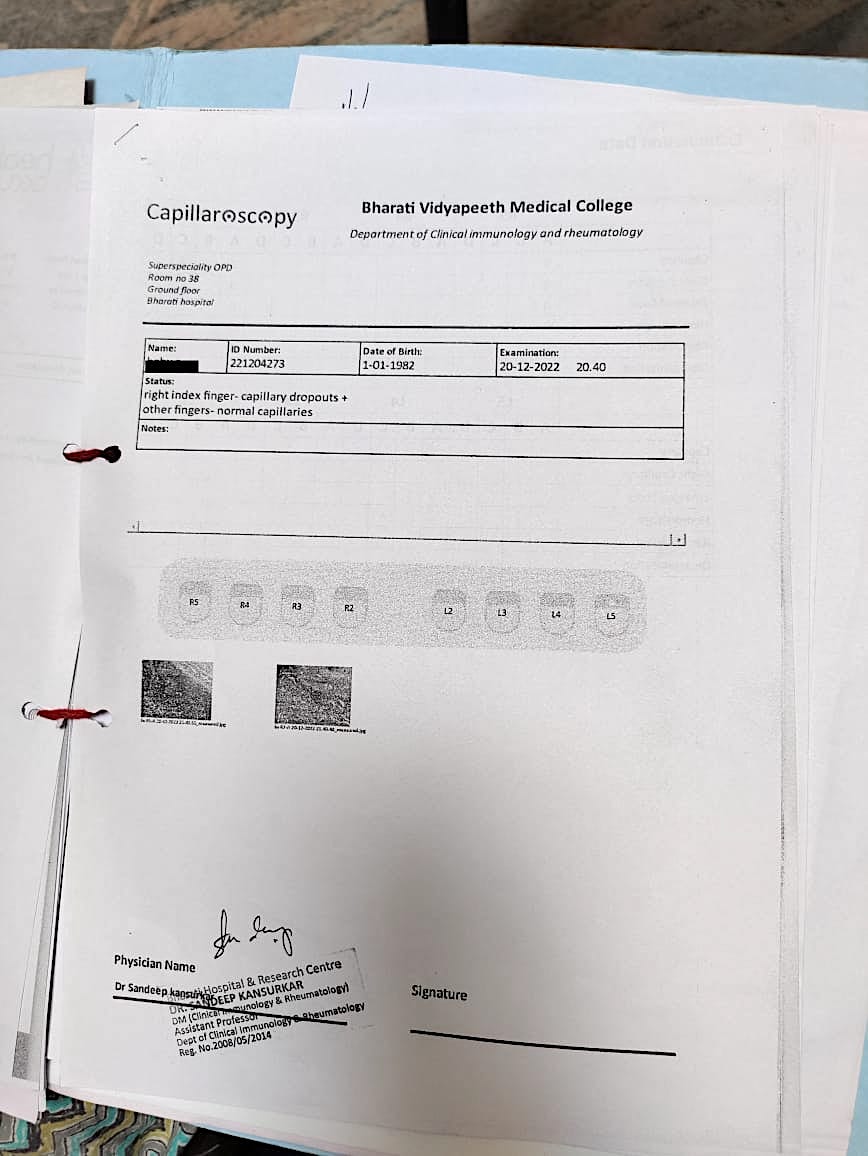
Modern Diagnostic parameter; The patient had a confirmed biomedical diagnosis based on the CT upper limb angiography, genetic study and the capillaroscopy, done.
Image 2. CT upper limb angiography dated 09.01.2021
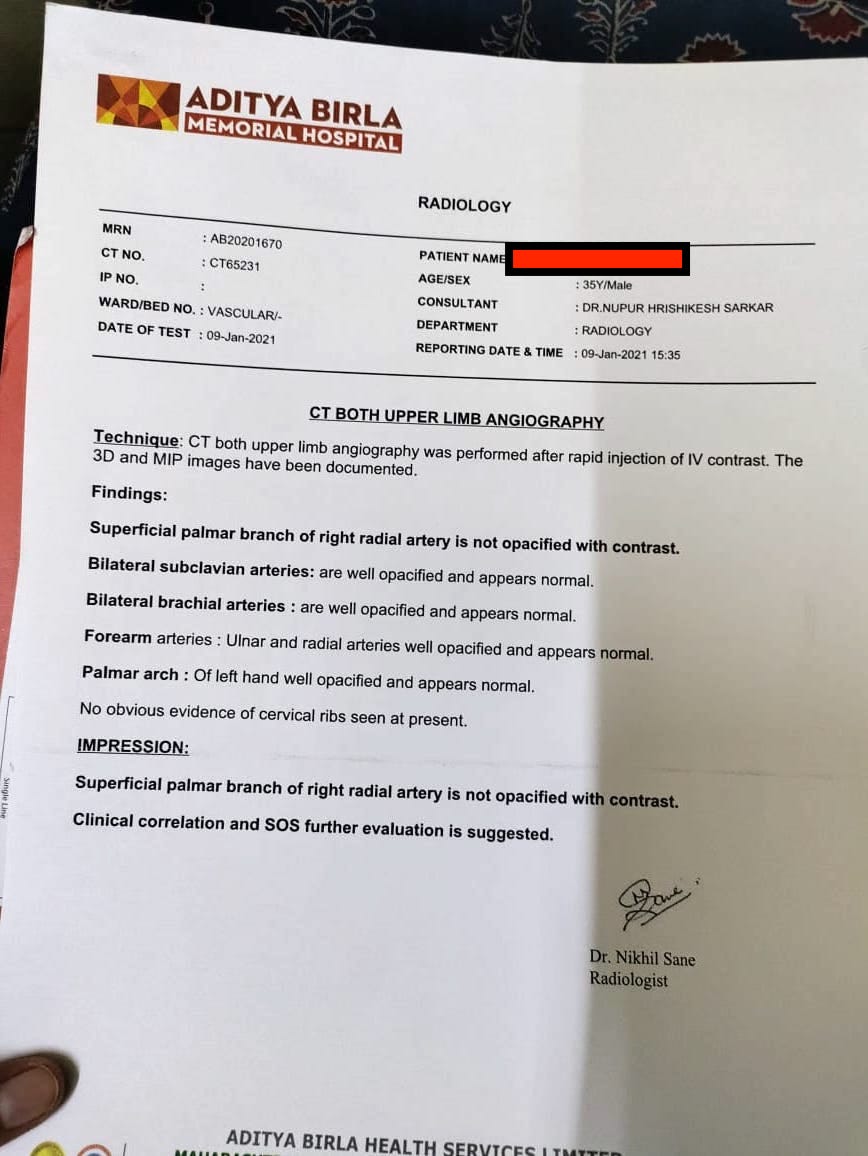
Image 3. Genetic study dated 27.1.2022
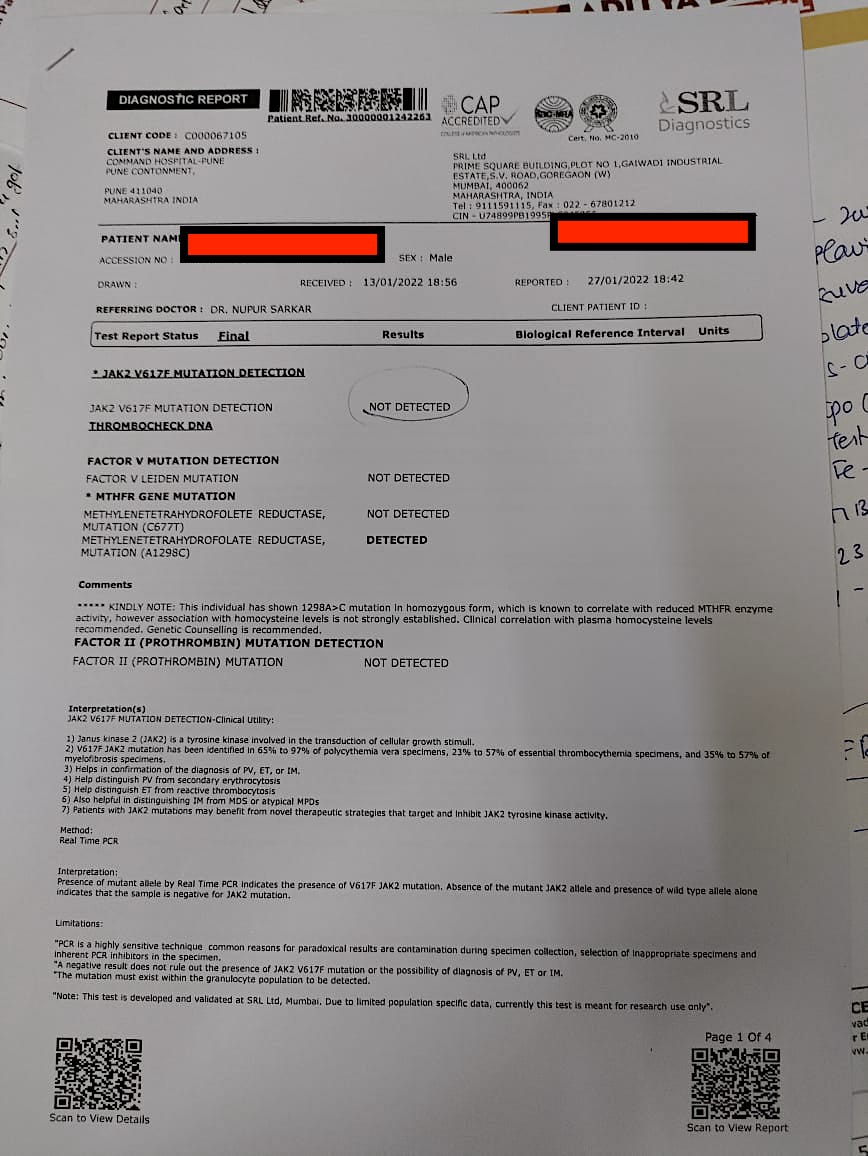
Image 4. Capillaroscopy dated 20.12.2022
Ayurvedic Assessment was done based on the presenting complaints and clinical evaluation. The treating physician confirmed the Ayurvedic diagnosis as vatapitta pradhana vatarakta- uttana avastha.
Baseline evaluation
Image 5. Photo of the right hand at baseline dated 28.12.2022
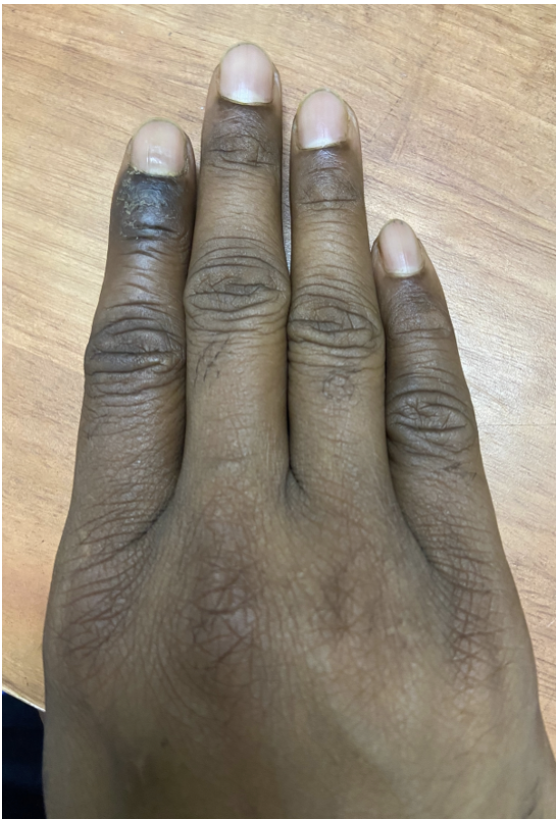
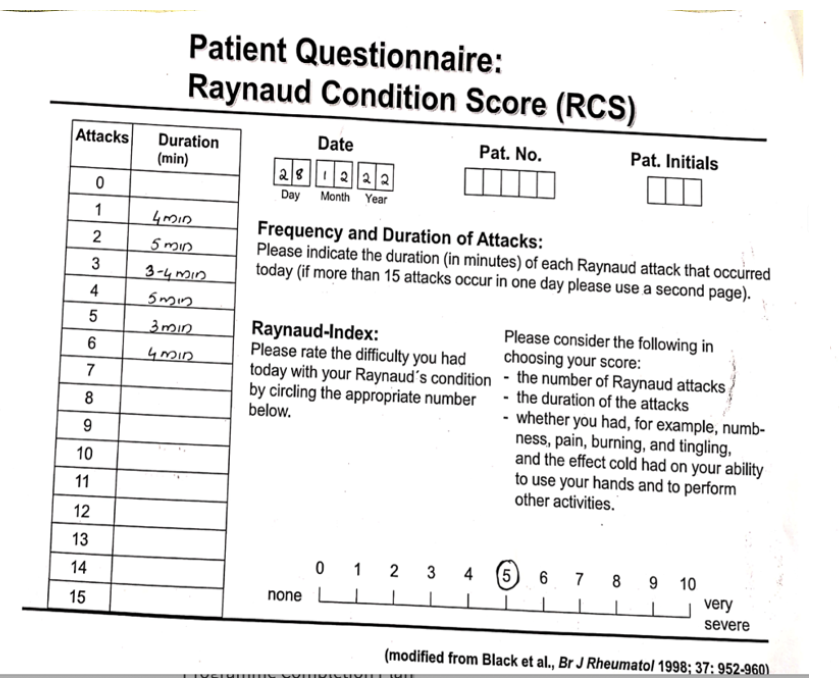
Image 6. Raynaud condition score dated 28.12.2022
Differential Diagnosis- External blood vessel compression, complex regional pain syndrome, erythromelalgia, acute idiopathic blue finger also known as paroxysmal finger hematoma, acrocyanosis, occlusive peripheral vascular disease, peripheral neuropathy, and excessive cold sensitivity. Based on genetic study and capillaroscopy, this condition is diagnosed as Raynaud's phenomenon
Prognosis: There are 2 types of Raynaud’s - Primary and Secondary. Primary is mild, such that it goes away on its own and no treatment is required. Secondary occurs due to the incidence of another disease. If secondary Raynaud's is severe, reduced blood flow to fingers or toes could cause tissue damage. But that's rare. A completely blocked artery can lead to skin sores or dead tissue. This can be difficult to treat. Rarely, very bad untreated instances might require removing the affected part of the body.
THERAPEUTIC INTERVENTION
Refer the tab ‘Treatment’ in the Portal.
FOLLOW-UP AND OUTCOMES
The patient had 2 follow ups in total. The subjective and objective parameters were assessed.
Clinician-based assessment; After 1 month of treatment, the patient had a reduction in symptoms of pain and discolouration. After 2 months, the patient got significant symptomatic relief. Raynaud condition score before treatment was 5 which became 1 after treatment.
Patient-assessed; Not relevant
Image 7. Photo taken at endpoint dated 25.2.2023
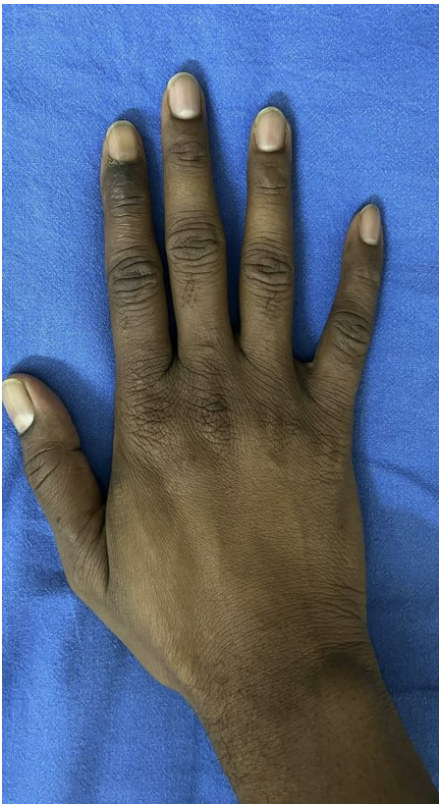
Image 8. Raynaud condition score dated 11.1.2023
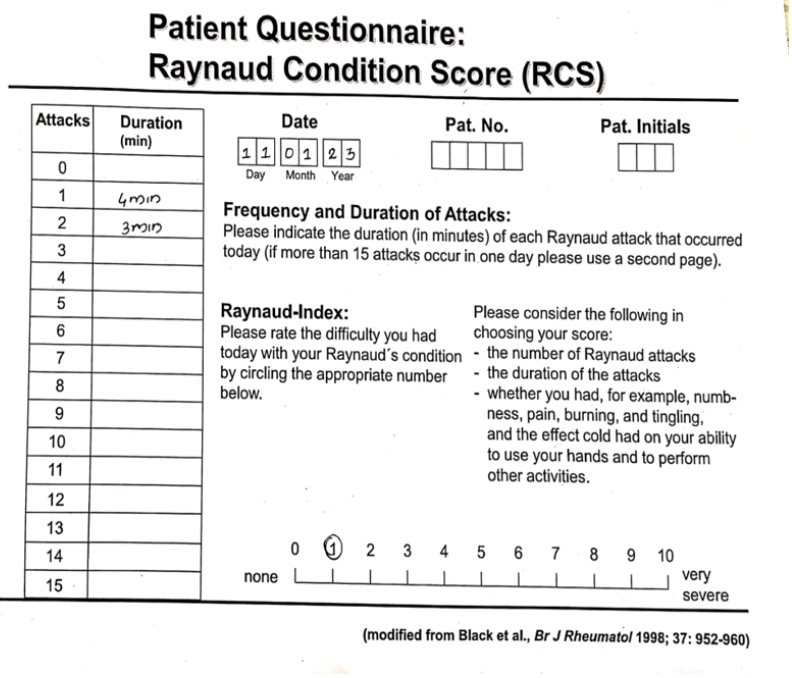
The Raynaud condition score was 5 at baseline, and became 1 at endpoint.
Intervention adherence and tolerability – The patient adhered to the prescribed treatments and tolerated the treatments well.
Method of assessment- Lab investigations, images, questionnaire and symptom evaluation were the primary assessment criteria.
Adverse and unanticipated events; None reported
DISCUSSION:
Primary Raynaud’s does not require medical intervention in most of the cases. This will resolve on its own. But in the secondary type, medical intervention is mostly required. In this case report, the type is not specified, but taking into consideration, it is chronic and was not responding to allopathic medications since a span of time, and the symptoms were worsening. The line of treatment followed by the physician was shopha hara, vata-pitta hara, balya and varnya. In general the Vatarakta cikitsa sutra was followed. The patient got relief from his symptoms and the Raynaud condition score reduced from 5 to 1.
PATIENT’S PERSPECTIVE
Not available.
LEARNING POINTS/TAKE HOME MESSAGES
This case report explains the successful integrative approach in the management of Raynaud’s phenomenon, in a patient, who has been suffering from the condition past 3 months and was not getting relief from his symptoms, in spite of taking allopathic medicines.
INFORMED CONSENT
Written consent obtained from patient for publishing of the case report in the Portal
ACKNOWLEDGEMENTS
None
CONFLICT OF INTEREST
None declared.
FUNDING
None
REFERENCE
2. Ashtanga Hrdaya. Nidana sthana. Chapter 16.
-
Immersive Learning
-
Modern Diagnosis
MODERN DIAGNOSIS: Raynaud’s phenomenon
ABOUT THE DISEASE:
Raynaud's (ray-NOSE) disease causes some areas of the body — such as fingers and toes — to feel numb and cold in response to cold temperatures or stress. In Raynaud's disease, smaller arteries that supply blood to the skin narrow. This limits blood flow to affected areas, which is called vasospasm. Women are more likely than men to have Raynaud's disease. It seems to be more common in people who live in colder climates.
Other names for this condition are:
- Raynaud's phenomenon.
- Raynaud syndrome.
Symptoms of Raynaud's disease include:
-Cold fingers or toes.
-Areas of skin that turn white then blue. Depending on your skin color, these color changes may be harder or easier to see.
-Numb, prickly feeling or stinging pain upon warming or stress relief.
During an attack of Raynaud's, affected areas of the skin usually first turn pale. Next, they often change color and feel cold and numb. When the skin warms and blood flow improves, the affected areas may change color again, throb, tingle or swell.
Raynaud's most commonly affects fingers and toes. But it also can affect other areas of the body, such as nose, lips, ears and even nipples. After warming up, the return of blood flow to the area can take 15 minutes.
Causes: But blood vessels in the hands and feet appear to react too strongly to cold temperatures or stress.
With Raynaud's, arteries to the fingers and toes narrow when exposed to cold or stress. The narrowed arteries limit blood flow. Over time, these small arteries can thicken slightly and limit blood flow even more.
Cold temperatures are the most likely cause of an attack. There are 2 types of Raynaud’s - Primary and Secondary. Primary is mild, such that it goes away on its own and no treatment is required. Secondary occurs due to the incidence of another disease. Symptoms of secondary usually appear around 40 years of age. Sex, age, climate and family history are the common risk factors for this condition.
Complications: Treatment & prognosis:
If secondary Raynaud's is severe, reduced blood flow to fingers or toes could cause tissue damage. But that's rare. A completely blocked artery can lead to skin sores or dead tissue. This can be difficult to treat. Rarely, very bad untreated instances might require removing the affected part of the body.
Diagnostic criteria: medical history and clinical evaluation is the basis of diagnosis. Apart from this, tests like nailfold capillaroscopy, ANA, ESR are usually relied upon as the main diagnostic tools.
In this case report, a 36 year old male patient presented with extreme pain ,cold sensation, slight swelling, blackish discoloration with crust over the tip of right index finger since past 3 months. Based on genetic study and capillaroscopy this condition was diagnosed as Raynaud's phenomenon. Patient underwent standard of care for some years and discontinued taking medications without medical advise. Then the condition started worsening even with medications. So he opted for Ayurvedic treatment for better management.
Previous reports of investigations submitted:
Image 1. CT upper limb angiography dated 09.01.2021
Image 2. Genetic study dated 27.1.2022
Baseline evaluation :
Image 3. Capillaroscopy dated 20.12.2022
Image 4. Photo of the right hand at baseline dated 28.12.2022
Image 5. Raynaud condition score dated 28.12.2022
Treatment & prognosis: Dressing for the cold in layers and wearing gloves or heavy socks usually can help mild symptoms of Raynaud’s. Medicines prescribed for this condition are calcium channel blockers and vasodilators. Apart from this, surgery is also resorted to depending upon the severity o the condition. If the symptoms persists or there is a relapse, then injection of onabotulinumtoxinA (Botox) may be required. If the patient does not respond to any of these treatments, then amputation may be advised.
Reference
-
Ayurveda Diagnosis
AYURVEDA DIAGNOSIS:Vatapitta pradhana raktanubandha vataraktam (uttanam)
The biomedical diagnosis of Raynaud’s phenomenon cannot be directly correlated to any specific condition mentioned in the classical textbooks of Ayurveda. There are diseases that can be directly linked to the diseases mentioned in the Ayurvedic texts. But sometimes, the diagnosis is such that the physician uses his yukti to create a term for the disease. Though the classical text clearly mentions that giving a name for a disease is not mandatory for treating a condition, here a terminology was given for the purpose of educating the reader. Based on the symptoms, the ayurvedic correlation is made to vatarakta- the specific type being vatapitta pradhana raktanubandha in the uttana avastha.
Prognosis- There are basically two types of Vatarakta- Utthana and Gambhira. In the utthana avastha, it is sukhasadhya when supported with the appropriate medications. But in the Gambhiravastha, it is krcchrasadhya.
In this case report, a 36 year old male patient presented with extreme pain ,cold sensation, slight swelling, blackish discolouration with crust over the tip of right index finger since past 3 months. Based on genetic study and capillaroscopy this condition was diagnosed as Raynaud's phenomenon. Patient underwent standard of care for some years and discontinued taking medications without medical advise. Then the condition started worsening even with medications. So he opted for Ayurvedic treatment for better management.
About vatarakta:
Nidana & Samprapti:
प्रायेण सुकुमाराणामचङ्क्रमणशीलिनाम्। अभिघातादशुद्धेश्च नृणामसृजि दूषिते।
वातलैः शीतलैर्वायुर्वृद्धः क्रुद्धो विमार्गगः। तादृशैवासृजा रुद्धः प्राक्तदेव प्रदूषयेत्॥३॥
आढ्यरोगं खुडं वातबलासं वातशोणितम्। तदाहुर्नामभिः———————————॥४॥
When a person takes excessive foods and exposes to lifestyle activities which aggravate Vata and also is used to long distance rides on animals like elephants, camels, horses, the vata gets severely aggravated by its own causes. On the other hand rakta or blood gets vitiated by the consumption of lavana, amla, katu, kshara etc causes mentioned above. The vitiated rakta quickly blocks the passages of vayu and interferes with its smooth movements. The vata, whose passages are blocked by rakta further undergoes vitiation and further contaminates the rakta or blood. The blood vitiated by vayu later burns the whole blood in the body. The blood contaminated by vitiated Vayu leaves its place and gravitates towards the foot. This vicious amalgamation of vitiated vata and rakta is called vatarakta. This is said to be a dangerous amalgamation which causes serious painful symptoms comprising of a disease called vatarakta. Later the pitta and kapha join this amalgamation and make the clinical picture of the disease even more complicated.
Lakshana: The symptoms vary depending upon the predominance of the dosa. Here the treating physician has identified the condition as Vata pitta pradhana with raktanubandha, taking into consideration the symptoms. The avastha has been specified as Uttana. This indicates that the disease pathology affects the superficial tissues i.e. skin and muscles, the symptoms are also limited to the skin. In this type, the symptoms moreover look like a skin disease or Kushta with skin lesions and muscle pain.
Sadhyasadhyata: As this considered to be mild compared to that of the Gambhiravastha, the management is possible, but as this patient had been suffering from the condition since sometime, the chronicity can be attributed to being Kricchrasadhya.
Treatment & rationale of treatment as mentioned by the physician:
Table 1. The medicine/therapy prescribed and the rationale for selecting them
MEDICINE
RATIONALE
Manjishtadi kashayam +Kaishora guggulu
Both are indicated for vatarakta treatment
Amritharishtam +Punarnavasavam
As to address pitta and sopha locally
Dasamoola hareethaki lehyam
To address sopha
Ksheera dhara
To control vata with dasamoola and to control rakta kopa with ksheera
Lepanam
For local alleviation of ruja and sopha
Prabhanjana tailam
Taila is indicated for asheethi vata roga
Matra vasti - Madhuyashtyadi tailam
Specific taila is mentioned in vatarakta cikitsa of AH
Manjishtadi kshara vasti
Kashaya used is indicated in vataraktam
Ksheera vasti
Vata pitta hara vasti, varnya in property
Njavara kizhi
As balya and to address vatakopa
Reference:
1. Ashtanga Hrdaya. Nidana sthana. Chapter 16.
-
Treatment
Name of Medicine Dosage Form Dosage Mode of Administrtation From - To (Date) Medicine Reference Manjishtadi kashayam + Kaisora gulgulu Samyoga 15 ml of Kasaya + 1 tablet Mix with warm water, twice daily before food 2022-12-28 - 2023-01-11 Manjishtadi Kashaya- Sahasrayogam. Kashaya Prakarana. Kaishora guggulu - Bhaishajya Ratnavali. Vatarakta cikitsa. Amritharishtam +Punarnavasavam Samyoga 15 ml each Oral, after food twice daily 2022-12-28 - 2023-01-11 Amritharishtam- Bhaishajya Ratnavali. Jvaradhikara 690-693. Punarnavasavam- Bhaishajya ratnavali. Shotharogadhikara 197-201 Dasamoola hareethaki lehyam Lehya 1 Teaspoon At bedtime with warm water 2022-12-28 - 2023-01-10 AH.Ci.17.14-16 Jadamayadi churnam + Madhuyashtyadi tailam Samyoga Required Quantity External application as lepa 2022-12-28 - 2023-01-02 AH.Ci.22 Jadamayadi churnam + Madhuyashtyadi tailam Samyoga Required Quantity External application as lepa 2023-01-06 - 2023-01-11 AH.Ci.22 Prabhanjana tailam Taila Required Quantity External application- Abhyanga 2022-12-29 - 2022-12-31 Sahasrayogam, Taila Prakaranam Madhuyashtyadi tailam Taila 75 ml Matra Vasti given on 3rd, 5th, 7th, 9th and 11th of january 2023-01-03 - 2023-01-11 AH.Ci.22 Manjishtadi kshara vasti Samyoga (Erandam + yashti sidha ksheeram -300ml: Tiktakam ghritam -100ml: Madhuyashtyadi tailam -100 600 ml Per rectal, on empty stomach 2023-01-04 - 2023-01-04 Anubhuta Yoga Manjishtadi kshara vasti Samyoga 600 ml Per rectal, on empty stomach 2023-01-06 - 2023-01-06 Anubhuta Yoga Kshara vasti Samyoga (Manjistadi kasaya - 300 ml: Madhuyashtyadi tailam - 75ml: Gomutram / dhanyamlam - 50ml: Ma 550 ml Per rectal, on empty stomach 2023-01-08 - 2023-01-08 CS.Si.4 -
Outcome Measures
OUTCOME MEASURES
In this case report, a 36 year old male patient presented with extreme pain ,cold sensation, slight swelling, blackish discolouration with crust over the tip of right index finger since past 3 months. Based on genetic study and capillaroscopy this condition was diagnosed as Raynaud's phenomenon. Patient underwent standard of care for some years and discontinued taking medications without medical advise. Then the condition started worsening even with medications. So he opted for Ayurvedic treatment for better management.
Assessment: Subjective and objective parameters were assessed to analyse the outcome of the treatment.
Subjective parameters: After 1 month of treatment, the patient had a reduction in symptoms like pain and discolouration. After 2 months, the patient got significant symptomatic relief. He is still continuing the medicines.
Objective parameters: Image of the condition after treatment was taken to assess the outcome.
Image 1. Photo taken at endpoint dated 25.2.2023
Image 2. Raynaud condition score dated 11.1.2023
The Raynaud condition score was 5 at baseline, and became 1 at endpoint.
-