Featured Case
-
Abstract
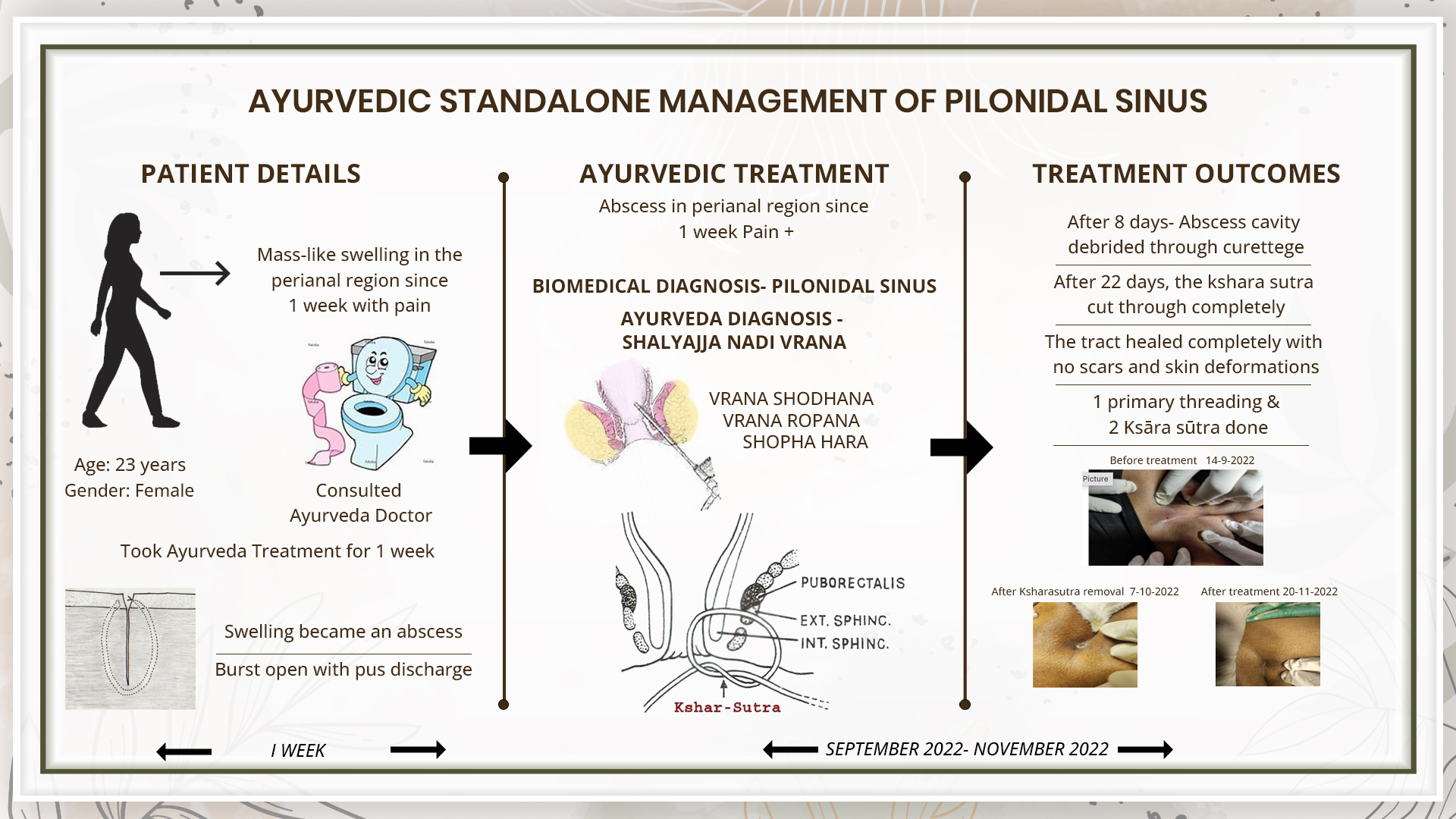
A 23-year-old female patient presented with an abscess in the perianal region associated with pain for 1 week. At the onset of symptoms, she tried Ayurveda treatment at another facility for 1 week. But she did not get complete relief. The patient now consulted Dr Sreelekshmi for better ayurvedic management. Based on inspection, and probing, the biomedical diagnosis was made as Pilonidal sinus. Based on the clinical evaluation, the Ayurvedic diagnosis was made as Shalyaja Nadi vrana. The line of treatment followed was Vrana ropana and shodhana, and shopha hara. With 2 weeks of ayurvedic treatment, the tract was healed completely without any cosmetic deformations or clearly visible scars. After 1 month of treatment, there was normal skin and in and around that area. The case report demonstrates the remarkable clinical efficacy of Ayurveda in treating pilonidal sinus, resulting in complete healing within just one month. This success underscores the potential of Ayurvedic therapies as a viable and efficient option for managing this condition.
-
Summaries
-
Listen
-
Watch
-
View
-
Read
A 23-year-old female patient presented with an abscess in the perianal region associated with pain for 1 week. At the onset of symptoms, she tried Ayurveda treatment at another facility for 1 week. But she did not get complete relief. The patient now consulted Dr Sreelekshmi for better ayurvedic management. Based on inspection, and probing, the biomedical diagnosis was made as Pilonidal sinus. Based on the clinical evaluation, the Ayurvedic diagnosis was made as Shalyaja Nadi vrana. The line of treatment followed was Vrana ropana and shodhana, and shopha hara. With 2 weeks of ayurvedic treatment, the tract was healed completely without any cosmetic deformations or clearly visible scars. After 1 month of treatment, there was normal skin and in and around that area. The case report demonstrates the remarkable clinical efficacy of Ayurveda in treating pilonidal sinus, resulting in complete healing within just one month. This success underscores the potential of Ayurvedic therapies as a viable and efficient option for managing this condition.
-
-
Timeline
-
Tabulated Summary
-
Narrative
TITLE OF CASE
Standalone ayurvedic management of Pilondal sinus- A case report
Dr Sreelekshmi VS
ABSTRACT
A 23-year-old female patient presented with an abscess in the perianal region associated with pain for 1 week. At the onset of symptoms, she tried Ayurveda treatment at another facility for 1 week. But she did not get complete relief. The patient now consulted Dr Sreelekshmi for ayurvedic management. Based on inspection, and probing, the biomedical diagnosis was made as Pilonidal sinus. Based on the clinical evaluation, the Ayurvedic diagnosis was made as Shalyaja Nadivrana. The line of treatment followed was Vrana ropana and shodhana, and shopha hara. With 2 weeks of ayurvedic treatment, the tract was healed completely without any cosmetic deformations or clearly visible scars. After 1 month of treatment, there was normal skin and in and around that area. The case report demonstrates the remarkable clinical efficacy of Ayurveda in treating pilonidal sinus, resulting in complete healing within just one month. This success underscores the potential of Ayurvedic therapies as a viable and efficient option for managing this condition.
KEYWORDS
Pilonidal sinus, nadi vrana, shalyaja, ksharasutra, standalone
INTRODUCTION
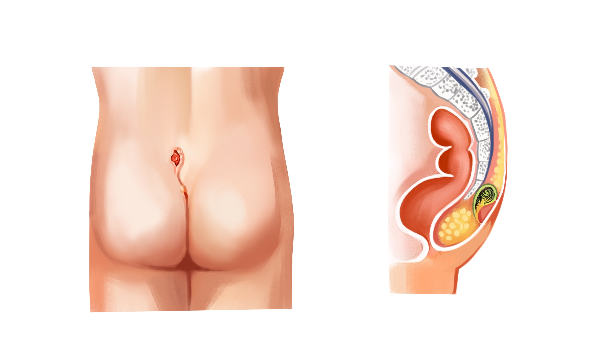
A pilonidal sinus is a small tunnel that develops at the top of the crease in the buttocks. Trapped hair around the buttocks crease can lead to an abscess, and a pilonidal sinus may develop as a result. they may have discomfort and irritation around the tailbone area. In some cases, a pilonidal sinus may resolve by itself, but people may require treatment, such as abscess drainage or sinus removal.
Cause: According to the, American Society of Colon and Rectal Surgeons (ASCRS) the cause of pilonidal sinus is not clear.
Symptoms: Symptoms can range from mild to severe depending on the level of infection. The most common symptoms are pain, pus discharge painful mass that may be an abscess, fever and nausea. Diagnostic Criteria: Medical history, examination and clinical evaluation are the primary diagnostic criteria. If infection is suspected, then culture and sensitivity may be recommended. Routine blood tests are done, when the general assessment of the health is to be done.
Prognosis & Treatment: If there are no symptoms or there is no infection, then treatment is not required. In minor cases, hair removal is sufficient. The normal treatments advocated are Abscess drainage, Pit- picking, and antibiotics to address the inflammation and reduce infection. Surgery is the most reliable method for treating and removing a pilonidal sinus, but it can come with possible complications, such as poor wound healing. If the patient has surgery, he will usually be able to return home the same day as that of the procedure. Depending on how patients respond to surgery, they may be able to return to work within 2-3 weeks.
PATIENT INFORMATION
The patient is a 23 year old female patient who presented with abscess in perianal region since 1 week associated with pain. She had consulted an Ayurvedic physician earlier and taken treatments. It was a swelling before and it became an abscess that burst open, with pus discharge. There was no Biomedical intervention involved.
No relevant family/genetic/surgical/psychosocial history.
No addictions documented.
CLINICAL FINDINGS
On examination: discolouration and inflammation are present on the left side of the Gluteal cleft.
probe not passing.
Palpation:Induration in the left side of the Gluteal cleft near to midline.
Tenderness present.
Digital examination:Pain at 12 'o'clock position
TIMELINE
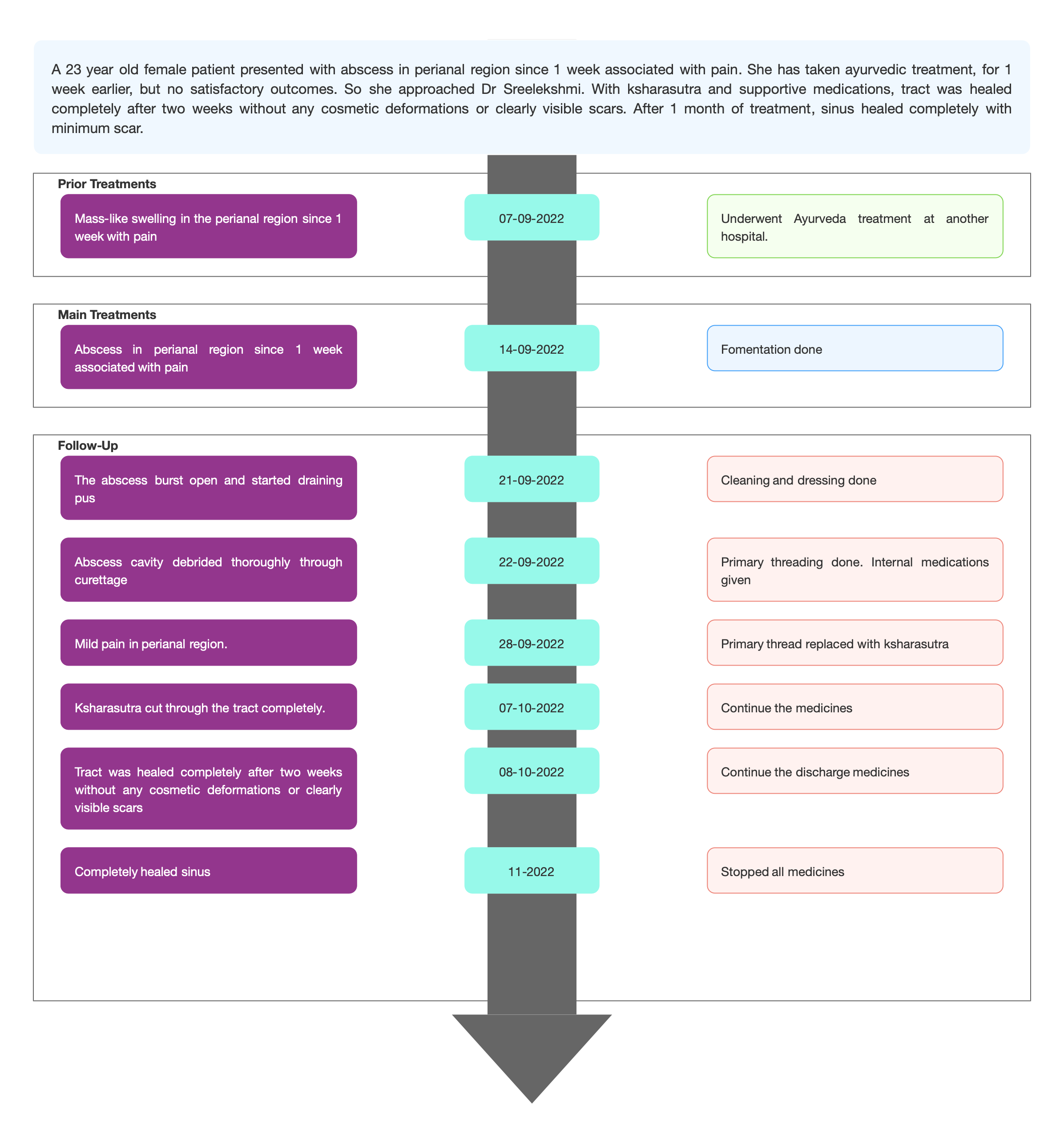
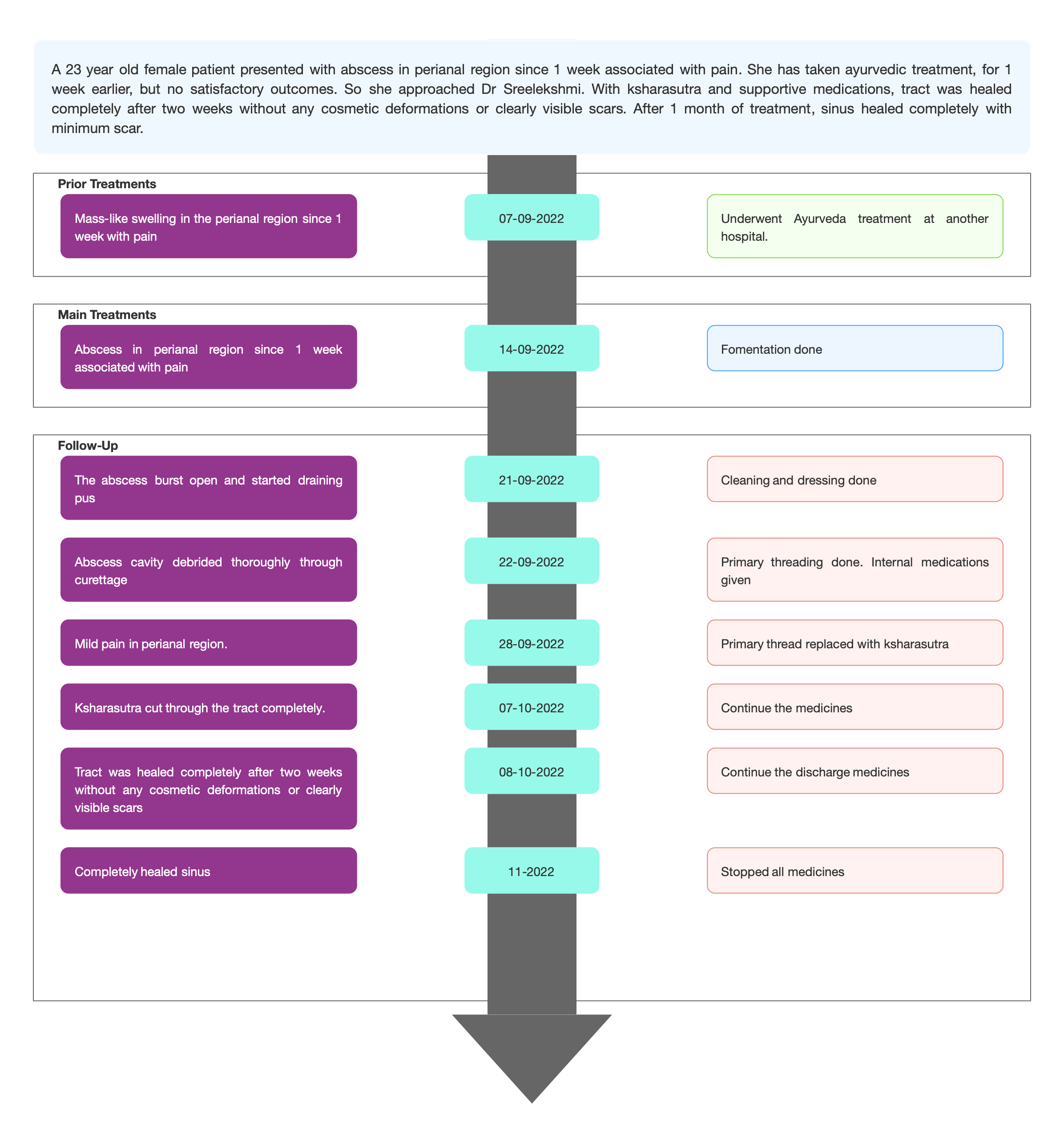
Image 1. Timeline of events added below
DIAGNOSTIC ASSESSMENT
Modern Diagnostic parameter; The biomedical diagnosis was confirmed by the Ayurvedic physician based on the clinical evaluation and probing of the tract.
Image 2. Images taken at baseline dated 14.9.2022
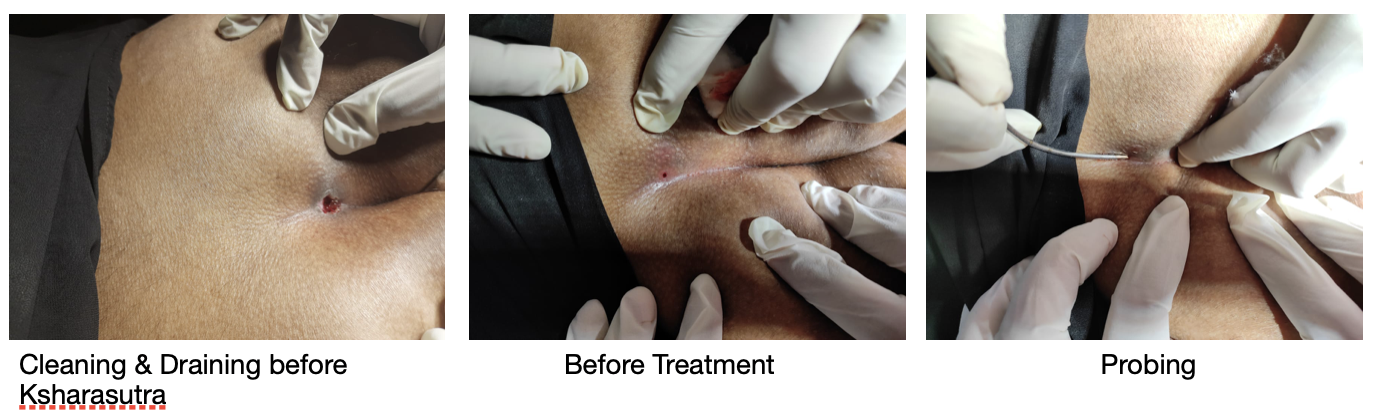
Ayurvedic Assessment was done based on the presenting complaints and clinical evaluation. The treating physician confirmed the Ayurvedic diagnosis as Shalyaja Nadi Vrana.
Differential Diagnosis-
Perianal abscess, Anal fistula, Furuncle.
In this case, based on the clinical examination, the physician diagnosed the condition as pilonidal sinus.
Based on the clinical findings, the physician confirmed the condition as Pilonidal sinus.
Prognosis- If there are no symptoms or there is no infection, then treatment is not required. In minor cases, hair removal is sufficient. The normal treatments advocated are Abscess drainage, Pit- picking, and antibiotics to address the inflammation and reduce infection. Surgery is the most reliable method for treating and removing a pilonidal sinus, but it can come with possible complications, such as poor wound healing. If the patient has surgery, he will usually be able to return home the same day as that of the procedure. Depending on how patients respond to surgery, they may be able to return to work within 2-3 weeks. In this case report, with 2 weeks of ayurvedic treatment, the tract was healed completely without any cosmetic deformations or clearly visible scars. After 1 month of treatment, there was normal skin in and around that area.
THERAPEUTIC INTERVENTION
Refer the tab ‘Treatment’ in the Portal.
FOLLOW-UP AND OUTCOMES
The patient had 6 follow ups in total. Each follow up, the tract was assessed and the changes documented.
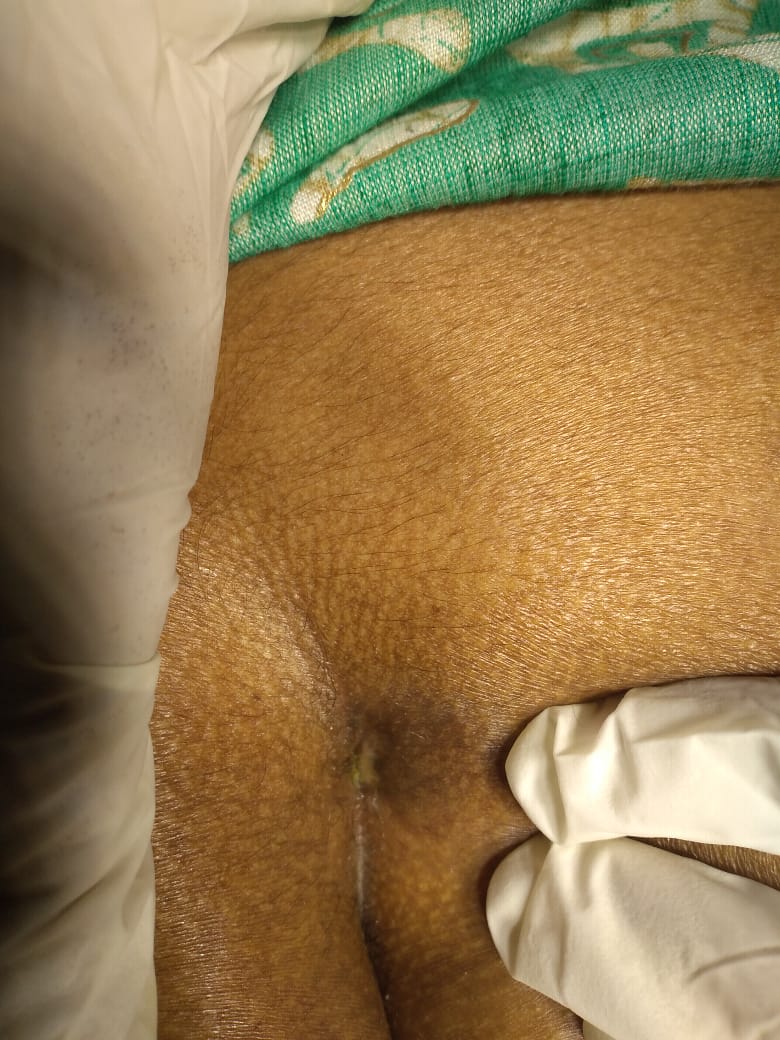
Clinician-based assessment; Tract was healed completely after two weeks without any cosmetic deformations or clearly visible scars. After 1 month of treatment: Fully healed sinus with minimum scar
Patient-assessed; Not relevant
Image 3. Images taken during treatment
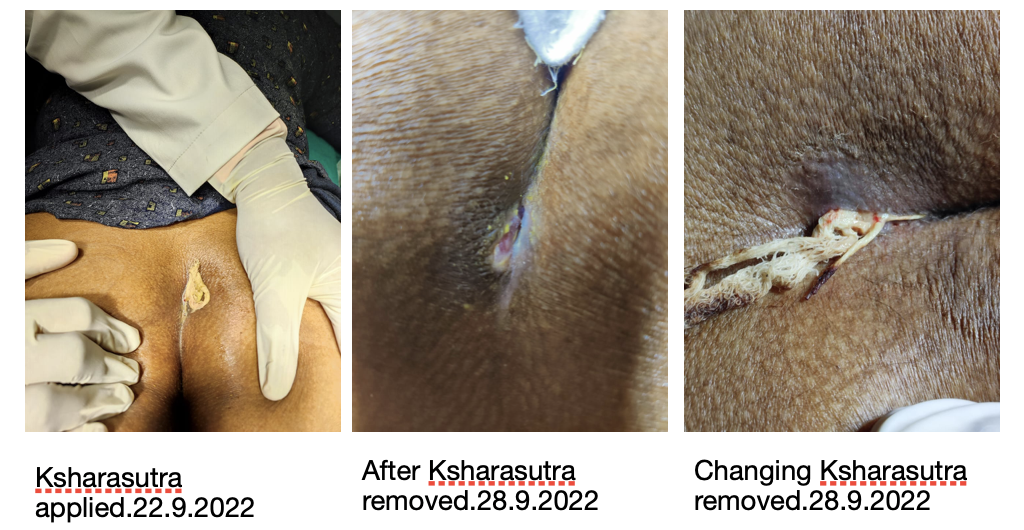
Image 4. Images taken at endpoint dated 20.11.2022
Intervention adherence and tolerability – The patient adhered to the prescribed treatments and tolerated the treatments well.
Method of assessment- Photographs taken before, during and after treatment were the primary assessment criteria.
Adverse and unanticipated events; None reported
DISCUSSION:
The treating physician opted of Ksharasutra as the primary treatment modality supported with internal medicines and external applications. Apamarga kshara is used in the preparation of ksharasutra. Due to its alkaline nature, it debrides the sinus tract and causes curettage of the thick pus hence the tract becomes clean. Ksharasutra gives mechanical pressure and causes chemical cauterisation. Therefore, in the first 3 days, cutting of the tract occurs and healing occurs during the next 3 to 4 days. in this manner cutting and healing take place simultaneously, so there is no gap for the accumulation of pus in the cavity.
Jatyadi taila contains lodhra, nimba, haridra, daruharidra, and abhaya. These drugs have antimicrobial activity. Manjishtha, sariva and karanja are vranashodhak (wound cleansing) in nature, katuka improves re-epithelialisation, neovascularization, and migration of endothelial cells and dermal fibroblasts into the wound or ulcer bed. It also facilitates rehydration in ulcers. Jati has vranaropaka action. Guggulu contains guggulsterones which has anti-inflammatory and analgesic effects. It may reduce the level of pro-inflammatory cytokines.PATIENT’S PERSPECTIVE
Not available.
LEARNING POINTS/TAKE HOME MESSAGES
This case report demonstrates the remarkable clinical efficacy of Ayurveda in treating pilonidal sinus, resulting in complete healing within just one month. This success underscores the potential of Ayurvedic therapies as a viable and efficient option for managing this condition. Patients and healthcare professionals may consider exploring Ayurveda as a promising alternative or complementary treatment for pilonidal sinus
INFORMED CONSENT
Written consent obtained from patient for publishing of the case report in the Portal
ACKNOWLEDGEMENTS
None
CONFLICT OF INTEREST
None declared.
FUNDING
None
REFERENCE
2. Shushruta Samhita -Vol I & II Ayuveda Tatwasandipika by AmbikaDutta Shastri,
Chaukhamba Subharti Prakshan.3. Shushruta Samhita -Vol I-II translated by Prof.K.R.Srikantha Murthy, Chaukhambha
orientelia. -
Immersive Learning
-
Modern Diagnosis
MODERN DIAGNOSIS: Pilonidal Sinus
ABOUT THE DISEASE:
A pilonidal sinus is a small tunnel that develops at the top of the crease in the buttocks. Trapped hair around the buttocks crease can lead to an abscess, and a pilonidal sinus may develop as a result. they may have discomfort and irritation around the tailbone area. In some cases, a pilonidal sinus may resolve by itself, but people may require treatment, such as abscess drainage or sinus removal.
Cause: According to the American Society of Colon and Rectal Surgeons (ASCRS), the cause of pilonidal sinus is not clear.
It may be due to hair that grows in the crease of the buttocks, or natal cleft. Poor hygiene, over weight, trauma or irritation in the area, can also be the cause. Alternatively, trapped hair follicles may lead to hair and bacteria entering the skin. This can result in inflammation and pus forming in an abscess.
Once the abscess heals, either on its own or with treatment, a pilonidal sinus may develop. The sinus is like a pipe just under the skin with tiny openings to the surface of the skin. People with a pilonidal sinus need to take care of the area to prevent future abscesses and infections.
Symptoms: Symptoms can range from mild to severe, depending on the level of infection. If people have a pilonidal sinus, they may have the following symptoms:
- small dimple in the skin
- irritation or discomfort
- painful mass, which may be an abscess
- drainage from the area, which may be a clear, cloudy, or bloody fluid
- red, tender area
- foul-smelling pus
- fever
- nausea
Diagnostic Criteria: Medical history, examination and clinical evaluation are the primary diagnostic criteria. If infection is suspected, then culture and sensitivity may be recommended. Routine blood tests are done, when the general assessment of the health is to be done.
In this case report, the patient is a 23 year old female patient who presented with abscess in perianal region since 1 week associated with pain. She had consulted an Ayurvedic physician earlier and taken treatments. It was a swelling before and it became an abscess that burst open, with pus discharge. There was no Biomedical intervention involved.
Prognosis & Treatment: If there are no symptoms or there is no infection, then treatment is not required. In minor cases, hair removal is sufficient. The normal treatments advocated are Abscess drainage, Pit- picking, and antibiotics to address the inflammation and reduce infection. Surgery is the most reliable method for treating and removing a pilonidal sinus, but it can come with possible complications, such as poor wound healing. If the patient has surgery, he will usually be able to return home the same day as that of the procedure. Depending on how patients respond to surgery, they may be able to return to work within 2–3 weeks.
Image 1. Baseline Images dated 14.9.2022
Reference
- https://www.medicalnewstoday.com/articles/pilonidal-sinus#recovery
-
Ayurveda Diagnosis
AYURVEDA DIAGNOSIS: Shalyaja Nadi Vrana
ABOUT THE DISEASE:
The definition of Vrana is:
व्रण गात्र विचूर्णने व्रणयति इति व्रणह….(AH.Utt.25.22)
There is a destruction, break, rupture or discontinuity in the body tissue, it is called as Vrana.
वृणोति यस्मात् रूढे’ पि व्रणवस्तु न नश्यति ।आदेह धारणात्तस्मत्व्रणैत्युच्च्यते ॥
Susruta explains Vrana as that which retains the scar even after complete healing of the wound, and the imprint remains the entire life. (Su.Ci.1.6)
नाडी नालश्च ।।
Nadi refers to Srotas, according to Amarakosha.नाडी संलर्गनो व्रणः || (Shabdakalpadruma)
Nadi Vrana is the ulcer having a track. “Nadi’ refers to the channel of the abscess, and ‘vrana’ refers to the ulcer cause. Fistula in ano can also be included under Nadi Vrana (though Bhagandara is a name given for Ayurvedic term correlated with anal fistula).
Causes: Causes of Nadi vrana:
Shopha upeksha – Due to the miss-diagnosis from the part of physician, when a formed and ripe pus cavity or abscess or swelling is considered to be unripe one and neglected or when pus filled wounds or ulcers are neglected, the pus (infected and contaminated material) on not finding the exit, traverses in a reverse direction and penetrates the deeper tissues and organs. The pus makes its own tract to travel deep into the body and the tract or pathway through which the pus travels deep into the tissues is called Nadi. The ulcers causing such nadi are called Nadi Vranas. These are compared to Sinus explained in modern science.
Types (According to Sushruta) –
Vataja Nadi – Sinus associated with vitiated Vata: rough on touch, narrow opening and associated with pain, foamy discharges at night
Pittaja Nadivran – Sinus associated with vitiated Pitta: associated with thirst, rise in body temperature, pricking pain, body fatigue, fever and splitting pain, hot and yellow discharges during day time
Kaphaja Nadivranam – Sinus associated with vitiated Kapha: hard, itchy, associated with mild pain, thick, viscous, white coloured unctous discharges during day time
Vata-Pittaja Nadi – Sinus associated with vitiated Vata and pitta: presents with mixed symptoms of Vataja and Pittaja Nadi
Pitta-Kaphaja Nadi – Sinus associated with vitiated Pitta and Kapha: presents with mixed symptoms of Pittaja and Kaphaja Nadi
Kapha-Vataja Nadi – Sinus associated with vitiated Kapha and Vata: presents with mixed symptoms of Kaphaja and Vataja Nadi
Tridoshaja Nadi – Sinus caused or associated with vitiation of all 3 doshas: presents with burning sensation, fever, dyspnoea, fainting, dryness of mouth and other mixed symptoms of vitiation of all 3 doshas. This is a dangerous and life threatening condition which had crossed the limitations of treatment.
Shalya janya nadi – Sinus caused due to foreign substances is called shalya janya nadi. In Shalyaja Nadi Vrana, hair can be considered as shalya (Foreign body) because hair follicles have never been demonstrated in the walls of the sinus. The hairs projecting from the sinus are dead hairs, with their painted ends directed towards the blind end of the sinus. While describing the “shalya” Acharya Sushruta has
Treatment: This primarily depends upon the type of Nadi Vrana. Basically, the Nadi has to be cut open and then medicines to initiate the healing have to be administered either internally or externally. Acharya Sushruta has mentioned Nadi Vrana in Chhedya & Bhedya Vyadhi. In chikitsa sthana he mentioned vidarana karma which indicates to chhedana and bhedana karma.
In this case report, the patient is a 23 year old female patient who presented with abscess in perianal region since 1 week associated with pain. She had consulted an Ayurvedic physician earlier and taken treatments. It was a swelling before and it became an abscess that burst open, with pus discharge. There was no Biomedical intervention involved. The Ayurvedic diagnosis was Nadi Vrana and the subtype was identified as Shalyaja.
Rationale of treatment as explained by the treating physician: The treating physician opted of Ksharasutra as the primary treatment modality supported with internal medicines and external applications. Apamarga kshara is used in the preparation of ksharasutra. Due to its alkaline nature, it debrides the sinus tract and causes curettage of the thick pus hence the tract becomes clean. Ksharasutra gives mechanical pressure and causes chemical cauterisation. Therefore, in the first 3 days, cutting of the tract occurs and healing occurs during the next 3 to 4 days. in this manner cutting and healing take place simultaneously, so there is no gap for the accumulation of pus in the cavity.
Jatyadi taila contains lodhra, nimba, haridra, daruharidra, and abhaya. These drugs have antimicrobial activity. Manjishtha, sariva and karanja are vranashodhak (wound cleansing) in nature, katuka improves re-epithelialisation, neovascularization, and migration of endothelial cells and dermal fibroblasts into the wound or ulcer bed. It also facilitates rehydration in ulcers. Jati has vranaropaka action. Guggulu contains guggulsterones which has anti-inflammatory and analgesic effects. It may reduce the level of pro-inflammatory cytokines.Reference:
1. https://www.easyayurveda.com/2017/03/06/nadivrana-sinus-ayurvedic-treatment/
2. Shushruta Samhita -Vol I & II Ayuveda Tatwasandipika by AmbikaDutta Shastri,
Chaukhamba Subharti Prakshan.3. Shushruta Samhita -Vol I-II translated by Prof.K.R.Srikantha Murthy, Chaukhambha
orientelia. -
Treatment
Name of Medicine Dosage Form Dosage Mode of Administrtation From - To (Date) Medicine Reference Chiravilwadi Kasayam + Guggulu tiktakam Kasayam Kasaya 15 ml Oral, with 45 ml lukewarm water twice daily before food 2022-09-22 - 2022-10-08 Chiravilwadi Kasayam- Sahasrayogam Kasaya Prakaranam. Guggulu tiktakam kasayam - AH Ci. 21. 57- 60 Aragwadhadi Kasayam Kasaya 15 ml Oral, with 45 ml lukewarm water twice daily before food 2022-09-28 - 2022-10-08 AH.Su.15.17 Tab Biogest Tablet 1 With warm water, thrice daily after food 2022-09-22 - 2022-10-08 Patent & proprietary medicine Tab Styplon Tablet 1 With warm water, twice daily after food 2022-09-22 - 2022-09-24 Patent & proprietary medicine Tab. Septilin Tablet 1 With warm water, thrice daily after food 2022-09-20 - 2022-10-08 Patent & proprietary medicine D.A. Tone Syrup 10 ml Twice daily after food 2022-09-25 - 2022-10-08 Patent & proprietary medicine Guggulu panchapala curnam Curna 5 gms With honey and ghee, twice daily after food 2022-09-15 - 2022-10-08 Sahasrayogam. Curna Prakaranam Avipathti curnam Curna 5 gms With warm water at bedtime 2022-09-22 - 2022-10-07 Sahasrayogam. Curna Prakaranam Gandhaka Rasayanam Tablet 1 With warm water, thrice daily after food 2022-09-20 - 2022-10-08 Rasatarangini. Chapter 8 -
Outcome Measures
OUTCOME MEASURES
In this case report, the patient is a 23 year old female patient who presented with abscess in perianal region since 1 week associated with pain. She had consulted an Ayurvedic physician earlier and taken treatments. It was a swelling before and it became an abscess that burst open, with pus discharge. There was no Biomedical intervention involved.
Assessment: Subjective parameters were assessed to analyse the outcome of the treatment.
Subjective parameters: Images were taken before, during and after treatment to assess the outcome of the outcome.
Image 1. Images taken during treatment
Image 2. Endpoint - Image dated 20.11.2022
Tract was healed completely after two weeks without any cosmetic deformations or clearly visible scars. One primary thread and 2 ksharasutra were applied to get the complete healing of the sinus.
After 1 month of treatment: Fully healed sinus with minimum scar. Complete relief from symptoms.
-