Featured Case
-
Abstract
A 35-year-old male patient presented with silvery-scaly patches over the trunk, scalp and over legs with severe itching and dryness for 8 years. He had tried topical applications and internal medications. He would get relief. But when he stopped the medicines, the relapse would be worse than the previous episode. So he decided to stop the allopathic medicines and approached Dr Roopa for ayurvedic management. Based on the clinical evaluation and assessments, Dr Roopa made the biomedical diagnosis as Plaque psoriasis and the Ayurvedic diagnosis as Kitibha. The line of treatment followed was Kapha-vata and Kapha-pitta hara, and Sarva kushta hara. After 1 month of Ayurvedic treatment, there was a reduction in the size of the lesions and also in the itching. After 3 months of Ayurvedic treatment, the patient got complete relief from all the symptoms and lesions.
This case report demonstrates the clinical efficacy of Ayurveda in treating a chronic case of psoriasis, in a patient who did not get relief from his symptoms, in spite of taking medicines, and always faced a worse relapse.
-
Summaries
-
Listen
-
Watch
-
View
-
Read
A 35-year-old male patient presented with silvery-scaly patches over the trunk, scalp and over legs with severe itching and dryness for 8 years. He had tried topical applications and internal medications. He would get relief. But when he stopped the medicines, the relapse would be worse than the previous episode. So he decided to stop the allopathic medicines and approached Dr Roopa for ayurvedic management. Based on the clinical evaluation and assessments, Dr Roopa made the biomedical diagnosis as Plaque psoriasis and the Ayurvedic diagnosis as Kitibha. The line of treatment followed was Kapha-vata and Kapha-pitta hara, and Sarva kushta hara. After 1 month of Ayurvedic treatment, there was a reduction in the size of the lesions and also in the itching. After 3 months of Ayurvedic treatment, the patient got complete relief from all the symptoms and lesions.
This case report demonstrates the clinical efficacy of Ayurveda in treating a chronic case of psoriasis, in a patient who did not get relief from his symptoms, in spite of taking medicines, and always faced a worse relapse.
-
-
Timeline
-
Tabulated Summary
-
Narrative
TITLE OF CASE
Standalone Ayurvedic management of Plaque psoriasis - A case report.
Dr Roopa Bhat
ABSTRACT
A 35-year-old male patient presented with silvery-scaly patches over the trunk, scalp and over legs with severe itching and dryness for 8 years. He had tried topical applications and internal medications. He would get relief. But when he stopped the medicines, the relapse would be worse than the previous episode. So he decided to stop the allopathic medicines and approached Dr Roopa. Based on the clinical evaluation and assessments, Dr Roopa made the biomedical diagnosis as Plaque psoriasis and the Ayurvedic diagnosis as Kitibha. The line of treatment followed was Kapha-vata and Kapha-pitta hara, and Sarva kushta hara. After 1 month of Ayurvedic treatment, there was a reduction in the size of the lesions and also duction in the itching. After 3 months of Ayurvedic treatment, the patient got complete relief from all the symptoms and lesions.
KEYWORDS
Standalone, Kitibha, Psoriasis, Skin disease, Ayurveda, Case report.
INTRODUCTION
Plaque psoriasis also called psoriasis vulgaris is a long-lasting autoimmune disease that causes your cells to reproduce very quickly. It’s a type of psoriasis that causes thick, scaly patches called plaques on your skin. It most commonly affects elbows, back, knees, and scalp. In severe cases of plaque psoriasis, the face, feet, genitals (penis, vagina, vulva), hands and legs also may be affected.
Symptoms:
Raised, discoloured (red, brown, grey or purple) plaques with a white or silvery surface.
Cracks (fissures).
Bleeding.
Itchiness.
Irritation or pain.
Diagnostic criteria: Medical history and clinical evaluation are the basic diagnostic criteria used. Apart from this allergy tests, biopsy and blood tests to rule out infections are also done.
Treatment: The treatments given in Plaque psoriasis are Injections, oral medicines, and photo therapy.
Prognosis: There is no cure for Plaque psoriasis. There are flare-ups and remissions, and only temporary relief is predicted.
PATIENT INFORMATION
A 35 year old male patient presented with Silvery- scaly patches over trunk, scalp and over legs with severe itching and dryness since 8 yrs. Inspite of taking standard of care the condition persist and hence approached for Ayurvedic consultation.
Family History- Mother had the same condition.
Psychosocial History- Patient was under stress due to symptoms
Addictions- Tobacco- Since he was 25 years old. Quit since 1 year
CLINICAL FINDINGS
General and specific physical examinations done.
Respiratory system - NAD
Cardiovascular system - NAD
Per abdomen - NAD
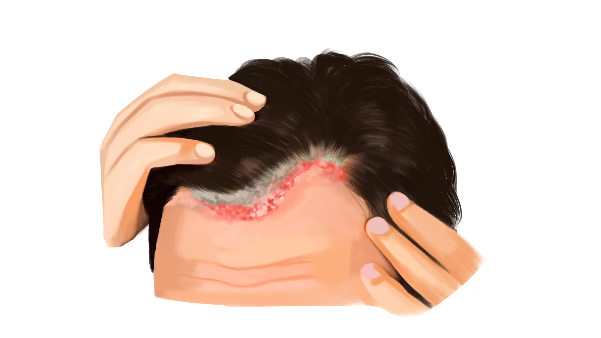
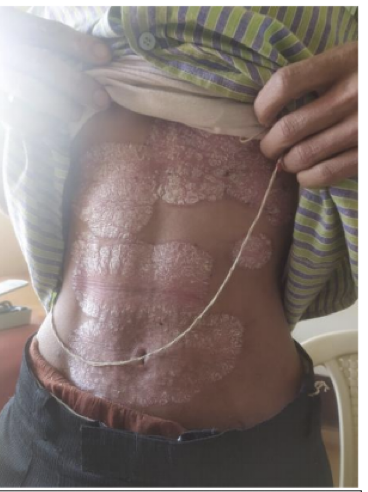
Lesion - Silver scaly patches over Scalp, whole trunk & Legs
No Discharge
Itching - Present
Auspitz sign - ++
Candle grease Sign - ++
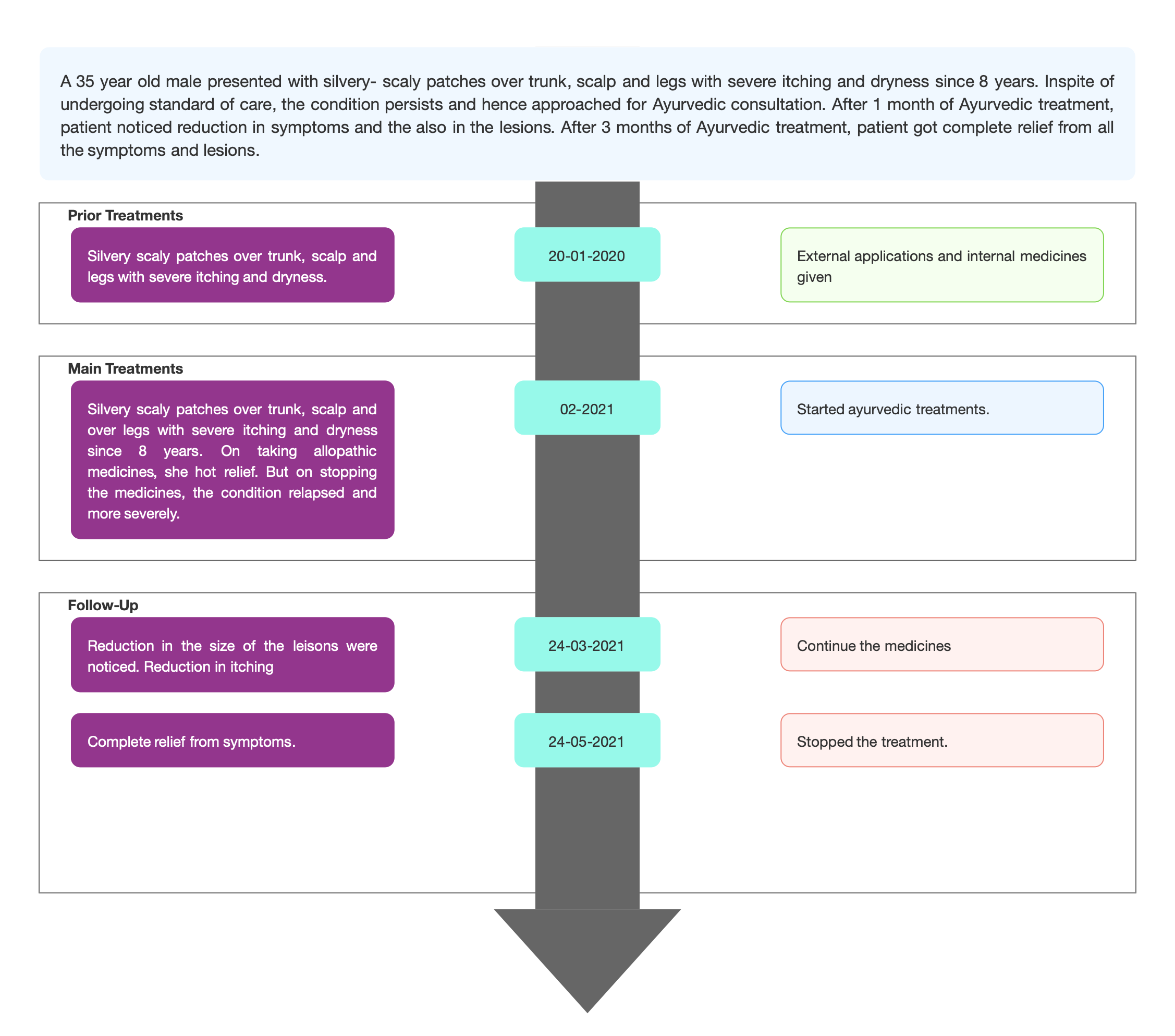
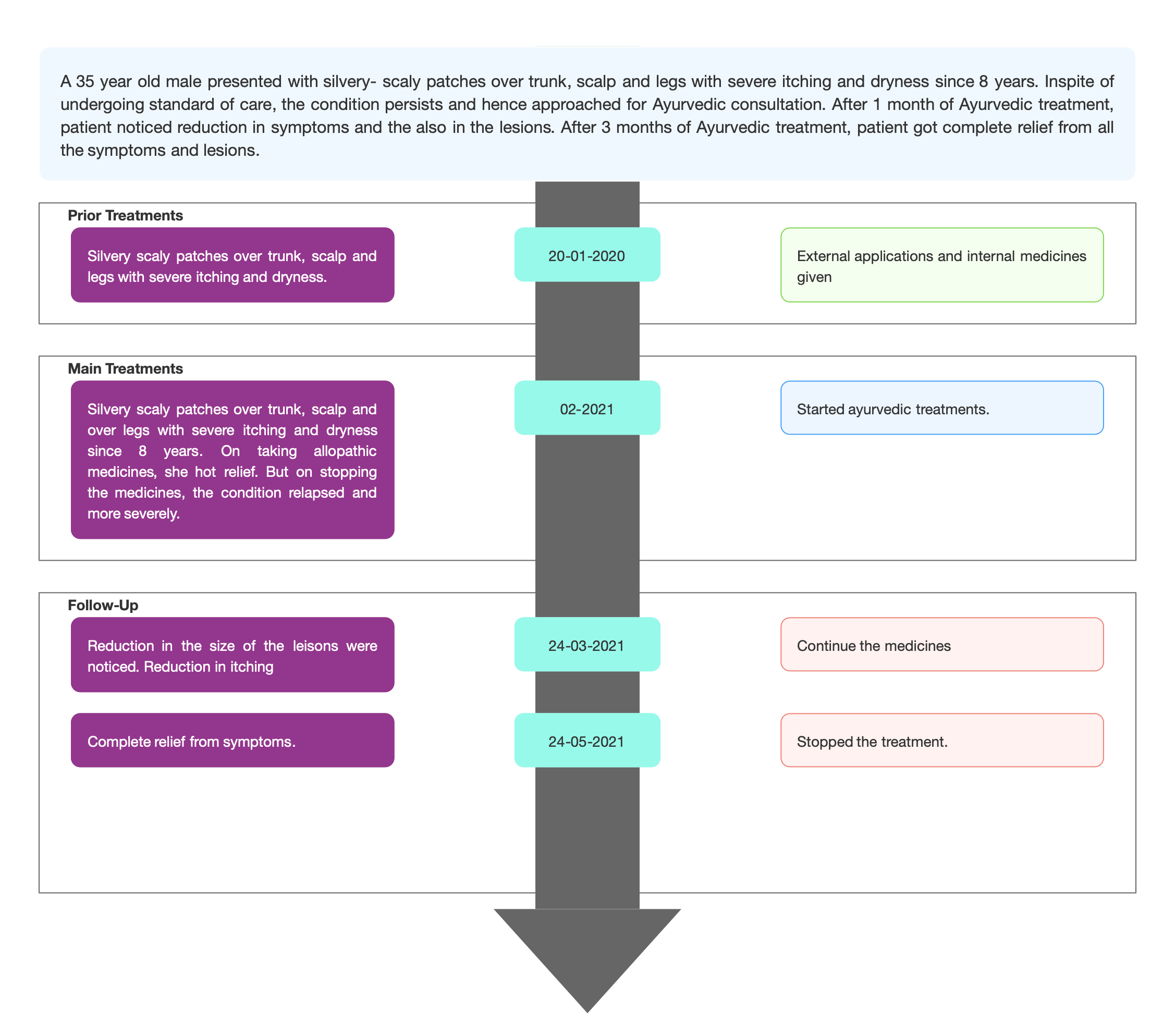
TIMELINE
Image 1. Timeline of events added below
DIAGNOSTIC ASSESSMENT
Modern Diagnostic parameter; The biomedical diagnosis was Psoriasis, in the words of the patient. But the biomedical diagnosis was confirmed as Plaque psoriasis by the treating physician based on the presentation of the symptoms.
Ayurvedic Assessment was done based on the presenting complaints and clinical evaluation. The treating physician the confirmed diagnosis, both biomedical and ayurveda.
Differential Diagnosis- The different conditions are as follows
DADRU - Ruled out as Pidaka, Daha were absent
SIDDHMA - Ruled out as the twak tanuta was absent
The physician diagnosed the case as kitibha based on the clinical examination and presenting complaints .
Prognosis- There is no cure for Plaque psoriasis. There are flare-ups and remissions, and only temporary relief is predicted.
THERAPEUTIC INTERVENTION
Refer the tab ‘Treatment’ in the Portal.
FOLLOW-UP AND OUTCOMES
The first follow up was after one month, and there was reduction in the size of the leisons and kandu as per patient words.
The second follow up was after 2 months, the medicines were still continued.
The third follow up was after 3 months, where the patient got complete relief from the symptoms.
Clinician-based assessment; On examination, there is significant relief from the skin lesions and also itching.
Patient-assessed; Not relevant
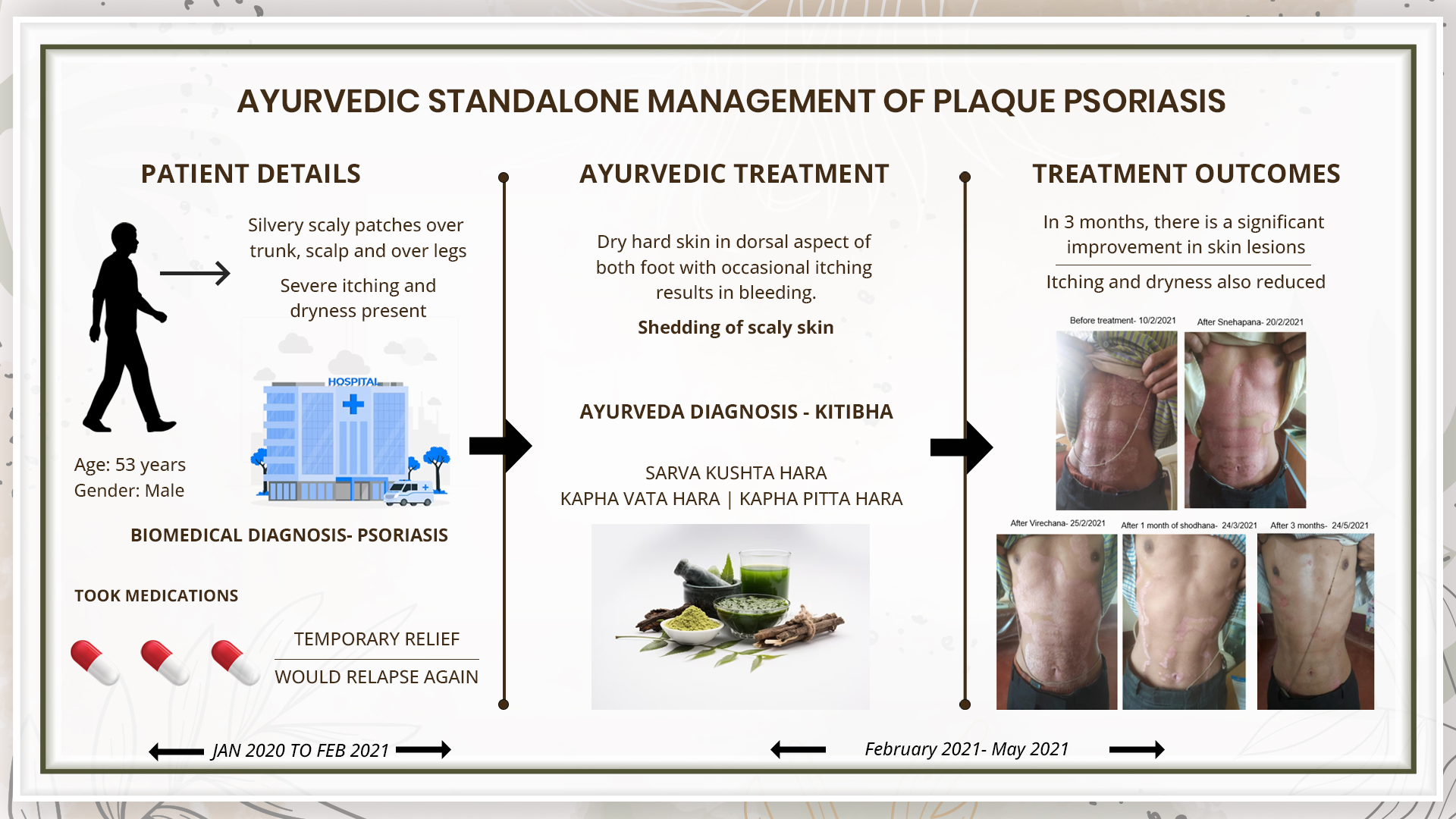
Image 2. Image taken of the lesions before starting the treatment dated 10.2.2021.
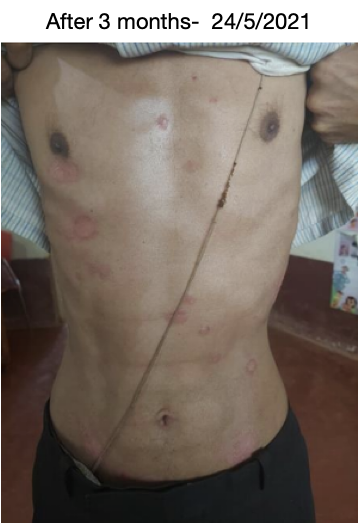
After 1 month of Ayurvedic treatment, patient noticed reduction in symptoms and the lesions reduced. After 3 months of Ayurvedic treatment, patient got complete relief from all the symptoms and lesions.
Image 3. Images of the lesions taken after snehapana dated 20.2.2021
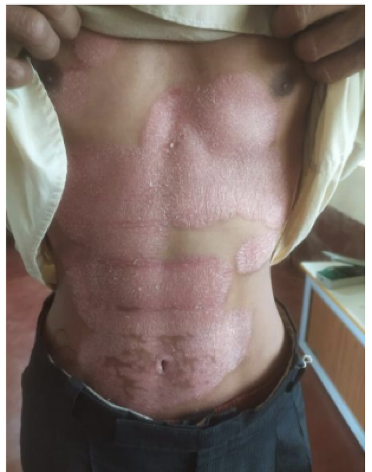
Image 4.
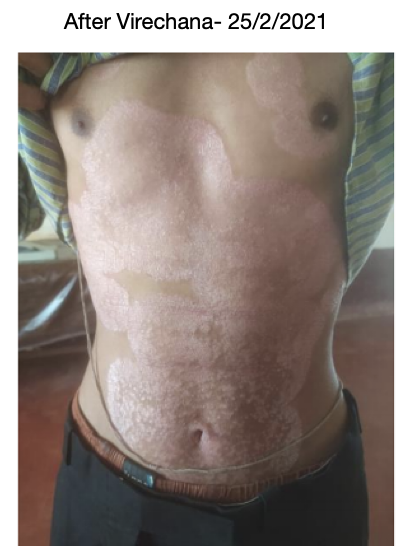
Image 5.
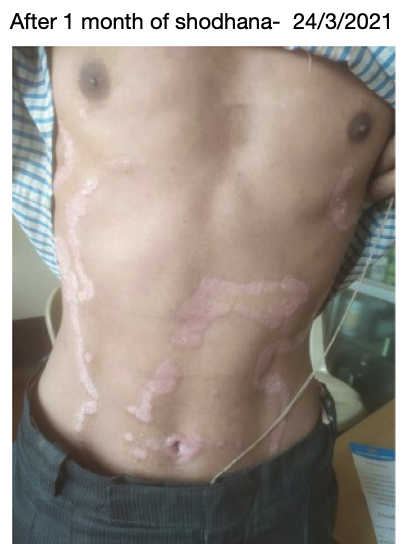
Image 6. After 3 months of Shodhana dated 24.5.2021
Intervention adherence and tolerability– The patient adhered to the prescribed treatments and tolerated the treatments well.
Method of assessment- Images were taken before and after treatment.
Adverse and unanticipated events; None reported
DISCUSSION ;
The patient had been suffering from the skin complaints past 8 years.The records of the allopathic medication are obtained only one year back. With standalone ayurvedic management, the patient got complete relief from symptoms in 3 months. The treatments were all stopped.
PATIENT’S PERSPECTIVE
Not available.
LEARNING POINTS/TAKE HOME MESSAGES
This case report demonstrates the therapeutic efficacy of Ayurveda in successfully managing a chronic condition of plaque psoriasis, in a 35 year old male who had been suffering from the symptoms since 8 years.
INFORMED CONSENT
Written consent obtained from patient for publishing the case report.
ACKNOWLEDGEMENTS
None
CONFLICT OF INTEREST
None declared.
FUNDING
None
REFERENCE
- Taken from - https://my.clevelandclinic.org/health/diseases/22842-plaque-psoriasis
- Caraka Samhita. Cikitsa Sthana. Chapter 7. Kushtha Cikitsadhyayam
-
Immersive Learning
-
Modern Diagnosis
MODERN DIAGNOSIS: Plaque Psoriasis
ABOUT THE DISEASE:
Plaque psoriasis is an autoimmune condition. It causes thick patches (plaques) on your skin, including your scalp. There isn’t a cure, but treatments can alleviate related symptoms.
Plaque psoriasis also called psoriasis vulgaris is a long-lasting autoimmune disease that causes your cells to reproduce very quickly. It’s a type of psoriasis that causes thick, scaly patches called plaques on your skin. It most commonly affects elbows, back, knees, and scalp. In severe cases of plaque psoriasis, the face, feet, genitals (penis, vagina, vulva), hands and legs also may be affected.
Symptoms:
Raised, discoloured (red, brown, grey or purple) plaques with a white or silvery surface.
Cracks (fissures).
Bleeding.
Itchiness.
Irritation or pain.
In this case report, the 35 year old male patient presented with silvery- scaly patches over trunk, scalp and over legs with severe itching and dryness since 8 years. Inspite of taking standard of care the condition persist and hence approached for Ayurvedic consultation.
Diagnostic criteria: Medical history and clinical evaluation are the basic diagnostic criteria used. Apart from this allergy tests, biopsy and blood tests to rule out infections are also done. In this patient, the biomedical diagnosis was made by the Ayurvedic physician based on the clinical evaluation and medical history.
Image 1. Image taken of the lesions before starting the treatment dated 10.2.2021.
Treatment: The treatments given in Plaque psoriasis are Injections, oral medicines, and photo therapy.
Prognosis: There is no cure for Plaque psoriasis. There are flare-ups and remissions, and only temporary relief is predicted. In this patient, over a period of 8 years, in spite of conventional medicines, he did not get relief from the symptoms and they were progressing. After 1 month of Ayurvedic treatment, patient noticed reduction in symptoms and the lesions reduced. After 3 months of Ayurvedic treatment, patient got complete relief from all the symptoms and lesions.
Reference
-
Ayurveda Diagnosis
AYURVEDIC DIAGNOSIS: Kitibha
ABOUT THE DISEASE:
The general term used for skin diseases is Kushta in Ayurveda. This is categorised as Mahakushta and Kshudra kushta. Eka kushta and Kitibha types that resemble the lesions found in Psoriasis.
स्याव किण खर स्पर्शं परुषं किटिभं मतम् (Ca.Ci)
The lesions are blackish brown or ash coloured, rough on touch like the wound scar, hard and dry in nature. Kitibha can enter deep into the dhatu and cause damage to them. The bones, muscles and joints are affected. Kitibha has a stage of asthigata, where the joints are affected. This can be correlated to psoriatic arthritis that manifests along with psoriasis. Kitibha is caused by the combination of vitiated Vata and kapha. If Vata is predominant, then dryness and flaking is visible. If kapha is predominant, then there is silvery wet scaling with severe itching and considerable swelling.
Treatment: The line of treatment followed in Kushtha can also be applied to Kitibha. The progression of arthritis can be prevented. Shodhana therapies like Vamana, virecana, and raktamokshana can be planned according to the avastha of the patient.
Vamana followed by virecana is the best-recommended line of treatment in Kitibha. Snehapana can be administered as a purvakarma, which helps reduce dryness and scaling. When Kitibha is associated with arthritis, then vasti is very beneficial. In this case report, the 35 year old male patient had been suffering from complaints for 8 years and was not getting relief in spite of taking allopathic medicines. The symptoms were progressing.
Rationale of treatment as explained by the treating physician: The specific reason for choosing the respective medicines are tabulated and presented below.
Table 1:
Name of the medicine
Rationale of treatment
Panchatikta Guggulu grita
Kapha Vatahara
Cap Tiktamruta
Kapha Pittahara
Khadirarista
Sarva kushta nivaraka
Cap Sujeerna
Agni deepana & Ama pachana
Snehapana ; Panchatikta guggulu grita with Ushnajala in arohana krama
Kapha vatahara Action
Abhyanga and Sweda with Yastimadhu Taila
For reducing Rukshata and to bring back dosha to the koshta
Virechana with Trivrit Lehya
To address the Kapha vataja vikara along with Rakta dushti
Samsarjana was followed - 5 days
For Agni deepana
Reference
Caraka Samhita.Kushta Cikitsa
-
Treatment
Name of Medicine Dosage Form Dosage Mode of Administrtation From - To (Date) Medicine Reference Panchatikta Guggulu Ghrita Ghrtam 1 Teaspoon Once daily, before food 2021-02-25 - 2021-03-25 AS.Ci.21.57 Cap Tiktamruta Capsule 1 Thrice daily after food with warm water 2021-02-25 - 2021-03-25 Patent and Proprietary Medicine Khadirarishta Arishta 1 Thrice daily after food with warm water 2021-02-25 - 2021-03-25 Bhaishajya Ratnavali. 54.365-370 -
Outcome Measures
OUTCOME MEASURES
The 35 year old male patient presented with Silvery- scaly patches over trunk, scalp and over legs with severe itching and dryness since 8 years. Inspite of undergoing standard of care, the condition persisted and hence he approached Ayurvedic physician. The condition was diagnosed as plaque psoriasis and as Kitibha in Ayurveda, by the treating physician.
Assessment: Images were taken before and after specific Ayurvedic treatment procedures, to assess the outcome of the treatment.
After 1 month of Ayurvedic treatment, patient noticed reduction in symptoms and the lesions reduced. After 3 months of Ayurvedic treatment, patient got complete relief from all the symptoms and lesions.
Image 1. Images of the lesions taken after snehapana dated 20.2.2021
Image 2. Lesions after virechana dated 25.2.2021
Image 3. After 1 month of Shodhana dated 4.3.2021
Image 4. After 3 months of Shodhana dated 24.5.2021
-