Featured Case
-
Abstract
A 41 year old female patient presented with a moderate increase in thirst, hunger, and frequency of micturition. The associated symptoms were mild tiredness and dryness of the mouth. She was diagnosed with Type II Diabetes mellitus 1 year back during a routine blood check-up. The patient is not under any medication and she noticed increased blood sugar variations. She approached Dr Indu for Ayurvedic management. Based on the clinical evaluation and HbA1c value, the Ayurvedic diagnosis was made as Prameha. The line of treatment followed was Prameha hara and Kaphamedo hara. With three months of Ayurvedic treatment, supported by dietary and lifestyle modifications, she experienced a significant reduction in symptoms. The HbA1c recorded 7.6 at baseline, became 4 at endpoint. She stopped all the ayurvedic medicine after 4 months. This case report demonstrates the standalone ayurvedic management of type 2 DM, in a patient who was not taking any anti-diabetic medications.
-
Summaries
-
Listen
-
Watch
-
View
-
Read
A 41 year old female patient presented with a moderate increase in thirst, hunger, and frequency of micturition. The associated symptoms were mild tiredness and dryness of the mouth. She was diagnosed with Type II Diabetes mellitus 1 year back during a routine blood check-up. The patient is not under any medication and she noticed increased blood sugar variations. She approached Dr Indu for Ayurvedic management. Based on the clinical evaluation and HbA1c value, the Ayurvedic diagnosis was made as Prameha. The line of treatment followed was Prameha hara and Kaphamedo hara. With three months of Ayurvedic treatment, supported by dietary and lifestyle modifications, she experienced a significant reduction in symptoms. The HbA1c recorded 7.6 at baseline, became 4 at endpoint. She stopped all the ayurvedic medicine after 4 months.
-
-
Timeline
-
Tabulated Summary
-
Narrative
TITLE OF CASE
Standalone Ayurvedic management of Type 2 Diabetes mellitus - A case report
Dr Indu
ABSTRACT
A 41 year old female patient presented with a moderate increase in thirst, hunger, and frequency of micturition. The associated symptoms were mild tiredness and dryness of the mouth. She was diagnosed with Type II Diabetes mellitus 1 year back during a routine blood check-up. The patient is not under any medication and she noticed increased blood sugar variations. She approached Dr Indu for Ayurvedic management. Based on the clinical evaluation and HbA1c value, the Ayurvedic diagnosis was Prameha. The line of treatment followed was Prameha hara and Kaphamedo hara. With three months of Ayurvedic treatment, supported by dietary and lifestyle modifications, she experienced a significant reduction in symptoms. The HbA1c recorded 7.6 at baseline, became 4 at endpoint. She stopped all the ayurvedic medicine after 4 months.
KEYWORDS
Standalone, ayurveda, prameha, diabetes, case report, type 2 diabetes mellitus
INTRODUCTION
Diabetes is a chronic metabolic disorder, characterised by constant elevated blood sugar levels. This can be caused by various reasons, the improper breaking down of the body sugar and its absorption. The excess sugar is released into the blood stream, thus causing an elevated blood sugar level. There are 3 types of Diabetes:
Type 1- This is considered as an auto immune reaction, where the body stops producing insulin. 5-10 % diabetics are of Type 1. The symptoms develop very quickly, and children, teens and adults are diagnosed with this Type. There is no prevention yet identified for Type 1.
Type 2- This is normally referred to as Adult onset Diabetes. Lack of Physical activity, obesity and unhealthy lifestyle are the risk factors for this Type of Diabetes. In the Pre-diabetes state, by adopting lifestyle changes and diet, this can be reversed. 90-95 % of the diabetics are of Type 2.
Type 3- Gestational Diabetes is normally referred to as Type 3. This prevails during pregnancy and after delivery, this is resolved in majority of the patients. But once the patient gets gestational diabetes, there is a possibility of becoming diabetic in the due course of time. Regular check up of blood sugar is advised.
Diagnostic criteria- Hb A1C is considered as the main diagnostic parameter, for Diabetes Mellitus. If the HbA1C is less than 5.7, it is normal. When the values are 5.7 to 6.4, it is considered to be Pre-diabetes. When the value is 6.5 and higher, then it is Diabetes. When the value is above 8, then it is considered to be poor control of Diabetes.
PATIENT INFORMATION
41 yr old female patient presented with a moderate increase in thirst, hunger, and frequency of micturition. Associated with mild tiredness and dryness of the mouth. She was diagnosed with Type II DM before 1 year during a routine blood check-up. The patient is not under any medication and she noticed increased glycemic variation.
Family History- Mother was diabetic
Food habits- Excess consumption of Non-veg, high fat diets. Irregular timings of meals
CLINICAL FINDINGS
General examination was done, from the Ayurvedic perspective was done and documented.
Dosha- Kapha
Dhatu- Rasa medas
Mala- Mutra
Bhoomi Desha- Sadharana
Dehadesha- Basti
Rogibala- Madhayama
Rogabala- Madhyama
Kala- Kshanadi
Vyadhyavastha- Puranam
Anala- Madhyama
Jaranasakti- MadhyamaPrakriti - Vata Kapha
Vayas - Madhyama
Satva - Madhyama
Satmya - Sarvarasa satmya
Ahara - Atimatra ahara sevana, Kheers, dadhi, Akaala bhojana, Atisnigdha ahara sevana
TIMELINE
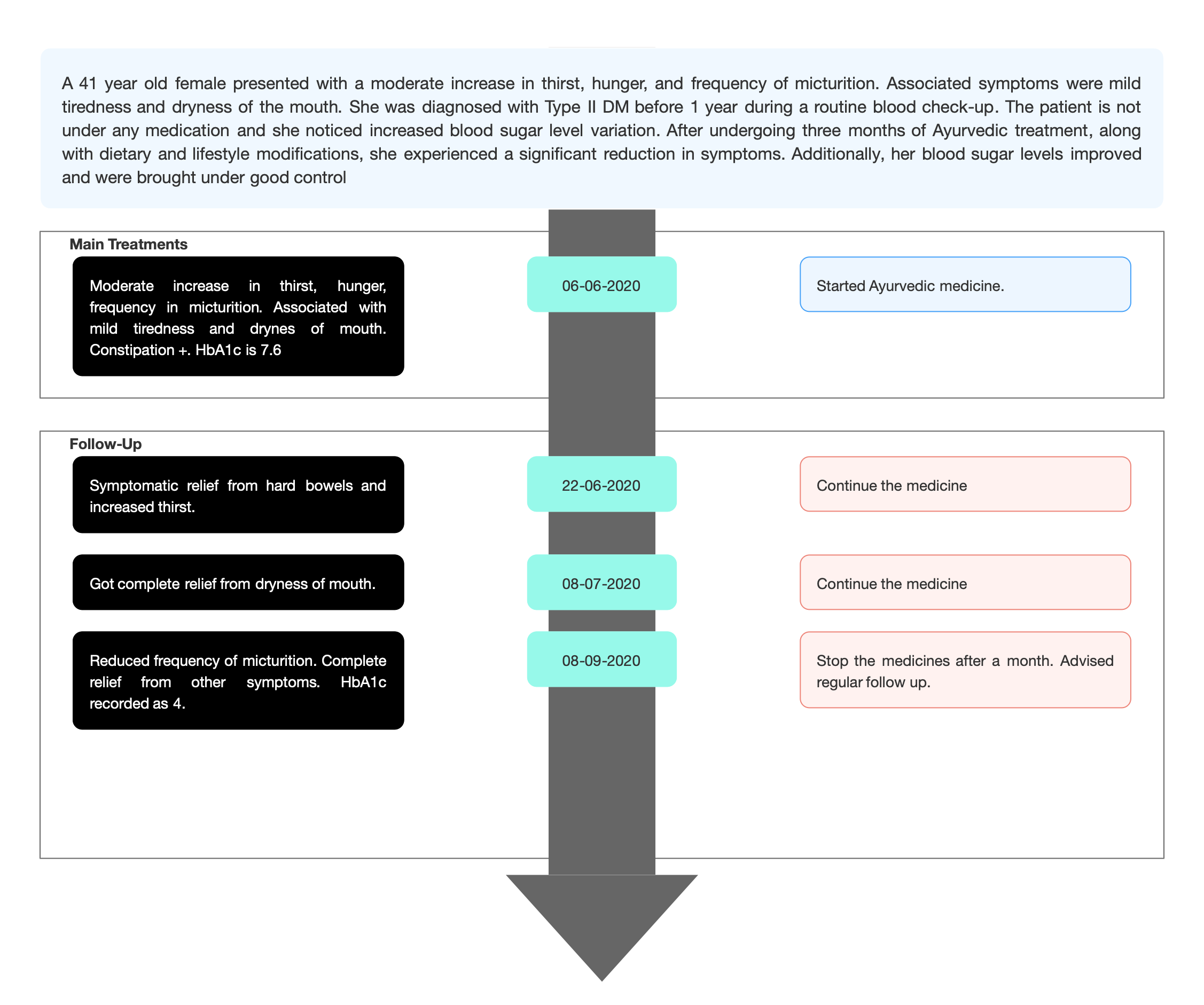
Image 1. Timeline of events added below

DIAGNOSTIC ASSESSMENT
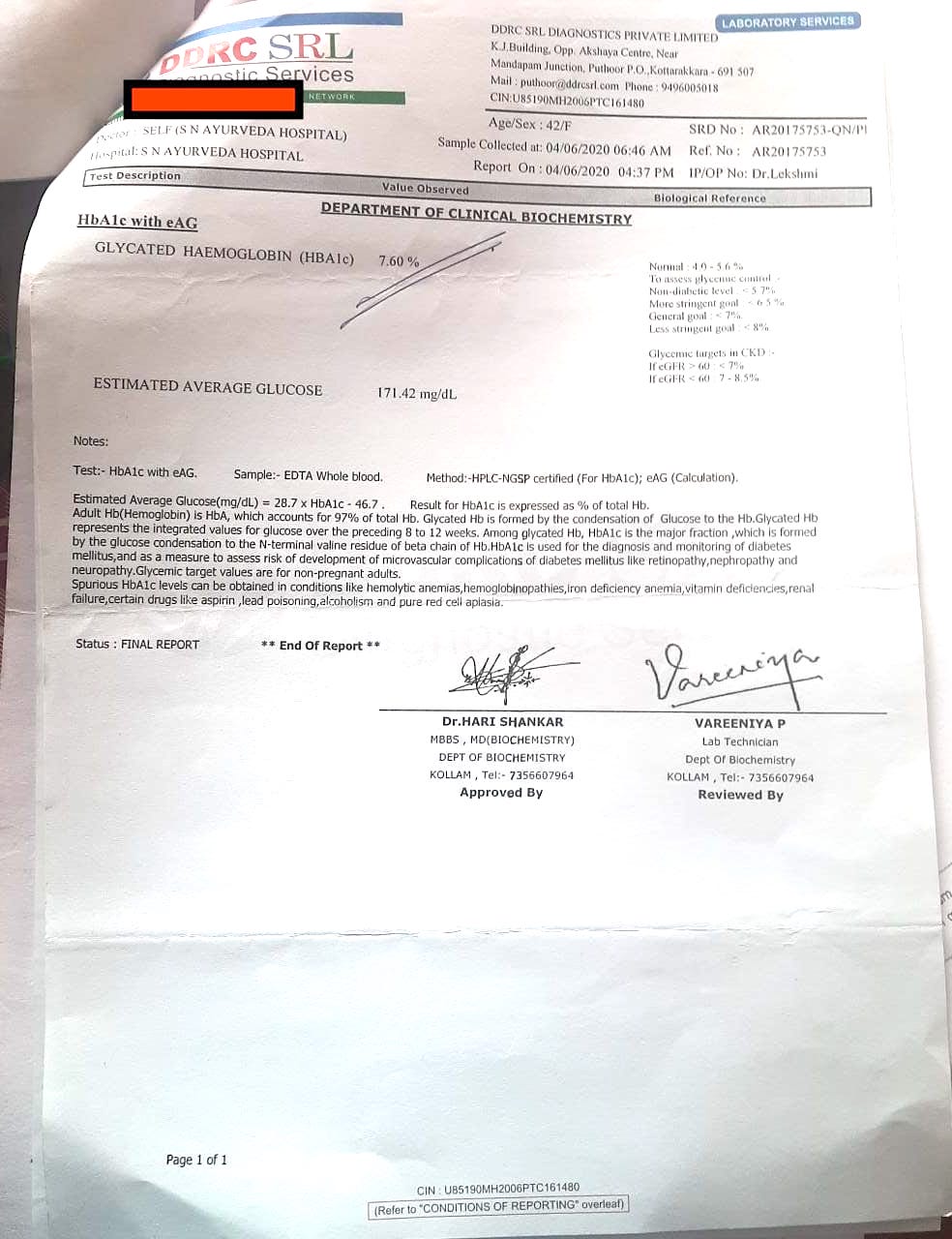
Modern Diagnostic parameter; The patient did not have any prior consultation or treatments. She was identified to have a very high blood sugar value during a routine check up and the biomedical diagnosis given was Type 2 Diabetes mellitus.
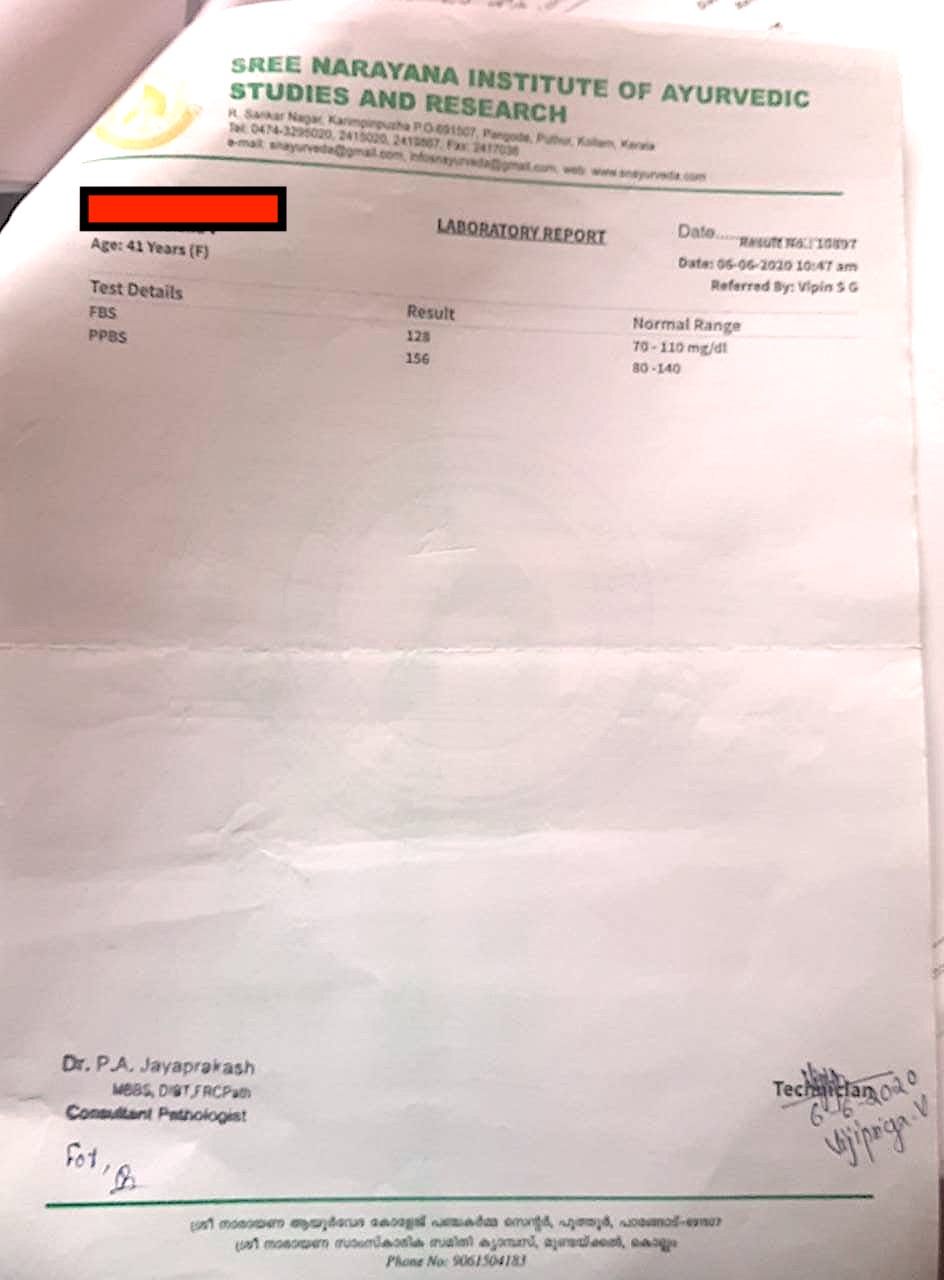
Image 2. Blood reports - HbA1c, FBS and PPBS dated June 2020 added below
Ayurvedic Assessment was done based on the presenting complaints, the confirmed biomedical diagnosis.
Differential Diagnosis- Does not apply as the patient came in with a definite diagnosis.
Prognosis & Treatment available: In Type 2, making drastic changes in the diet and lifestyle can produce a major change in the Blood sugar levels. Exercise and less-carb diet is the key to maintaining the blood sugar levels under control. This helps in the Pre-diabetes phase. When the patient reaches the Diabetic phase, then medical intervention supported by diet and lifestyle is the treatment protocol. If the blood sugar remains elevated inspite of taking medicines, then it can cause complications like damage to the microvascular vessels. If the sugar level is alarmingly high then insulin injection may be advised. In this patient, the blood sugar value was high and required medical intervention.
THERAPEUTIC INTERVENTION
Please refer the tab ‘Treatment’ in the Portal.
FOLLOW-UP AND OUTCOMES
The patient had three follow ups and the blood sugar levels were monitored.
Assessment: Both objective and subjective parameters were assessed to analyse the outcome of the ayurvedic treatment.
Subjective parameters: After 2 weeks of starting ayurvedic treatments, she got symptomatic relief in hard bowel and increased thirst. After 4 weeks, got symptomatic relief from dryness of mouth. After 12 weeks, significant reduction in symptoms of increased frequency of micturition. She got complete relief from constipation, and increased hunger. All the medicines were discontinued after 1 month. The patient is advised to come for a regular follow up.
Objective parameters: The HbA1c, FBS and PPBS were recorded and tabulated.
Table 1. The Subjective and Objective parameters tabulated date-wise, from the Doctor’s notes.
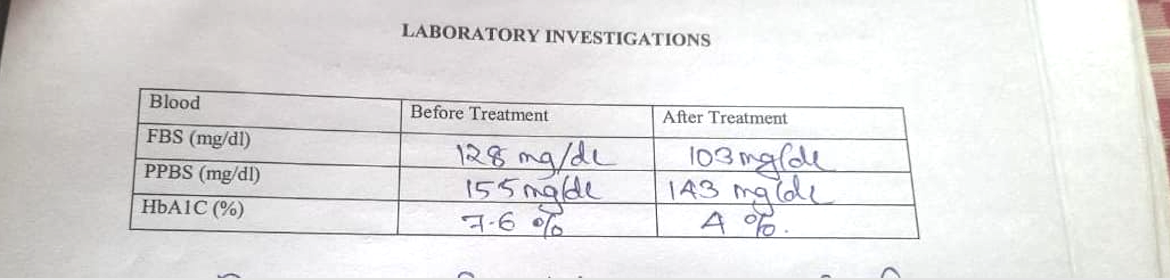
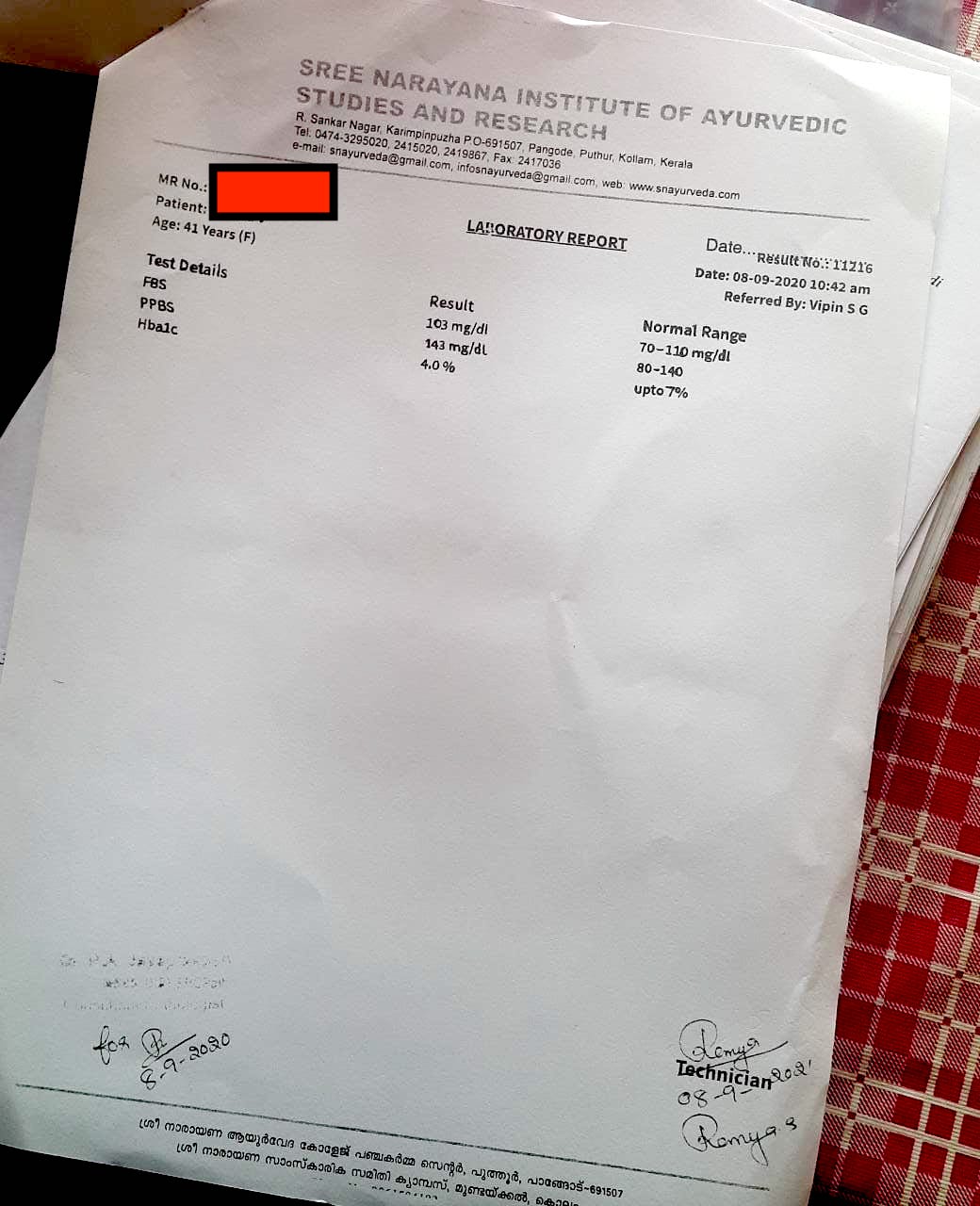
Image 3. Endpoint HbA1c, FBS and PPBS value dated August 2020.
Clinician-based assessment; Significant reduction in symptoms
- reduced frequency of micturition
- reduced excess thirst and hunger
- constipation relievedPatient-assessed; Not relevant
Intervention adherence and tolerability – The patient adhered to the prescribed treatments and tolerated the treatments well.
Method of assessment- By monitoring the patient.
Adverse and unanticipated events; None reported
DISCUSSION ;
The patient was diagnosed a year back, during a routine blood check up. But she did not take any medications. When she came for Ayurvedic consultation, she also had associated symptoms affecting her hunger and thirst and bowels. But with 14 weeks of treatment, which included only a single Kashaya, the HbA1c, FBS and PPBS could be brought to normal levels. The target of the medicine was Prameha hara and Kapha medo hara.
PATIENT’S PERSPECTIVE
Not available.
LEARNING POINTS/TAKE HOME MESSAGES
This case report demonstrates the successful ayurvedic management of a patient, with elevated sugar levels with a simple medicine and in a very short duration of time.
INFORMED CONSENT
Written consent obtained from patient for publishing of the case report in the Portal
ACKNOWLEDGEMENTS
None specified
CONFLICT OF INTEREST
None declared.
FUNDING
None
REFERENCE
- American Diabetes Association. Diagnosis and classification of diabetes mellitus. Diabetes Care. 2013;36 Suppl 1(Suppl 1):S67-S74. doi:10.2337/dc13-S067
- Murthy AR, Singh RH. Concept of prameha/madhumeha (contradictions and compromises). Anc Sci Life. 1989;9(2):71-79.
-
Immersive Learning
-
Modern Diagnosis
BIOMEDICAL DIAGNOSIS: Diabetes mellitus Type 2
ABOUT THE DISEASE:
Diabetes is a chronic metabolic disorder, characterised by constant elevated blood sugar levels. This can be caused by various reasons, the improper breaking down of the body sugar and its absorption. The excess sugar is released into the blood stream, thus causing an elevated blood sugar level. There are 3 types of Diabetes:
Type 1- This is considered as an auto immune reaction, where the body stops producing insulin. 5-10 % diabetics are of Type 1. The symptoms develop very quickly, and children, teens and adults are diagnosed with this Type. There is no prevention yet identified for Type 1.
Type 2- This is normally referred to as Adult onset Diabetes. Lack of Physical activity, obesity and unhealthy lifestyle are the risk factors for this Type of Diabetes. In the Pre-diabetes state, by adopting lifestyle changes and diet, this can be reversed. 90-95 % of the diabetics are of Type 2.
Type 3- Gestational Diabetes is normally referred to as Type 3. This prevails during pregnancy and after delivery, this is resolved in majority of the patients. But once the patient gets gestational diabetes, there is a possibility of becoming diabetic in the due course of time. Regular check up of blood sugar is advised.
Diagnostic criteria- Hb A1C is considered as the main diagnostic parameter, for Diabetes Mellitus. If the HbA1C is less than 5.7, it is normal. When the values are 5.7 to 6.4, it is considered to be Pre-diabetes. When the value is 6.5 and higher, then it is Diabetes. The 41 year old female patient, the elevated blood sugar levels were identified during a routine blood check up. She did not take any allopathic medicines. At Baseline, her HbA1c was recorded as 7.6. But the value is less than 8, hence with effort, the blood sugar can be brought down.
Image 1. Baseline reports of HbA1c, FBS and PPBS dated June 4th 2020
Prognosis & Treatment available: In Type 2, making drastic changes in the diet and lifestyle can produce a major change in the Blood sugar levels. Exercise and less-carb diet is the key to maintaining the blood sugar levels under control. This helps in the Pre-diabetes phase. When the patient reaches the Diabetic phase, then medical intervention supported by diet and lifestyle is the treatment protocol. If the blood sugar remains elevated inspite of taking medicines, then it can cause complications like damage to the microvascular vessels. In this patient, there was no prior consultation or medication. Diet and Lifestyle regimens were strictly to be followed as prescribed by the physician.
Reference
American Diabetes Association. Diagnosis and classification of diabetes mellitus. Diabetes Care. 2013;36 Suppl 1(Suppl 1):S67-S74. doi:10.2337/dc13-S067
-
Ayurveda Diagnosis
AYURVEDIC DIAGNOSIS: Prameha
ABOUT THE DISEASE:
The Biomedical diagnosis in this case report is Diabetes Mellitus Type 2. The Ayurvedic physician has diagnosed this condition as Prameha. The specific type was not mentioned by the treating physician.
The word Prameha is derived from Pra – means excess, Meha – ksharane - passing of urine. ‘Pra’ means excess and ‘Meha’ means ‘ksharaNe’ (ie) passing of urine. Prameha can be defined as the disease characterised by passing excess urine. The Classical Texts also mention the turbid appearance of the urine.
प्रभूताविल मूत्रता......
Apart from this, symptoms like Malina danta, hasta pada daha, deha chikkanata, trshna, madhurya asya, madhu samana varna, angagandha, shithilangata are also mentioned.
Causative Factors: Lack of physical activity and inappropriate diet are the main causes. Kapha and medas are aggravated and dhatu shaithilya manifests. Prameha can be Sahaja (hereditary) or Apathya nimittaja (Unsuitable food and activities). Depending on the predominance of the Dosa, there are 20 types of Prameha listed in the textbooks. They are 10 Kaphaja, 6 Pittaja and 4 Vataja types.
In the clinical examination, a detailed pariksha as per the Ayurvedic protocol was followed.
Dosha- Kapha
Dhatu- Rasa medas
Mala- Mutra
Bhoomi Desha- Sadharana
Dehadesha- Basti
Rogibala- Madhayama
Rogabala- Madhyama
Kala- Kshanadi
Vyadhyavastha- Puranam
Anala- Madhyama
Jaranasakti- MadhyamaPrakriti - Vata Kapha
Vayas - Madhyama
Satva - Madhyama
Satmya - Sarvarasa satmya
Ahara - Atimatra ahara sevana, Kheers, dadhi, Akaala bhojana, Atisnigdha ahara sevana
Prognosis of Prameha: According to Caraka, in patients with early onset, is sthula and the origin of the disease is Apathyaja, it is sadhya. Pittaja and certain types of Kaphaja Prameha are yapya. This can be managed with palliative care. Vataja and Sahaja type of prameha, in a krsha, the prameha is said to be asadhya. The 41 year old female patient was asymptomatic, and the elevated blood sugar was identified during a routine blood check up. The first consultation was Ayurveda. Based on the clinical evaluation and the blood reports, the Ayurvedic diagnosis was made as Prameha. The associated symptoms were Moderate increase in thirst, hunger, frequency in micturition. Associated with mild tiredness and drynes of mouth, Constipation +.
Treatment & rationale for treatment: The patient is identified as Sthula pramehi or Krsha Pramehi. In sthula pramehi, अपतर्पणयुक्तिभिः is the treatment adopted. In a Krsha pramehi, अन्नपानप्रतिसंस्कृताभिः is the line of treatment followed.
Rationale of treatment explained by the Physician: The uniqueness of this case report is that the Ayurvedic physician prescribed only one Kashaya targeting Kapha-medo hara and Prameha hara. The blood sugar levels were constantly monitored.
Reference
1.Ashtanga Hrdaya. Prameha Nidanam & Cikitsa
-
Treatment
Name of Medicine Dosage Form Dosage Mode of Administrtation From - To (Date) Medicine Reference Kataka Amalaki Kashayam Kashayam 50 ml Twice daily, half an. hour before food 2020-06-06 - 2020-10-08 Anubhuta Yoga -
Outcome Measures
OUTCOME MEASURES
The 41 year old female patient presented with a moderate increase in thirst, hunger, and frequency of micturition. Associated symptoms were mild tiredness and dryness of the mouth. She was diagnosed with Type II DM 1 year back, during a routine blood check-up. There were no prior consultation or treatments.
Assessment: Both objective and subjective parameters were assessed to analyse the outcome of the ayurvedic treatment.
Subjective parameters: After 2 weeks of starting ayurvedic treatments, she got symptomatic relief in hard bowel and increased thirst. After 4 weeks, got symptomatic relief from dryness of mouth. After 12 weeks, significant reduction in symptoms of increased frequency of micturition. She got complete relief from constipation, and increased hunger. All the medicines were discontinued after 1 month. The patient is advised to come for a regular follow up.
Objective parameters: The HbA1c, FBS and PPBS were recorded and tabulated.
Table 1. The Subjective and Objective parameters tabulated date-wise, from the Doctor’s notes.
Image 1. Endpoint HbA1c, FBS and PPBS value dated August 2020.
-