Featured Case
-
Abstract
A 40-year-old male patient was diagnosed with Diabetes mellitus, 8 years back. The diagnosis was confirmed with HbA1C that was 8.6 in 2014. Over a period of 8 years, despite taking 3 different anti-diabetic drugs, the HbA1C in 2022 was 7.2 which indicated a poor diabetic control. He is also suffering with erectile dysfunction for 4 years. So, he decided to try Ayurveda and approached Dr Partap Chauhan, who diagnosed this condition as Vataja Prameha- Madhumeha. With 4 months of Ayurvedic treatment along with diet and lifestyle modification, his HbA1C was reduced to 5.6 which indicated good diabetic control. He was able to discontinue 2 anti-diabetic drugs out of 3 and reduce the dosage of the other concomitant medicine. There was also improvement in the erectile dysfunction.
-
Summaries
-
Listen
-
Watch
-
View

-
Read
A 40-year-old male patient was diagnosed with Diabetes mellitus, 8 years back. The diagnosis was confirmed with HbA1C that was 8.6 in 2014. Over a period of 8 years, despite taking 3 different anti-diabetic drugs, the HbA1C in 2022 was 7.2 which indicated a poor diabetic control. He is also suffering with erectile dysfunction for 4 years. So, he decided to try Ayurveda and approached Dr Partap Chauhan, who diagnosed this condition as Vataja Prameha- Madhumeha. With 4 months of Ayurvedic treatment along with diet and lifestyle modification, his HbA1C was reduced to 5.6 which indicated good diabetic control. He was able to discontinue 2 anti-diabetic drugs out of 3 and reduce the dosage of the other concomitant medicine. There was also improvement in the erectile dysfunction..
-
-
Timeline
-
Tabulated Summary
-
Narrative
TITLE OF CASE
Integrative management of chronic Diabetes Mellitus Type 2 - A Case report
Dr Partap Chauhan, Dr Vineeta Singh
ABSTRACT
A 40-year-old male patient was diagnosed with Diabetes mellitus 8 years back. The diagnosis was confirmed with HbA1C that was 8.6 in 2014. Over a period of 8 years, despite taking 3 different anti-diabetic drugs, the HbA1C in 2022 was 7.2 which indicated a poor diabetic control. He is also suffering with erectile dysfunction for 4 years. So, he decided to try Ayurveda and approached Dr Partap Chauhan, who diagnosed this condition as Vataja Prameha- Madhumeha [2]. With 4 months of Ayurvedic treatment along with diet and lifestyle modification, his HbA1C reduced to 5.6 which indicated good diabetic control. He was able to discontinue 2 anti-diabetic drugs out of 3 and reduce the dosage of the other concomitant medicine. There was also improvement in the erectile dysfunction.
KEYWORDS
Integrative, Diabetic mellitus, Type 2 Diabetes, Prameha, Vataja Prameha, Madhumeha, Case report, Ayurveda
INTRODUCTION
Diabetes is a chronic metabolic disorder, characterized by constant elevated blood sugar levels. This can be caused by various reasons, the improper breaking down of the body sugar and its absorption. The excess sugar is released into the blood stream, thus causing an elevated blood sugar level. There are 3 types of Diabetes: Type 1(autoimmune), Type 2 (adult onset), Type 3 (gestational).
The main symptoms are Polyuria and Polyphagia. If the disease is of a chronic onset and the blood sugar level is uncontrolled, then it results in a number of complications eventually leading organ system failure. Diagnostic criteria: HbA1C is considered as the main diagnostic tool for Diabetes.
PATIENT INFORMATION
A 40-year-old male patient was diagnosed with Diabetes 8 years back and was on conventional medicines. He was on 3 Anti-Diabetic Drugs, but still the blood sugar was uncontrolled. He also developed erectile dysfunction for 4 years. So, he wanted to try Ayurvedic treatments.
Medical History: The patient was a known case of Type 2 Diabetes Mellitus since 8 years. He was under 3 different allopathic drugs to control diabetes. Even with medications, HbA1c was in poor control. He is also suffering from Erectile Dysfunction for 4 years. So, he opted Ayurveda for further management. Both his parents had history of Diabetes. No relevant surgical, genetic, or psychosocial history. He consumed alcohol, once or twice every week. On excess consumption of alcohol, he vomits.
PHYSICAL FINDINGS/CLINICAL FINDINGS
Weight - 85 kg: Height - 170 cm: BMI - 30.3: Nadi - Vata Paithikam.
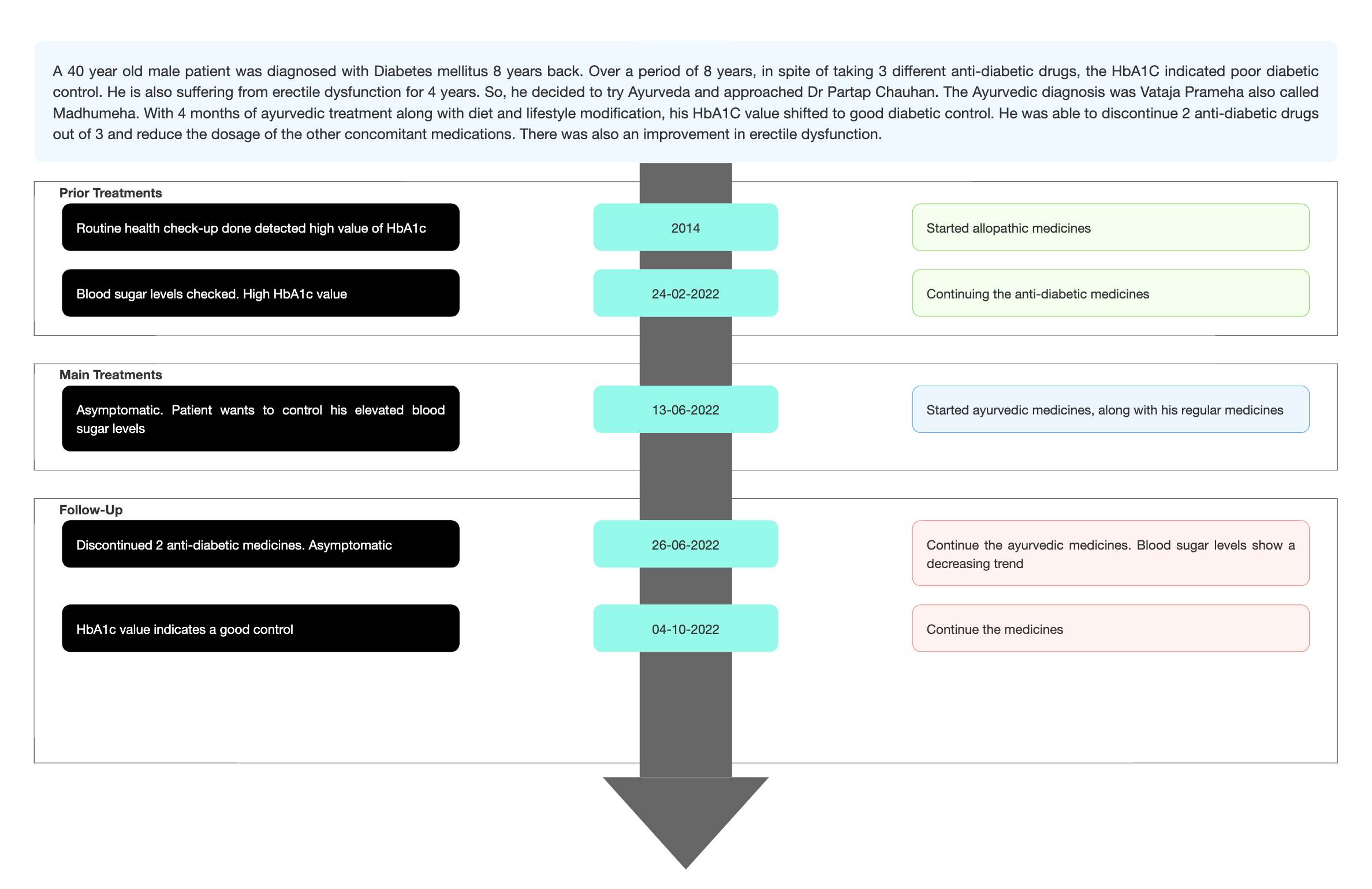
TIMELINE
Image 1. Timeline added below
DIAGNOSTIC ASSESSMENT
Modern Diagnostic parameter: The HbA1C value at baseline was the proof document submitted. The biomedical diagnosis was confirmed based on the HbA1c value.
Image 2-4. Baseline blood reports, Previous treatment record added below
Ayurvedic Assessment was done based on the clinical evaluation by the Ayurvedic physician, and the HbA1C, Fasting and Random Blood sugar levels at baseline.
Differential Diagnosis- This does not apply as the patient had a definite diagnosis.
Prognosis- The prognosis of DM is greatly influenced by the management of blood sugar levels. The patient was a known case of Type 2 Diabetes Mellitus for 8 years. Patient is at high risk of diabetes complication especially microvascular complications when there is chronic hyperglycaemia. If the patient can revert to normal blood sugar during the progression from a prediabetes stage to diabetes stage, the prognosis is very good. In this patient, despite taking 3 different anti- diabetic medications, HbA1c value indicated poor control. With the 4 months of ayurvedic treatment along with diet and lifestyle modification, he was able to discontinue 2 of his anti-diabetic drugs and was able to reduce the dosage of the remaining concomitant medicine also.
THERAPEUTIC INTERVENTION
See the tab ‘Treatment Details’
FOLLOW-UP AND OUTCOMES
Monthly follow ups were done.
22.7.22- FBS was 115 and PPBS was 130. (From the physician’s notes).
29.8.22- FBS was 140 and PPBS was 190. (From the physician’s notes).
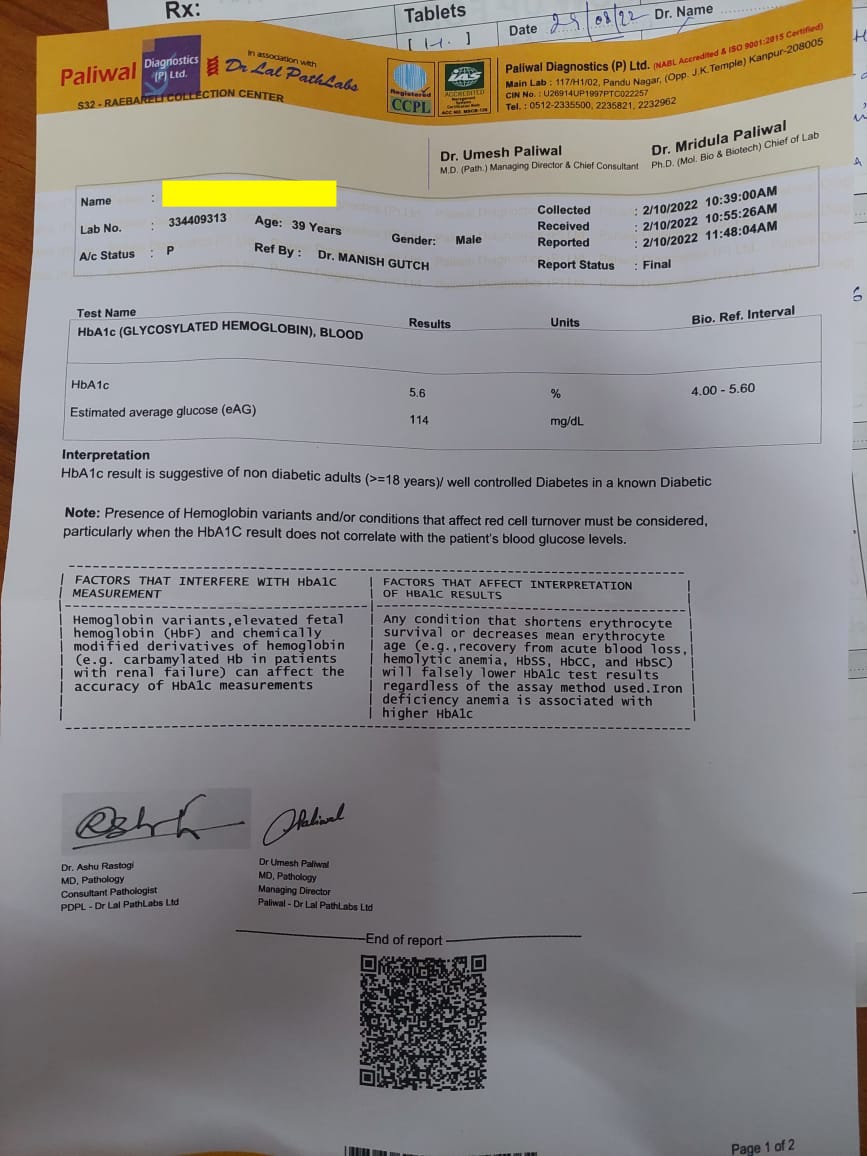
Image 3 dated 4.10.22- The HbA1C value recorded was 5.6%. (Blood report available).
Clinician-based assessment:
HbA1C that was 7.2 % became 5.6 % after Ayurvedic treatments.
BMI was 30.3 (obese) became 29.1(over weight) after Ayurvedic treatments.
Image 5. HbA1c after treatment added below
The concomitant medicines were Tab Gluconorm G3 Forte 1-0-1, Tab Forxiga 10 mg 1-0-0, Tab Reniva 20 mg at baseline. Tab Forxiga and Reniva could be stopped and only Gluconorm was continued and the dose could be tapered to half. There was a significant reduction in the erectile dysfunction also.
Patient-assessed: Not relevant
Follow up test results: HbA1C was tested after 4 months of Ayurvedic Treatments. The value was normal- 5.6 %.
Intervention adherence and tolerability – The patient adhered to the prescribed treatments and tolerated the treatments well.
Method of assessment- By monitoring the patient and blood reports.
Adverse and unanticipated events: None reported
DISCUSSION:
Vataja Prameha- Madhumeha is asadhya according to the classical textbooks of Ayurveda. In this patient, it was chronic and had a history of 8 years. The blood sugar control was poor in spite of the anti-diabetic medicines, and he was also developing associated symptoms like erectile dysfunction. The Ayurvedic physician chose the medicines targeting to reduce the blood sugar levels. The logic of using medicines like Pamehantaka curna, Madhumehantaka Curna, Rejuva and Udumbara ghana satva is they are Kashaya - tikta rasa pradhaana dravyas. Eg- The herbs from nyagrodhadi gana, punarnava, bilwa, jambu etc. Udumbara sattva is stambhaka and works on the mutravaha srotas. It prevents oja kshaya happening through the through mutra marga. In Mahasudarshana vati, Kiratatikta is main ingredient. It is the most bitter herb. Helps in managing sugar levels. It is also a very good liver tonic and helps in cleansing medo vaha srotas. Medo dushti is the major pathological change in diabetes. Chandraprakash Rasayana vati is a rasayana prescribed in madhumeha. This is an enhanced version of chandraprabha vati. Diaboherb tablet helps in managing sugar levels. The medicines Panchanimbadi churna, Tejovatyadi churna, Madhumehantak churna and Amrita rasayana were prescribed basically to control the sugar levels. They contain Tikta and Kashaya rasa pradhana herbs. Diabetes Tablet is Kapha shamana and reduces kleda. Diatrin is a Rasayana and an antidiabetic. Karela Jaumun juice is primarily Anti-diabetic in nature. Triphala curna was prescribed for easy bowel evacuation as patient had hard stools. Triphala was also given for rasayana purpose. Shuddh Shilajit and Diaboni tablet are both rasayana. In addition to this, Diaboni is also an effective antidiabetic.
PATIENT’S PERSPECTIVE
Not available.
LEARNING POINTS/TAKE-HOME MESSAGES
Ayurvedic medicines can successfully help manage chronic cases of Diabetes Mellitus non-responsive to conventional medicines and developing associated symptoms. This patient could achieve a normal HbA1C value and get significant reduction in his symptom of erectile dysfunction.
INFORMED CONSENT
Written consent obtained from patient for publishing the case report.
ACKNOWLEDGEMENTS
None.
CONFLICT OF INTEREST
None declared.
FUNDING
None
REFERENCE
- American Diabetes Association. Diagnosis and classification of diabetes mellitus. Diabetes Care. 2013;36 Suppl 1(Suppl 1):S67-S74. doi:10.2337/dc13-S067
- Murthy AR, Singh RH. Concept of prameha/madhumeha (contradictions and compromises). Anc Sci Life. 1989;9(2):71-79.
Image 1. Timeline
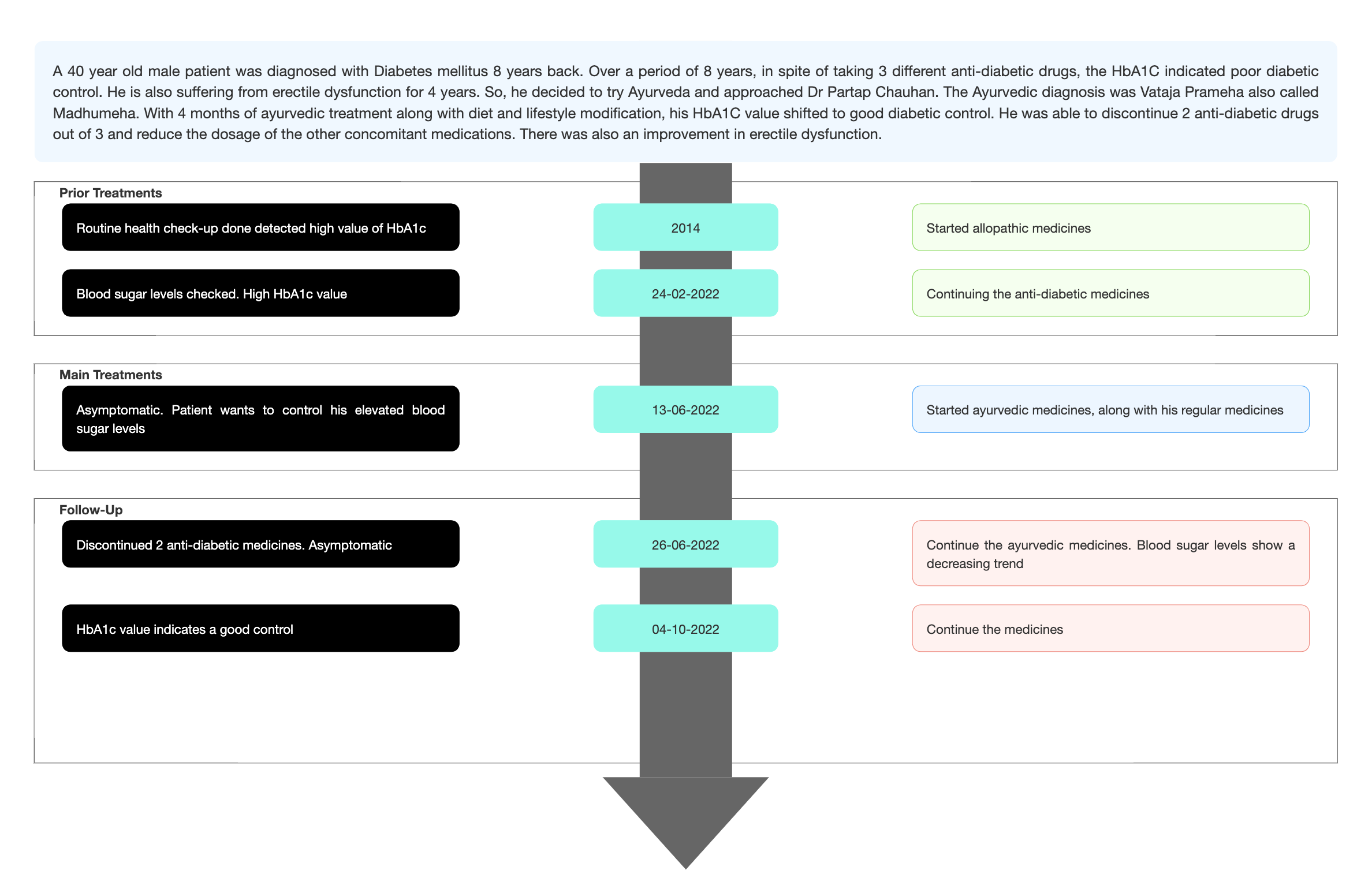
Image 2 . Baseline FBS added below
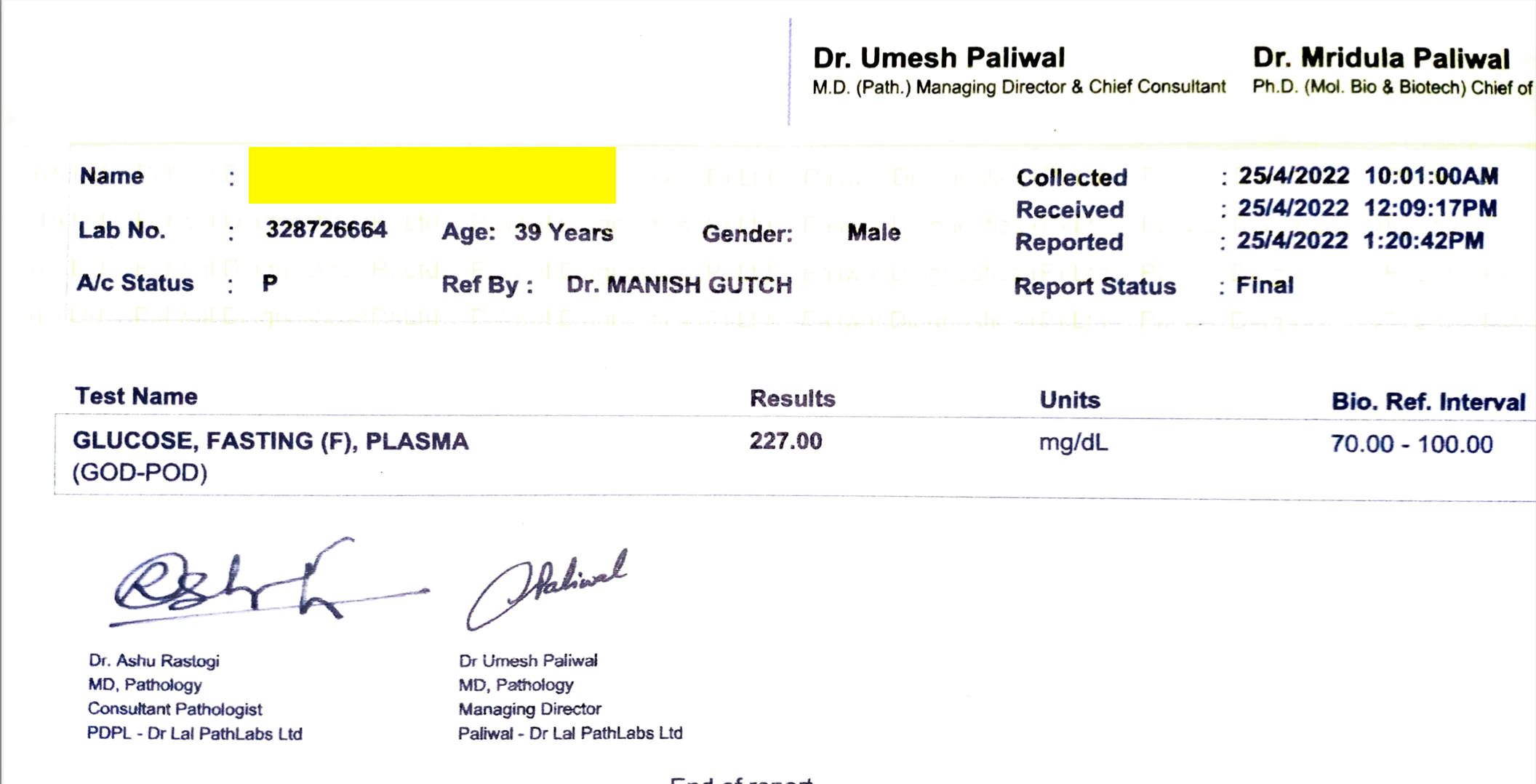
Image 3. Base line HbA1C added below
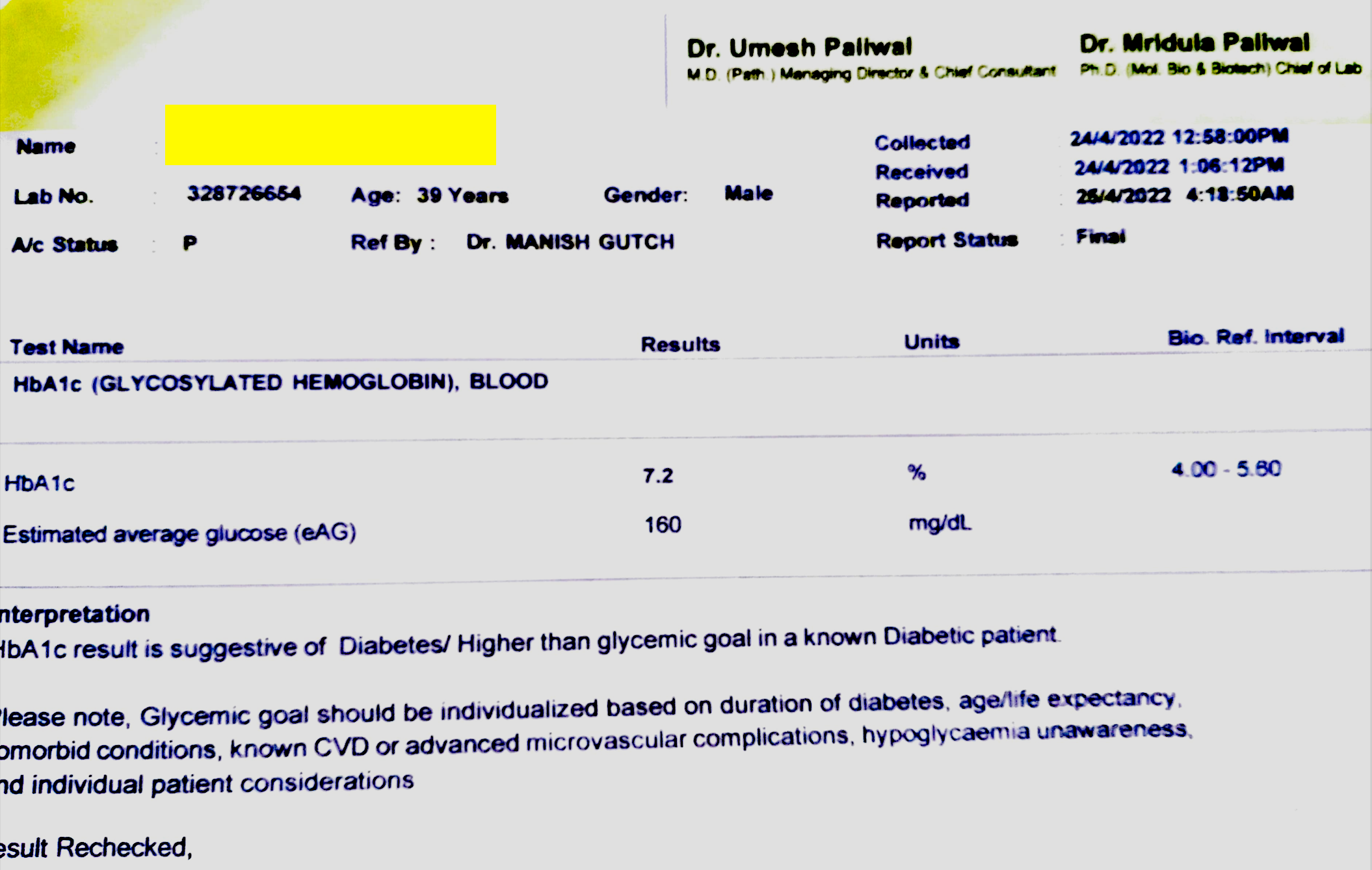
Image 4. Baseline RBS added below
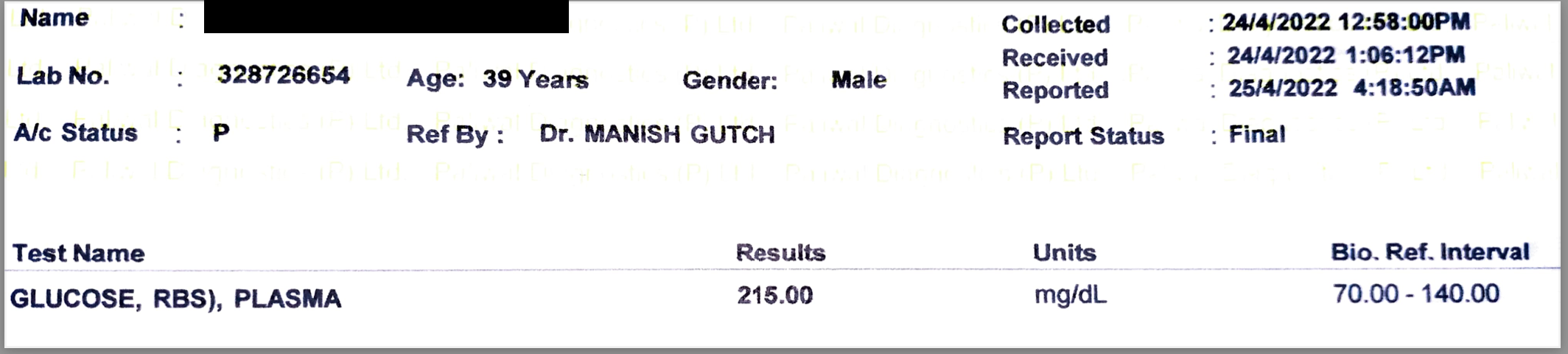
Image 4. Prescription medicines added below
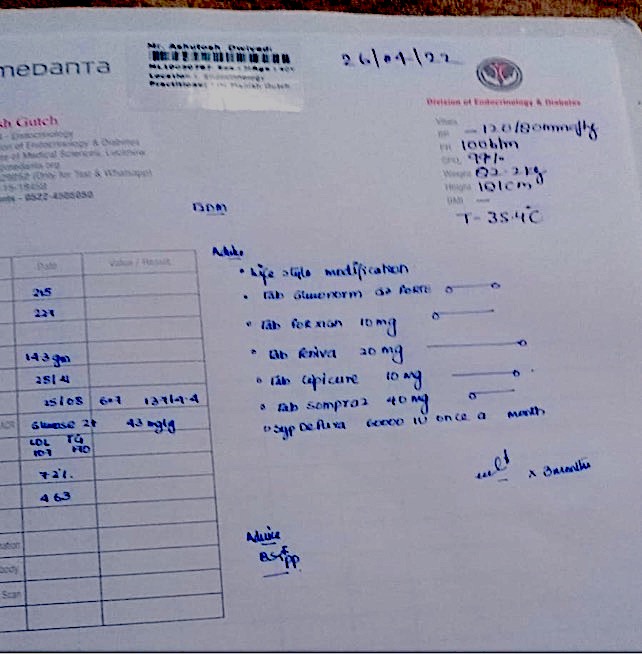
Image 5. HbA1c after treatment
-
Immersive Learning
-
Modern Diagnosis
About the Disease: Diabetes Mellitus Type 2
Diabetes is a chronic metabolic disorder, characterized by constant elevated blood sugar levels. This can be caused by various reasons, the improper breaking down of the body sugar and its absorption. The excess sugar is released into the blood stream, thus causing an elevated blood sugar level. There are 3 types of Diabetes:
Type 1- This is considered as an auto immune reaction, where the body stops producing insulin. 5-10 % diabetics are of Type 1. The symptoms develop very quickly, and children, teens and adults are diagnosed with this Type. There is no prevention yet identified for Type 1.
Type 2- This is normally referred to as Adult onset Diabetes. Lack of Physical activity, obesity and unhealthy lifestyle are the risk factors for this Type of Diabetes. In the Pre-diabetes state, by adopting lifestyle changes and diet, this can be reversed. 90-95 % of the diabetics are of Type 2.
Type 3- Gestational Diabetes is normally referred to as Type 3. This prevails during pregnancy and after delivery, this is resolved in majority of the patients. But once the patient gets gestational diabetes, there is a possibility of becoming diabetic in the due course of time. Regular check up of blood sugar is advised.
Diagnostic criteria- Hb A1C is considered as the main diagnostic parameter, for Diabetes Mellitus. If the HbA1C is less than 5.7, it is normal. When the values are 5.7 to 6.4, it is considered to be Pre-diabetes. When the value is 6.5 and higher, then it is Diabetes. In this patient, the diagnosis was confirmed with HbA1C, at Baseline. The Fasting and the Random Blood sugar was also checked.
When the value is above 8, then it is considered to be poor control of Diabetes. In this patient, the condition demanded a course of action, because he was already taking 3 anti-diabetic drugs, but the blood sugar level was still high. In addition to this, he was also developing associated symptoms like erectile dysfunction that started 4 years back. So, he decided to try Ayurvedic treatments.
Prognosis & Treatment available: In Type 2, making drastic changes in the diet and lifestyle can produce a major change in the Blood sugar levels. Exercise and less-carb diet is the key to maintaining the blood sugar levels under control. This helps in the Pre-diabetes phase. When the patient reaches the Diabetic phase, then medical intervention supported by diet and lifestyle is the treatment protocol. If the blood sugar remains elevated inspite of taking medicines, then it can cause complications like damage to the microvascular vessels. If the sugar level is alarmingly high then insulin injection may be advised.
Image 1. Baseline blood reports added below
Image 2. Prescription medicines
-
Ayurveda Diagnosis
About the Disease: Vataja Prameha- Madhumeha
The Biomedical diagnosis in this case report is Diabetes Mellitus Type 2. The Ayurvedic physician has diagnosed this condition as Vataja Prameha- Madhumeha. The word Prameha is derived from Pra – means excess, Meha – ksharane - passing of urine.
‘Pra’ means excess and ‘Meha’ means ‘ksharaNe’ (ie) passing of urine. Prameha can be defined as the disease characterized by passing excess urine. The Classical Texts also mention the turbid appearance of the urine.
प्रभूताविल मूत्रता......
Apart from this, symptoms like Malina danta, hasta pada daha, deha chikkanata, trshna, madhurya asya, madhu samana varna, angagandha, shithilangata are also mentioned.
Causative Factors: Lack of physical activity and inappropriate diet are the main causes. Kapha and medas are aggravated and dhatu shaithilya manifests. Prameha can be Sahaja (hereditary) or Apathya nimittaja (Unsuitable food and activities). Depending on the predominance of the Dosa, there are 20 types of Prameha listed in the textbooks. They are 10 Kaphaja, 6 Pittaja and 4 Vataja types.
Prognosis of Prameha: According to Caraka, in patients with early onset, is sthula and the origin of the disease is Apathyaja, it is sadhya. Pittaja and certain types of Kaphaja Prameha are yapya. This can be managed with palliative care. Vataja and Sahaja type of prameha, in a krsha, the prameha is said to be asadhya. This patient was diagnosed with Vataja type by the Ayurvedic physician, and so it is asadhya. In addition to this, he has been having the condition for 8 years, and the conventional medicine did not help reduce the blood sugar level.
Treatment & rationale for treatment: The patient is identified as Sthula pramehi or Krsha Pramehi. In sthula pramehi,अपतर्पणयुक्तिभिः is the treatment adopted. In a Krsha pramehi, अन्नपानप्रतिसंस्कृताभिः is the line of treatment followed.
Rationale of treatment explained by the Physician: The logic of using medicines like Pamehantaka curna, Madhumehantaka Curna, Rejuva and Udumbara ghana satva is they are Kashaya - tikta rasa pradhaana dravyas. Eg- The herbs from nyagrodhadi gana, punarnava, bilwa, jambu etc. Udumbara sattva is stambhaka and works on mutravaha srotas. It prevents oja kshaya happening through the through mutra marga.
In Mahasudarshana vati, Kiratatikta is main ingredient. It’s the most bitter herb. Helps in managing sugar levels. It is also a very good liver tonic and helps in cleansing medovaha srotas. Medo dushti is the major pathological factor in diabetes. Chandraprakash Rasayana vati is a rasayana prescribed in madhumeha. This is an enhanced version of chandraprabha vati. Diaboherb tablet helps in managing sugar levels.
The medicines Panchanimbadi churna, Tejovatyadi churna, Madhumehantak churna and Amrita rasayana were prescribed basically to control the sugar levels. They contain Tikta and Kashaya rasa pradhana herbs.
Diabetes Tablet is Kapha shamana, and reduces kleda. Diatrin is a Rasayana and also an antidiabetic. Karela Jaumun juice is primarily Anti-diabetic in nature. Triphala curna was prescribed for easy bowel evacuation as patient had hard stools. Triphala was also given for rasayana purpose. Shuddh Shilajit and Diaboni tablet are both rasayana. In addition to this, Diaboni is also an effective antidiabetic.
-
Treatment
Name of Medicine Dosage Form Dosage Mode of Administrtation From - To (Date) Medicine Reference Pramehantak churna Madhumehantak churna Rejuva Udumbar ghan sattva 3gm of the mixture twice a day after food with lukewarm water Oral 0022-06-26 - 2022-07-05 Pramehantak churna - Patent and proprietary medicine Madhumehantak churna- Patent Rejuva - Patent and Proprietary medicine Udumbar ghan sattva- Bhaishajya Kalpana Vijnana. Pramehantak churna Madhumehantak churna Rejuva Udumbar ghan sattva 3gm of the mixture twice a day after food with lukewarm water Oral 2022-08-29 - 2023-03-29 Mahasudarshan ghan vati 1 tablet twice a day after food with lukewarm water Oral 2022-06-26 - 2022-07-05 Bhaishajya Ratnavali, Kushta Rogadhikara, 86-91 Mahasudarshan ghan vati 1 tablet twice a day after food with lukewarm water 2022-08-29 - 2023-03-29 Bhaishajya Ratnavali, Kushta Rogadhikara, 86-91 Chandraprakash rasayana vati 1 tablet twice a day after food with lukewarm water Oral 2022-06-26 - 2022-07-22 Patent and proprietary medicine Chandraprakash rasayana vati 1 tablet twice a day after food with lukewarm water Oral29 2022-08-29 - 2023-03-29 Patent and proprietary medicine Diaboherb tablet 1 tablet twice a day after food with lukewarm water Oral 2022-06-26 - 2023-03-29 Patent and proprietary medicine Panchanimbadi churna Tejovatyadi churna Madhumehantak churna Amrita rasayana 3gm of the mixture twice a day after food with lukewarm water Oral 2022-07-06 - 2023-03-29 Anubhuta Dravya Prayoga Diabetes tablet 1 tablet twice a day after food with lukewarm water Oral 2022-07-06 - 2022-08-28 Patent and Proprietary Medicine Diatrin 1 tablet twice a day after food with lukewarm water 2022-07-06 - 2023-03-29 Patent and Proprietary Medicine Karela Jamun juice 20 ml empty stomach – morning and evening before food Oral 2022-07-06 - 2023-03-29 Patent and Proprietary Medicine Triphala churna 3 gm before sleep with luke warm water Oral 2022-07-06 - 2022-07-22 Bhavaprakasha Nighantu, Haritakyadi Varga, 42,-43 Shudh shilajeet bhasm It was mixed in the powder mixture Oral 2022-07-22 - 2022-08-28 Bhavaprakash nighantu. Purva Khanda, Mishra Prakaranam Diaboni tablet 1 tablet twice a day after food with lukewarm water Oral 2022-07-22 - 2022-08-28 Patent and Proprietary Medicine Gurmar churna 2 gm twice a day after food with luke warm water Oral 2022-08-28 - 2023-03-29 Botanical name of Gurmar- Gymnema sylvestre. Anubhuta Yoga -
Outcome Measures
Outcome Measures:
In this case report, the 40-year-old male patient, has been suffering from Diabetes Mellitus for 8 years. He was on 3 Anti-Diabetic medicines, but the blood sugar level was still elevated. He was also developing associated symptoms like erectile dysfunction, for 4 years. So, he decided to try Ayurveda. With 4 months of Ayurvedic treatment, his HbA1C level became normal.
Image 1. HbA1C before treatment
Image 2. HbA1C after treatment
Both subjective and objective parameters were used to assess the outcome in this patient.
Subjective parameters:
The HbA1C value was checked Post Ayurvedic Treatment. For the first time, the value was 5.6 that indicated a good response to the Ayurvedic Treatments.
Objective parameters: There was a significant reduction in erectile dysfunction.
Image 1. HbA1C before treatment
Image 2. HbA1C after treatment
-