Featured Case
-
Abstract
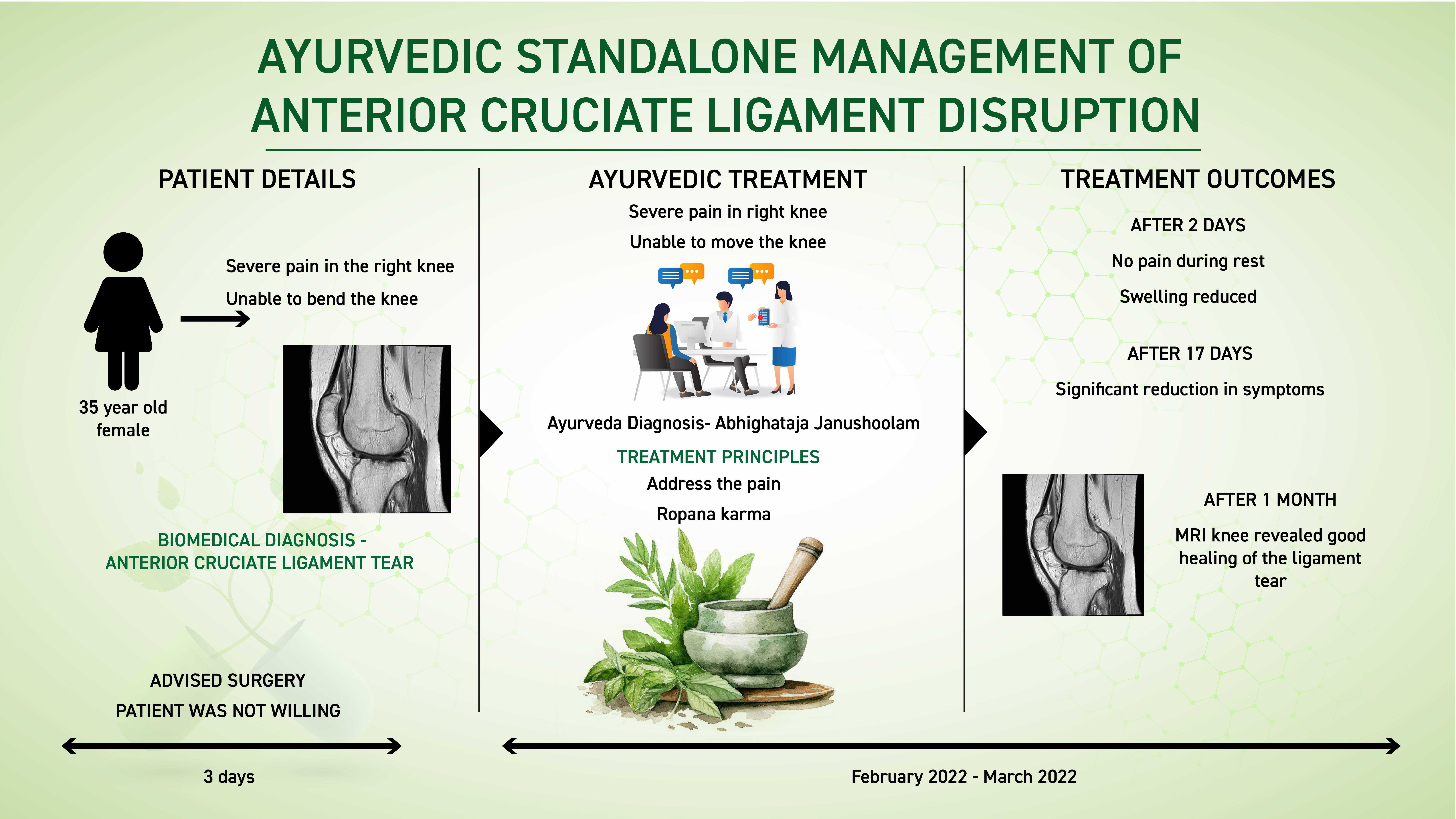
A 35-year-old female patient presented with pain in the right knee joint since 5 days associated with restricted knee joint movements. The patient had a history of a Road traffic accident 5 days back and her right knee had been injured. She was taken to a nearby hospital for emergency care. Movement of the right knee joint was not affected at that time and the patient was prescribed painkillers and advised to rest. The next day she noticed severe pain in the knee joint while walking and could not bend the knee. MRI of the right knee revealed complete disruption of the anterior cruciate ligament near its femoral insertion. Surgery was advised, but she was unwilling to undergo surgery. So, she consulted Dr Govind Narayanan for ayurvedic management. This was diagnosed as Abhighataja janu shoolam. The line of treatment followed was to address the abhighata. Within 2 days of starting treatment, the swelling reduced and there was no pain in the knee during rest. Follow-up after another 2 weeks revealed a significant reduction of pain and swelling in the right knee. A follow-up MRI of the right knee done after 1 month revealed only partial disruption of fibres at the femoral insertion, indicating a recovery.
-
Summaries
-
Listen
-
Watch
-
View
-
Read
A 35-year-old female patient presented with pain in the right knee joint since 5 days associated with restricted knee joint movements. The patient had a history of a Road traffic accident 5 days back and her right knee had been injured. She was taken to a nearby hospital for emergency care. Movement of the right knee joint was not affected at that time and the patient was prescribed painkillers and advised to rest. The next day she noticed severe pain in the knee joint while walking and could not bend the knee. MRI of the right knee revealed complete disruption of the anterior cruciate ligament near its femoral insertion. Surgery was advised, but she was unwilling to undergo surgery. So, she consulted Dr Govind Narayanan for ayurvedic management. This was diagnosed as Abhighataja janu shoolam. The line of treatment followed was to address the abhighata. Within 2 days of starting treatment, the swelling reduced and there was no pain in the knee during rest. Follow-up after another 2 weeks revealed a significant reduction of pain and swelling in the right knee. A follow-up MRI of the right knee done after 1 month revealed only partial disruption of fibres at the femoral insertion, indicating a recovery.
-
-
Timeline
-
Tabulated Summary
-
Narrative
TITLE OF CASE
Standalone successful ayurvedic management of complete disruption of anterior cruciate ligament
Dr Govind Narayanan
ABSTRACT
A 35-year-old female patient presented with pain in the right knee joint since 5 days associated with restricted knee joint movements. The patient had a history of a Road traffic accident 5 days back and her right knee had been injured. She was taken to a nearby hospital for emergency care. Movement of the right knee joint was not affected at that time and the patient was prescribed painkillers and advised to rest. The next day she noticed severe pain in the knee joint while walking and could not bend the knee. MRI of the right knee revealed complete disruption of the anterior cruciate ligament near its femoral insertion. Surgery was advised, but she was unwilling to undergo surgery. So, she consulted Dr Govind Narayanan for ayurvedic management. This was diagnosed as Abhighataja janu shoolam. The line of treatment followed was to address the abhighata. Within 2 days of starting treatment, the swelling reduced and there was no pain in the knee during rest. Follow-up after another 2 weeks revealed a significant reduction of pain and swelling in the right knee. A follow-up MRI of the right knee done after 1 month revealed only partial disruption of fibres at the femoral insertion, indicating a recovery.
KEYWORDS
Cruciate ligament, ligament tear, janu shula, case report, standalone, anterior cruciate ligament, ligament tear, ACL
INTRODUCTION
ACL injury is very common during athletic performance compared to the incidence in the general population. Recently, the interest in ACL failure has increased since several studies highlight ACL injury as a risk factor for knee osteoarthritis regardless of ACL reconstruction.
Symptoms: They include pain, audible pop, and oedema. The knee movements can be restricted. The presence and importance of these signs in relation to isolated ACL injury have been evaluated in the past. Several studies have contributed in a better understanding of the biomechanical properties of the ACL like strength, stiffness and tension patterns in relation to its failure properties.
A very interesting point is that a part of ACL fibres fail initially while the rest remain intact and have the ability to withstand load. This condition could represent the partial ACL tear or the tear of only the AM or the PL bundle of the ACL.
Diagnostic criteria: Medical history taking, and clinical evaluation is the basic criteria. Imaging like MRI helps exactly define the extent of damage present.
Treatment: Prompt first-aid care can reduce pain and swelling immediately after an injury to your knee.
PATIENT INFORMATION
A 35-year-old female patient presented with pain in the right knee joint since 5 days associated with restricted knee joint movements. The patient had a history of a Road traffic accident before 5 days and her right knee had been injured.
Medical History: After the Roadtraffic accident, she was immediatley taken to a nearby hospital. Movement of the right knee joint elicited comfortability at that time and the patient was prescribed painkillers and advised to rest. The next day she noticed severe pain in the knee joint while walking and could not bend the knee. AT this point, MRI of the right knee revealed complete disruption of the anterior cruciate ligament near its femoral insertion. Surgery was advised, but she was unwilling to undergo surgery. So, she consulted Dr Govind Narayanan for ayurvedic management. THis was diagnosed as Abhighataja janu shoolam.
CLINICAL FINDINGS/PHYSICAL EXAMINATION
On examination of the right knee-
Inspection- swelling - present
No discolouration/ deformity
Palpation- Tenderness present - Grade 2 on medial aspect of Right knee
Warmth- Present
Knee circumference- 37 cm
ROM- Restricted due to pain
TIMELINE
Image 1. Timeline of events is attached below
DIAGNOSTIC ASSESSMENT
Modern Diagnostic parameter: Biomedical diagnosis was made based on the presenting symptoms and the MRI reports of the right knee.
Image 2. MRI Right Knee done at baseline dated 12.2.2022 added below
Ayurvedic Assessment was done based on the clinical evaluation by the ayurvedic physician.
Differential Diagnosis- This does not apply as the patient came in with a definite diagnosis.
Prognosis- ACL injuries often require surgery and/or many months of rehabilitation. In this case report, in patient's words, surgery was suggested. After 2 weeks of Ayurvedic treatment, the patient got complete relief from all the symptoms and repeat MRI taken after 5 weeks of ayurvedic treatments indicated a healing process. The patient is requested to come for further follow up.
THERAPEUTIC INTERVENTION
See the tab ‘Treatment details’
FOLLOW-UP AND OUTCOMES
Clinician-based assessment; Subjective parameters were assessed. Pain reduced after 3 days of treatment. The patient attained complete symptomatic relief within 7 days of treatment.
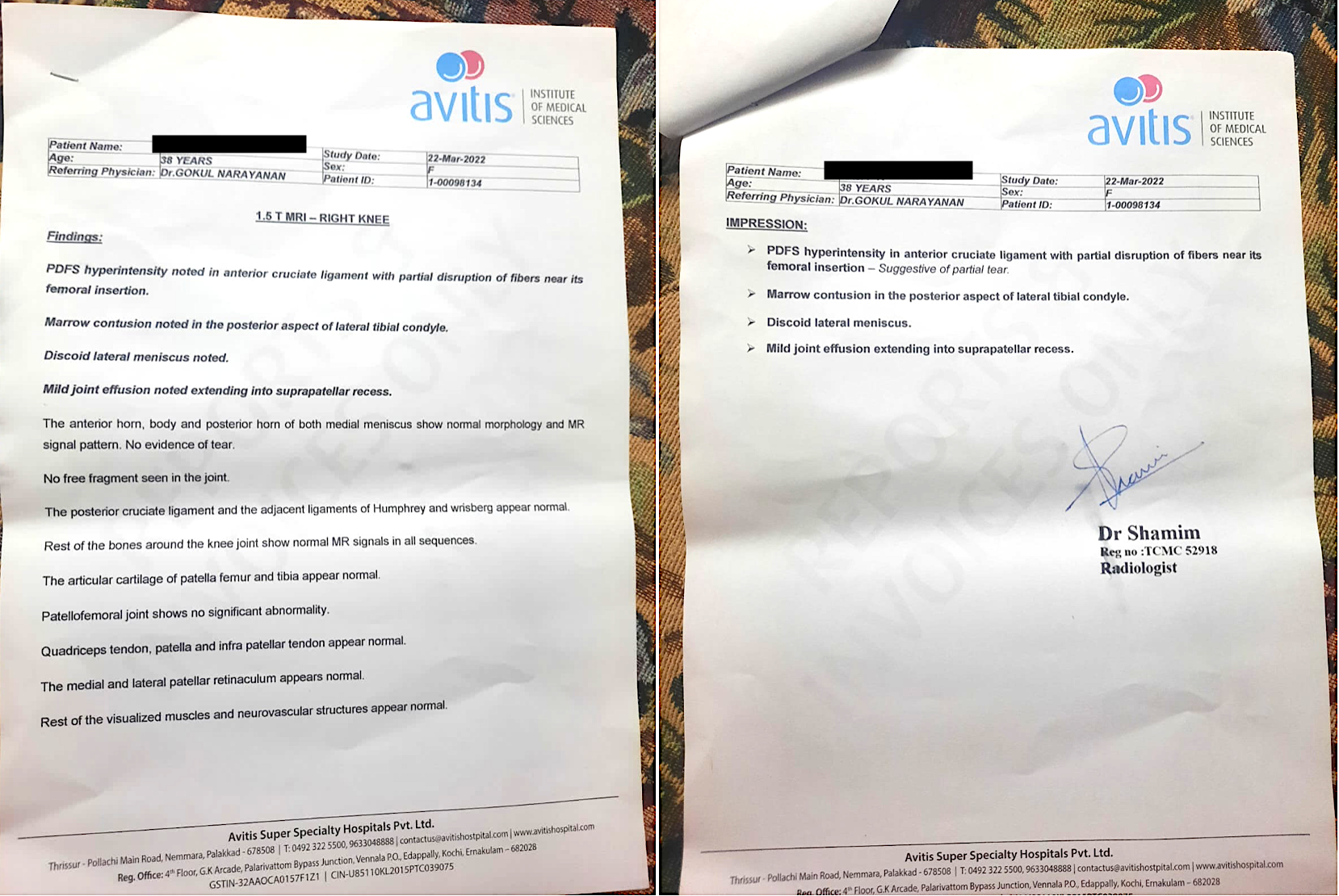
Objective outcome: On The MRI of the right knee done at baseline indicated a complete disruption of the anterior cruciate ligament, and repeat MRI done indicated partial tear
Subjective outcome: The patient is free from all the symptoms after 15 days of treatment. And is still continuing the follow-ups.
Image 3. MRI right knee dated 22.3.2022 added below
Patient-assessed; Not relevant.
Intervention adherence and tolerability – The patient adhered to the prescribed treatments and tolerated the treatments well.
Method of assessment- By monitoring the patient.
Adverse and unanticipated events; None reported.
DISCUSSION ;
As the diagnosis was Janu shoola due to abhighata, all the medicines and therapies chosen were shula and shopha hara, and to pacify pitta. Brmhana, sandhaneeya, and balya therapies were also planned to initiate the healing and recovery process.
PATIENT’S PERSPECTIVE
Not available.
LEARNING POINTS/TAKE-HOME MESSAGES
This case report demonstrates the successful ayurvedic management of an acute condition of complete disruption of the anterior ligament where surgery was suggested as the best option of treatment.
INFORMED CONSENT
Written consent obtained from patient to publish the case report.
CONFLICT OF INTEREST
None declared.
FUNDING
None
REFERENCE
- Georgoulis AD, Ristanis S, Moraiti CO, et al. ACL injury and reconstruction: Clinical related in vivo biomechanics. Orthop Traumatol Surg Res. 2010;96(8 Suppl): S119-S128. doi: 10.1016/j.otsr.2010.09.004
- https://www.mayoclinic.org/diseases-conditions/acl-injury/diagnosis-treatment/drc-20350744
Image 1. Timeline of events
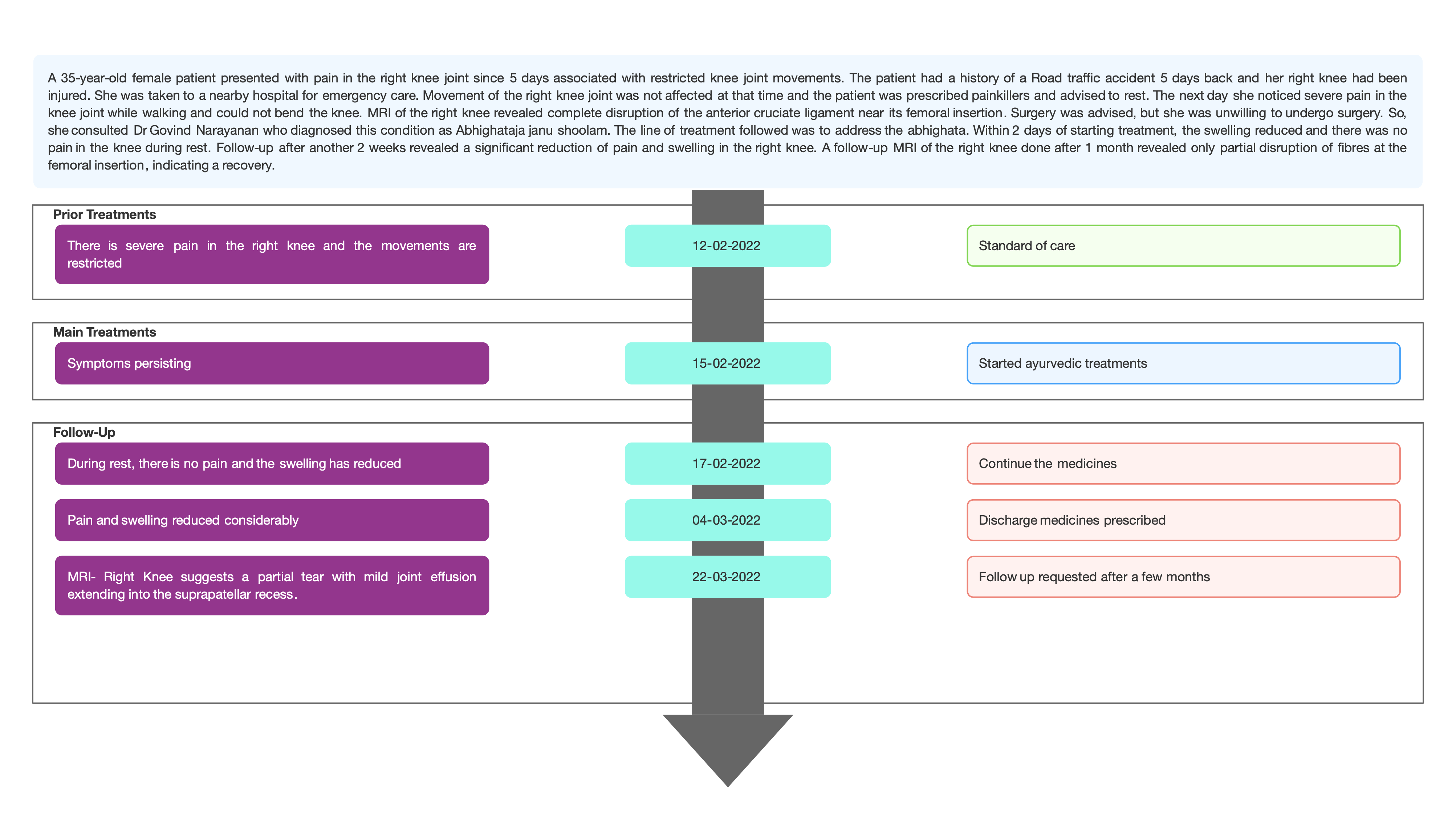
Image 2. MRI Right Knee done at baseline dated 12.2.2022
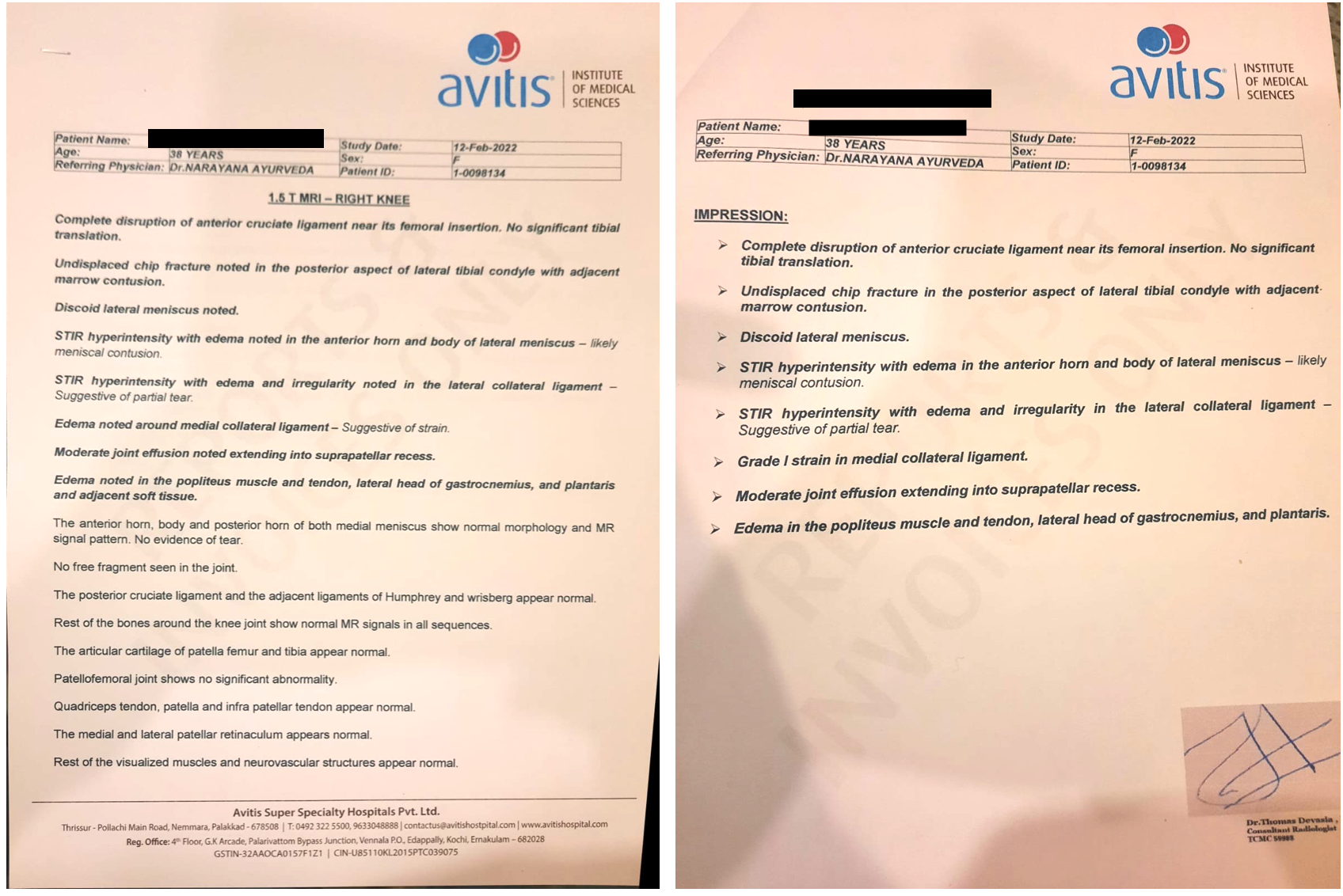
Image 3. MRI right knee dated 22.3.2022
-
Immersive Learning
-
Modern Diagnosis
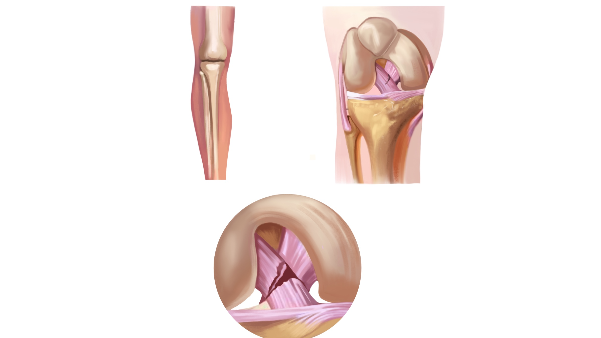
MODERN DIAGNOSIS: Anterior cruciate ligament (ACL) disruption
ABOUT THE DISEASE:
ACL injury is very common during athletic performance compared to the incidence in the general population. Recently, the interest in ACL injury treatment has increased since several studies highlight ACL injury as a risk factor for knee osteoarthritis regardless of ACL reconstruction.
Symptoms: They include pain, audible pop, and oedema. The knee movements can be restricted. The presence and importance of these signs in relation to isolated ACL injury have been evaluated in the past. Several studies have contributed to a better understanding of the biomechanical properties of the ACL like strength, stiffness and tension patterns in relation to its failure properties.
A very interesting point is that a part of ACL fibres fail initially while the rest remain intact and have the ability to withstand the load. This condition could represent the partial ACL tear or the tear of only the AM or the PL bundle of the ACL.[1]
In this case report, the 35-year-old female patient presented with pain in the right knee joint for 5 days associated with restricted knee joint movements. The patient had a history of a Road traffic accident 5 days back and her right knee had been injured. The diagnosis was confirmed with an MRI of the right knee.
Image 1. MRI of the right knee dated 12.2.2022 added below
Diagnostic criteria: Medical history taking, and clinical evaluation is the basic criteria. Imaging like MRI helps define the extent of damage present.
Treatment: Prompt first-aid care can reduce pain and swelling immediately after an injury to the knee.
Rest. General rest is necessary for healing and limits weight bearing on your knee.
Ice. When you're awake, try to ice your knee at least every two hours for 20 minutes at a time.
Compression. Wrap an elastic bandage or compression wrap around your knee.
Elevation. Lie down with your knee propped up on pillows.
Rehabilitation: ACL injury begins with several weeks of rehabilitative therapy
Surgical management.[2]
In this patient, painkillers and rest was advised initially, but as she did not respond satisfactorily, the patient approached ayurveda.
Reference
- Georgoulis AD, Ristanis S, Moraiti CO, et al. ACL injury and reconstruction: Clinical related in vivo biomechanics. Orthop Traumatol Surg Res. 2010;96(8 Suppl): S119-S128. doi: 10.1016/j.otsr.2010.09.004
- https://www.mayoclinic.org/diseases-conditions/acl-injury/diagnosis-treatment/drc-20350744
Image 1. MRI of the right knee dated 12.2.2022
-
Ayurveda Diagnosis
AYURVEDA DIAGNOSIS: Abhighataja Janu shula
ABOUT THE DISEASE:
Shula implies ‘pain’. Normally, the term shula when used stands for ‘colic’ relating to gastrointestinal pain. But in this context, the term shula is correlated to pain. Janu is knee, and so Janu shula is the pain in the knee. In this case report, the 35-year-old female suffered from Janu Shula after a road traffic accident. Hence it has been identified as abhighataja.
In the Bhrihatrayee of Ayurveda, there is no dedicated chapter for pain or its associated synonyms, but it is discussed as a symptom in many diseases. All types of pain are considered as a vitiation of Vata. As Vata Dosha is responsible for every movement and action in the body, the obstruction in Vata dosha flow leads to pain.
Vata is the primary dosha associated with pain in various sthana, including Prana, Vyana, Samana, Udana and Apana vayu. Acarya Sushruta and Madhav Nidankara has explained different types of shula in the texts. Shoola vyadhi as explained by Acarya Sushruta is considered as Abdominal colic with its clinical features, and as a upadrava of Gulma. Caraka has explained two types of Mahakashaya in relation to pain.i.e. shula prashamana and vedanasthapana.[1]
Treatment: In case of injury-induced, janu shula, treatments planned to address the pain, the inflammation, and to initiate the healing process. In this patient, all the therapies and internal medicines planned were targeting shula and shopha hara, and pacifying pitta. The therapeutic effect of the drugs was Brmhana, balya and sandhaneeya to initiate the healing and recovery process.
Reference
1. A concept of shoola (pain) and its management through ayurveda and modern approach. Swati and Madhuri. Vol. No. IX, Issue- 12 (I) July-December 2022. ISSN 2277-7067UGC CARE Group 1.
-
Treatment
Name of Medicine Dosage Form Dosage Mode of Administrtation From - To (Date) Medicine Reference Nadee kasaya+ Punaranavadi Kasaya Kasaya 15 ml + 60 ml warm water On empty stomach at 6 am and 6 pm 2022-02-15 - 2022-03-04 Sahasrayogam. Kasaya prakaranam Chincadi Taila+ Karpooradi thailam Taila Required quantity External application on the affected area 2022-02-15 - 2022-03-04 Sahasrayogam. Taila prakaranam Jadamayadi Lepam Lepa dravya Required quantity External application on the affected area 2022-02-15 - 2022-02-17 Sahasrayogam. Taila prakaranam. Kalka of Balagulucyadi taila Dhanyamla Dhara Dhara dravya Required quantity External application on the affected area 2022-02-15 - 2022-02-17 Anubhuta prayoga Kukkudanda Jangama dravya Required quantity Upanaham, done once daily 2022-02-18 - 2022-02-22 Anubhuta dravya prayoga Kshira Jangama dravya Required quantity Dhoomam 2022-02-18 - 2022-02-22 Anubhuta dravya prayoga Kukkudanda Jangama dravya Required quantity Upanaham, done once daily 2022-02-28 - 2022-03-06 Anubhuta dravya prayoga Sastika shali Audbhida dravya Required quantity Pinda sveda 2022-02-28 - 2022-03-06 Keraliya kriya karma -
Outcome Measures
OUTCOME MEASURES
A 35-year-old female patient presented with pain in the right knee joint for 5 days associated with restricted knee joint movements. The patient had a history of a Road traffic accident before 5 days and her right knee had been injured. Immediately after accdent, she was taken to a nearby hospital for emergency care. Movement of the right knee joint elicited comfortability at that time and the patient was prescribed painkillers and advised to rest. The next day she noticed severe pain in the knee joint while walking and could not bend the knee. MRI of the right knee revealed complete disruption of the anterior cruciate ligament near its femoral insertion. Surgery was advised, but she was unwilling to undergo surgery. So, she consulted Dr Govind Narayanan for ayurvedic management. This was diagnosed as Abhighataja janu shulam.
Subjective parameters: Within 2 days of starting treatment, the swelling reduced and there was no pain in the knee during rest. Follow-up after another 2 weeks revealed a significant reduction of pain and swelling in the right knee.
Objective parameters: A follow-up MRI of the right knee done after 1 month revealed only partial disruption of fibres at the femoral insertion, indicating a recovery.
Image 1. Repeat MRI dated March 2023 after treatment added below
MRI- Right Knee- PDFS hyperintensity in anterior cruciate ligament with partial disruption of fibres near its femoral insertion - Suggestive of partial tear. Mild joint effusion extending into suprapatellar recess.
Disease-modifying effect: The patient is showed signs of significant improvement in symptoms and is in remission.
Image 1. Repeat MRi dated March 2023
-